Elephant Beetle Care Guide | Characteristics and Husbandry of Megasoma elephas
A comprehensive guide to elephant beetle care. This guide introduces management of adult and larval Megasoma elephas, optimal substrate, temperature and humidity, breeding methods, and tips for long-term husbandry for beginners.

Key Takeaways
A comprehensive guide to elephant beetle care. This guide introduces management of adult and larval Megasoma elephas, optimal substrate, temperature and humidity, breeding methods, and tips for long-term husbandry for beginners.
Related Species
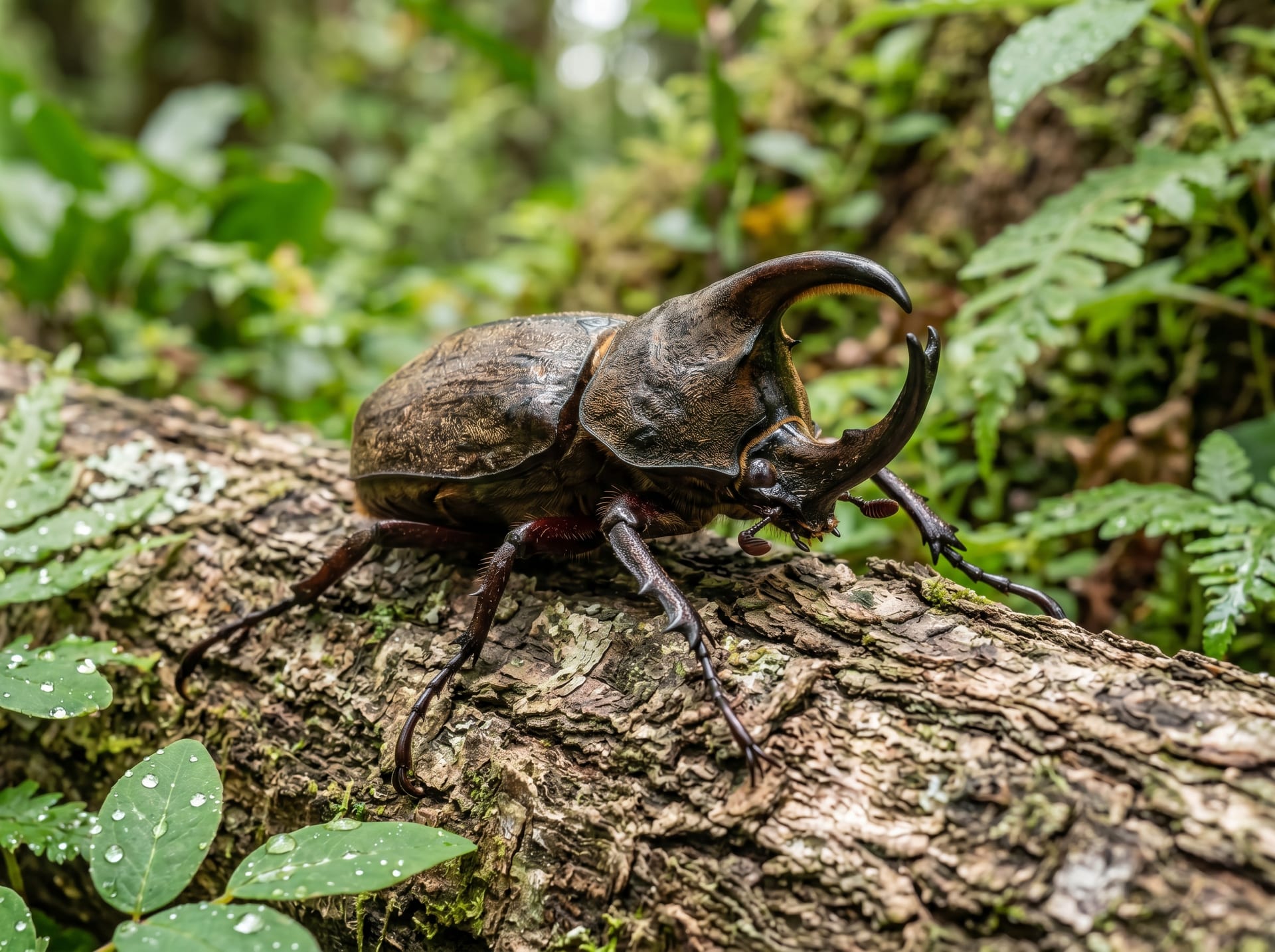
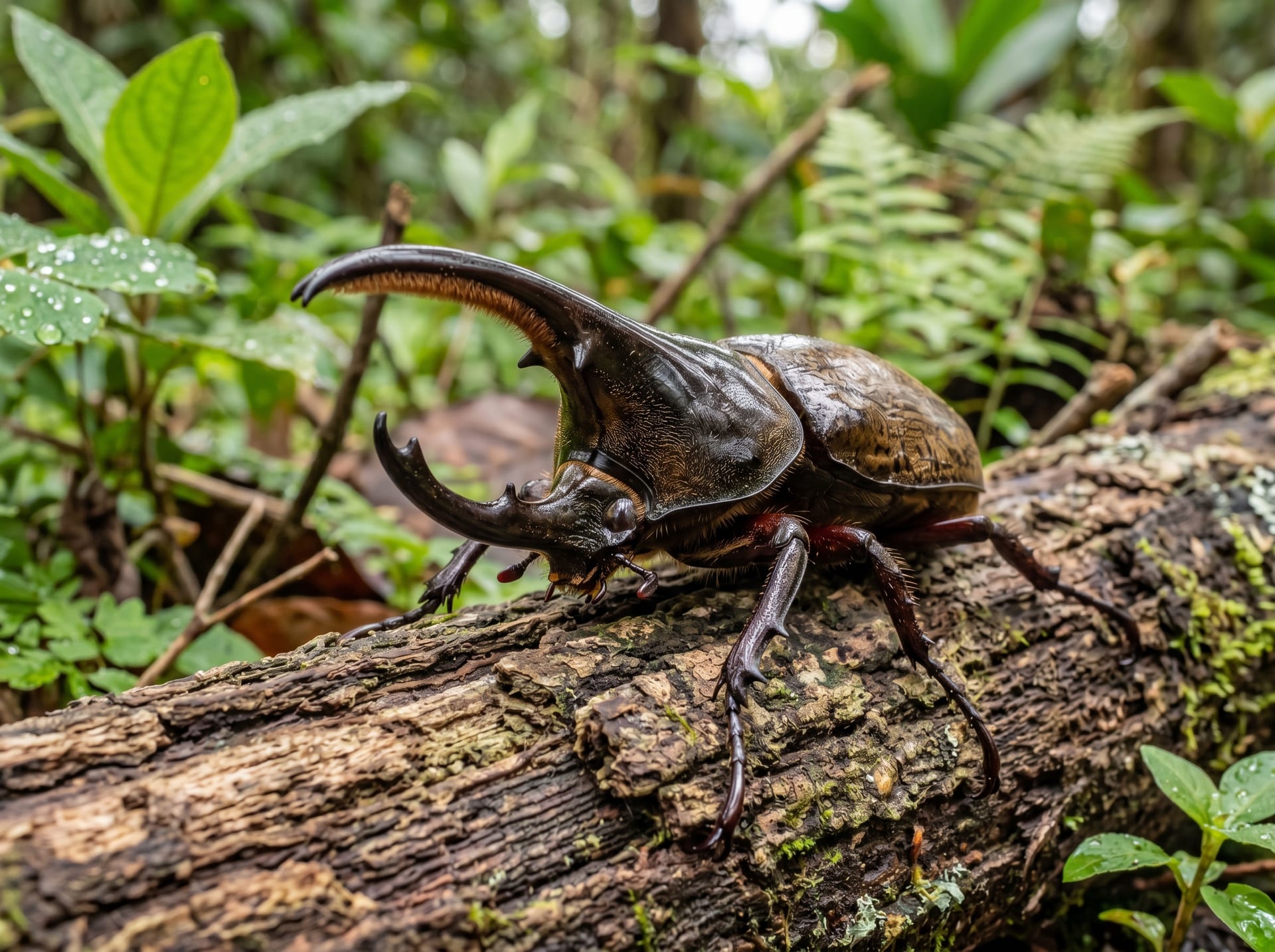
Elephant Beetles (Megasoma elephas)
The elephant beetle (Megasoma elephas) is a large beetle native to Central America and northern South America, reaching 60-130mm in body length as adults. True to their name, they are characterized by an elephant-like massive body and three horns (one on the pronotum and one on the head). Known alongside the Hercules beetle as one of the "world's largest beetles," their impressive weight and presence captivate many collectors.
Major Species
| Species | Origin | Characteristics |
|---|---|---|
| M. elephas (Elephas) | Mexico to Colombia | Largest species. Dense yellow setae on body |
| M. actaeon (Actaeon) | Brazil, Peru | Glossy black giant |
| M. mars (Mars) | Colombia, Venezuela | Large and rare |
This guide focuses on the most commonly available species, Megasoma elephas.
Adult Care
Enclosure and Housing
Due to their size, adults require large containers or enclosures of at least 60cm in length.
| Husbandry Type | Recommended Size | Notes |
|---|---|---|
| Single housing | 60cm × 40cm or larger | 20cm depth minimum recommended |
| Pair housing | 90cm × 60cm or larger | Risk of fighting |
Layer the bottom with 10-15cm of fermented substrate, and provide climbing wood, bark, or cork bark to reduce stress.
Temperature and Humidity
While elephant beetles are tropical insects, excessively high temperatures also shorten their lifespan.
| Parameter | Recommended Range |
|---|---|
| Temperature | 22-26°C (stable year-round) |
| Humidity | 60-75% |
Air conditioning management is essential during summer. Prolonged exposure to temperatures above 30°C will cause severe decline.
Feeding
The primary food for adults is insect jelly (high-protein, 16g or more).
- Replacement frequency: Daily to once every 2 days
- Supplementary foods: Ripe banana, watermelon (summer)
- Water: Sufficient moisture from jelly and fruit; no separate water source needed
Elephant beetles have extremely vigorous appetites. It's not uncommon for them to consume 2-3 jelly cups per day.
Adult Lifespan
Adult lifespan is typically 3-6 months (after starting to feed). Feeding typically begins 1-3 months after emergence; during this period, handle minimally and maintain quiet conditions.
Larval Care
The greatest joy of keeping elephant beetles is raising them from the larval stage. From L1 (first instar) to emergence takes 2-3 years, allowing you to gradually develop impressive specimens.
Required Substrate
Larvae require fully fermented substrate as the foundation.
| Substrate Type | Suitability |
|---|---|
| Fully fermented stag beetle substrate | ◎ Optimal |
| Fermented beetle substrate | ○ No issues |
| Fungal wood | △ Not ideal (unsuitable for beetle larvae in general) |
Commercial "fully fermented beetle substrate" can work, but medium-coarse grain substrate is recommended for easier digestion.
Larval Container Sizes
| Instar | Recommended Container | Substrate Amount |
|---|---|---|
| L1 (First instar) | 600cc bottle | ~500g |
| L2 (Second instar) | 1L bottle to 2L container | ~1kg |
| L3 (Third/final instar) | 10-20L container | 5-15kg |
Final instar larvae are extremely large (weighing approximately 60-120g); inadequately sized containers will restrict growth. To produce large specimens, containers of 15L or larger are recommended.
Temperature Management (Larval Stage)
| Temperature | Effect |
|---|---|
| 20-24°C | Standard growth rate |
| 25-28°C | Accelerated growth (rapid weight gain) |
| 18°C or below | Slow growth, dangerous |
| 30°C or above | Risk of larval mortality |
Substrate Exchange Guidelines
- L1 to L2 transition: Move to new container after approximately 1-2 months
- L2 to L3 transition: Exchange substrate and expand container after approximately 2-4 months
- L3 management: Exchange half the substrate every 3-4 months
Complete substrate exchanges before larvae enter pupation preparation (do not move larvae approaching pupation).
Breeding
Pairing
The optimal mating period is 1-2 months after the male begins feeding.
- Male management: As males are large, they may injure the female during mating. Conduct mating in the enclosure while observing.
- Hand pairing: Place the female in front of the male and observe for mating behavior (5-30 minutes).
- Confirmation: Once successful, transfer the female to an egg-laying setup.
Egg-Laying Setup
| Element | Specification |
|---|---|
| Container | 30×20cm or larger |
| Substrate | Fully fermented substrate, 20-25cm, firmly packed |
| Temperature | 24-26°C |
| Humidity | 60-75% (substrate holds shape when squeezed) |
First instar larvae can be observed 4-6 weeks after egg-laying. Typical clutch size is 20-50 eggs per cycle.
Tips When Purchasing from Breeders
Elephant beetles have lower circulation compared to Hercules beetles, making it important to source from reputable breeders.
- Confirmed feeding status: Recently emerged non-feeding individuals carry high transport risk.
- Emergence date and current condition: Verify how many months have elapsed since emergence, as adult lifespan is short.
- For larvae: Confirm instar (L1/L2/L3), hatch date, and current weight.
- Origin information: Size and morphology vary by subspecies and location.
Conclusion
While elephant beetles require substantial husbandry space, the impressive presence of adults raised patiently from larvae is unparalleled. With proper temperature management and adequate space, they are an accessible large exotic beetle species even for beginners. Try purchasing larvae directly from breeders and enjoy the journey of gradually achieving maximum size over 2-3 years.