Optimal SPS & LPS Placement Guide | Designing Your Ideal Layout with Light and Water Flow | ブリちょく
Coral| ✍️ BreederDirect Editorial
Optimal SPS & LPS Placement Guide | Designing Your Ideal Layout with Light and Water Flow
Explains how to optimize SPS and LPS placement considering light intensity and water flow. Also covers distance settings accounting for coral aggression.
Key Takeaways
Explains how to optimize SPS and LPS placement considering light intensity and water flow. Also covers distance settings accounting for coral aggression.
Related Species
Fundamental Approach to Coral Placement
To maintain a beautiful coral tank, more than just visual balance is needed—a "scientific approach" to placement that meets each coral's physiological requirements is essential. Each coral has different light intensity, water flow, and compatibility with neighboring corals. Providing appropriate conditions improves coloration and promotes long-term health. Beyond the initial tank setup, reviewing placement as corals grow and change shape and size is key to maintaining an attractive layout.
The key factors when considering placement fall into three main categories:
Light Intensity (PAR value): The amount of light energy required for photosynthesis
Water Flow: Delivers oxygen and nutrients while removing waste
Allelopathy (Chemical & Physical Attack): Interference from adjacent corals
By considering these factors holistically, you can achieve an ideal layout where all corals coexist.
---
Vertical Zoning Based on PAR Values
Light intensity decreases dramatically as depth increases in a tank. Using this principle to separate corals by their required PAR values into distinct "zones" is the first step in successful placement.
Upper Zone (PAR 250–350+)
The brightest upper zone is home to SPS (small polyp stony corals) that demand high light intensity.
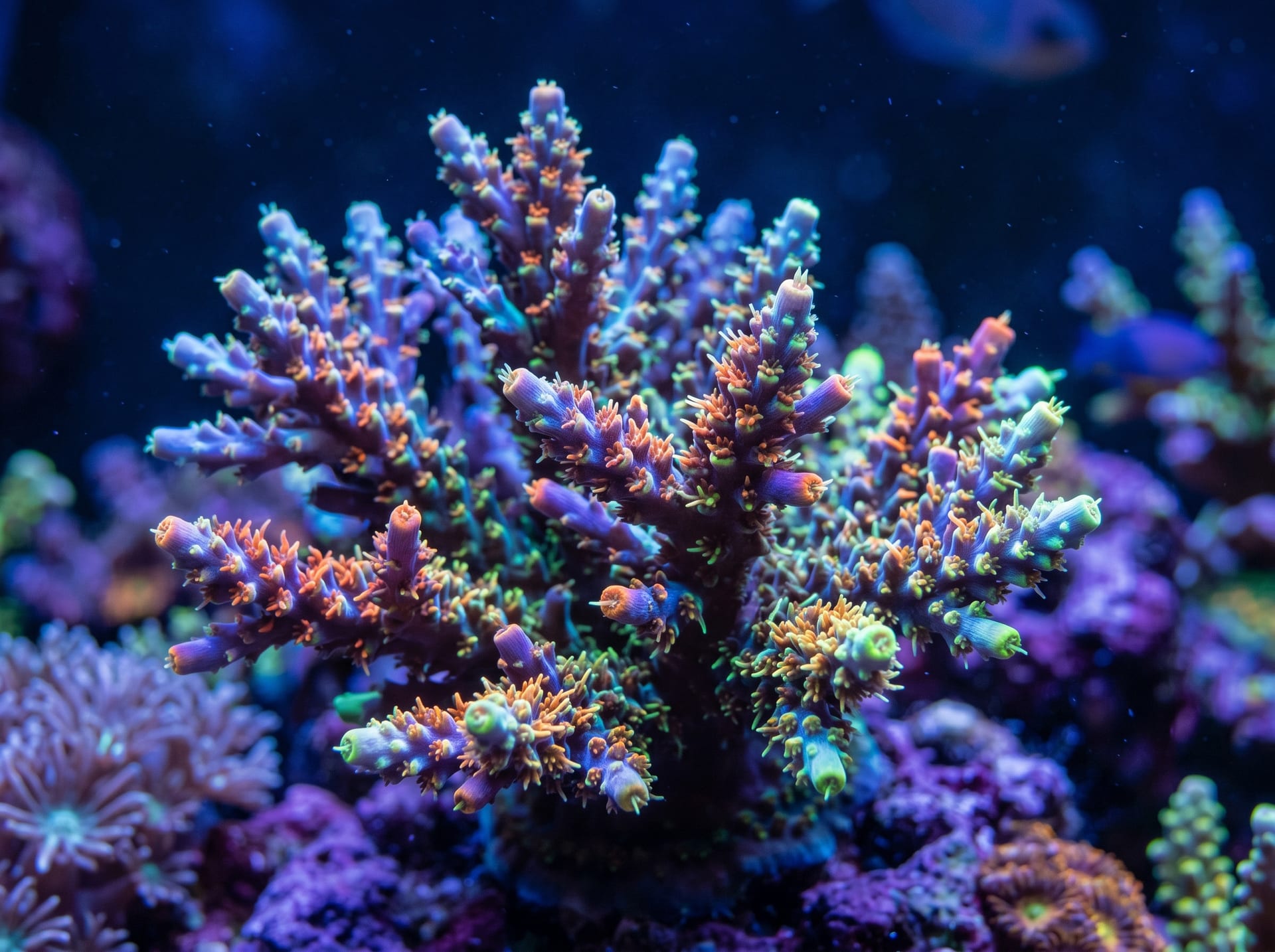
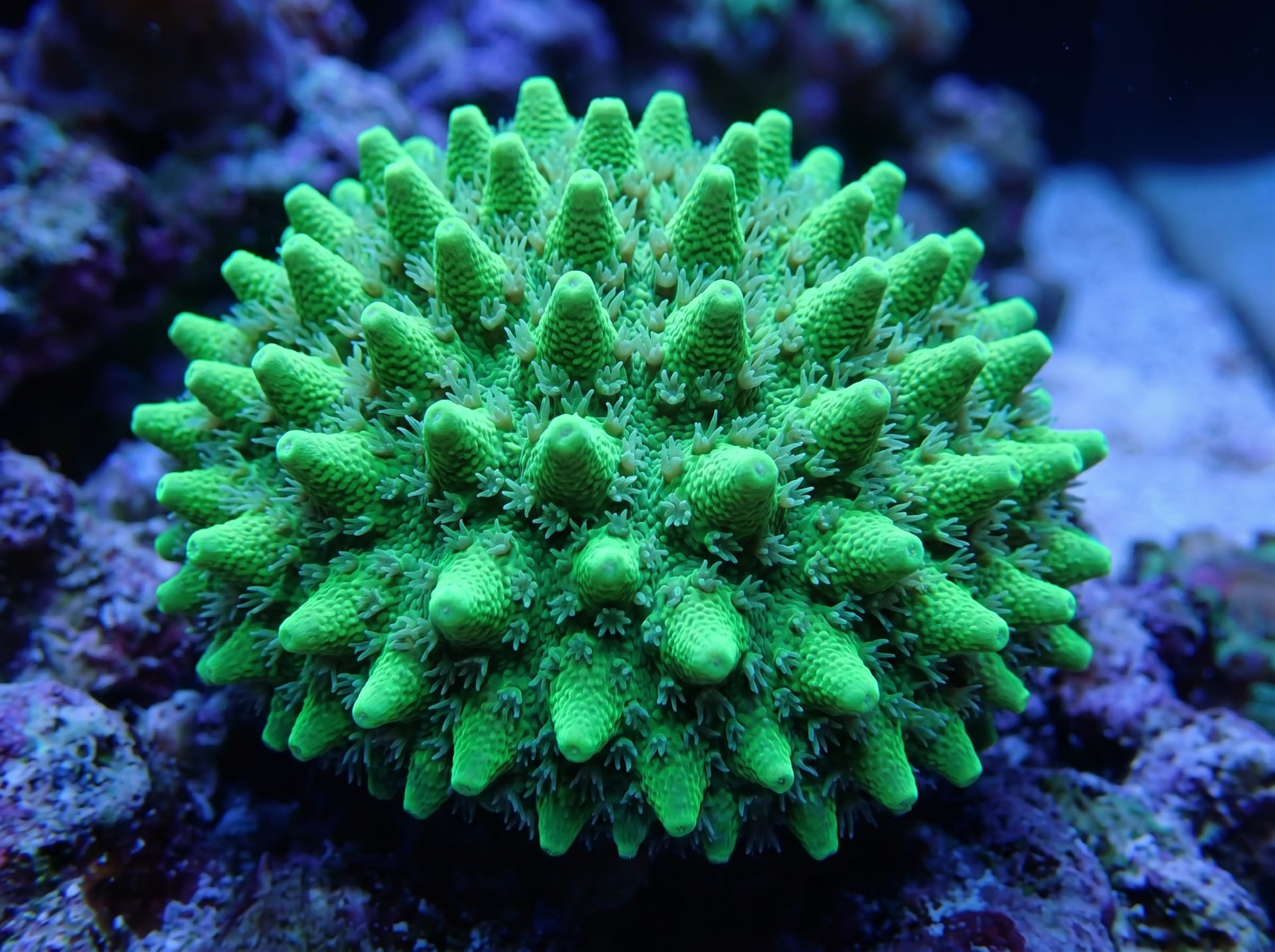
Acropora: Among all corals, these demand the highest light levels. Insufficient light causes browning and bleaching
Pocillopora (Common Corals): Their branching or columnar form stands out when placed near the peak of live rock
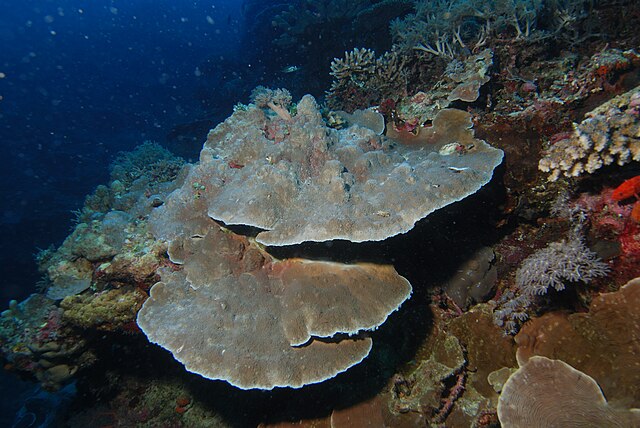
Montipora (Plate & Capricornis): Thin plating corals that receive light across their entire surface benefit from placement at the top or on slopes
Middle Zone (PAR 100–250)
✍️
BreederDirect Editorial
The BreederDirect editorial team specializes in care information for animals, covering veterinary care and breeding to deliver beginner-friendly guides.
Find Coral on BreederDirect
Buy directly from verified breeders
Browse Related Listings
Find Coral listings related to this article on BreederDirect. Buy directly from verified breeders.
The middle zone provides the light intensity favored by most LPS (large polyp stony corals). Their larger polyps and slow, swaying motion add dynamism to the tank.
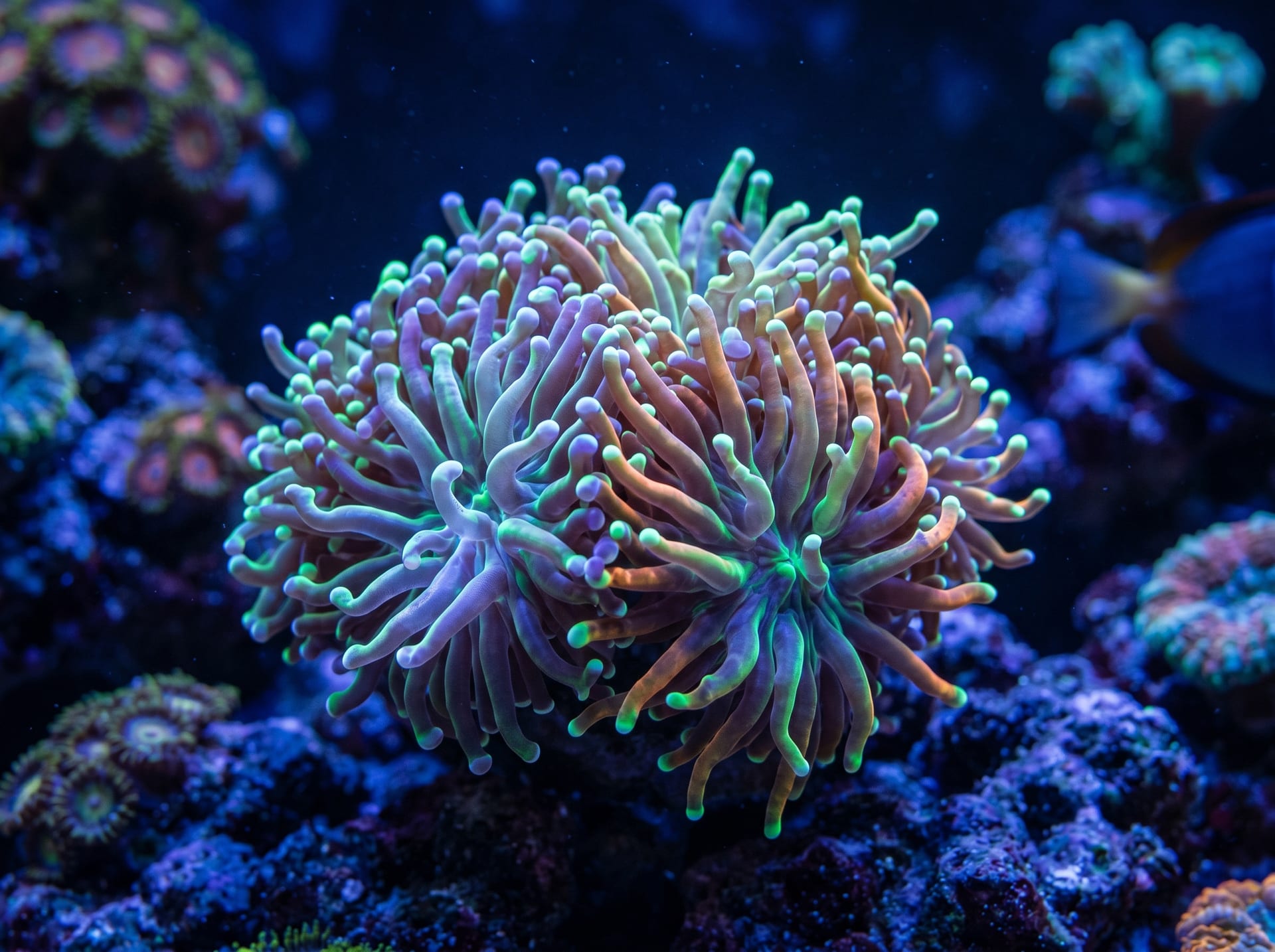
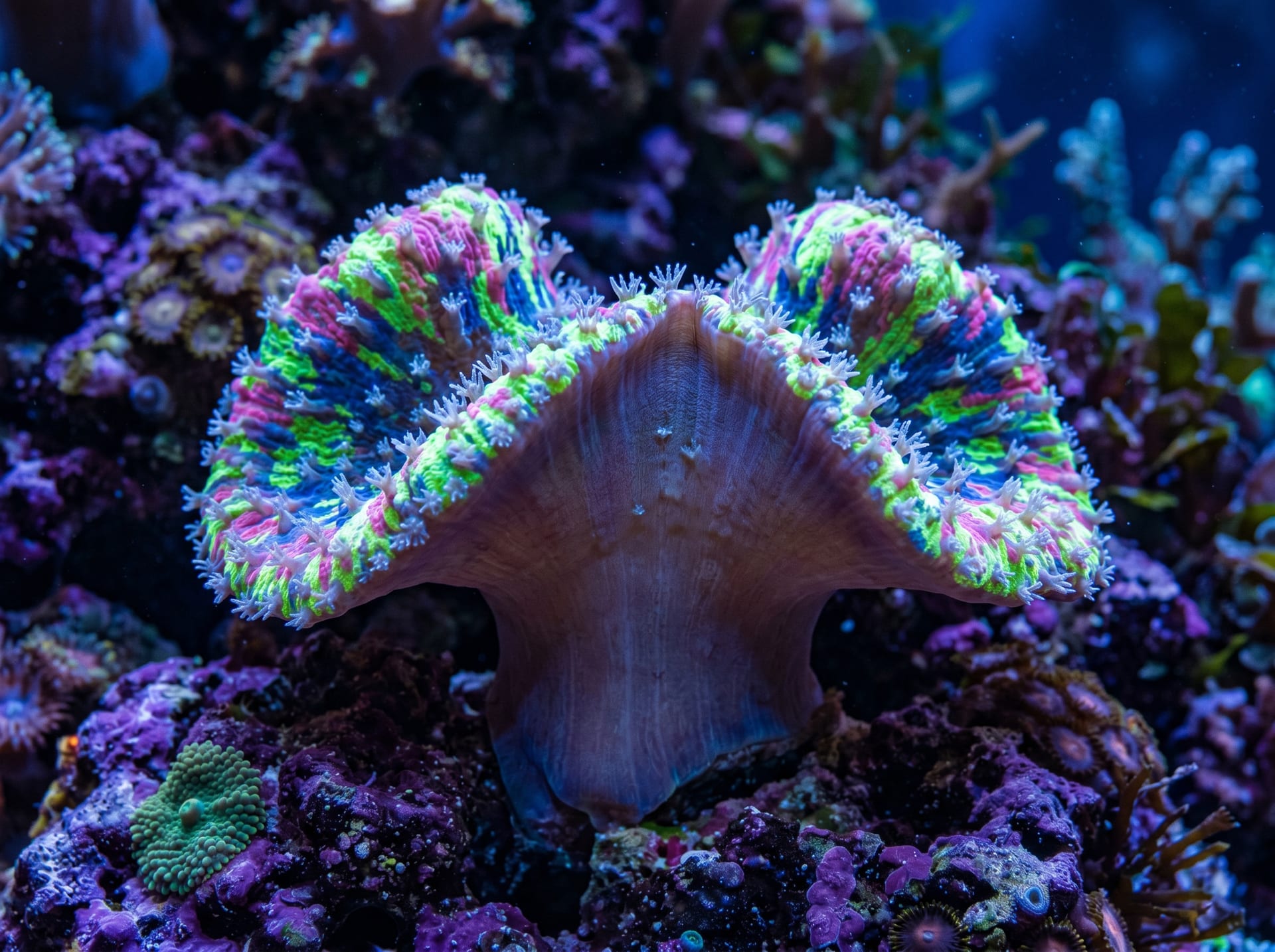
Euphyllia (Torch Coral): Brilliant, glowing polyps that are highly popular. These develop excellent color under moderate light
Caulastrea (Trumpet Coral): Forms colonies that spread, with pastel-colored polyps that are highly attractive
Anchor Coral (Euphyllia paraancora): Characterized by T-shaped polyps, positioned to flow naturally with middle-zone currents
Lower Zone & Substrate (PAR 30–100)
The low-light zone near the tank bottom is home to soft, gentle corals.
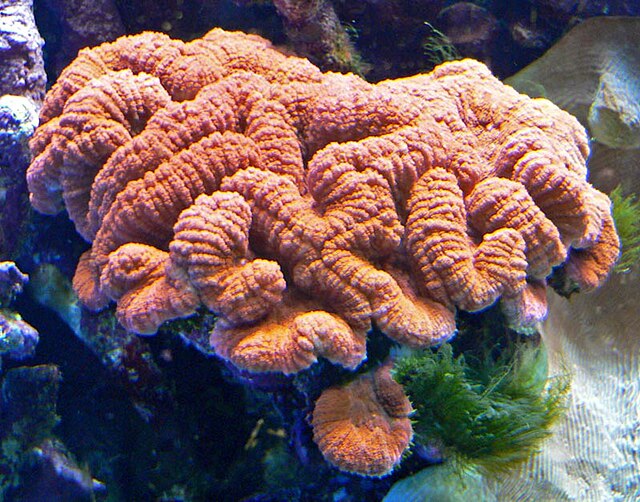
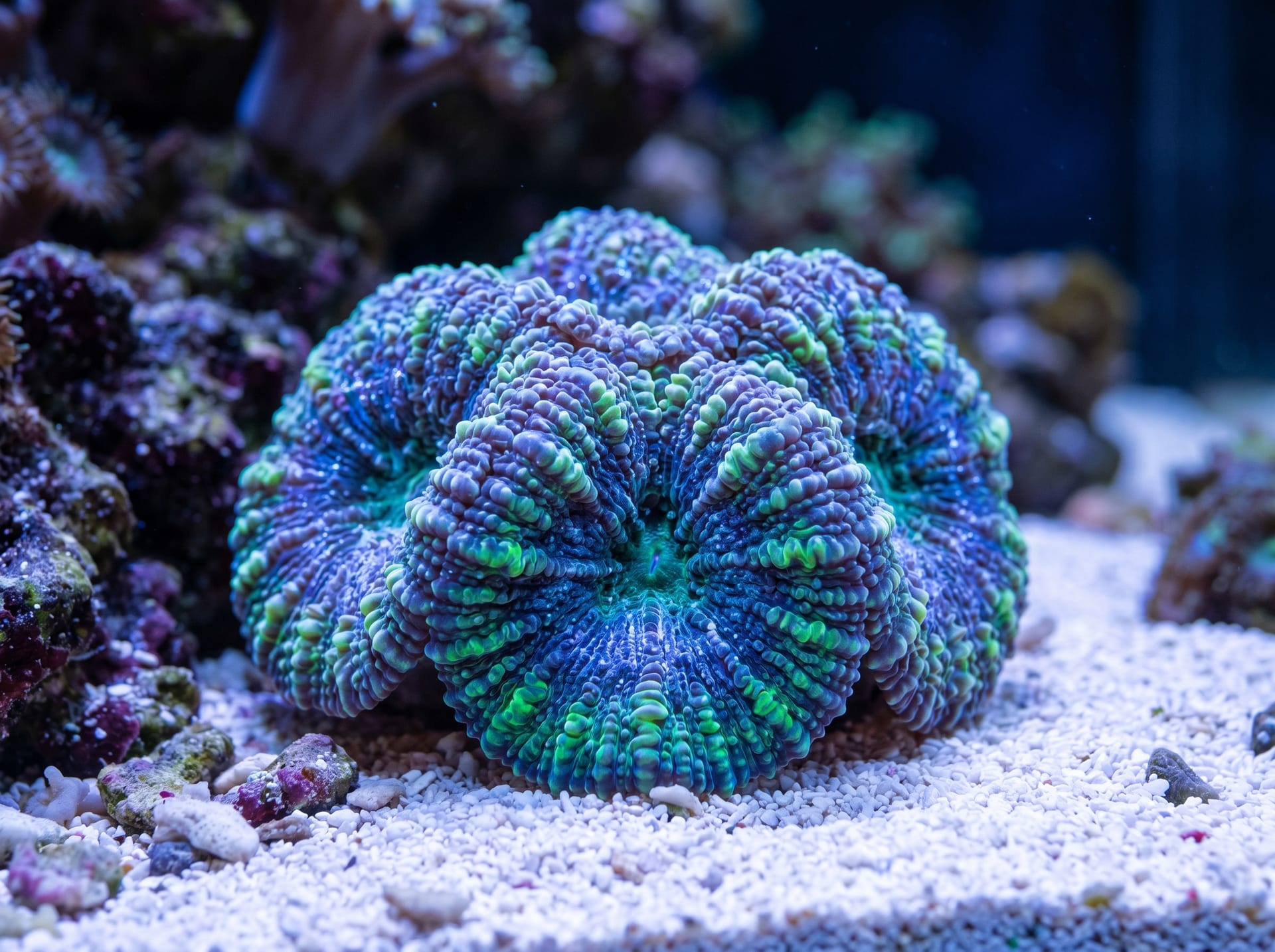
Brain Coral (Favites): Features a complex, brain-like surface structure best placed near the bottom away from direct light
Discosoma (Disc Coral): Flat-bodied corals that prefer weak light and gentle flow. Can be placed directly on sand
Zoanthids (Button Polyps): Highly adaptable with excellent reproduction even at the tank floor. Ideal for beginners
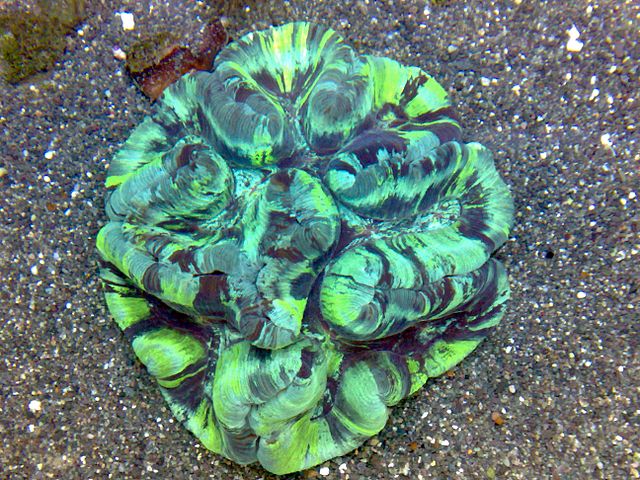
Trachyphyllia (Open Brain Coral): Typically placed directly on sand. Strong light and high flow are prohibited
---
Zoning Based on Water Flow Patterns
Water flow is the lifeline supporting coral respiration and feeding. Like light intensity, each species requires specific flow strength and direction.
Strong Turbulent Zone (20–30+ cm/s flow)
Acropora and Pocillopora, types of SPS, naturally inhabit turbulent shallows. Strong turbulent flow prevents debris accumulation on their surfaces and provides constant oxygen supply—critical for their health. Install multiple wave pumps or circulators to create irregular, multidirectional flow rather than unidirectional current.
Moderate Indirect Flow (10–20 cm/s)
LPS like Euphyllia and Caulastrea prefer gentle swaying flow. Direct, strong current damages polyps, so aim "indirect flow" bounced off walls or rocks. If polyps extend more than halfway, water flow is appropriate.
Gentle Flow Zone (5–10 cm/s)
Bottom-dwelling species like brain corals, disc corals, and zoanthids absorb nutrients in calm water. Excessive flow contracts polyps and creates long-term stress. Use tank corners and shaded areas to advantage.
---
Allelopathy and Safe Spacing
Though corals appear motionless, they engage in fierce territorial battles. Beyond physical contact, they release chemicals into the water that weaken neighboring corals—"allelopathy" is an often-overlooked placement risk.
Sweep Tentacle Attacks
Euphyllia (Torch Coral): At night, extends sweeper tentacles up to 15–20 cm to attack surrounding corals. Maintain 20+ cm spacing from neighbors
Lobophyllia/Scleractinia (Open Brain): Deploys digestive filaments (part of their digestive system) outside their bodies to dissolve adjacent corals. A 10+ cm gap is mandatory
Brain Corals: Though they appear gentle, they can damage neighboring SPS on contact
Chemical Attacks
Soft Corals (Toadstool, Kenya Tree, etc.): Release organic compounds like terpenes into the water, inhibiting SPS growth. For SPS-heavy tanks, regularly dose activated carbon and use high-performance protein skimmers to remove these compounds
Zoanthids (Button Polyps, Palythoa): Reproduce extremely aggressively, covering adjacent corals. Create natural "barriers" with small stones at substrate boundaries for effective separation
Placing complementary colors (opposite on the color wheel) side by side makes each stand out. For example, orange Montipora beside green Acropora creates striking contrast. Placing bright fluorescent corals in the foreground and muted-tone corals in the back creates depth.
Three-Dimensionality and Height Variation
Stacking live rock in stepped formations creates varied height, making each coral individually visible. Imagine branching SPS at the peak, plate Montipora on slopes, LPS at mid-height, and soft corals nestled in valleys.
Leaving Negative Space
Beginners often pack the tank densely from the start. Since corals grow, even trouble-free initial placement becomes crowded within months. Target 50–70% density when initially stocking, keeping negative space in mind for sustainable layouts.
---
br-choku's Safety & Reliability
Successfully placing corals begins with a prerequisite: obtaining healthy specimens. Perfect placement cannot overcome corals already weak or carrying pathogens at purchase, which will harm the entire tank.
With br-choku, you buy directly from breeders actually growing corals, eliminating quality degradation from middleman distribution. Breeders know their tank environment (lighting, flow, water parameters) and can specifically describe "the conditions this coral grew in"—information unavailable at retail shops.
Also powerful: you can casually ask breeders questions before purchase like "What's your tank size?" and "What corals are currently with it?" Many breeders also advise on placement, making it safe for newcomers to SPS and LPS.
Your first step toward an ideal coral tank is meeting a trustworthy breeder. Placement isn't final once set—plan reviews every few months as corals grow, creating sustainable long-term success.