Complete Guide to Coral Tank Cleanup Crews | How to Choose and Introduce Cleaning Organisms | ブリちょく
Coral| ✍️ BreederDirect Editorial
Complete Guide to Coral Tank Cleanup Crews | How to Choose and Introduce Cleaning Organisms
A comprehensive guide to selecting cleanup crews (cleaning organisms) essential for managing algae and detritus in coral tanks. This article covers characteristics of various species including Strombus snails, top shell snails, coral hermit crabs, and emerald green crabs, along with recommended stocking numbers and reef-safe classification standards.
Key Takeaways
A comprehensive guide to selecting cleanup crews (cleaning organisms) essential for managing algae and detritus in coral tanks. This article covers characteristics of various species including Strombus snails, top shell snails, coral hermit crabs, and emerald green crabs, along with recommended stocking numbers and reef-safe classification standards.
What is a Cleanup Crew?
✍️
BreederDirect Editorial
The BreederDirect editorial team specializes in care information for animals, covering veterinary care and breeding to deliver beginner-friendly guides.
Find Coral on BreederDirect
Buy directly from verified breeders
Browse Related Listings
Find Coral listings related to this article on BreederDirect. Buy directly from verified breeders.
Cleanup Crew (CUC) is a collective term for invertebrates that consume algae, detritus, and leftover food in coral tanks to maintain water quality.
Introducing an appropriate cleanup crew provides the following benefits:
Algae suppression: Consumes algae on glass, live rock, and substrate
Detritus processing: Decomposes fish waste and uneaten food
Substrate aeration: Sand-burrowing species prevent anaerobic layer formation
Water quality stabilization: Reduces organic matter accumulation and suppresses nutrient spikes
However, some species are "not reef-safe," requiring careful selection.
---
Cleanup Crew Types and Characteristics
1. Snails
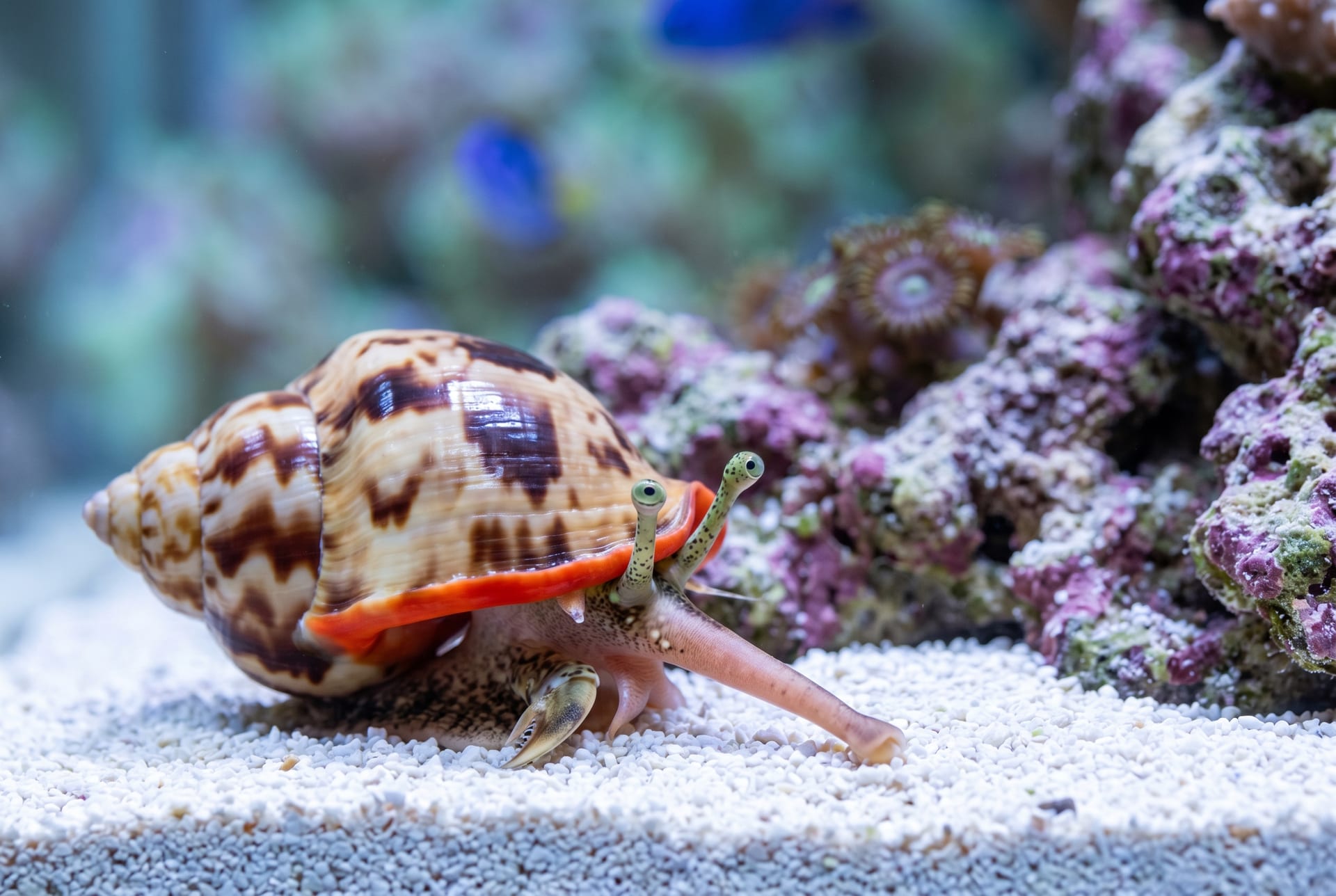
Strombus Snails (Strombus spp.)
Characteristics:
- Consumes algae and detritus on substrate surface
- Cleans surface without digging through sand
- Fast-moving and actively roams the tank
- Reef-Safe: ◎
Recommended Stocking:
2–5 snails per 100L
Notes:
- May become stuck upside down and require manual righting
- Sensitive to water quality; dies from sudden parameter swings
---
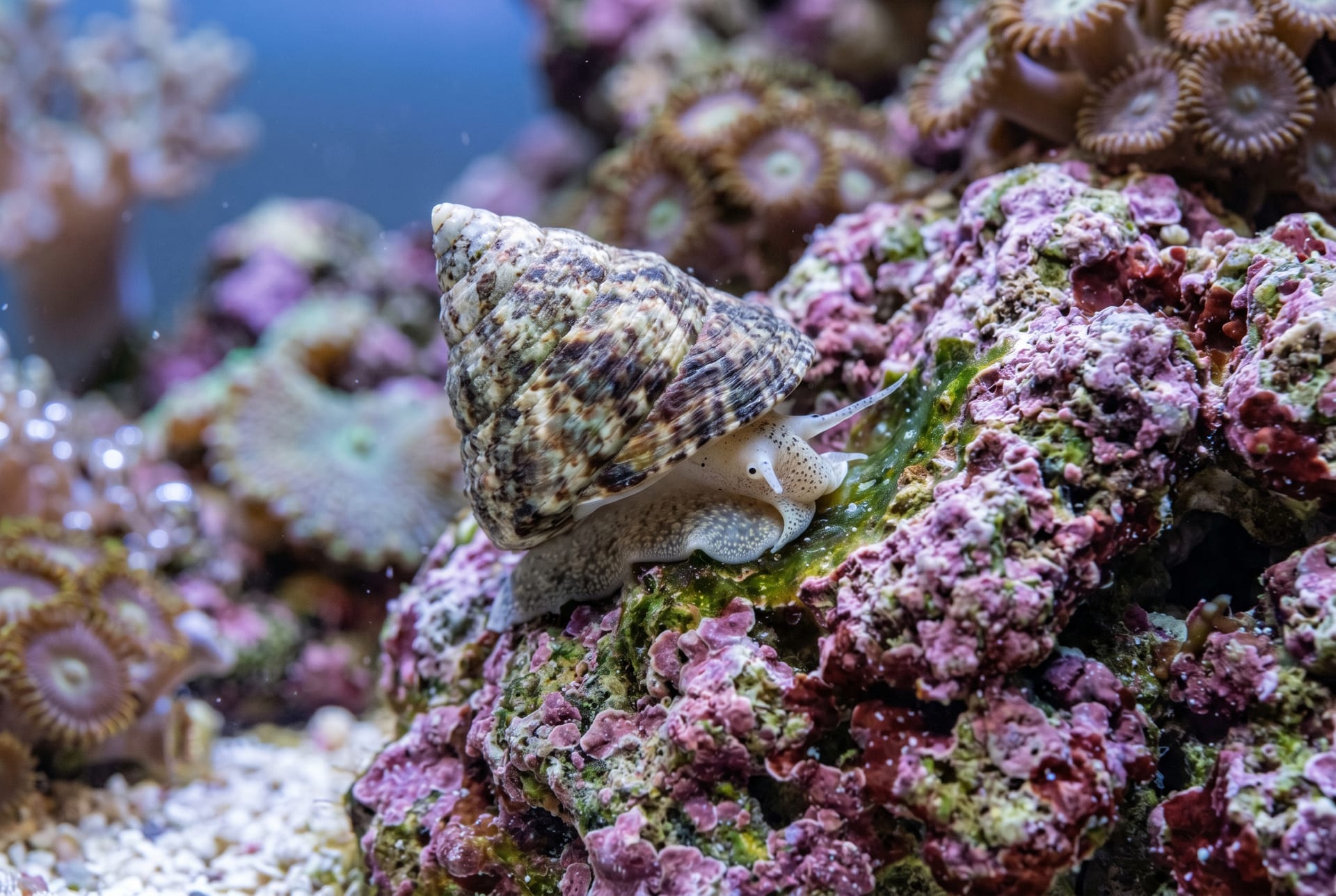
Top Shell Snails / Trochus Snails (Trochus spp.)
Characteristics:
- Consumes algae on glass and live rock
- Particularly effective against diatoms
- Self-righting ability
- Reef-Safe: ◎
Recommended Stocking:
3–10 snails per 100L
Notes:
- Sensitive to high temperatures (28°C and above)
- Calcium deficiency weakens shell (maintain proper KH and Ca)
---
Turbo Snails (Turbo spp.)
Characteristics:
- Large snail species; consumes large quantities of green and red algae
- Excellent for glass cleaning
- Powerful enough to flip live rock
- Reef-Safe: △ (may step on coral polyps)
Recommended Stocking:
1–2 snails per 150L
Notes:
- May disrupt tank layout
- Can damage coral polyps by stepping on them
---
Nassarius Snails (Nassarius spp.)
Characteristics:
- Burrows in substrate; consumes leftover food and detritus
- Highly effective for substrate aeration
- Emerges en masse when fed (nicknamed "vacuum snails")
- Reef-Safe: ◎
Recommended Stocking:
5–15 snails per 100L
Notes:
- Starves without adequate food; requires regular feeding
- Substrate depth of 3cm or greater recommended
Characteristics:
- Consumes algae on live rock and substrate
- Available in various colors: red legs, blue legs, scarlet, etc.
- Carries shells and relocates as it grows
- Reef-Safe: 〇~△ (varies by species)
Recommended Stocking:
5–15 crabs per 100L
Notes:
- Some individuals are aggressive; may attack other crabs or snails
- Without adequate shells, they steal shells from other crabs (provide spare shells)
- Scarlet Reef Hermit Crabs are relatively docile and reef-safe
---
3. Crabs
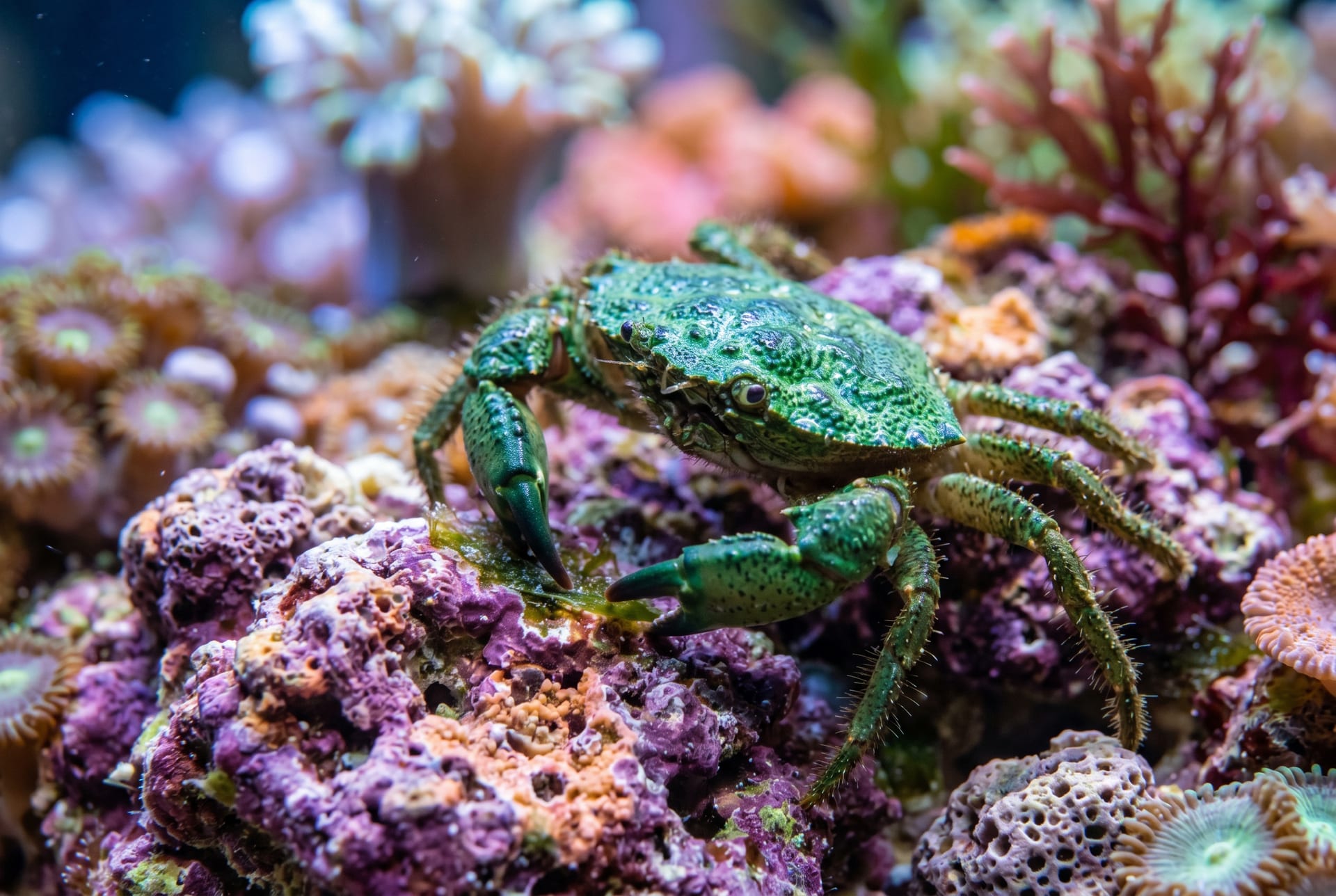
Emerald Green Crab (Mithraculus sculptus)
Characteristics:
- Only organism that consumes bubble algae
- Also consumes algae on live rock surfaces
- Docile temperament
- Reef-Safe: 〇
Recommended Stocking:
1–2 crabs per 150L
Notes:
- May consume coral polyps when food is scarce
- Supplemental feeding required after bubble algae is eradicated
---
Coral Crabs (Various Small Crabs)
Characteristics:
- Inhabit live rock crevices; consume detritus
- Often arrive as hitchhikers with live rock purchases
- Reef-Safe: Species-dependent (requires caution)
Notes:
- Some species (e.g., arrow crabs) are corallivores
- Unidentified crabs should be removed
---
4. Sea Cucumbers
Black Sea Cucumbers (Holothuria spp.)
Characteristics:
- Consumes large quantities of detritus from substrate
- Ingests sand internally, absorbs nutrients, expels clean sand
- Reef-Safe: ◎
Recommended Stocking:
1 per 200L
Notes:
- Release toxins (holotoxin) when dying, risking tank collapse
- May be sucked into powerheads and clog pumps
- Prone to starvation without adequate detritus
---
5. Starfish
Small Reef Starfish (Various)
Characteristics:
- Consumes microorganisms and detritus attached to live rock
- Nocturnal; hides during the day
- Reef-Safe: ◎
Recommended Stocking:
1–2 per 100L
Notes:
- Prone to starvation; only suitable for mature tanks
- Coral-eating starfish (some Asterina spp.) feed on coral; use caution
---
6. Shrimp
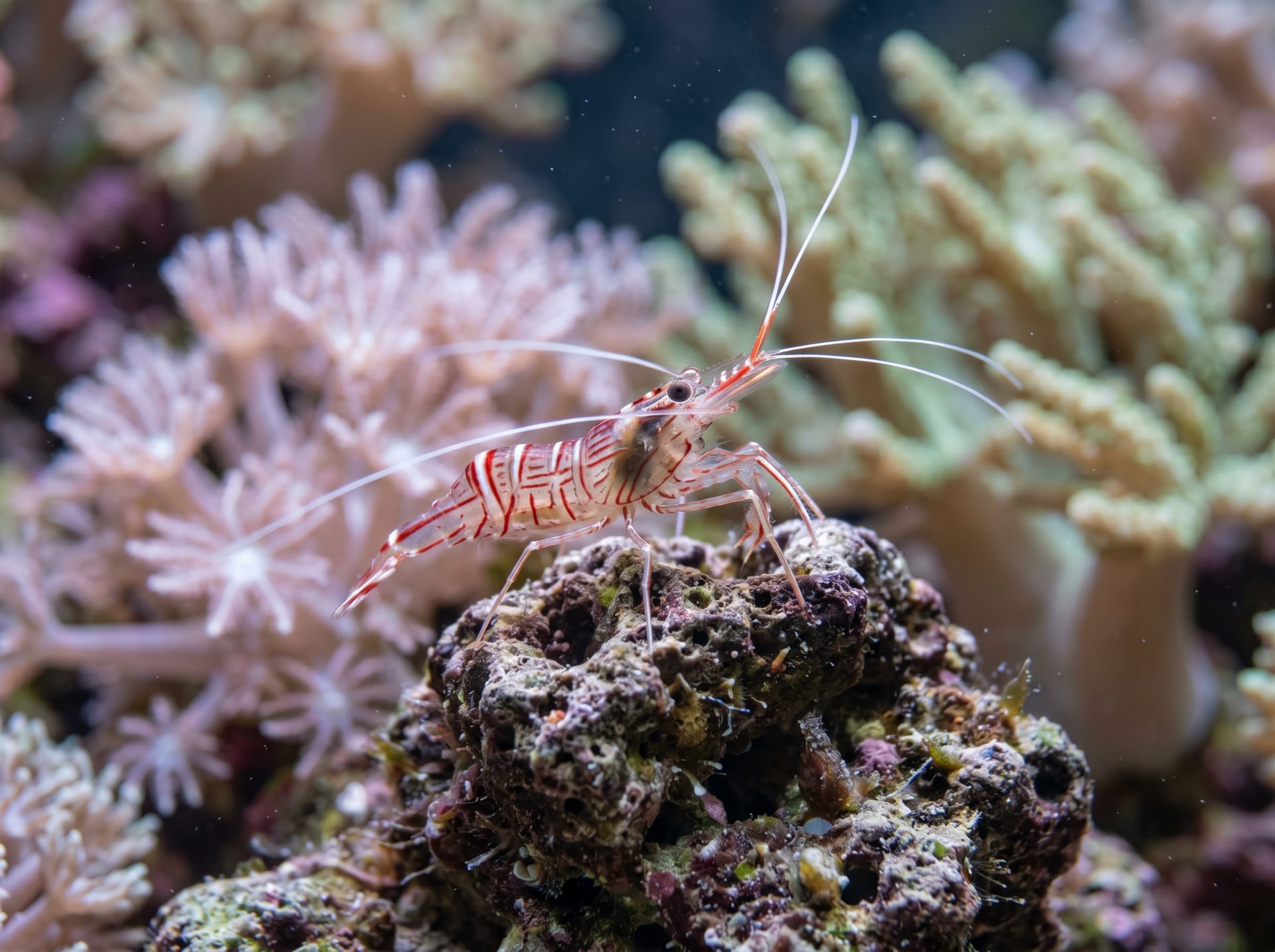
Peppermint Shrimp (Lysmata wurdemanni)
Characteristics:
- Highly effective at eradicating Aiptasia (glass anemones)
- Nocturnal; hides among rocks during the day
- Reef-Safe: ◎
Recommended Stocking:
2–5 per 100L (10+ during severe Aiptasia outbreaks)
Notes:
- Requires supplemental feeding after Aiptasia is fully eradicated to prevent starvation
- Feeding effectiveness varies by individual
---
Cleanup Crew Introduction Timing
1. Two to Four Weeks After Tank Establishment
Timing:
When nitrogen cycle is complete and nitrate and phosphate are first detected
Species to introduce:
- Top shell snails (diatom control)
- Strombus snails (substrate detritus processing)
- Coral hermit crabs (small number)
Reason:
Initial tank setup experiences heavy diatom (brown algae) blooms; introducing algae-eating snails early is highly effective.
---
2. One to Two Months After Coral Introduction
Timing:
When corals are established and detritus increases from feeding and additives
Species to introduce:
- Nassarius snails (substrate aeration)
- Emerald green crabs (bubble algae prevention)
- Peppermint shrimp (Aiptasia prevention)
Reason:
As coral husbandry stabilizes, leftover food and detritus increase; introduce species with high substrate aeration and organic processing capabilities.
---
3. Troubleshooting Additions
During severe bubble algae outbreak:
Add 2–5 emerald green crabs
During Aiptasia infestation:
Add 5–10 peppermint shrimp
When substrate becomes fouled:
Add Nassarius snails or sea cucumbers
---
Stocking Guidelines (Per 100L)
Species
Recommended Number
Role
Top shell snails
3–10
Glass and live rock algae cleanup
Strombus snails
2–5
Substrate surface detritus
Nassarius snails
5–15
Substrate aeration and detritus
Coral hermit crabs
5–15
Live rock algae cleanup
Emerald green crabs
1–2
Bubble algae eradication
Peppermint shrimp
2–5
Aiptasia eradication
Important:
Do not introduce large quantities at once; they will starve. Add gradually.
---
Reef-Safe Classification Standards
Species
Reef-Safe Rating
Notes
Top shell snails
◎
Does not damage coral
Strombus snails
◎
Does not damage coral
Nassarius snails
◎
Does not damage coral
Coral hermit crabs
〇~△
Species-dependent; scarlet varieties are safe
Emerald green crabs
〇
May consume polyps when food-deprived
Peppermint shrimp
◎
Harmless to coral
Turbo snails
△
Steps on coral polyps
Sea cucumbers
◎
Tank collapse risk if they die
---
Cleanup Crew Management Tips
1. Maintain a Supply of Spare Shells
Hermit crabs exchange shells as they grow. Without appropriately-sized shells, they will attack other crabs.
Recommended shells:
Turban shells, whelk shells, or similar—approximately 1cm larger than crab body length; keep 5–10 on hand
2. Supplemental Feeding
As algae diminishes, snails and crabs will starve. Recommended supplements:
Dried seaweed or nori sheets wedged between live rocks
Spirulina tablets placed on substrate
Small amounts of flake food
3. Early Detection of Dead Organisms
Decaying sea cucumbers, crabs, and snails rapidly degrade water quality.
Detection methods:
- Snails: Operculum open and motionless; foul odor
- Hermit crabs: Found dead outside shell
- Sea cucumbers: Disintegrating with white discharge (remove immediately)
---
Summary
Cleanup crews are not "magical organisms that eliminate algae once introduced"; they require proper management as part of the tank ecosystem.
Keys to Success:
- Maintain appropriate numbers for tank size
- Provide supplemental feeding as algae decreases
- Carefully select reef-safe species
- Regularly monitor populations and remove dead organisms
When properly introduced and managed, cleanup crews function as the "unseen workers" that stabilize coral tank water quality long-term.