Complete Guide to Fungal Culture Media Management for Rhinoceros Beetles and Stag Beetles | Changing Timing and Selection
A thorough explanation of how to select fungal culture media, timing for changes, temperature management, and how to identify deterioration—essential for growing larger stag beetle larvae. We introduce the types of fungal media suitable for each species—Japanese stag beetles, flat-horned stag beetles, and small stag beetles—and their management methods.
Key Takeaways
A thorough explanation of how to select fungal culture media, timing for changes, temperature management, and how to identify deterioration—essential for growing larger stag beetle larvae. We introduce the types of fungal media suitable for each species—Japanese stag beetles, flat-horned stag beetles, and small stag beetles—and their management methods.
Related Species


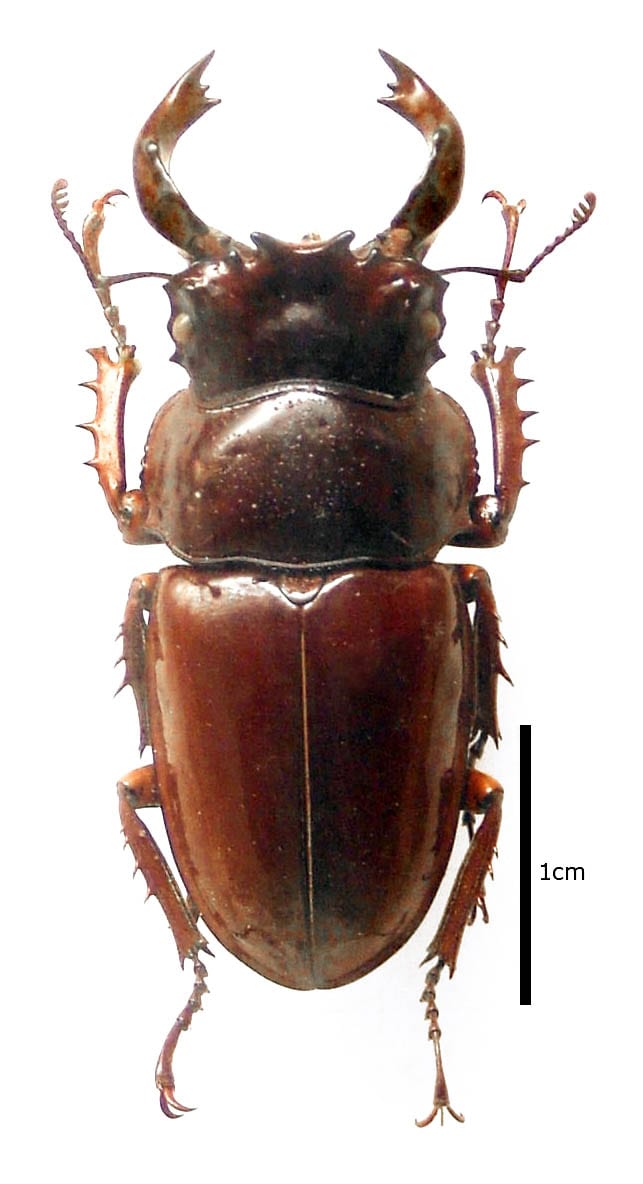
What Are Fungal Culture Media?
Fungal culture media (also called mushroom bottles) are rearing containers for larvae in which sawdust is seeded with fungal strands of mushrooms such as oyster mushrooms, bracket fungi, and king oyster mushrooms. In nature, stag beetle larvae feed on decayed wood that has been broken down by fungi. Fungal culture media artificially recreate this natural, nutrient-rich environment. As the fungal strands decompose wood cellulose, the substrate becomes rich in amino acids and proteins, allowing larvae to absorb nutrition efficiently.
The greatest advantage of fungal culture media rearing is "size enhancement." Compared to fermented substrate rearing, larvae tend to grow larger in the same time period. To aim for female Japanese stag beetles over 60mm and males over 80mm, fungal culture media rearing is effectively the standard. In some cases, it also shortens the larval period, which is advantageous for breeders looking to increase turnover efficiency. However, fungal culture media are not suitable for rhinoceros beetle larvae, which prefer fermented substrate. Remember that fungal culture media are rearing methods specifically for stag beetle larvae.
Types of Fungal Media and Selecting Appropriate Species
Select the type of fungal media according to the larval species, cost, and management difficulty. Choosing incorrectly can lead to poor growth or death, so it is important to understand the suitability of each type.
Oyster mushroom strains (typical white fungal media): Suitable for most domestic and imported stag beetles, including Japanese stag beetles, flat-horned stag beetles, and small stag beetles. Easy to obtain and reasonably priced, making them most recommended for beginners. They also have the advantage of being easy to handle, as the fungal media deteriorates relatively slowly.
Bracket fungus strains: Essential for specific species such as rainbow-colored stag beetles, Tarandus shiny stag beetles, and Regius shiny stag beetles. Rich in enzymes that break down tannins, they promote growth of species that are difficult to rear on oyster mushroom strains. Somewhat expensive, but this fungal media is irreplaceable for target species.
King oyster mushroom strains: Known for high size-enhancement effects and recommended for advanced users. However, they deteriorate quickly, making them difficult to manage in environments with poor temperature control. The key is to select established brands from reputable shops.
Brand is also important when selecting fungal culture media. Quality varies depending on the sawdust source of the substrate, the packing density, and the thoroughness of sterilization. Referencing recommendations from trusted shops and fellow breeders reduces the risk of failure.
Basics of Volume and Exchange Schedule
Gradually increasing the size of fungal culture media bottles in line with the larval instar is the basic strategy for size enhancement. For first-instar (1st stage) larvae, use 250–500ml bottles; for second instar, 500–800ml; and for third instar, use large bottles of 800–1,400ml or more. Placing first-instar larvae in large bottles from the start will cause deterioration before they finish eating, so be sure to increase sizes gradually.
A typical schedule is as follows:
- 1st bottle (500ml): Place at first instar to shortly after second instar molt. Replace at approximately 2–3 months.
- 2nd bottle (800–1,000ml): Place at early third instar. Replace at approximately 2–3 months.
- 3rd bottle (1,400ml or larger): Place at mid to late third instar. Use until pupation.
For Japanese stag beetles, the period from hatching to pupation takes approximately 10–16 months. Keep in mind that you will go through 2–3 bottles during this period and plan your rearing costs accordingly. When managing multiple breeding lines as a breeder, inventory management of bottles and staggering replacement times are important.
Identifying Signs of Deterioration and Optimal Replacement Timing
Replace fungal culture media not based on time alone, but by observing the condition of the bottle and larva. Missing the appropriate timing allows fungal media deterioration to damage the larva.
Signs of Deterioration
- The fungal media color changes from white to yellow to brown, spreading beyond the feeding marks.
- Gas accumulates in the bottle, causing it to swell, or there is a strong odor.
- The larva sticks to the outer wall of the bottle and moves around (searching for a place to settle).
- The white part of the fungal media is almost gone, with the entire area filled with feeding marks.
Cases Where Replacement Is Not Necessary
Even if part of the fungal media has yellowed, there is no need to rush if the larva is feeding vigorously and feeding marks are spreading. Especially in winter, deterioration is slow, and in many cases you can use the bottle longer than planned.
Importance of Temperature Management
In fungal culture media rearing, temperature management is the most critical factor for success or failure. For most domestic stag beetles, 20–24°C is the ideal temperature, and maintaining stability within this range is optimal. Above 25°C, fungal media deterioration accelerates, and above 28°C, the risk of larval death increases sharply. During summer, cooling boxes, wine coolers, or air-conditioning management is essential. Conversely, if temperatures drop below 15°C in winter, larval activity slows and growth slows, but this is not a problem if there are no sudden changes.
Exchange Procedure and Precautions
Following the proper procedure minimizes stress on the larvae.
Pre-work preparation: Do not use new fungal culture bottles immediately after purchase; instead, acclimate them for 24–48 hours to the same temperature as the rearing environment. Sudden temperature changes stress the larva and cause it to stop at the top of the bottle instead of burrowing.
Removing the larva: Avoid using bare hands; use rubber gloves or a plastic spoon instead. Human body heat, skin oils, and normal bacteria can damage the larva. Carefully extract the larva along the feeding marks without injuring it.
Placing into new bottle: Extract a handful of the feeding marks (the compacted fecal section) created by the larva itself and place it in a depression made in the center of the new bottle. Adding a small amount of feeding marks helps maintain gut bacteria balance and accelerate settlement. After placing, cap the bottle and keep it in a dark place for 1–2 days, waiting for the larva to burrow on its own. Do not force it down.
Post-exchange observation: If feeding marks begin to spread within a few days, settlement is successful. If there is still no activity after a week, gently tilt the bottle to check inside.
Cost Management for Breeders
Fungal culture media management costs more than fermented substrate rearing. At approximately 500–1,000 yen per 800ml bottle, with 2–3 bottles used per larva, managing multiple larvae in one line requires significant expense.
Ways to reduce costs include purchasing multiple bottles together to lower unit price, utilizing discounted items in the latter part of the season, and identifying cost-effective brands with stable quality. Additionally, used bottles (plastic) can be washed, sterilized, and repurposed for fermented substrate rearing or egg-laying setups.
When selling as a breeder, larger individuals tend to receive higher valuations and prices. Mastering fungal culture media management not only increases the enjoyment of rearing but also directly improves product quality for sale. Taking a planned approach while understanding the effort and cost involved is the first step toward becoming a breeder who can sustain this hobby long-term.