African Grey Parrot Complete Care & Breeding Guide | Living with Highly Intelligent Parrots
The African Grey Parrot is one of the most intelligent bird species, living over 50 years. This expert guide thoroughly explains the differences between Congo and Timneh subspecies, diet management, enrichment, breeding protocols, and CITES regulations.

Key Takeaways
The African Grey Parrot is one of the most intelligent bird species, living over 50 years. This expert guide thoroughly explains the differences between Congo and Timneh subspecies, diet management, enrichment, breeding protocols, and CITES regulations.
Related Species
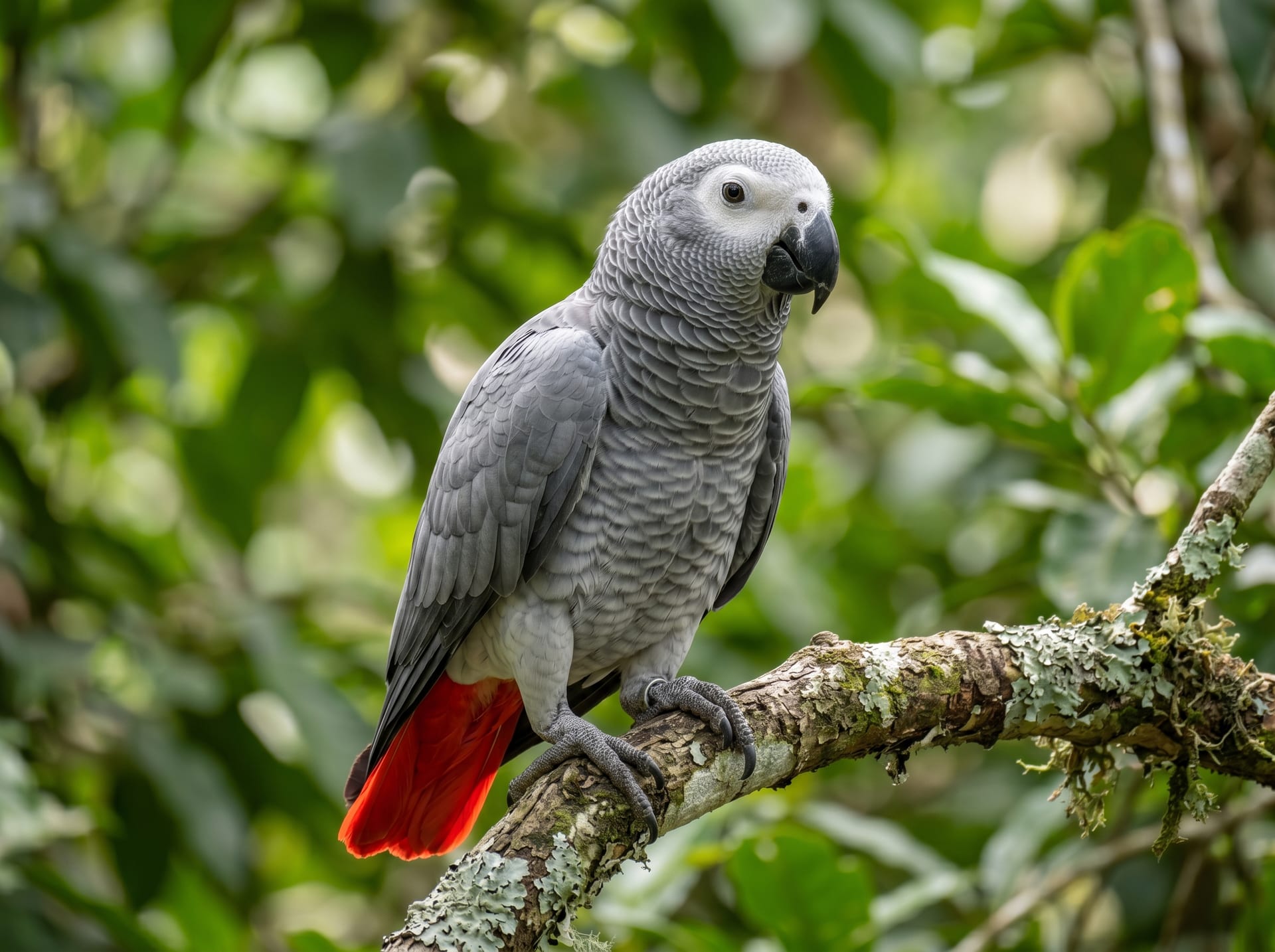
What is the African Grey Parrot: Intelligence and Longevity in a Large Parrot
The African Grey Parrot (scientific name: Psittacus erithacus) is a large parrot native to the tropical rainforests of West and Central Africa, and is known as one of the most intelligent bird species in the world. The Alex Study—research conducted by Dr. Irene Pepperberg, an American animal psychologist—demonstrated that African Greys "understand numerical concepts, colors, and shapes, and can produce contextually appropriate vocalizations of 150+ words," capturing the attention of avian researchers worldwide.
In captivity, their lifespan is 40–60 years, with some individuals on record living over 70 years. Due to their longevity and strong social bonds, acquiring an African Grey is often described as "choosing a lifelong partner."
Two Subspecies: Congo vs. Timneh African Grey Parrots
| Feature | Congo African Grey (CAG) | Timneh African Grey (TAG) |
|---|---|---|
| Body length | Approx. 33 cm | Approx. 29 cm |
| Weight | 400–650 g | 275–375 g |
| Tail feather color | Bright red | Dark red (silvery-gray at tips) |
| Distribution | Congo Basin, Ghana, Nigeria | Sierra Leone, Guinea coast |
| Temperament | Sensitive, cautious | Somewhat bolder, higher adaptability |
| Vocalization ability | Highly skilled | Skilled (slightly lower volume) |
Beginners are often advised that Timneh African Greys have somewhat higher stress tolerance, but both subspecies share equally demanding social needs.
Setting Up the Ideal Living Environment
Cage Size and Materials
African Grey Parrots have a wingspan of approximately 60 cm. A cage must be at least 90 cm wide × 60 cm deep × 120 cm tall, though 120 cm × 90 cm × 150 cm or larger is recommended. Allow several hours daily outside the cage for free flight.
Stainless steel (without powder coating) is ideal. Avoid galvanized metal due to the risk of zinc toxicity.
Perches and Claw Care
African Greys' foot health depends directly on perch diameter and material. Install multiple natural wood perches (cork oak, Japanese marble beech, willow) with diameters of 2.5–4 cm and varying textures to prevent bumblefoot. A single concrete perch naturally wears down claws, reducing the need for regular trimming.
Temperature and Humidity
| Item | Recommended |
|---|---|
| Temperature | 20–28°C (ideal: 23–26°C) |
| Humidity | 50–70% (sensitive to dryness) |
| Nighttime temperature | Minimum 18°C |
African Greys originate from tropical rainforests and are sensitive to Japan's dry winters. Maintain humidity above 50% using a humidifier or by providing a water bath container inside the cage.
Diet Management: Nutrition for Longevity
Basic Food Composition
| Food Type | Percentage | Examples |
|---|---|---|
| Pellets | 50–60% | Harrison's Bird Foods, Zupreem Natural, or other low-sugar formulations |
| Fresh vegetables & fruits | 30–40% | Leafy greens, bell peppers, root vegetables, berries (limit high-sugar fruits) |
| Seeds & nuts | 10% or less | Small amounts only; avoid excessive sunflower seeds due to high fat content |
Foods to avoid: Chocolate, avocado, caffeine, onions, garlic, alcohol, raw beans—all are toxic to African Greys.
Calcium and Micronutrients
African Greys are prone to hypocalcemia due to vitamin D3 and calcium deficiency, manifesting as seizures, ataxia, or postural abnormalities. Natural light exposure (UVB) or pellet-based diets prevent this, but seed-eating birds benefit from cuttlebone or calcium supplements.
Making Chop (Homemade Food Mix)
- Finely chop leafy greens (kale, bok choy, Chinese cabbage)
- Add colorful bell peppers, carrots, beets
- Include cooked legumes (no salt) and sprouted beans for protein
- Divide into daily portions and freeze for convenient use
Enrichment and Mental Stimulation: Utilizing Their Intelligence
Most behavioral problems in African Greys—feather plucking, self-injury, excessive vocalization—stem from lack of stimulation, isolation, or stress. Enrichment matching their intelligence is essential.
Daily Recommended Program
- Foraging: Hide food in containers and toys to encourage natural search behavior. This mimics wild feeding time (4–6 hours daily).
- Target training: Use a clicker to train the bird to touch a target stick. Practice 5–10 minutes per session, twice daily, using positive reinforcement to build trust.
- Toy rotation: Change toys every 1–2 weeks to prevent boredom. Provide variety in materials: paper, wood, leather, cotton rope.
- Social interaction: Conversation, reading aloud, English-language TV content. Aim for 2–4 hours daily of active engagement.
Early Detection and Management of Feather Plucking
African Greys have a high incidence of feather plucking. Early signs include patchy feather loss, exposed skin, and chewing at feather bases. Determine the underlying cause:
- Medical causes: PBFD, fungal infection, allergies, dermatitis (→consult an avian veterinarian)
- Behavioral causes: Insufficient stimulation, sexual frustration, new environment stress (→enhance enrichment, manage reproduction)
- Social causes: Overdependent relationship with owner (→re-establish appropriate boundaries)
Breeding Protocol
Sex Determination
African Greys cannot be reliably sexed by appearance. DNA sex determination (PCR testing of blood or feather samples) is mandatory. Testing is available through avian DNA laboratories in Japan (cost: ¥3,000–¥8,000 per bird).
Pairing and Compatibility
African Greys are monogamous and incompatible pairs will not breed. Observe potential mates in adjacent cages for a minimum of 2–3 months, looking for preening behavior, vocal responses, and food-sharing before introducing them.
Nest Box Setup
| Item | Specification |
|---|---|
| Material | Natural wood (cedar, cypress, cork) |
| Interior size | 30×30 cm minimum, 50–60 cm deep |
| Entrance hole | 9–10 cm diameter |
| Nesting material | Fine wood shavings layered 5 cm at bottom |
Position the nest box high in the cage to ensure privacy. Some breeders provide two boxes to give the pair options.
Egg-Laying and Incubation
African Greys lay 2–4 eggs per clutch, with an incubation period of approximately 28–30 days. Both parents share incubation duties. Minimize interference during incubation; limit observations to once or twice daily.
Chick Rearing and Hand-Feeding
African Grey chicks fledge at approximately 12–13 weeks. Parent-rearing is ideal, but if parents abandon the nest, switch to hand-feeding (see "Complete Guide to Hand-Feeding Avian Chicks" for details). For hand-tame birds, begin hand contact at 2–3 weeks of age and gradually acclimate them to human handling. Full hand-tameness requires 3–4 months of consistent interaction.
Breeding Frequency and Health Management
One to two clutches per year is appropriate. Excessive breeding depletes the female's health and increases risks of calcium deficiency and egg-binding. Allow at least 3–4 months of rest between breeding seasons.
CITES and the Washington Convention: Legal Framework for African Greys
African Greys are listed on CITES Appendix I (as of the 2017 amendment). Appendix I designates the highest protection level, with international commercial trade essentially prohibited.
Important considerations for handling in Japan:
- Domestically bred (CB: captive-bred) individuals may be traded within Japan, but import and export are strictly controlled.
- Purchase requires verification of breeding documentation and CITES registration certificates.
- When purchasing from a breeder, always confirm the bird is "domestic CB" and that "all required documentation is complete."
The breeder marketplace "BreederDirect" requires breeders to provide CITES-compliant documentation. Purchasing an individual without proper documentation carries legal risk; conduct thorough document verification before any transaction.
Before Welcoming an African Grey: Important Considerations
African Greys are challenging to keep and require significant commitment. Ask yourself these questions before acquiring one:
- Lifespan: The bird may live 50+ years. Does this align with your future life plans?
- Time commitment: 2–4 hours daily of interaction are necessary. Can you balance this with work and family?
- Cost: Initial expenses (individual: ¥200,000–¥600,000; cage and equipment: ¥100,000+) plus monthly food and veterinary care (¥50,000–¥150,000 annually). Are you financially prepared?
- Avian veterinarian: Have you identified a trusted avian veterinarian in advance?
Through "BreederDirect," you can connect directly with breeders who specialize in African Greys. Obtain your bird from a reputable breeder and nurture a lasting bond.