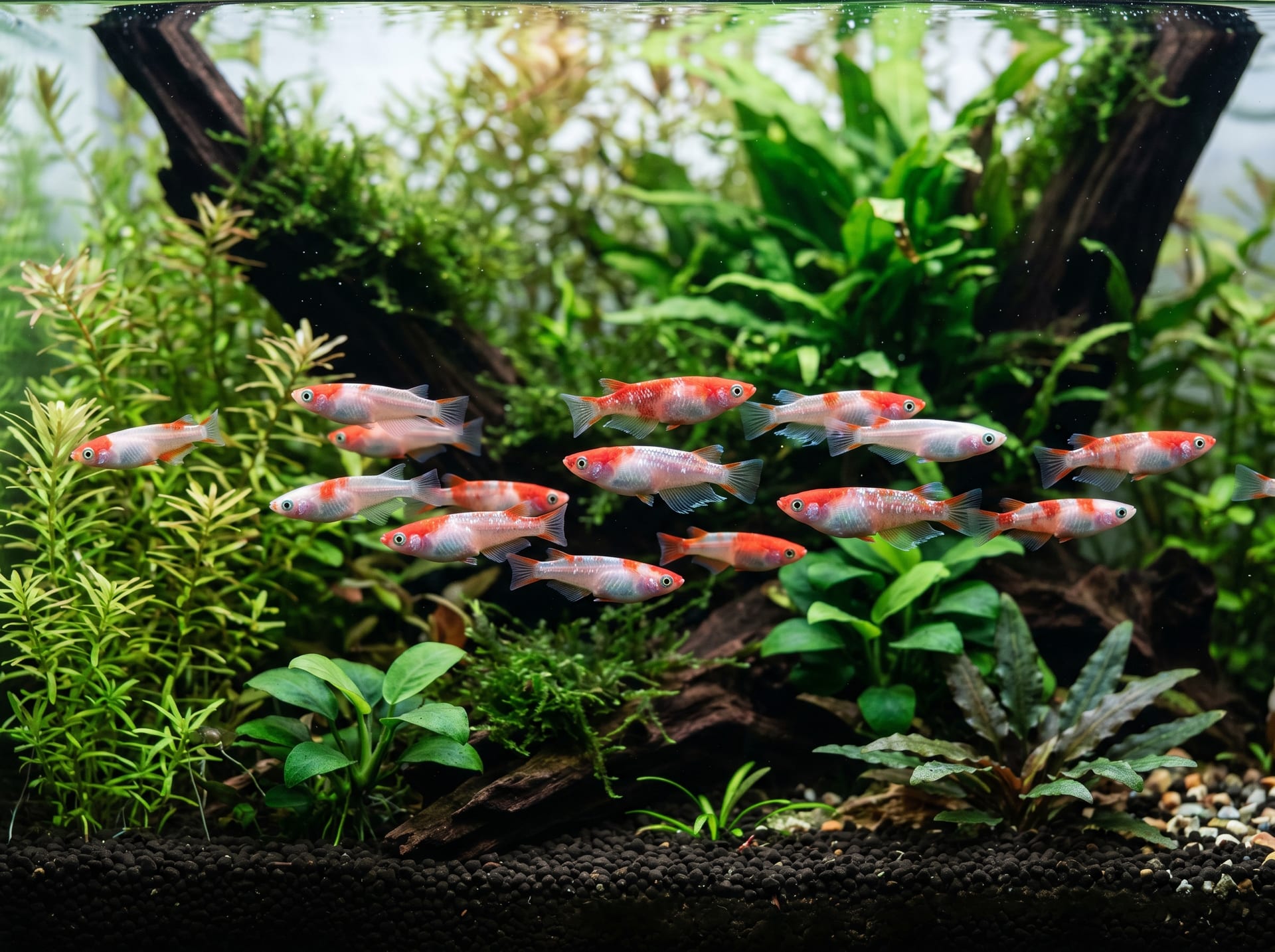
Kohaku medaka feature a striking contrast of bright red-orange patterning over a white body, reminiscent of koi. They are hardy and easy to keep both indoors and outdoors, making them a great choice for beginners. The natural variation in pattern from fish to fish adds a personal, one-of-a-kind charm to every individual.
First 3 sales - 0% commission!Register as a breeder by July 31, 2026 and your first 3 sales are commission-free!
Breeder Wanted!
List on BreederDirect and sell directly to customers nationwide!
Each Medaka listing includes the following from Breeder. Full transparency on color variations (Yokihi/Miyuki/Lame) and lineage guaranteed.
Price
Region
Attributes
Adjust your filters, or get notified when new listings arrive.
Getting alerts is free with a member account. When new listings match your saved search, we'll notify you by email and in-app.
Are you raising medaka?
Register as a breeder and connect with buyers directly.

Kohaku medaka is a selectively bred variety known for its bold red-orange patterning over a white body, inspired by the classic kohaku coloration of koi carp. Established relatively early in the history of improved medaka breeding, it remains a perennial favorite and an ideal entry point for newcomers to the hobby. The defining visual feature is the striking contrast between the clean white base and vivid red markings, which lend this small fish remarkable ornamental appeal. Patterning varies widely among individuals — some display concentrated red on the head, while others show large blotches along the flanks — giving each fish a distinct personality. Kohaku medaka are calm and tend to school together, creating a relaxing, harmonious display. They are also notably hardy; with basic water quality management, long-term care is quite achievable. Maintaining vibrant coloration requires attention to sunlight, color-enhancing diet, and stable water temperatures, and watching the fish respond to their environment is one of the rewarding aspects of keeping this variety.
1Each Fish Has a Unique Pattern
The red patterning on Kohaku medaka varies greatly between individuals and can shift as the fish matures. Color intensity may deepen or fade depending on water temperature, diet, and lighting, so maintaining a fixed pattern can be challenging.
2Ideal Water Temp: 5–30°C
Kohaku medaka tolerate a fairly wide temperature range and can overwinter in outdoor setups. However, sudden temperature swings cause stress and disease, so pay extra attention during seasonal transitions. Also be cautious of water temperature spikes from direct summer sun.
3Sunlight Enhances Color
Adequate sunlight helps maintain and deepen the red coloration in Kohaku medaka. Fish kept in outdoor tubs or well-lit indoor tanks tend to show brighter colors. In summer, use shade cloth or reed screens to prevent dangerous water temperature rises.
4Diet Can Support Coloration
Feeding a color-enhancing food rich in carotenoids can help support the red pigmentation in Kohaku medaka. However, genetic traits play a large role in coloration, so diet alone will not produce dramatic changes. Feed two to three times daily in amounts the fish can consume within a few minutes.
5Choose Peaceful Tankmates
Kohaku medaka are peaceful and do well with other medaka varieties. Avoid housing them with fin-nipping or large fish, as this causes stress and injury. They are compatible with small shrimp such as cherry shrimp, which also help control algae.
6Watch for Water Quality Decline
Loss of appetite, skin lesions, or fish resting at the bottom are signs of poor water quality or disease. Aim to replace about one-third of the water weekly to maintain stable conditions. Monitor closely for ammonia and nitrite buildup, which are harmful even at low concentrations.
7Breeding Peaks in Spring–Summer
Kohaku medaka breed actively when water temperatures exceed 18°C and day length increases in spring and summer. Providing spawning mops or water hyacinth makes egg collection easier. Eggs are vulnerable to being eaten by adults, so moving them to a separate container after collection is recommended.