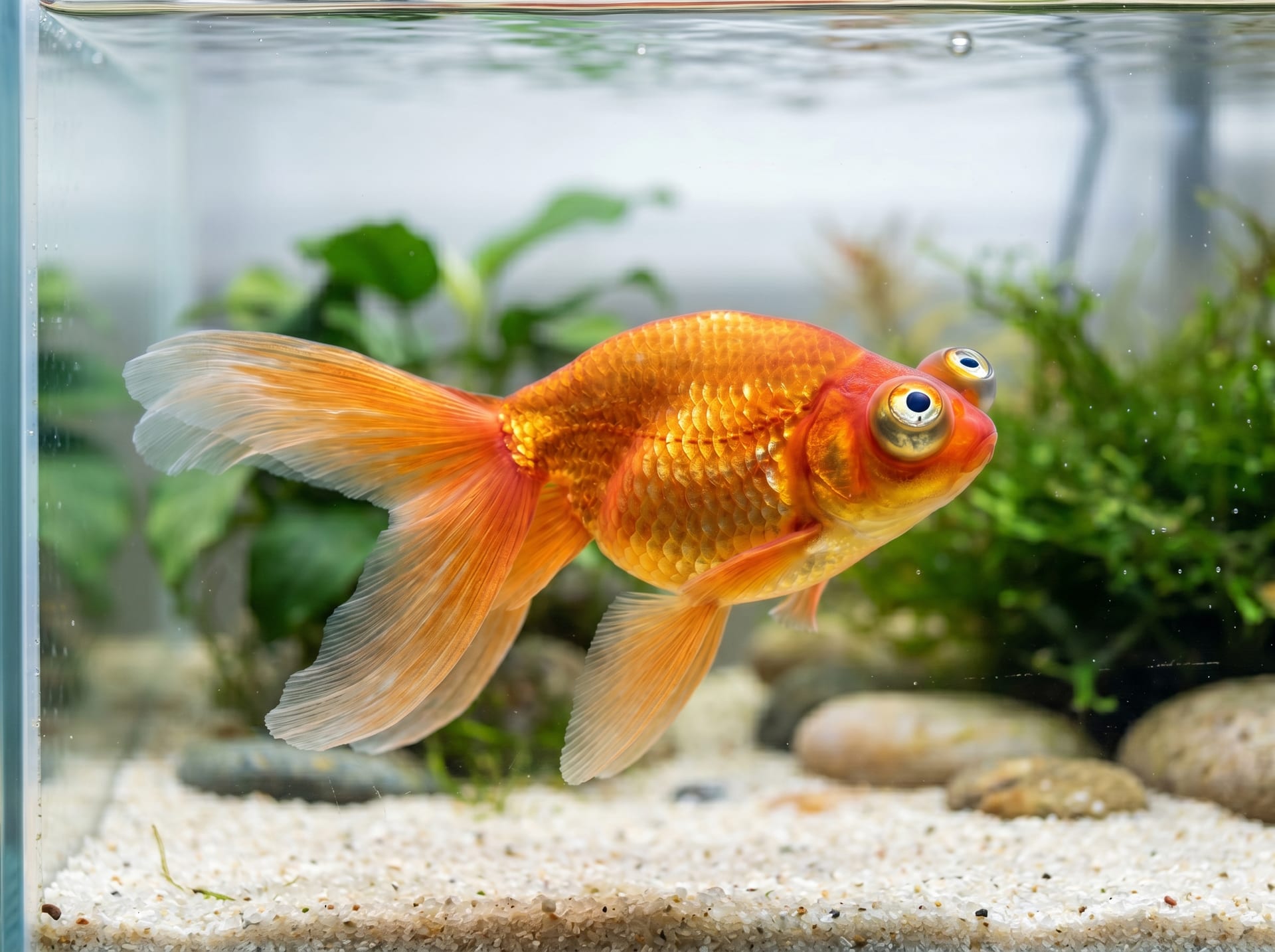
Celestial Eye
Rare goldfish with upward-facing eyes. Chinese-bred to resemble gazing at heaven. No dorsal fin, very rare variety.
View Celestial Eye encyclopedia →Breeder Wanted!
List on BreederDirect and sell directly to customers nationwide!
BreederDirect's 6 Transparency Commitments
All Goldfish listings from Breeder include the following details. We guarantee transparency in lineage (Yamato/Yatomi/Edo) and competition awards.
- Lineage
- Real Photos
- Breeder Lineage
- Award History
- Competition History
- Age Stated
Browse all 111 breeds
Care Difficulty
No listings match your filters
Adjust your filters, or get notified when new listings arrive.
Getting alerts is free with a member account. When new listings match your saved search, we'll notify you by email and in-app.
Browse other categories
Verified breeders (preview)
Celestial Eye key facts
- Care level
- Advanced
- Lifespan
- 5-10 years
- Size
- 10-15cm
- Diet
- Goldfish pellets (sinking type)
- Container & Tank
- A shallow tank is recommended as it makes feeding easier to manage. With almost no forward vision, keep obstacles in the tank to a minimum.
- Diet & Feeding
- Floating food at the surface is easiest for it to find. Sinking food must be searched out on the bottom, so drop it near the nose to ensure it eats.
- Tank Mates & Compatibility
- An extremely slow swimmer with almost no eyesight, so mixing with other varieties is strictly out. Keep only with its own kind.
- Water Temperature & Quality
- Keep the water clean with regular changes and maintain a neutral pH around 7.0. Remove uneaten food as it fouls the water.
- Eyes
- Upward eyes make finding food difficult
- Notes
- Very rare — obtain from specialty shops
About Celestial Eye
The Choten-gan is a goldfish bred in China as a "fish gazing at heaven," with both eyes pointing straight up and a rounded, dorsal-fin-free body. It is rare in Japan and found mostly at specialist shops. With almost no forward vision, it needs a single-variety tank and careful feeding and water flow, making it a variety for experienced keepers.
7 things to know before welcoming a Celestial Eye
1Understand Its Limited Vision
Because the eyes point upward, the fish has almost no forward vision. Floating food at the surface is easiest for it to find, while sinking food must be searched for along the bottom, so drop it right in front of the nose to make sure it is eaten. Feeding at the same spot and time each day helps the fish learn where to find food.
2Dorsal-Fin-Free Swimming
The absence of a dorsal fin gives this fish an unusual center of balance, making it sensitive to strong currents. Attaching a sponge diffuser to the filter outlet helps reduce flow. Keeping water movement gentle minimizes physical stress on the fish.
3Protect Those Protruding Eyes
The protruding eyes are vulnerable to scratches from sharp decor or the fins of tank mates. Keep obstacles in the tank to a minimum, avoid driftwood with pointed edges or jagged rocks, and choose fine, smooth substrate. Do not mix it with other varieties; keep only Choten-gan together.
4Water Temperature and Quality
The ideal water temperature is 18–24°C; sudden shifts can trigger illness. Perform partial water changes of about one-third weekly, keep ammonia and nitrite levels low, and maintain neutral water at around pH 7.0. Avoid overcrowding, which degrades water quality.
5How to Feed
Use sinking goldfish pellets as the staple and drop them right in front of the fish's nose so they are eaten. Floating food at the surface is easy for it to find, while sinking food must be searched for along the bottom. Remove any uneaten food promptly, as it fouls the water.
6Checks and Preparation Before You Buy
Prices for Choten-gan vary from listing to listing depending on bloodline, coloring, age, and the individual fish, so check each listing page. It also helps to confirm the fish's health condition and its parent fish on the listing page. Set up your tank, filter, heater, and other equipment before bringing the fish home.
7Avoid Mixing With Other Varieties
With almost no vision and very slow swimming, this fish must never be kept with other varieties. Keeping Choten-gan only with their own kind is the basic rule. Even with several of them together, check at each feeding that every fish is getting enough food.
Frequently asked questions about Celestial Eye
- Q.Can beginners keep Choten-gan?
- A.Choten-gan are considered a difficult variety best suited to experienced keepers. They need an environment that accommodates their visual limitations, so it is safest to have a solid grasp of basic goldfish care — water quality, flow management, and feeding technique — before starting. Attentive daily observation is also important.
- Q.Can they be kept with other goldfish?
- A.No. With very slow swimming and almost no vision, they must never be mixed with other varieties, which leads to competition for food and injuries. Keeping only Choten-gan together is the basic rule.
- Q.How often should water be changed?
- A.A general guideline is to change about one-third of the water weekly. Choten-gan eyes are sensitive to declining water quality — ammonia and nitrite buildup frequently cause redness or cloudiness — so regular testing with a simple water quality kit alongside water changes is recommended.
- Q.The eyes look cloudy — is something wrong?
- A.Cloudy eyes are most commonly caused by poor water quality, bacterial infection, or a physical scratch. Start by testing ammonia, nitrite, and pH levels, and perform an immediate partial water change if values are off. If the cloudiness does not improve within a few days, consult a specialist shop about appropriate treatment.
- Q.Where can I buy Choten-gan?
- A.Due to limited availability, specialist goldfish stores, competitive shows, and direct breeders are the most reliable sources. Online retailers do carry them occasionally, but wherever possible it is worth inspecting the fish in person to assess eye shape, body form, and overall health before purchasing.
Useful tools for Celestial Eye care
Learn more about Celestial Eye in the encyclopedia
View Celestial Eye encyclopedia entry →
Care difficulty, lifespan, size and diet — all basics covered.
More in this category
Can't find the one you're looking for?
Post your wishes for free and breeders with matching animals will contact you with introductions.