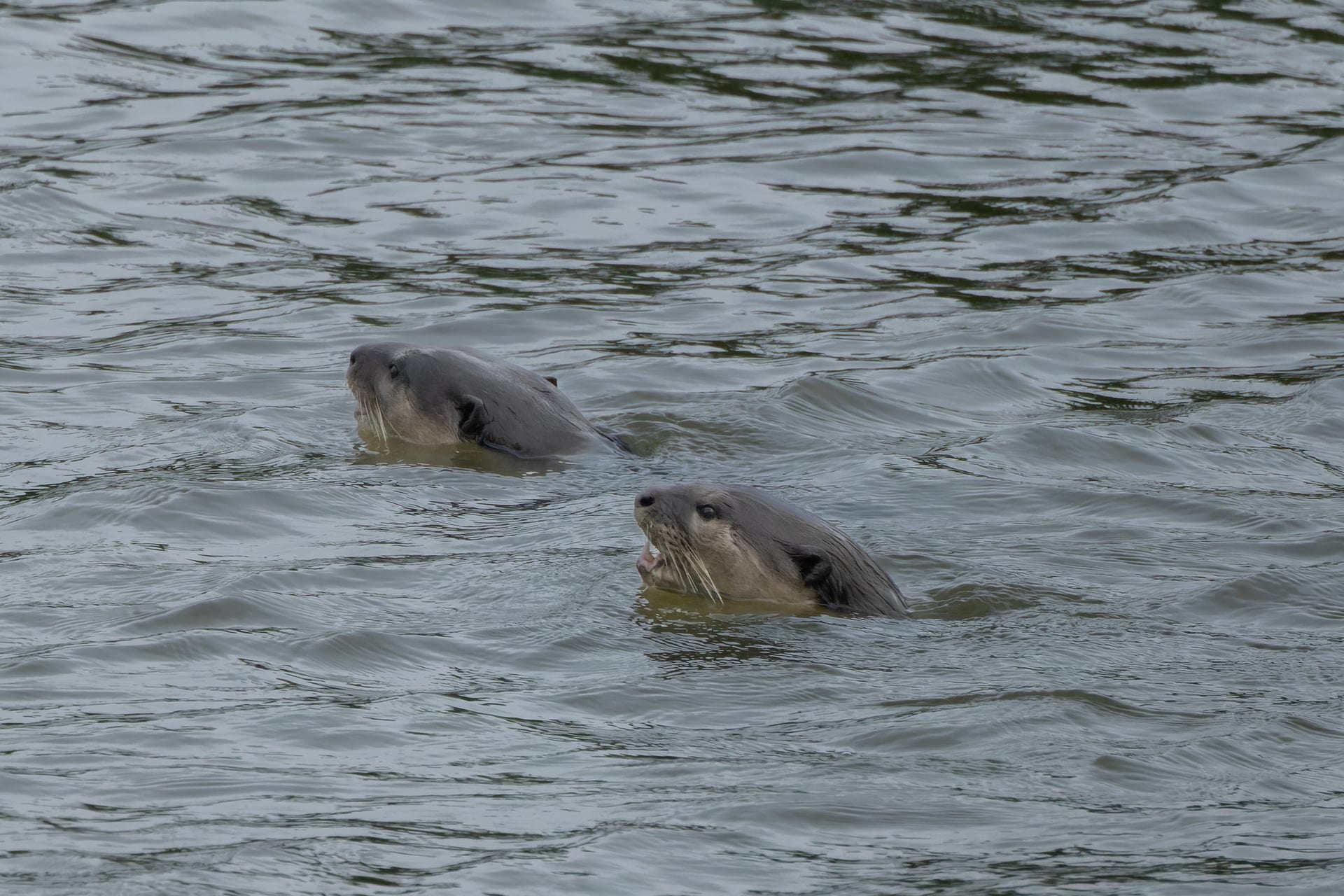
Source: Wikimedia Commons
Smooth-coated Otter
AdvancedLutrogale perspicillata
A large 7-11kg otter of South and Southeast Asian rivers and wetlands. CITES Appendix I and an internationally endangered species under Japanese law, so transfers require a registration certificate. Very few are kept in Japan.
Difficulty
Advanced
Temperature
18〜26℃
Lifespan
4-10 years wild, up to 20 in captivity
Size
Head-body 59-79cm / 7-11kg
Humidity
40〜60%
Diet
Fish (about 1kg per day in captivity), crustaceans
About
The smooth-coated otter (Lutrogale perspicillata) ranges from Pakistan, India and Nepal through southwestern China and Southeast Asia to Borneo, Sumatra and Java, with an isolated population in Iraq. The coat is short and smooth as the name suggests, and the tail is flattened with a triangular cross-section. Fish make up 75-100% of the diet, with insects, crustaceans, frogs and small mammals. It forms small family groups of a mated pair and up to four offspring from earlier seasons, unusually social for an otter. It is Vulnerable. Listed on CITES Appendix II from 1977, it was uplisted to Appendix I in 2019 and is designated an internationally endangered species under Japan's Act on Conservation of Endangered Species. Any transfer or sale within Japan therefore requires a registration certificate from the Ministry of the Environment, and unregistered trade is illegal. Husbandry demands a large permanent swimming pool and a fish-based diet of about 1 kg a day, so private keeping is extremely demanding. Only a very small number are kept in Japan.
Source: Wikipedia (CC BY-SA 4.0)
Lifespan of the Smooth-coated Otter
The Smooth-coated Otter lives 4-10 years wild, up to 20 in captivity.
Wild lifespan is 4-10 years and captive longevity up to 20.
Size of the Smooth-coated Otter
The Smooth-coated Otter grows to Head-body 59-79cm / 7-11kg.
Head-body length is 59-64 cm (65-79 cm in some sources), tail 37-43 cm and weight 7-11 kg, making it the largest otter in Southeast Asia.
Basic Info
Origin
South and Southeast Asia (Pakistan to Indochina, Borneo, Sumatra, Java; isolated population in Iraq)
Care Specifications
References & Sources
Edited & verified by: BreederDirect editorial team
The taxonomic, regulatory, and husbandry data on this page are compiled and verified against the authoritative primary sources below.
Taxonomy & Authority
Accepted name: Lutrogale perspicillata (I. Geoffroy Saint-Hilaire, 1826)
Synonyms: Lutra perspicillata
Authority databases: GBIF
Nomenclature follows global taxonomic authority databases.
Regulations & Conservation Status
CITES Appendix IIUCN VU · Vulnerable
Domestic law: Designated an internationally endangered species under the Act on Conservation of Endangered Species (listed as Lutrogale perspicillata in the Ministry of the Environment regulated-species list). Transfer or sale requires a registration certificate.
Sources: CITES Appendices (Appendix I) / IUCN Red List Lutrogale perspicillata / Ministry of the Environment: regulated species list under the Act on Conservation of Endangered Species
Regulations may change. Always verify the latest information with the relevant authorities.
Smooth-coated Otter Listings
Loading latest listingsFind listings for this species