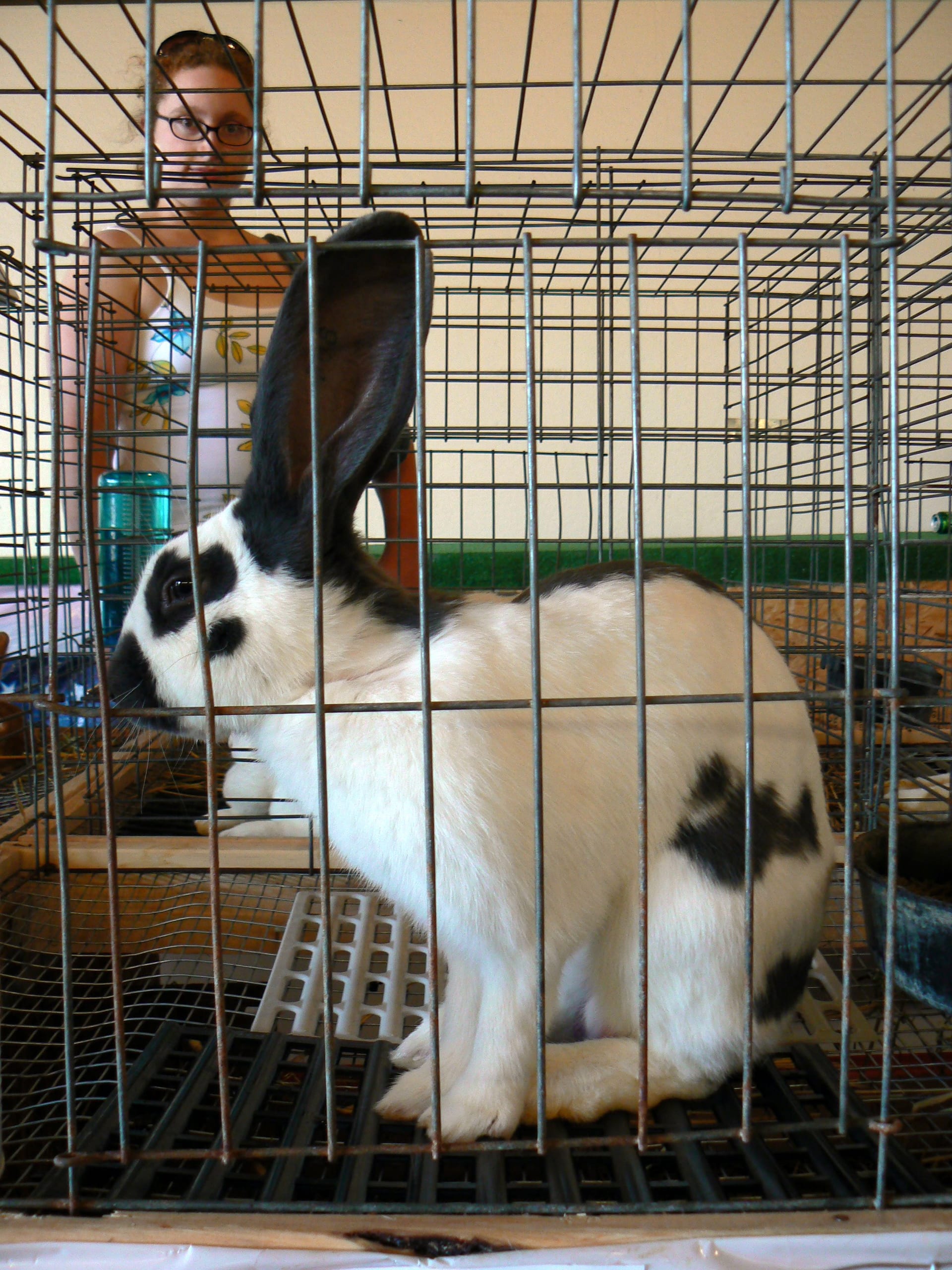
Checkered Giant Rabbit
IntermediateOryctolagus cuniculus 'Japanese White'
A domestic rabbit breed developed in Japan by fixing albinism, with a white coat and red eyes. A large breed of 3–6kg, it was improved as a dual-purpose fur and meat rabbit and has long been kept in schools.
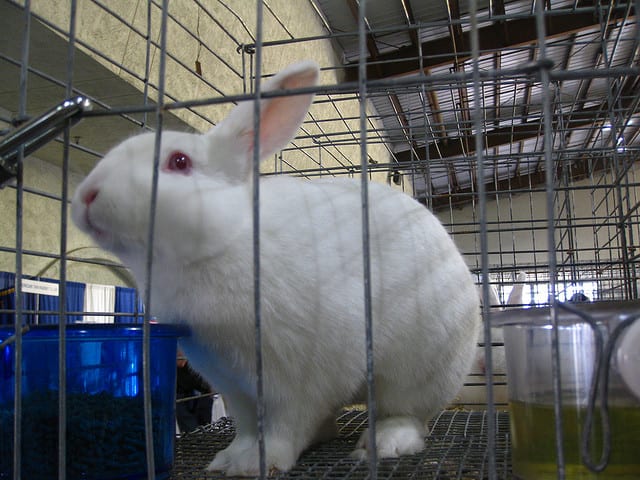
The Japanese White is a breed of domestic rabbit, the domesticated European rabbit (Oryctolagus cuniculus), developed in Japan. Its exact origin is unclear, but it is thought to derive from crosses between rabbits imported in the early Meiji era from China, Italy, the United States and elsewhere and local rabbits; animals of mixed type were later unified as the Japanese White. It is albinism fixed as a breed, so most animals are white with red eyes. After the war it was promoted for keeping in primary schools and spread nationwide, and lines are also maintained as laboratory animals. It closely resembles the New Zealand White, which is also white and red-eyed, so confirm the animal's origin with the breeder. In Japan it is usually obtained from specialist breeders or through rehoming.
Source: Wikipedia (CC BY-SA 4.0)
The Japanese White Rabbit lives Up to about 9 years, as for domestic rabbits.
The Japanese White Rabbit grows to 3–6kg (the Akita improved strain exceeds 10kg).
Keeping spread around the Sino-Japanese and Russo-Japanese wars with demand for meat and fur, and in the Taisho era crosses with New Zealand White, Flemish Giant and Belgian rabbits pursued larger size and easily dyed white pelts, raising adult weight from the 2–3kg of local rabbits to about 5kg. Typical weight is 3–6kg, and the Akita improved strain from Daisen, Akita Prefecture, exceeds 10kg and is known as the "jumbo rabbit".
Origin
Japan, developed from crosses of imported and local rabbits from the early Meiji era
Edited & verified by: BreederDirect editorial team
The taxonomic, regulatory, and husbandry data on this page are compiled and verified against the authoritative primary sources below.
Primary sources
Accepted name: Oryctolagus cuniculus 'Japanese White' (Linnaeus, 1758)
Authority databases: GBIF · GBIF: Oryctolagus cuniculus
Nomenclature follows global taxonomic authority databases.
Not covered by CITES, the Invasive Alien Species Act or the specified-animal rules. European rabbits have gone feral on Japanese islands and harmed ecosystems (NIES Invasive Species Database). Never release captive animals into the wild.
Sources: NIES Invasive Species of Japan: European rabbit (JA) / Species+ CITES query (not listed) / Ministry of the Environment: Invasive Alien Species list, incl. species requiring a species-name certificate (JA)
Regulations may change. Always verify the latest information with the relevant authorities.
Find listings for this species
Lifespan
Up to about 9 years, as for domestic rabbits
Size
3–6kg (the Akita improved strain exceeds 10kg)
Temperature
18〜26℃
Humidity
40〜60%
Herbivore: grass hay as the staple, with pellets and vegetables
An albino with white fur and red eyes, weighing 3–6kg. It looks very like the New Zealand White, so confirm its origin with the breeder.
As a large rabbit it needs a cage big enough to stretch out fully, plus time to exercise in a room.
Feed grass hay as the staple, with pellets and vegetables.
Large strains are sensitive to heat, so keep the room cool with air conditioning, especially in summer.
Its weight makes it prone to sore hocks (pododermatitis). Keep the floor clean and use foot-friendly flooring.
European rabbits have gone feral on Japanese islands, damaging vegetation and affecting native birds and the Amami rabbit. Never release captive animals into the wild.
Intermediate. This is an intermediate-level species. Some prior experience and knowledge of environmental management are recommended.
The average lifespan of Japanese White Rabbit is Up to about 9 years, as for domestic rabbits. With proper care and nutrition, they can live a long and healthy life.
Japanese White Rabbit typically reaches 3–6kg (the Akita improved strain exceeds 10kg) as an adult. Size may vary depending on care conditions and individual genetics.
Japanese White Rabbit feeds on: Herbivore: grass hay as the staple, with pellets and vegetables. Aim for a balanced diet with appropriate feeding frequency.
The price of Japanese White Rabbit varies significantly depending on variety, age, sex, and the individual animal's condition. Check our market price page for the latest pricing information.
Last updated: September 23, 2026