Source: Wikimedia Commons
Lithophyllon Coral
IntermediateLithophyllon undulatum
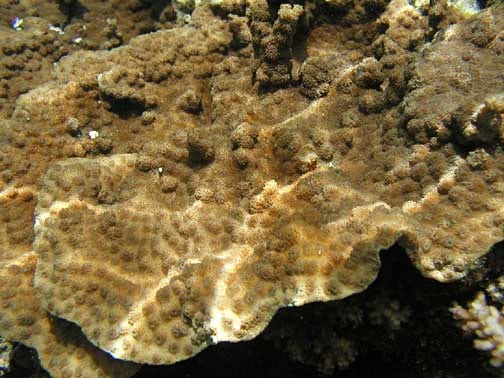
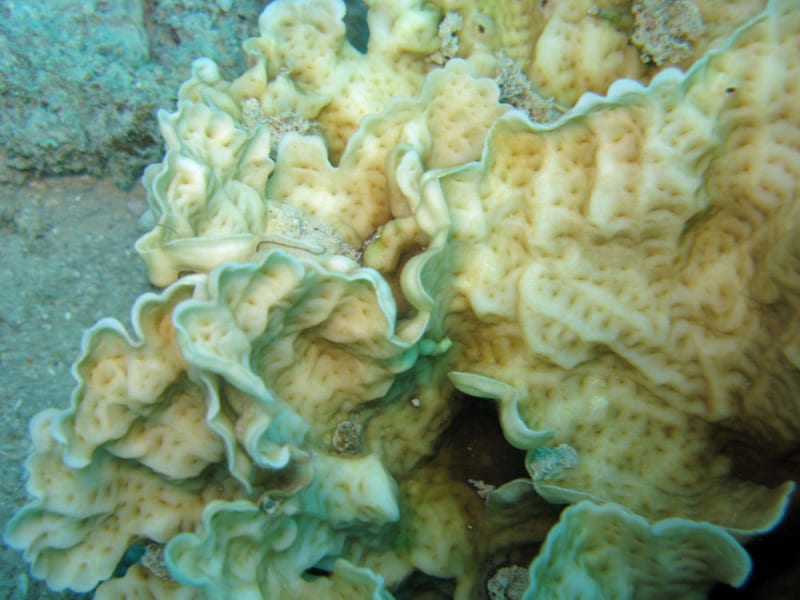
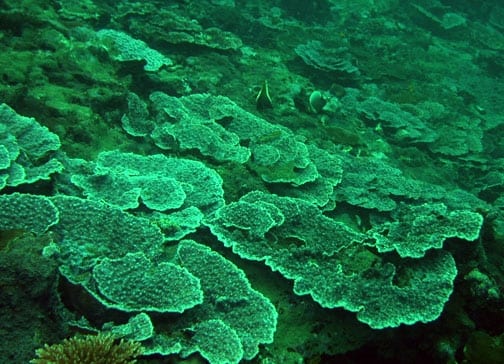
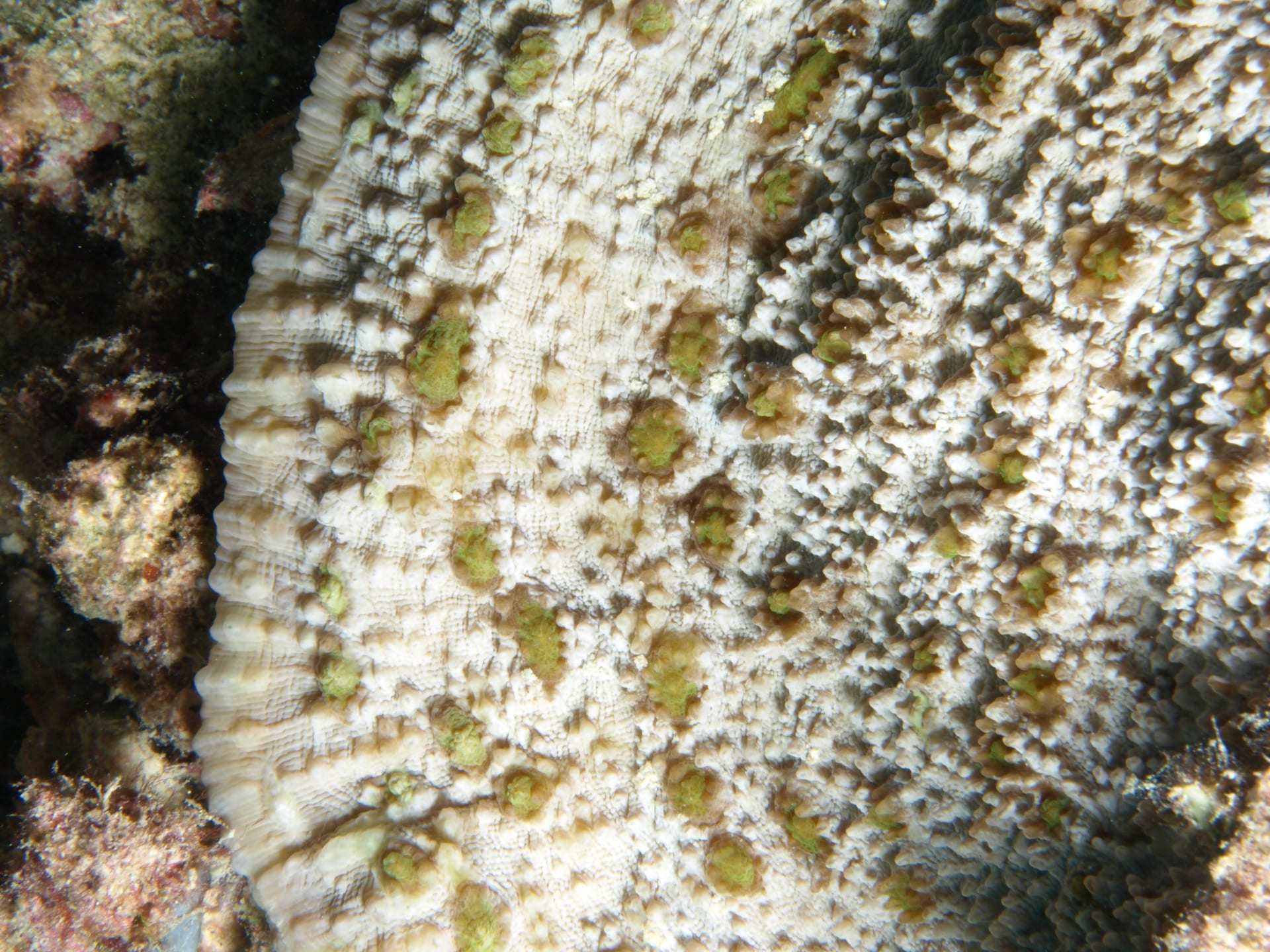
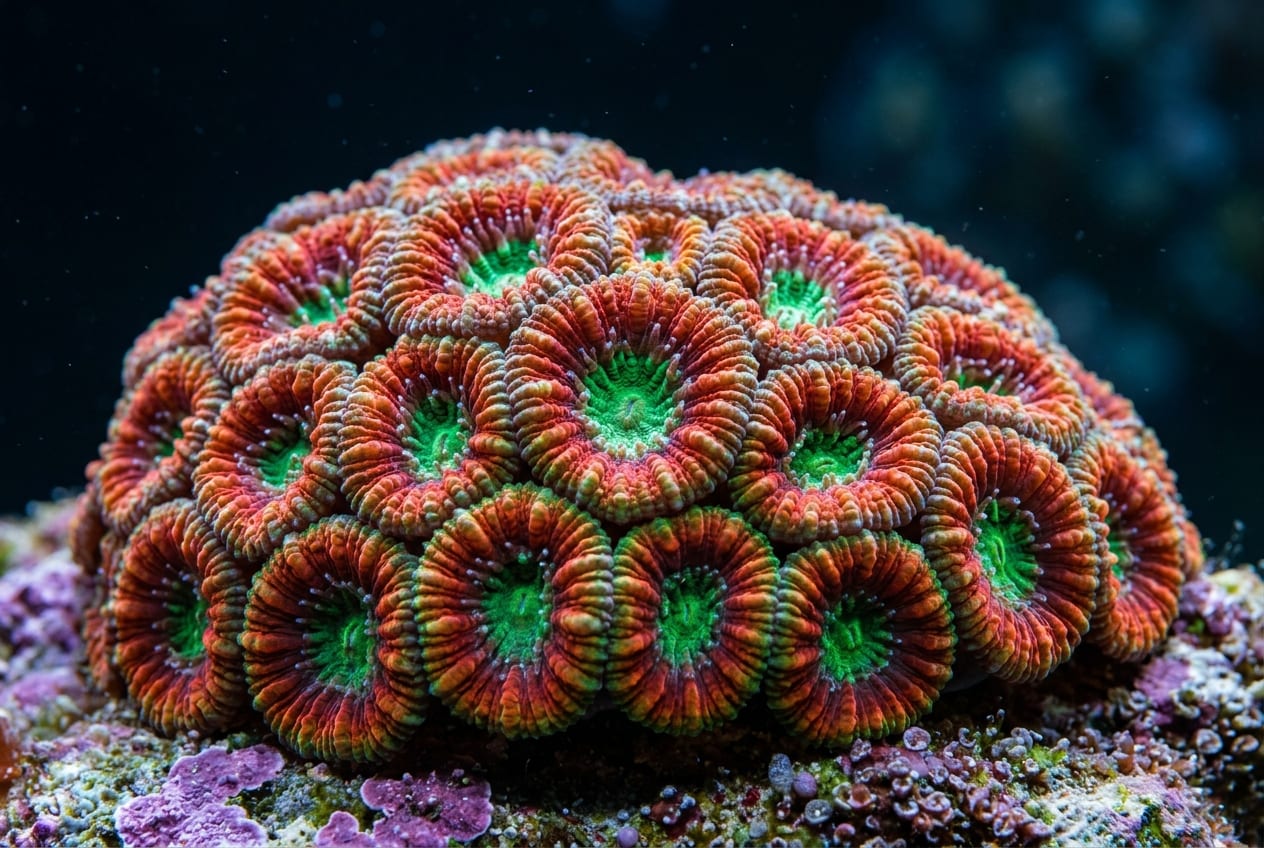
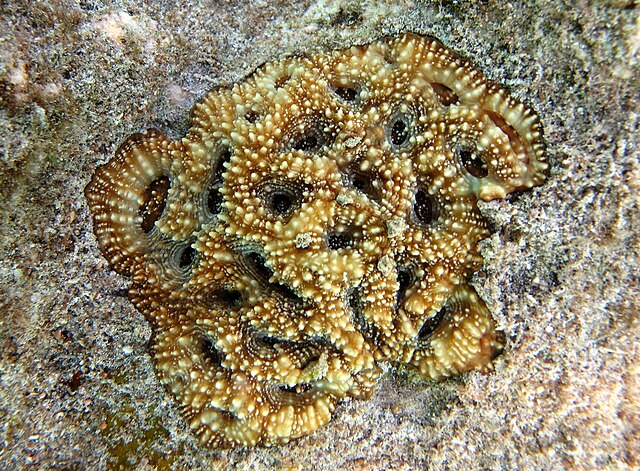
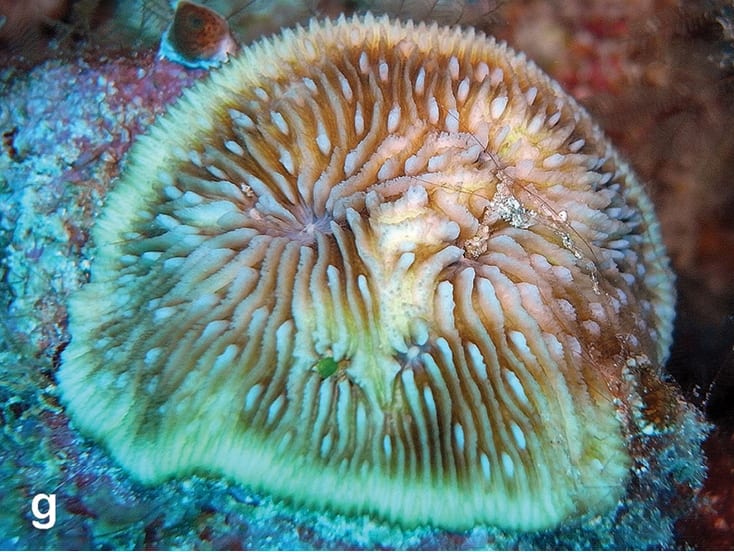
A mushroom-coral relative that stays attached to rock, spreading as encrusting sheets or flat plates with lobed edges. It has many mouths but usually no central one; deep green or brown in the north of its range, dark blue with white centres in the south.
Difficulty
Intermediate
Temperature
24〜27℃
Size
Up to about 25 cm
Diet
Photosynthesis (zooxanthellae) plus plankton
About
Lithophyllon undulatum is a stony coral of the family Fungiidae; WoRMS also lists the Japanese name Minami-kawarasango. It occurs in the central Indo-Pacific on reefs and rocky shores. Most mushroom corals detach and lie free on the bottom as adults, but this species stays attached, spreading as encrusting sheets or flat plates with lobed margins. There is usually no central mouth; thin septo-costae stand out and many mouths are scattered over the surface. Colour is deep green or brown in the north of its range and dark blue with white corallite centres in the south (Corals of the World). The free-living mushroom corals on this site, such as Fungia, are kept on sand, whereas this species should be attached to rock. Reeflex rates it moderately easy, recommends at least 150 L and notes it is easy to propagate. Specialist shops in Japan stock it repeatedly.
Size of the Lithophyllon Coral
The Lithophyllon Coral grows to Up to about 25 cm.
Temperature & humidity for the Lithophyllon Coral
The ideal temperature for the Lithophyllon Coral is 24〜27℃.
Basic Info
Origin
Reefs and rocky shores of the central Indo-Pacific
Size
Up to about 25 cm
Temperature
24〜27℃
Diet
Photosynthesis (zooxanthellae) plus plankton
Care Specifications
- Water Temp.
- 24–27℃
- Specific Gravity
- 1.023–1.025
- Salinity
- 33–35 ppt
- Min. Tank
- 150 L
LPS
Sources: Corals of the World (Lithophyllon undulatum) / Reeflex (Lithophyllon undulatum) / AlgaeBarn: A quick guide to LPS and SPS / AlgaeBarn: Water Parameters 101
References & Sources
Edited & verified by: BreederDirect editorial team
The taxonomic, regulatory, and husbandry data on this page are compiled and verified against the authoritative primary sources below.
Primary sources
- Species+ (CITES listing of Lithophyllon undulatum)
- Okinawa Prefecture: Collection of reef-building corals is prohibited
- Tokyo Metropolitan Fisheries Adjustment Regulations (Arts. 37 and 41)
- e-Gov: Natural Parks Act (Art. 22, marine park zones)
- Corals of the World (Lithophyllon undulatum)
- Reeflex (Lithophyllon undulatum)
- AlgaeBarn: A quick guide to LPS and SPS
- AlgaeBarn: Water Parameters 101
Taxonomy & Authority
Accepted name: Lithophyllon undulatum Rehberg, 1892
Synonyms: Lithophyllon lobata (Van der Horst, 1921), Podabacia dispar Verrill, 1901, Leptoseris floriformis Gerth, 1923
Authority databases: WoRMS · GBIF · GBIF · WoRMS · Corals of the World
Nomenclature follows global taxonomic authority databases.
Regulations & Conservation Status
CITES Appendix IIIUCN LC · Least Concern
Domestic law: Collecting in Japanese waters is governed by each prefecture's fisheries adjustment regulations, which differ by prefecture. Okinawa bans all collection of reef-building corals, including stony corals, and also bans possessing or selling illegally collected corals (cultured corals are exempt, and the prefecture advises buyers to confirm a coral is cultured, on an artificial base or tagged). Tokyo bans collection in the waters off Ogasawara Village. In marine park zones of national and quasi-national parks, taking designated animals and plants requires a permit (Natural Parks Act, Art. 22).
All stony corals (Scleractinia) are listed in CITES Appendix II (checked on Species+). International trade requires export permits, but no registration is needed to sell or transfer specimens within Japan.
Sources: Species+ (CITES listing of Lithophyllon undulatum) / Okinawa Prefecture: Collection of reef-building corals is prohibited / Tokyo Metropolitan Fisheries Adjustment Regulations (Arts. 37 and 41) / e-Gov: Natural Parks Act (Art. 22, marine park zones)
Regulations may change. Always verify the latest information with the relevant authorities.
Lithophyllon Coral Listings
Loading latest listingsFind listings for this species