Source: Wikimedia Commons
Silver Pheasant
IntermediateLophura nycthemera
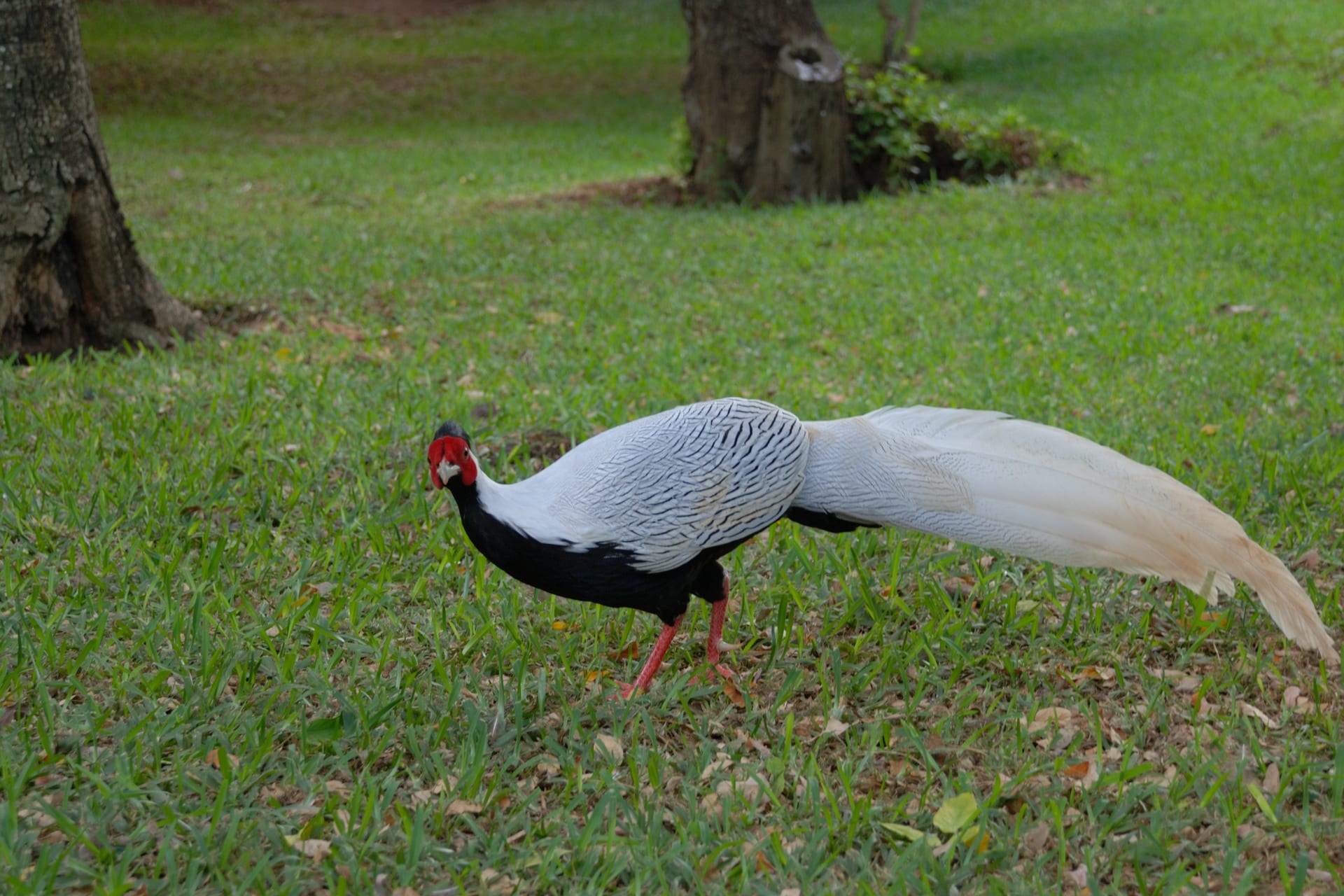
A large pheasant whose male is white above and black below with a black crest, set off by a bare red face and red legs; the female is plain brown. It lives in mountain forest from southern China to Southeast Asia and has long been kept as an aviary bird.
Difficulty
Intermediate
Temperature
15〜30℃
Lifespan
Little data
Size
Male 90-130 cm, female 50-70 cm
Humidity
40〜60%
Diet
Pheasant or poultry rations, grain, greens and insects
About
The silver pheasant (Lophura nycthemera) lives in forests, mainly in mountains, of mainland Southeast Asia and eastern and southern China. The male is strikingly white above and black below, and the species name refers to night and day. The female is brown like most pheasants. Both sexes have a bare red face and red legs, the legs separating it from the grey-legged kalij pheasant. The two species can hybridise, and the imperial pheasant, once thought a rare species, is a natural hybrid between the silver pheasant and Edward's pheasant. Fifteen subspecies are recognised, and some, such as those from Hainan, southern Laos and southern Vietnam, are rare. A ground-dwelling bird of mountain forest and bamboo up to around 2,700 m, it eats seeds, shoots and insects, and breeding males give a metallic call. It has been introduced to Argentina and Vancouver Island in Canada. It has long been known as an aviary bird and reached Japan long ago. In Japan it is available from ornamental pheasant fanciers and specialist shops, and is commonly bred in captivity.
Source: Wikipedia (CC BY-SA 4.0)
Size of the Silver Pheasant
The Silver Pheasant grows to Male 90-130 cm, female 50-70 cm.
Males are 90-130 cm long and weigh 0.9-1.5 kg; females are 50-70 cm and 0.7-1 kg.
Basic Info
Origin
Mountain forest and bamboo of southern and eastern China and mainland Southeast Asia
Lifespan
Little data
Size
Male 90-130 cm, female 50-70 cm
Temperature
References & Sources
Edited & verified by: BreederDirect editorial team
The taxonomic, regulatory, and husbandry data on this page are compiled and verified against the authoritative primary sources below.
Taxonomy & Authority
Regulations & Conservation Status
Not CITES-listedIUCN LC · Least Concern
Lophura nycthemera. Not listed in the CITES Appendices, and a foreign pheasant not native to Japan. Imports are subject to animal import notification under the Infectious Diseases Control Law, but no notification is needed for transfers within Japan. The IUCN assesses it as Least Concern, though some subspecies are rare.
Sources: Species+ search (Lophura nycthemera not listed) / IUCN Red List
Regulations may change. Always verify the latest information with the relevant authorities.
Silver Pheasant Listings
Loading latest listingsFind listings for this species