Source: Wikimedia Commons
Red-throated Parrotfinch
BeginnerErythrura psittacea
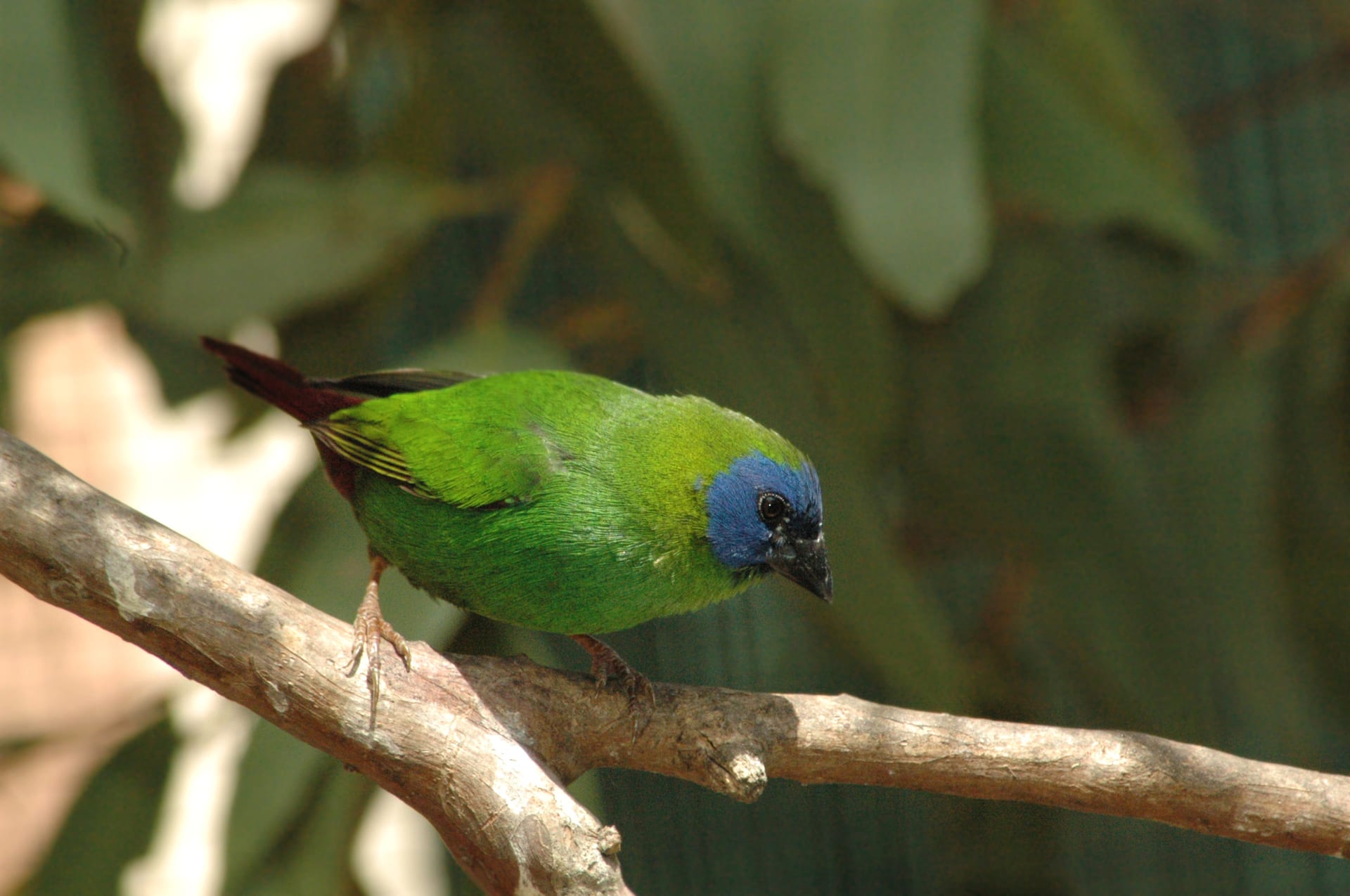
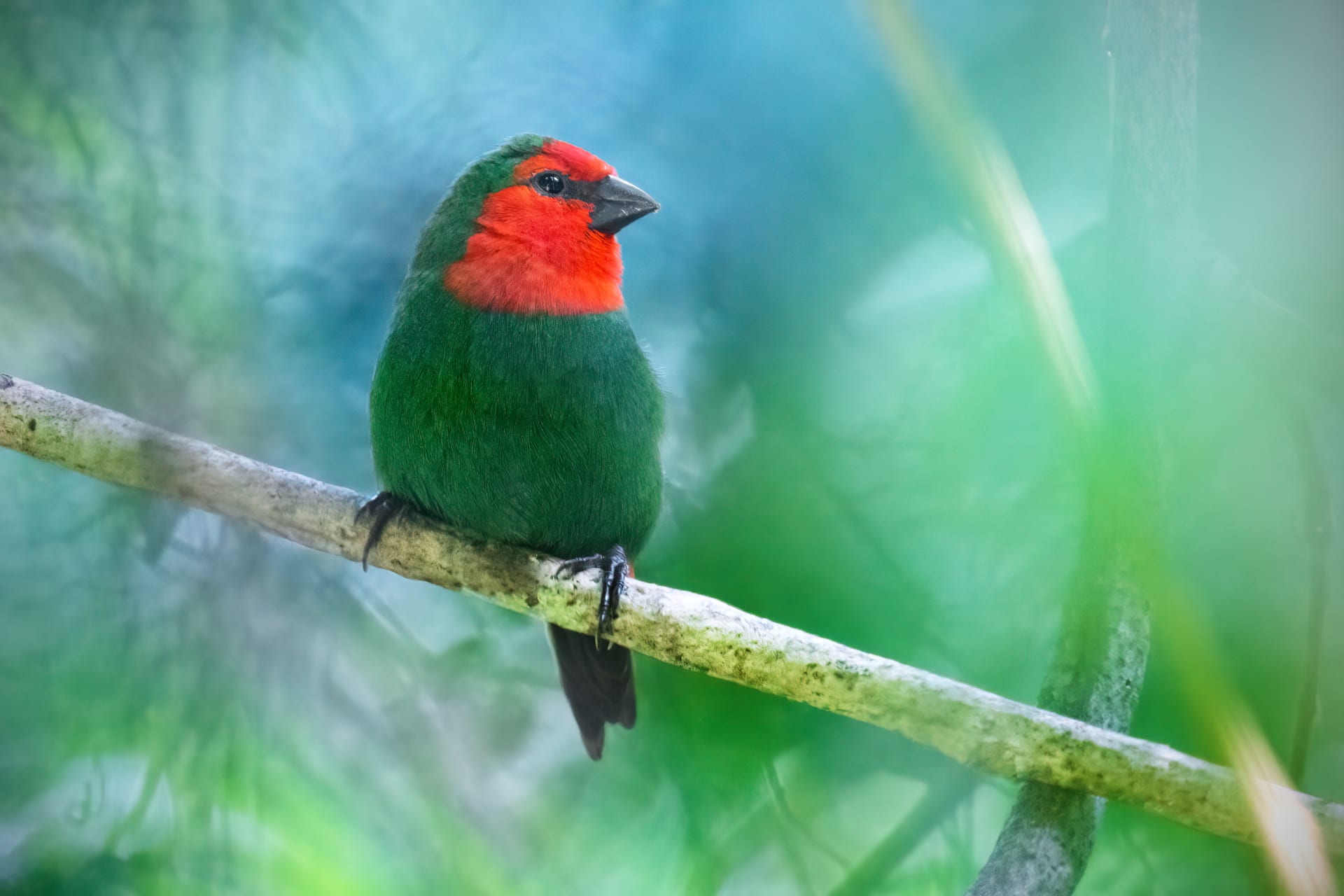
A parrotfinch endemic to New Caledonia, dark green with a vivid red mask covering face, throat and upper breast, and a red rump and tail. It is bred extensively in Japan.
Difficulty
Beginner
Temperature
15〜30℃
Lifespan
6-10 years
Size
11-12cm
Humidity
40〜60%
Diet
Mixed seed, spray millet, greens, small livefood
About
The red-throated parrotfinch (Erythrura psittacea) is an estrildid finch endemic to Grande Terre and the Ile des Pins in New Caledonia. It is 11-12 cm long, emerald green with a deep red mask running from behind the ear coverts and cheeks over the throat to the upper breast, and a red rump and tail. The sexes are nearly alike, the female slightly duller and lacking the red undertail coverts. The male's mask typically extends about 3 mm behind the eye while the female's reaches only the rear edge of the eye, though there are exceptions. Only the male sings, and his long sustained phrase separates the sexes. No subspecies are recognised. It lives at forest edges, in open secondary forest, plantations, roadsides, gardens and parks, occasionally taking fallen seed from the ground although grass seed is its staple. Incubation lasts fourteen days and the nestling period twenty to twenty-two days. Europe has records from France as early as 1873 but the species was always scarce; today it is bred especially widely in Japan, the source of most European stock.
Source: Wikipedia (CC BY-SA 4.0)
Lifespan of the Red-throated Parrotfinch
The Red-throated Parrotfinch lives 6-10 years.
Size of the Red-throated Parrotfinch
The Red-throated Parrotfinch grows to 11-12cm.
Basic Info
Origin
Forest edges, secondary forest and cultivated land of New Caledonia (Grande Terre and the Ile des Pins)
Lifespan
6-10 years
Size
Care Specifications
PeacefulGroupBreeding: Easy
Sources: Wikipedia (German) - Rotkopf-Papageiamadine (range, ecology, 14-day incubation, 20-22 day nestling period, breeding in Japan) / Wikipedia (French) - Diamant psittaculaire (12 cm, sexual difference in the mask, only the male sings) / Wikipedia (Dutch) - Roodkoppapegaaiamadine (11-12 cm total length)
References & Sources
Edited & verified by: BreederDirect editorial team
The taxonomic, regulatory, and husbandry data on this page are compiled and verified against the authoritative primary sources below.
Primary sources
- Wikipedia
- CITES Appendices (Estrildidae not listed)
- IUCN Red List
- Wikipedia (German) - Rotkopf-Papageiamadine (range, ecology, 14-day incubation, 20-22 day nestling period, breeding in Japan)
- Wikipedia (French) - Diamant psittaculaire (12 cm, sexual difference in the mask, only the male sings)
- Wikipedia (Dutch) - Roodkoppapegaaiamadine (11-12 cm total length)
- GBIF
Taxonomy & Authority
Accepted name: Erythrura psittacea (Gmelin, 1789)
Synonyms: Amblynura psittacea
Authority databases: GBIF
Nomenclature follows global taxonomic authority databases.
Regulations & Conservation Status
Not CITES-listedIUCN LC · Least Concern
Erythrura psittacea. The family Estrildidae is not listed in the CITES Appendices, so this species is not covered. The IUCN assesses it as Least Concern.
Sources: CITES Appendices (Estrildidae not listed) / IUCN Red List
Regulations may change. Always verify the latest information with the relevant authorities.
Red-throated Parrotfinch Listings
Loading latest listingsFind listings for this species