Source: Wikimedia Commons
Red-tailed Black Cockatoo
AdvancedCalyptorhynchus banksii
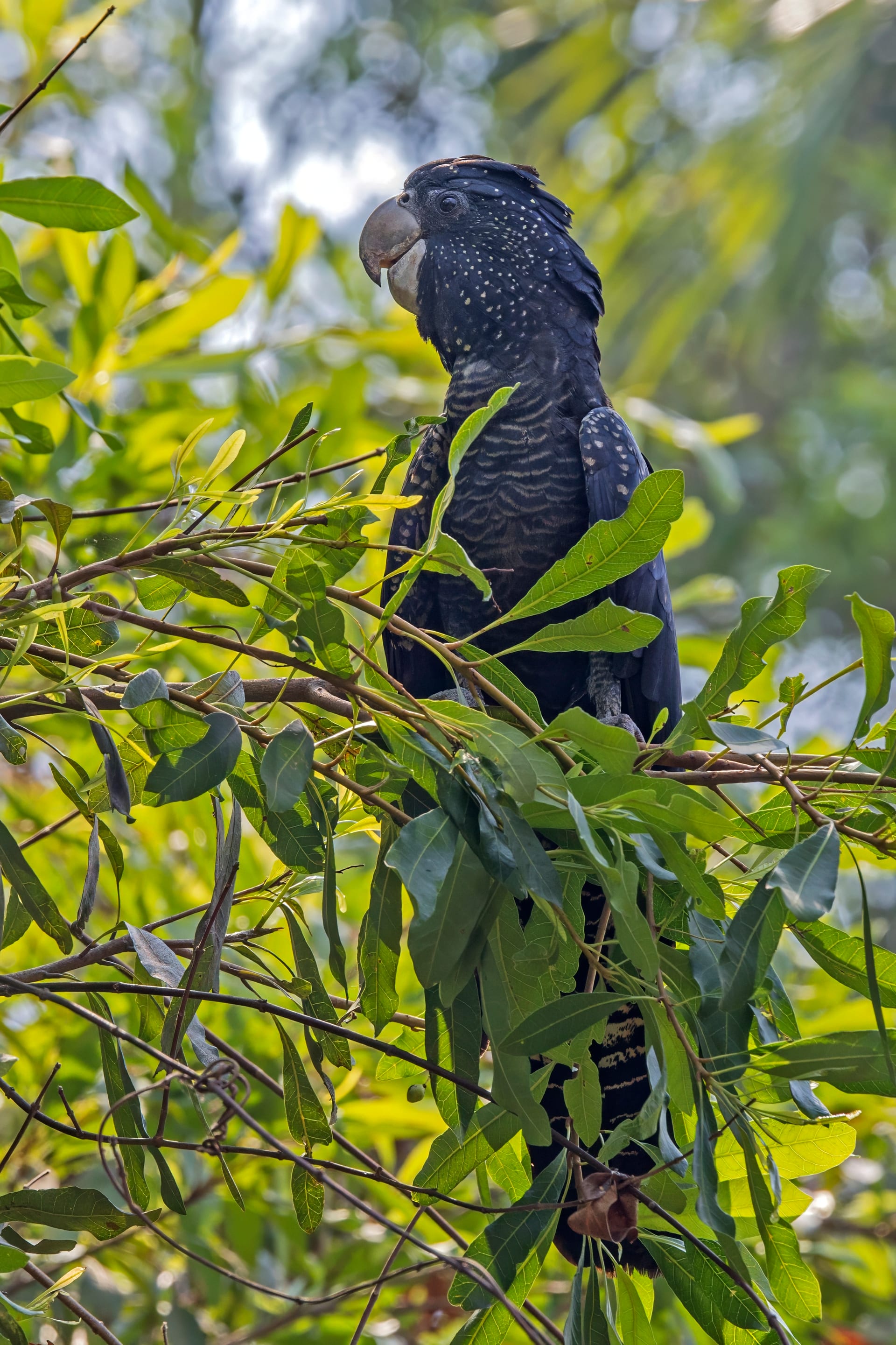
A large all-black cockatoo whose male has bright red panels on each side of the tail, while the female is black with yellow spots and bars. It is considered the black cockatoo most adaptable to aviculture.
Difficulty
Advanced
Temperature
15〜30℃
Lifespan
Captive record 45 years
Size
About 60 cm
Humidity
40〜60%
Diet
Large-parrot seed or pellets and nuts; a seed eater in the wild
About
The red-tailed black cockatoo (Calyptorhynchus banksii) is a large cockatoo widespread in Australia, about 60 cm long. The sexes differ clearly: the male is all black with a crest of long forehead and crown feathers, a dark grey bill and bright red panels on each side of the tail, while the female is black with yellow to red spots on the cheeks and wings, yellow-orange bars on the chest and tail, and a pale horn-coloured bill. Juveniles resemble females, and males take about four years to replace their yellow tail feathers with red. It is commonest in the drier parts of the continent and gathers in large flocks in the north, while south-eastern populations have declined through clearing. It eats seeds and nests in hollows of large trees. It is very long-lived in captivity; one bird at London and Rotterdam zoos reached 45 years and 5 months. It is considered the black cockatoo most adaptable to aviculture, but it is very scarce outside Australia and only occasionally reaches specialist shops in Japan. Large and loud, it suits keepers who can provide spacious housing.
Source: Wikipedia (CC BY-SA 4.0)
Lifespan of the Red-tailed Black Cockatoo
The Red-tailed Black Cockatoo lives Captive record 45 years.
Size of the Red-tailed Black Cockatoo
The Red-tailed Black Cockatoo grows to About 60 cm.
Males weigh 670-920 g and females 615-870 g.
Basic Info
Origin
Australia, mainly the drier northern half, from shrubland to tropical rainforest
Lifespan
Captive record 45 years
References & Sources
Edited & verified by: BreederDirect editorial team
The taxonomic, regulatory, and husbandry data on this page are compiled and verified against the authoritative primary sources below.
Taxonomy & Authority
Regulations & Conservation Status
CITES Appendix IIIUCN LC · Least Concern
Calyptorhynchus banksii. Parrots (Psittaciformes) are listed in CITES Appendix II apart from a few species, and this species is in Appendix II. International trade needs an export permit, but no registration under Japan's species conservation law is needed to transfer birds within Japan. Imports into Japan are subject to animal import notification under the Infectious Diseases Control Law. The two southern subspecies are threatened by habitat loss. The IUCN assesses it as Least Concern.
Sources: Species+ (Calyptorhynchus banksii) / IUCN Red List
Regulations may change. Always verify the latest information with the relevant authorities.
Red-tailed Black Cockatoo Listings
Loading latest listingsFind listings for this species