Complete Guide to Raising a Yorkshire Terrier | Coat Care, Training, and Health Management
A comprehensive guide covering the Yorkshire Terrier's personality and characteristics, daily care methods, training tips, and common health issues. Learn the key points for living wisely with a Yorkie—a dog with a big personality in a small body.
Key Takeaways
A comprehensive guide covering the Yorkshire Terrier's personality and characteristics, daily care methods, training tips, and common health issues. Learn the key points for living wisely with a Yorkie—a dog with a big personality in a small body.
The Yorkshire Terrier (commonly called the "Yorkie") is one of the world's most popular toy dog breeds. Despite weighing only around 3–4 kg, they possess the characteristic terrier temperament—active and confident—with silky, lustrous long coat hair being their greatest charm. With proper care and training, they can become comfortable companions even in urban apartments.
Yorkshire Terrier Personality and Characteristics
✍️
BreederDirect Editorial
The BreederDirect editorial team specializes in care information for animals, covering veterinary care and breeding to deliver beginner-friendly guides.
Find Dogs on BreederDirect
Buy directly from verified breeders
Browse Related Listings
Find Dogs listings related to this article on BreederDirect. Buy directly from verified breeders.
The Yorkie is a toy terrier developed in the Yorkshire region of England in the 19th century as a pest-control dog. Carrying terrier blood, they are curious, bold, and sometimes stubborn. They are affectionate and bond closely with their owners, though they may initially show wariness toward strangers and other dogs.
Physical Characteristics
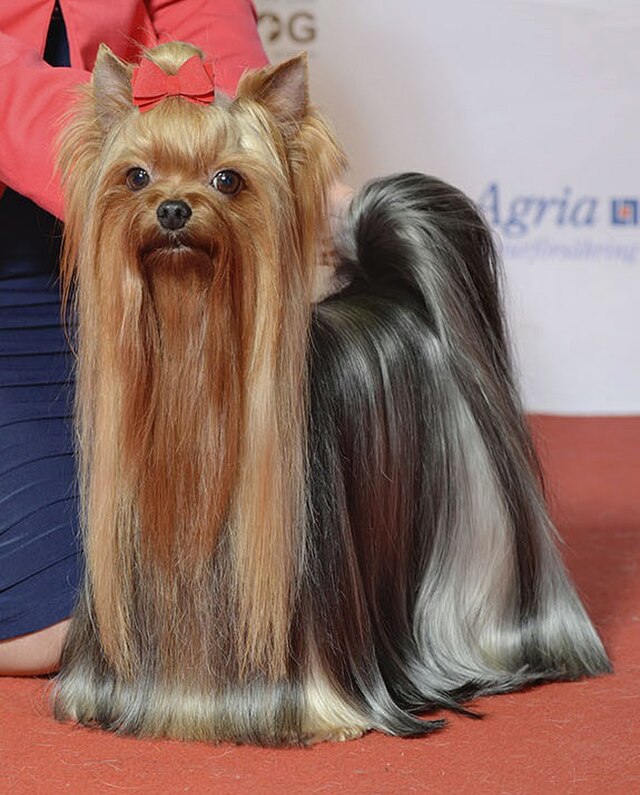
Adult coats are the standard steel blue and tan bicolor. Puppies are black and tan (brown), but as they grow, their coat transforms into a lustrous blue-tinged color. Their coat is fine and soft with minimal shedding, making them suitable even for those with allergies.
Temperament Characteristics
They inherit strong terrier traits and are remarkably brave and independent for such a small dog. Intelligent and capable of understanding their owner's commands, they are also strong-willed and assertive about their own opinions. They have watchdog tendencies and may bark at visitors, making early socialization training crucial.
Setting Up the Right Living Environment
Yorkies are well-suited to apartment living, though they do require a reasonable amount of exercise.
Living Space
While they need minimal dedicated space as a toy breed, jumping down from high places risks fractures. Use pet ramps or steps to access sofas and beds. Non-slip rugs on floors reduce joint strain compared to bare flooring.
Temperature Control
Their small size makes temperature regulation difficult, and they are sensitive to cold. Maintain room temperature above 18°C in winter and consider dog clothing for nighttime and outings. Summer heat exhaustion is also a risk—avoid leaving them in direct sunlight.
Crate Training
Acclimate them to a crate as a safe haven. This is useful during emergencies and vet visits. Start with the door open, encouraging natural entry, then gradually increase the time the door stays closed.
Coat Care
Coat care is one of the most important grooming tasks for Yorkies.
Daily Brushing
Their fine, silky hair tangles easily, so daily or every-other-day brushing is ideal. Use a slicker brush and comb together, gently working from the root slowly. Avoid pulling forcefully to prevent skin damage—use conditioner spray on tangles.
Trimming
Regular trimming is necessary. Show cut (full coat) extends the hair to the floor, but for daily maintenance, shorter poodle cuts or teddy bear cuts are more manageable. Visit a professional groomer every 2–3 months.
Shampooing
Shampoo every 1–2 weeks. Lather dog shampoo well and wash gently, rinsing thoroughly to remove all soap residue. After towel drying, use a dryer to completely dry the coat.
Training Tips
Yorkies are intelligent but can be stubborn, requiring consistent training.
Basic Training Approach
Positive reinforcement (reward-based training) is most effective. Scolding after failures often backfires—instead, praise and reinforce correct behavior. Keep training sessions short (5–10 minutes) and do several per day.
Barking Control
They readily bark at visitors and noises. Early socialization to various sounds, people, and situations is crucial. Teach a "quiet" command while they're barking, then reward calm behavior. Ignore demand barking as a general rule.
Toilet Training
Teach them to recognize pee pads as a toilet. Keep the pad in a fixed location in their playpen and take them there after eating, waking up, and playtime. Praise enthusiastically immediately after success—this is key to learning.
Health Management and Common Conditions
Patellar Luxation
Common in toy breeds, Yorkies need monitoring. Jumping and sudden directional changes worsen the condition—minimize obstacles. Regular vet checkups should include hip joint evaluation.
Dental Disease and Tartar
Toy breeds are particularly prone to dental disease. Establish tooth brushing habits early and consider regular professional scaling. Dental disease increases the risk of heart and kidney disease.
Tracheal Collapse
Common in toy and brachycephalic breeds, including Yorkies. Coughing and wheezing sounds indicate the condition. Use a harness instead of a collar to avoid throat pressure.
Hypoglycemia
Puppies and small individuals are prone to low blood sugar. Feed 2–3 times daily and avoid prolonged fasting. Seek immediate veterinary care if trembling or lethargy appears.
Yorkshire Terriers require high-maintenance grooming, but the deep bond formed matches the care you invest. Spend fulfilling days with these intelligent, emotionally rich "little giants."