Endler's Livebearers Genetics Guide | Maintaining N-Class and Selective Breeding
Explaining Endler's Livebearer genetics and breed management. Introduces methods for maintaining pure N-Class and preventing hybridization with guppies.
Key Takeaways
Explaining Endler's Livebearer genetics and breed management. Introduces methods for maintaining pure N-Class and preventing hybridization with guppies.
Related Species
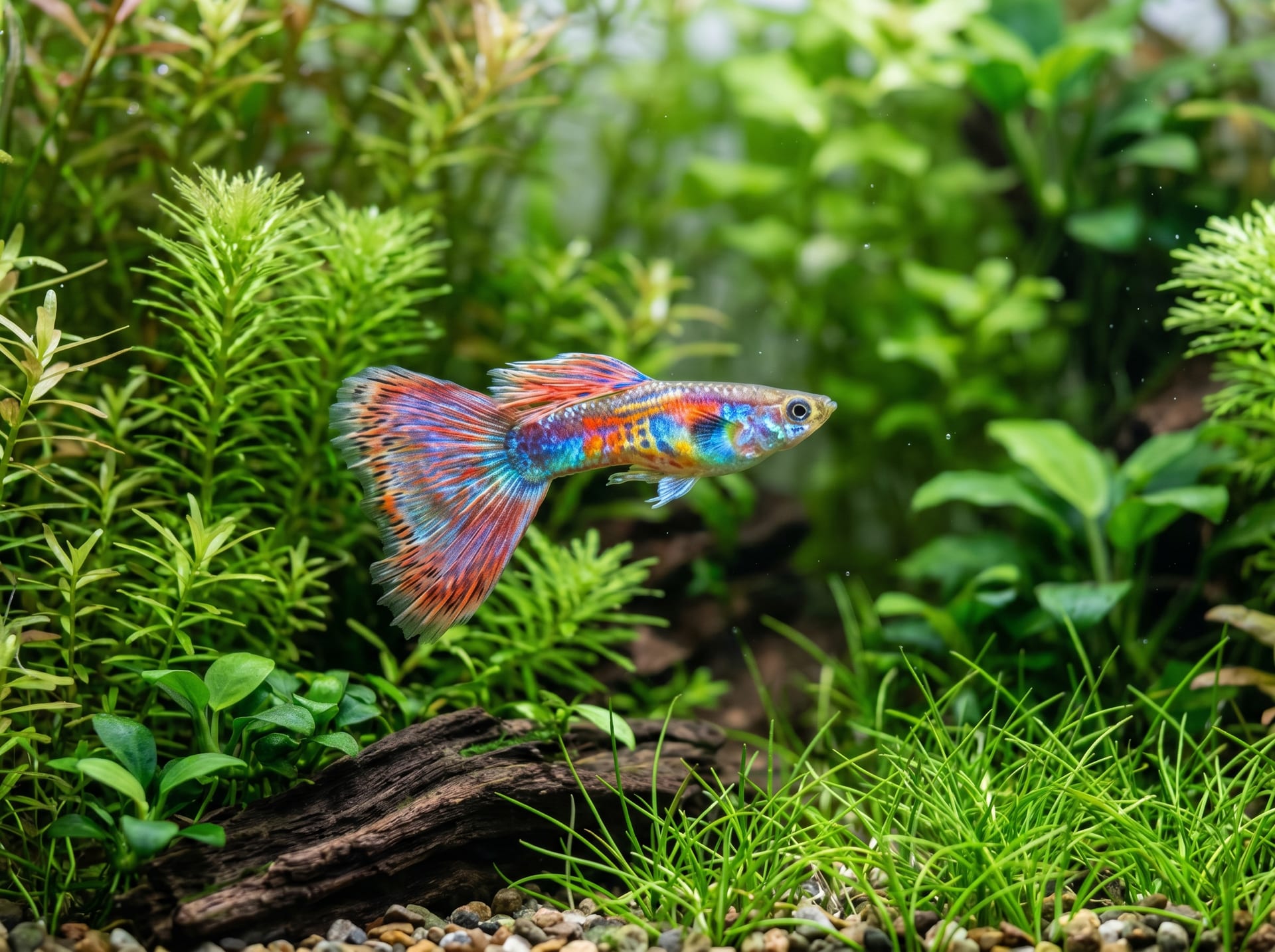
Endler's Livebearers (Poecilia wingei) are small livebearing fish inhabiting the Paria Peninsula of Venezuela. While they are closely related to guppies, they are slightly smaller at 2-3 cm in body length, and males display jewel-like coloration mixing blue, green, orange, and black. Females are a dull silver-gray, but the contrast with the males' brilliant patterns creates a beautiful accent in the aquarium. Their most distinctive feature is that their patterns are inherited relatively stably. While guppies vary considerably by variety, Endler's maintain wild-derived genetic patterns more easily and are carefully managed by enthusiasts worldwide from the perspective of "maintaining pure bloodlines." In recent years, specialized breeders have increased in Japan as well, expanding opportunities to directly obtain rare bloodlines.
N-Class, P-Class, K-Class | Understanding the Three Classifications
In the world of Endler's, "class classifications" established by international enthusiast communities are widespread. Understanding this is the first step to proper keeping and breeding.
N-Class (Natural/Purebred)
These are pure Endler's with a clear collection location and absolutely no history of hybridization with guppies. The most rigorous management is required.
- Locality (collection location) is clearly recorded
- No genetic traits indicating hybridization
- Generation count and parental information are traceable
Rarity is high, and they can only be obtained from trustworthy breeders.
P-Class (Estimated Purebred)
These likely have pure bloodlines, but collection location information is incomplete. While more readily available than N-Class, purity cannot be guaranteed.
K-Class (Hybrid)
These are the result of intentional crossing between guppies and Endler's. Brightly colored individuals tend to be born frequently and are popular as aquarium fish, but they are clearly distinguished from purebreds. Housing K-Class individuals with N-Class or P-Class is strictly prohibited.
Endler's Livebearer Genetics | Pattern Inheritance Mechanisms
Endler's body coloration and patterns involve unique genetic mechanisms found in fish.
Y-Chromosome Linked Inheritance
Many pattern genes are linked to the Y chromosome. Male patterns tend to be passed nearly unchanged from father to son. This mechanism makes patterns stable even when repeatedly breeding the same bloodline, directly connecting "bloodline maintenance" with "pattern maintenance."
The Problem of Guppy Hybridization
Endler's and guppies can hybridize, and F1 hybrids may appear to have clean patterns. However, when guppy-derived sequences become mixed into Y-chromosome linked genes, patterns rapidly deteriorate in subsequent generations. "Latent hybridity" that cannot be distinguished by appearance results, and once hybridization occurs, that bloodline cannot be restored as N-Class. A single generation of contamination can waste decades of maintenance effort.
Practical Tips for Long-Term N-Class Maintenance
Maintaining pure bloodlines is not difficult at all. With proper knowledge and habits, even beginners can reliably maintain them.
Strict Separation Housing
Avoid housing them in the same tank as guppies at all costs. Ideally, prepare a dedicated Endler's tank and do not share water change equipment.
Habit of Keeping Bloodline Records
- Locality (collection location) information
- Source breeder name and date
- Parental generation count and coloration pattern
- Breeding date and fry count
Keeping these records allows you to trace the cause if any problems arise. It becomes proof of reliability when selling.
Periodic Outcrossing
Every 3-5 generations, perform "outcrossing" by breeding with different bloodlines of the same N-Class and locality to maintain genetic diversity. Exchanging pairs between trusted breeders is a good method.
The Joy of Selective Breeding | Innovations Within N-Class Framework
"Selective breeding" does not mean "hybridization." It is possible to select color direction while maintaining N-Class purity.
Bloodline Enhancement Through Color Selection
Select males with target coloration patterns (more vibrant orange, wider black patches, etc.) from the same N-Class population to use as parents. By repeating this, traits become emphasized over generations. To avoid reducing diversity from excessive selection pressure, it is important to use multiple males in breeding.
Determining Target Traits
- Expand the area of body coloration
- Fix specific pattern types (serpentine, double sword, etc.)
- Refine fin shape
By determining the direction of improvement from the start, selection criteria become clear, allowing you to proceed through generations efficiently.
BreederDirect's Safe and Secure System
The most important factor in Endler's keeping is "reliability of the source." Even if marked as N-Class, it is difficult to determine before purchase whether bloodline management is actually rigorous.
BreederDirect is a platform where breeders and buyers connect directly. You can check seller profiles and past transaction records, and can ask breeders directly questions such as "Where is the collection location?" "What generation is this?" and "Are they kept separate from guppies?"
- Directly confirm bloodline information from breeders
- Pre-purchase verification of actual housing environment and management philosophy
- Minimize transport stress through interaction with domestic breeders
To preserve N-Class pure bloodlines, selecting a "reliable source" from the very first fish is most important. Meet trustworthy breeders through BreederDirect and inherit these bloodlines under proper knowledge.