Endler's Livebearer Complete Catalog | Complete Guide to Strains from N-Class to P-Class and Hybrids
A comprehensive catalog of Endler's livebearer strains covering N-Class, P-Class, and hybrids. This guide also explains how to maintain pure bloodlines and presents options for rehoming or selling excess fish.
Key Takeaways
A comprehensive catalog of Endler's livebearer strains covering N-Class, P-Class, and hybrids. This guide also explains how to maintain pure bloodlines and presents options for rehoming or selling excess fish.
Related Species
About Endler's Livebearers
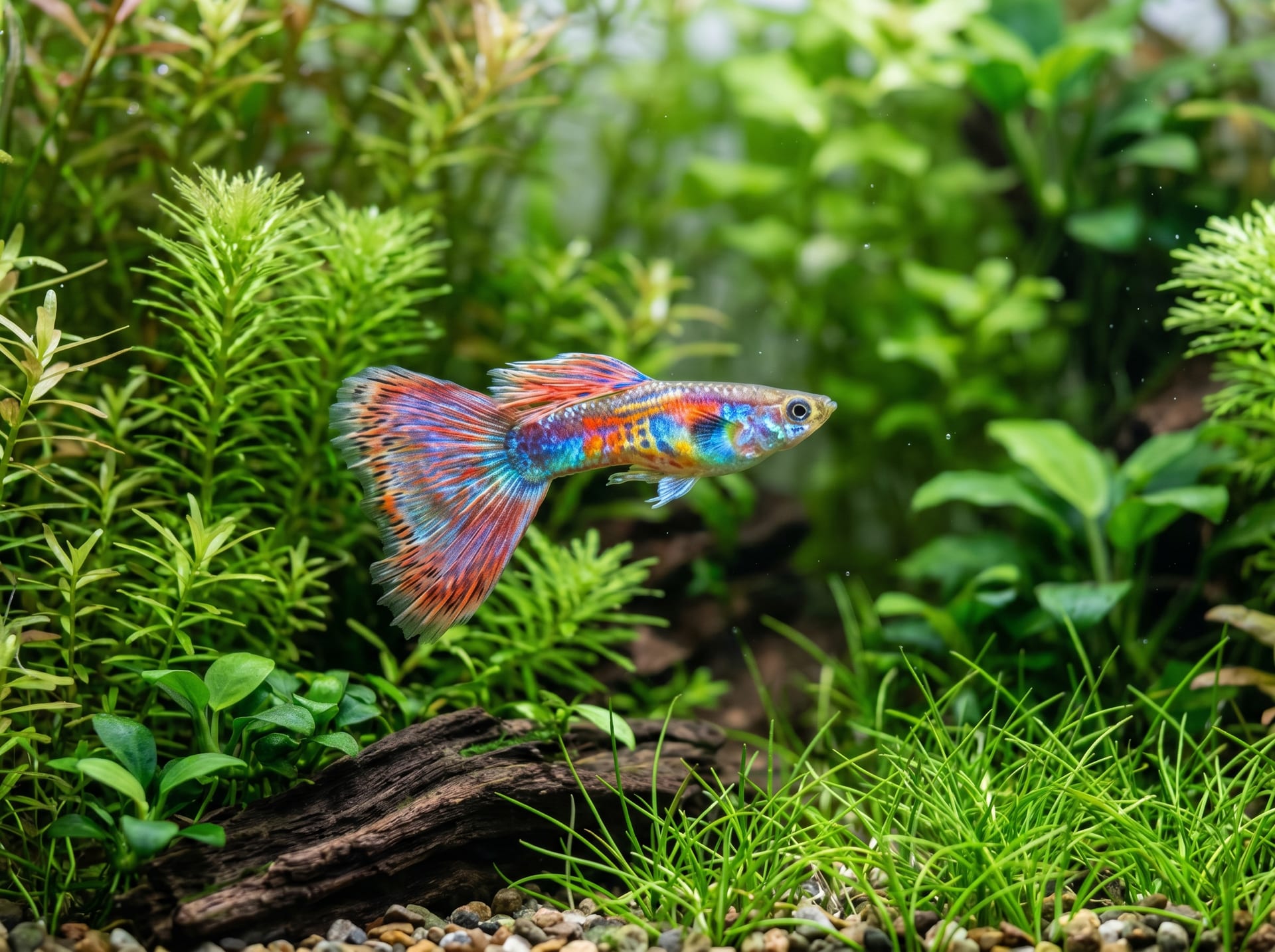
Endler's livebearer (Poecilia wingei) is a small livebearing fish native to the area around Laguna de Patos in Venezuela. A close relative of the guppy (Poecilia reticulata), it is beloved by aquarists worldwide for its vibrant coloration and hardy constitution.
While the wild population was scientifically described by Dr. John Endler in 1975, the species did not gain popularity in the hobby until the 2000s. Today, numerous color variations and a "classification system" have been established, with international standards set to maintain and prove the purity of bloodlines.
Basic Specifications
| Item | Details |
|---|---|
| Scientific Name | Poecilia wingei |
| Length (Males) | Approximately 2–3 cm |
| Length (Females) | Approximately 3–4.5 cm |
| Lifespan | 2–3 years |
| Water Temperature | 72–82°F (22–28°C) |
| Water Quality | pH 7.0–8.5 (prefers slightly hard water) |
| Breeding Cycle | Approximately 23–28 days |
Overview of the Classification System
Within the hobby, Endler's livebearers are managed using a "classification system" designed to maintain bloodline purity. This system, primarily established by AECA (Endler's Livebearer Association), ensures transparency in lineage.
The Four Main Classes
N-Class (N = Natural) Purebred individuals from Laguna de Patos or their descendants, with no history of crossbreeding with other species. These command the highest value. Hobby-kept N-Class individuals are recognized only when purity has been documented over several generations. This category is most highly valued by collectors.
P-Class (P = Pure) Maintained through breeding of pure Endler's to pure Endler's, but lacking documented or provable direct connection to the original wild population. Most "pure Endler's" maintained by breeders fall into this category.
K-Class (K = Known Cross) Individuals resulting from documented and disclosed crosses with other species such as guppies. Although they may resemble Endler's in appearance, their hybrid nature is clearly indicated.
X-Class (X = Unknown) Individuals with unknown lineage. Breeding history is unclear and purity cannot be proven. Most fish sold in pet shops fall into this category.
Major N-Class Strains
N-Class individuals represent numerous strains based on specific collection sites, collection years, and individual collectors' lineages within Laguna de Patos. Here are the major strains.
Endler Original (El Tigre Origin)
The original collected strain from the El Tigre district of Laguna de Patos. Features a classic color pattern with vibrant blends of orange, black, and metallic blue-green. Known for high contrast and primitive beauty, it is one of the most striking N-Class strains.
Laguna de Patos Strains (Multiple Collection Points)
Color patterns vary depending on collection location, with subtle differences such as red-dominant, orange-dominant, and blue-metallic-dominant strains. Even within N-Class, different strains can have noticeably different appearances.
Endler's Black Bar
Characterized by wide black bars running from the dorsal to the ventral area. Orange and yellow contrast beautifully around the bars. One of the most sought-after N-Class strains available.
Representative P-Class Color Patterns
P-Class has undergone selective breeding by hobbyists and breeders, resulting in many diverse color variations.
Snake Skin
Fine patterns reminiscent of snake scales spread across the body. Features a distinctive mosaic of orange and black coloration, making it one of the most popular patterns.
Star of India
Star-shaped or polygonal spots appear on the rear portion of the body. The contrast between silver and color is striking.
Salmon
Overall salmon pink to orange coloration with a warm, soft appearance. Red pigment is evenly distributed throughout the body.
Coral
Orange-red coloration approaching coral hues. Many individuals display color extending into the fins.
Blue Grass
Blue mosaic patterns spread across the rear portion. While resembling guppy Blue Grass in pattern, it displays the distinctive brilliance characteristic of Endler's.
Double Sword
Individuals with double sword tails, featuring symmetrical extensions on both dorsal and ventral edges. Often seen as K-Class due to guppy hybridization, though P-Class established strains also exist.
Gold Lame
Gold sparkle (iridescent luster) distributed across the entire body. The charm lies in how colors shift with changes in lighting.
Tuxedo
Endler's displaying "tuxedo" patterning with the rear half turning black. The contrast with the colored front half is striking and visually impressive.
Hybrids (Endler's × Guppy)
Endler's and guppies can interbreed, and their offspring (K-Class) sometimes display beautiful coloration combining traits from both parents. In the hobby, these are sometimes deliberately marketed as "Endler's hybrids."
Characteristics of Hybrids
- Often larger in body size than purebred Endler's
- Some individuals develop the large fins characteristic of guppies
- Coloration often displays complex patterns combining traits from both parents
- Avoided by collectors seeking pure bloodlines, but valued by those who appreciate aesthetic beauty
Key Points for Maintaining Pure Bloodlines
Strict management is essential to preserve the purity of N-Class and P-Class lineages.
Basics of Lineage Management
Separate Male and Female Tanks Endler's have extremely high reproductive capacity. Once a female has bred, she can store sperm internally and produce multiple broods without further mating (sperm storage can last 3–6 months). Therefore, when introducing females, you must confirm they are virgin females or keep them in separate tanks until fry from previous births mature.
Do Not Mix Classes N-Class and P-Class must be maintained in separate tanks; mixing them compromises lineage purity. Implement strict labeling and keep each maintained strain in its own tank.
Selection and Successive Generations To maintain beautiful color patterns, select individuals with superior coloration and form in each generation to use as breeding stock for the next. For N-Class especially, periodically consider refreshing bloodlines with stock from top collectors to prevent loss of original traits.
How to Obtain and Pricing Guide
Choosing a Source
Direct from Breeders The most reliable way to obtain clearly classified N-Class and P-Class individuals is direct purchase from established breeders. The major advantage is receiving lineage certificates and detailed information about strain origins.
Specialty Shops Shops specializing in Endler's can provide individuals with some level of classification management. However, management standards vary between shops.
Auctions and Events Rare N-Class strains sometimes appear at aquatic plant and tropical fish auctions and events. Verifying seller credibility is crucial.
Price Range Guide
| Category | Price (per male) |
|---|---|
| X-Class (typical pet shops) | ¥200–500 |
| P-Class (general breeder stock) | ¥500–2,000 |
| N-Class (managed pure bloodlines) | ¥2,000–8,000 |
| N-Class rare strains and direct imports | ¥5,000–20,000+ |
Keeping and Breeding Tips
Endler's are relatively easy to keep and can be maintained in tanks as small as 20–30 liters. Fry are free-swimming from birth and grow rapidly when fed brine shrimp nauplii or finely crushed flake food.
When breeding for enjoyment, provide plenty of aquatic plants (such as willow moss or guppy grass) to create hiding places for fry and reduce predation by adults. For bloodline maintenance, we recommend dedicating a breeding tank and managing pairs separately.
The allure of Endler's lies in their diverse color variations and the joy of creating your own unique strain through breeding. Understanding the classification system, decide where you place value—on purity, collecting, or aesthetic beauty—and enjoy your personal Endler's keeping experience.
What to Do with Excess Fish
Under favorable conditions, Endler's breeding can become uncontrollable, quickly exceeding tank capacity. Overcrowding leads to poor water quality and stunted growth, so reducing excess fish early is the best practice.
Never release them into the wild. Endler's are tropical exotic fish that could establish populations in warm-water ecosystems. Note that legal restrictions under Japan's Invasive Alien Species Law apply only to "Specified Alien Species," which does not include Endler's or guppies. However, the Ministry of the Environment's "List of Invasive Alien Species for Ecosystem Damage Prevention" (an administrative guideline established in 2015, not a law) recommends against releasing them into the wild, so please avoid doing so.
There are three practical options.
- Rehome to acquaintances or local enthusiasts: The least labor-intensive option. Provide instructions for acclimation.
- Sell or surrender to a shop: Policies and conditions vary by shop, so confirm in advance.
- Sell them yourself: If you maintain and breed your strains, this is the most appropriate outlet for them.
Endler's are ornamental fish and do not require Class 1 animal dealer registration (Japan's Animal Protection and Management Law covers only mammals, birds, and reptiles). However, if your fish sales generate taxable income, you must file an appropriate tax return.