Small Animal Care Environment Guide | Choosing the Right Cage and Creating a Comfortable Home
Explains appropriate cage sizes, bedding materials, and layouts for small animals such as rabbits, hamsters, and guinea pigs. Also covers methods for securing exercise space, temperature and humidity management, and cleaning frequency and techniques.
Key Takeaways
Explains appropriate cage sizes, bedding materials, and layouts for small animals such as rabbits, hamsters, and guinea pigs. Also covers methods for securing exercise space, temperature and humidity management, and cleaning frequency and techniques.
Related Species
When welcoming a small animal into your family, the first thing to establish is their "living environment." Providing an appropriate habitat not only extends your animal's healthy lifespan but also reduces stress and encourages richer natural behaviors. Conversely, an unsuitable environment can lead to health problems and behavioral issues. This article focuses on hamsters, rabbits, and guinea pigs, and explains in detail the key points for creating a comfortable home environment, from cage selection to temperature and humidity management.
Basic Principles of Cage Selection
While the ideal cage varies depending on the species, there are fundamental selection principles common to all small animals. First and foremost, you should prioritize "size."
- Larger is generally better: Don't settle for the bare minimum dimensions in the specs—ensure your animal has enough space to move around freely. For high-activity species in particular, a cramped cage becomes a source of stress.
- Check escape prevention: Always verify the mesh gap sizes and door locking mechanisms. Animals like hamsters can slip through surprisingly tiny gaps.
- Ease of cleaning: Removable bottom trays and wide-opening doors make daily maintenance much easier. Hygiene management is crucial for disease prevention.
- Ventilation: Cages made with metal mesh or lattice materials offer good airflow and help combat summer heat. Sealed plastic enclosures can trap heat, so use caution.
The placement of the cage is equally important. Window sills with direct sunlight, areas with direct air conditioning airflow, and low positions near the floor all experience dramatic temperature fluctuations and are unsuitable for small animals. Choose a location with relatively stable room temperature where your family can keep an eye on your pet.
Hamster Care Environment
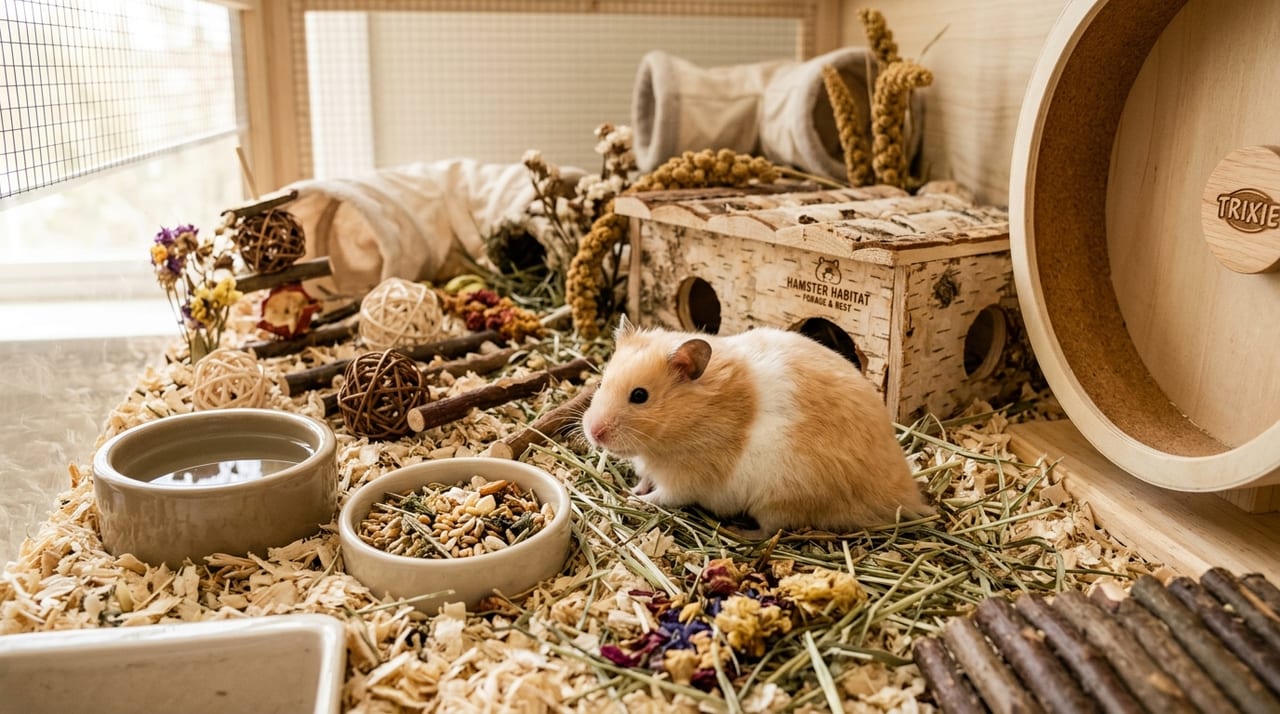
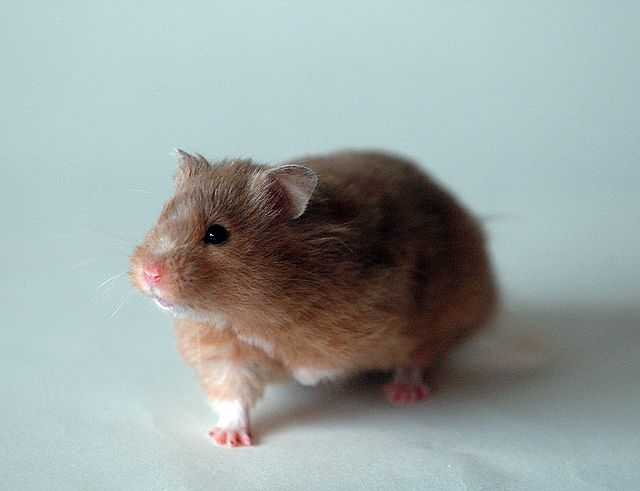
Hamsters must be housed individually. They have strong territorial instincts, and housing multiple hamsters in the same cage almost always results in serious fights. This is especially pronounced in golden hamsters, so always keep them one per cage.
Cage and Layout
- Floor area: Aim for at least 60×40cm. Commercially available small cages are often narrower than they appear and tend to stress hamsters, so choose the largest option possible.
- Bedding: Lay paper bedding or wood chips 5-10cm deep. Hamsters naturally dig and burrow, so providing sufficient depth encourages their natural nesting behaviors.
- Essential items: A wheel at least 15cm in diameter (large enough that the hamster's back doesn't curve) · nesting box · water bottle · sand bath container. Silent-type wheels with low noise are recommended.
Temperature Management
The ideal temperature is 20-26°C. Below 15°C, hamsters risk entering a state of torpor (hibernation-like state) and can die from hypothermia. Winter months require special attention. Since hamsters are nocturnal, pay attention to temperature drops at night.
Rabbit Care Environment
Rabbits are relatively large for small animals and require ample space. Think of the cage as primarily a resting and sleeping area—daily out-of-cage exercise time in a room or pen is essential. Lack of exercise can lead to obesity and digestive problems.
Cage and Layout
- Floor area: Ideally, the cage should be at least three times the rabbit's body length. Larger breeds require even more space.
- Bedding: A slatted floor is standard, but laying some cushioning material or fleece mats in places helps prevent sore hocks (foot pad inflammation) from rubbing.
- Essential items: Hay rack (keep timothy hay stocked at all times) · pellet dish · water bottle · litter box · chew wood. Rabbit teeth continuously grow, making chew wood essential for dental care.
Temperature Management
The ideal temperature is 16-25°C. Rabbits are extremely sensitive to heat and humidity—above 28°C, heat stress risk rises significantly. During summer, use air conditioning consistently and place the cage in a cool location.
Guinea Pig Care Environment
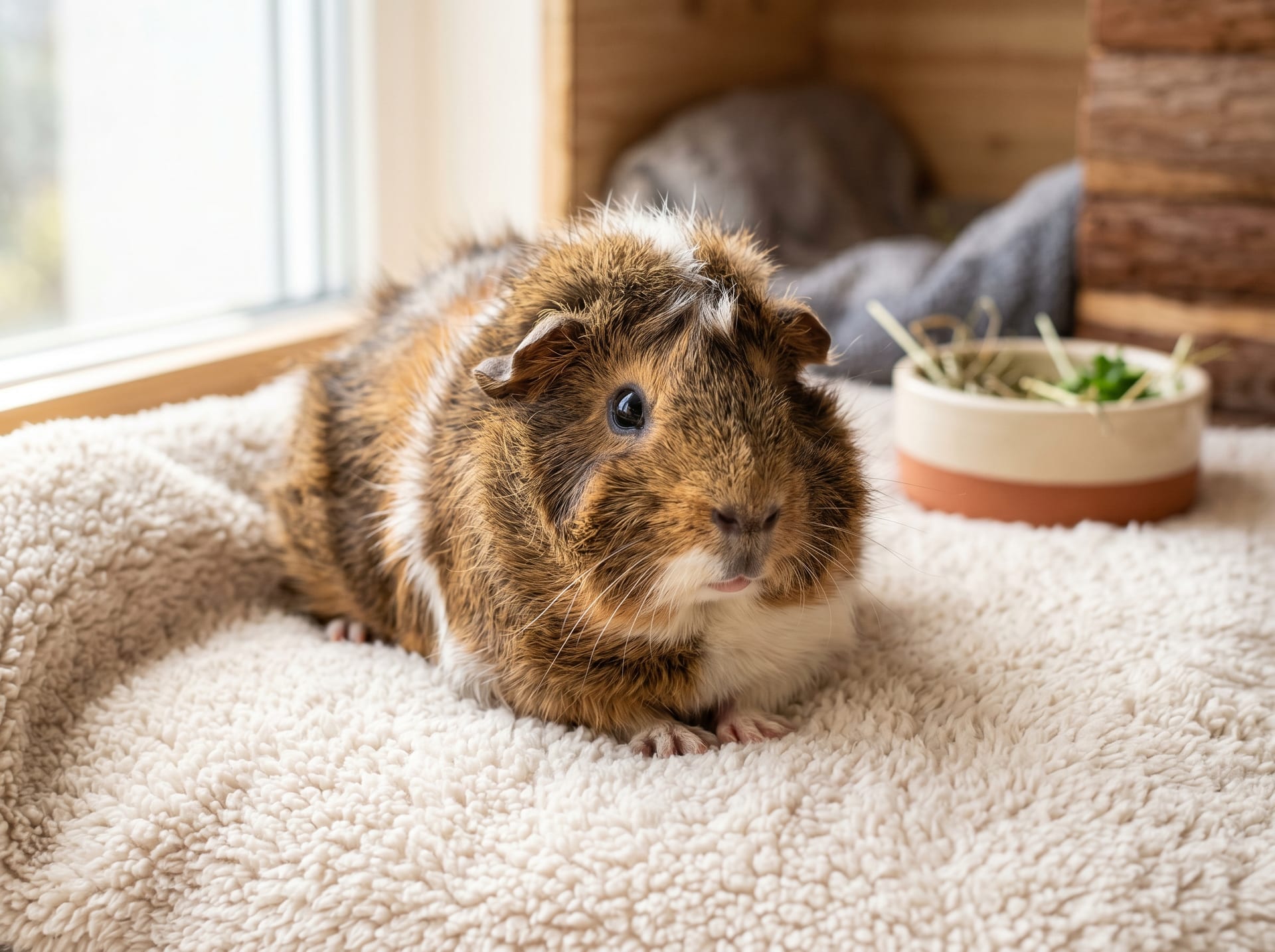
Guinea pigs are highly social animals that live in groups. Housing multiple guinea pigs is recommended, as a single guinea pig is prone to stress from loneliness. However, if you don't intend to breed, house them in same-sex pairs or with spayed/neutered individuals.
Cage and Layout
- Floor area: For two guinea pigs, plan for at least 120×60cm. A spacious environment is ideal.
- Bedding: Soft paper bedding or fleece fabric works well. Unlike rabbits, avoid slatted floors as they can put strain on their feet.
- Essential items: Hide-outs (provide multiple, one per guinea pig) · hay rack · water bottle · pellet dish. Guinea pigs cannot synthesize their own vitamin C, so they need daily supplementation through specialized pellets and vegetables.
Temperature Management
The ideal temperature is 18-24°C. Guinea pigs are sensitive to sudden temperature changes and easily become ill. Pay special attention during seasonal transitions.
The Importance of Temperature and Humidity Management
Because small animals have small bodies, they are directly affected by temperature fluctuations. What feels mildly cold to humans can cause serious harm to animals. Year-round proper environmental management is essential.
Seasonal Management Tips
- Summer: Using air conditioning to maintain a consistent room temperature is most effective. However, arrange the cage so that cool air doesn't blow directly onto it. As a backup for power outages, wrapping ice packs in towels and placing them beside the cage also works.
- Winter: Use pet heating pads or heat lamps as supplementary heat sources. However, if the entire cage warms evenly, animals lose a cooler refuge, so heat only part of the cage and let the animal choose its preferred temperature.
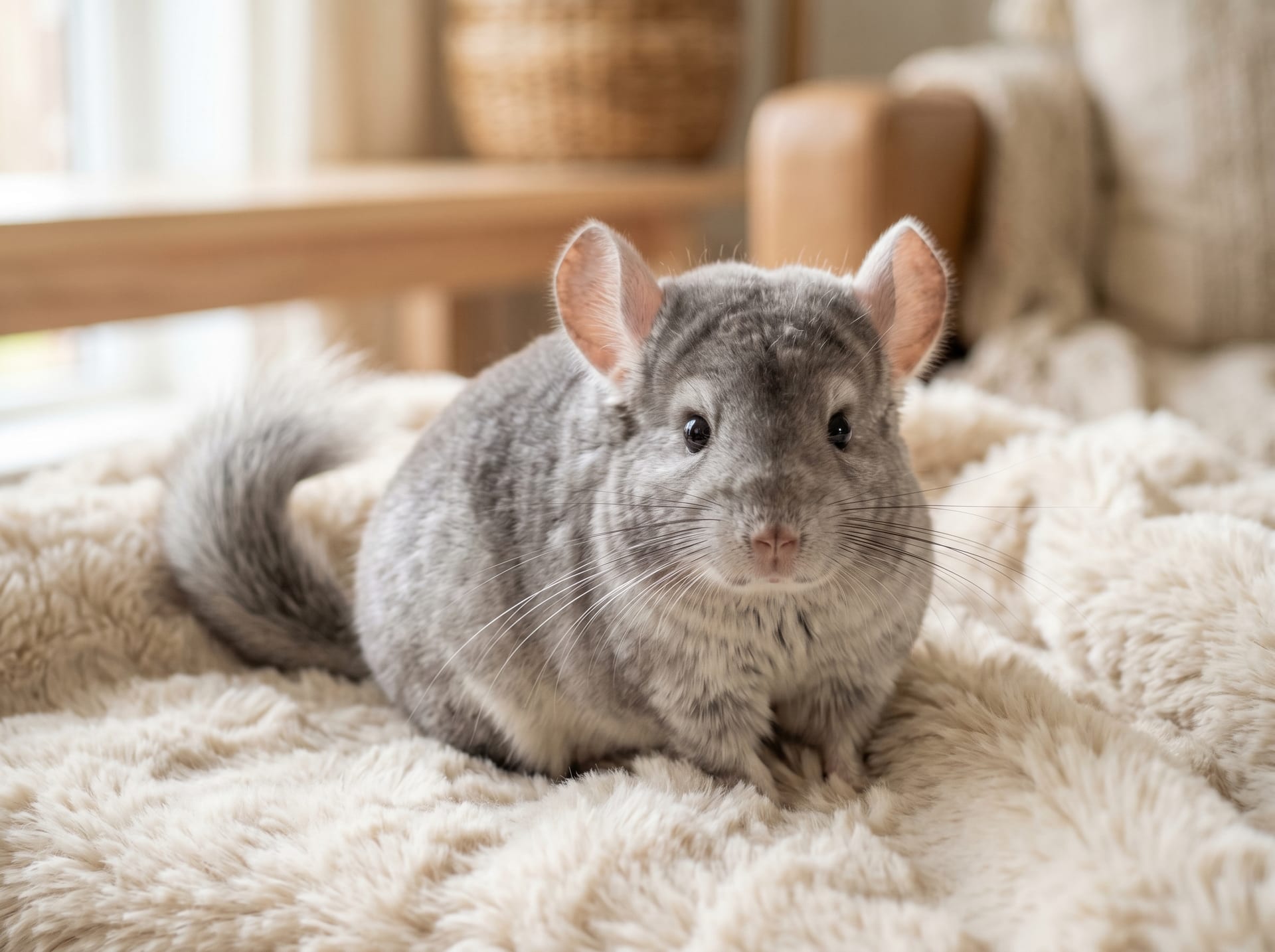
- Humidity: Aim to maintain 40-60%. Chinchillas are particularly susceptible to high humidity—consider using a dehumidifier during the rainy season and summer.
Installing a thermohygrometer near the cage makes management much easier. A digital model that records high and low temperatures is recommended.
BreederDirect's Safety and Security
Once you've established a proper care environment, you're ready to welcome a new family member. BreederDirect is a platform where you can acquire small animals directly from trusted breeders.
Since you can ask breeders directly, you can smoothly get concrete care advice such as "Will my setup work?" or "What bedding material did you use?" Hearing directly from the breeder about the animal's birth environment, temperament, and daily behavior provides great peace of mind, especially for first-time small animal owners.
Now that you've prepared the right environment and gathered your knowledge, come find your perfect match on BreederDirect.