Ferrets and Sugar Gliders Beginner's Guide | Care, Personality, and Costs Explained
A comparative guide to raising ferrets and sugar gliders, which are growing in popularity. Learn about their personality differences, required care environments, monthly costs, and important points to know before bringing them home.
Key Takeaways
A comparative guide to raising ferrets and sugar gliders, which are growing in popularity. Learn about their personality differences, required care environments, monthly costs, and important points to know before bringing them home.
Related Species
Ferrets: Personality and Care
Ferrets, sometimes called "tiny weasels," are small animals known for their intense curiosity and playful nature. With a charm entirely different from dogs and cats, they have been steadily growing in popularity as pets in recent years.
Ferret Personality:
- Extremely curious and active. Fascinated by anything that moves
- Affectionate and love playing with their owners
- Highly social and well-suited to multi-ferret households
- Spend most of the day (14-18 hours) sleeping
- When playing, they move around with full energy and fall asleep immediately when tired
Basics of Ferret Care:
- Cage: A multi-level large cage is ideal. Ensure it's at least 60cm wide
- Temperature Control: Ferrets are very heat-sensitive, so keep the temperature below 25°C with air conditioning during summer. Heat stroke can be life-threatening
- Free Roaming Time: They need 1-2 hours daily outside the cage for play
- Diet: Use ferret-specific food as their main diet. Since they're carnivores, choose high-protein and high-fat foods
- Litter Box: Place a litter box in the corner and they'll learn to use it quickly
- Bite Training: Consistent training from a young age can improve biting habits
Important Note: Ferrets are prone to diseases like adrenal disease and insulinoma. Make sure to locate an exotic animal veterinarian beforehand. As of 2026, exotic animal specialty clinics are increasingly available in urban areas, making it easier to research in advance.
Sugar Gliders: Personality and Care
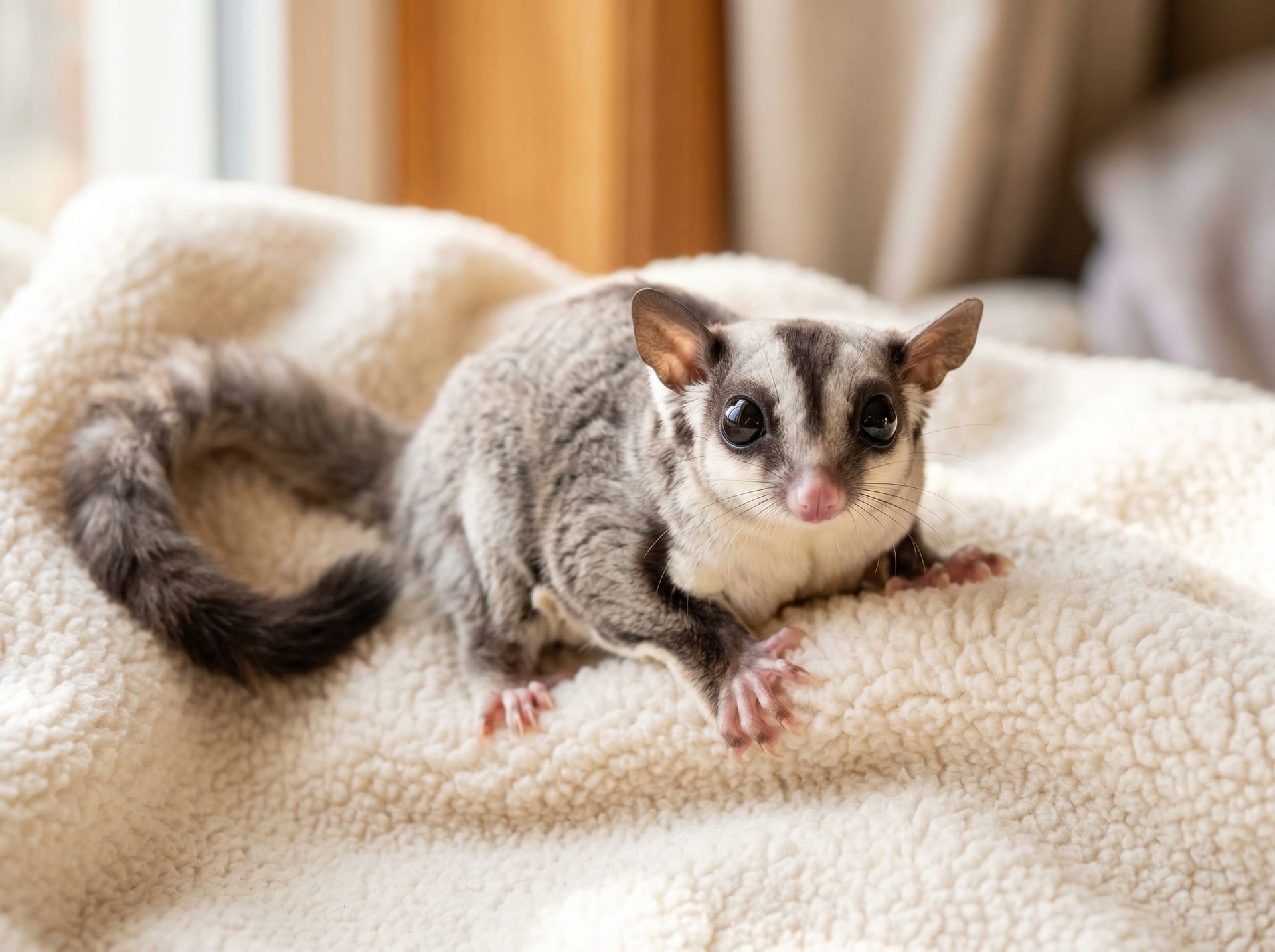
Sugar gliders are small marsupials with large eyes and are popular for their ability to glide by spreading their wing membranes.
Sugar Glider Personality:
- Cautious by nature, but become extremely affectionate once accustomed to their owner
- Nocturnal, becoming active from dusk onwards
- Communicate through vocalizations (crying, hissing, etc.)
- Can be carried in a pouch for "pouch-carrying" care
- Remember their owner's scent and form strong bonds
Basics of Sugar Glider Care:
- Cage: A tall cage is essential. Create vertical space with a tall cage since they like to glide
- Temperature Control: 24-28°C is ideal. They're cold-sensitive, so a pet heater is necessary in winter
- Diet: Balance species-specific food, fruits, and insects like mealworms. Be careful about picky eating
- Pouch: They sleep in a fleece pouch during the day. The owner's body heat and scent comfort them
- Communication: Build trust through daily handling. Persist even if they hiss at first
- Nail Trimming: Regular nail trims are necessary, as overgrown nails can snag on clothing and skin
Comparing Ferrets and Sugar Gliders (Personality, Cost, Space)
For those deciding between ferrets and sugar gliders, we've created a comparison guide.
Personality Differences:
- Ferrets are often naturally affectionate from the start and may play on day one
- Sugar gliders may take weeks to months to become comfortable, but the bond once formed is deep
Cost Guide (as of 2026):
- Ferrets: ¥30,000-80,000 for the animal, ¥50,000-80,000 initial setup (cage and supplies), ¥5,000-10,000 monthly (food and supplies)
- Sugar Gliders: ¥20,000-60,000 for the animal (varies by color), ¥30,000-50,000 initial setup, ¥3,000-6,000 monthly
Housing Space:
- Ferrets require a designated free-roam space (ferret-proofed room)
- Sugar gliders can mostly stay in their cage but need a tall one
Lifespan:
- Ferrets: 6-10 years
- Sugar Gliders: 10-15 years (with proper care)
What You'll Need for Care
Here are items needed for both species and items unique to each.
Common Items:
- Appropriately sized cage
- Temperature control equipment (air conditioning, pet heater)
- Species-specific food
- Water bottle (bottle-type recommended)
- Carrier (for vet visits)
- Toys
Ferret-Specific Items:
- Hammock (sleeping area in cage)
- Ferret litter box and litter
- Collar and harness (for walks)
- Ear cleaning supplies
Sugar Glider-Specific Items:
- Fleece pouches (rotate multiple)
- Honey and pollen supplements
- Perches and platforms
- Insects (live food like mealworms)
Benefits of Buying from Breeders
There are significant benefits to purchasing ferrets and sugar gliders directly from breeders.
- Well-socialized animals: Animals handled from infancy are far more likely to bond with you
- Clear health status: You can verify parent information and health records from birth
- Care advice: Expert guidance from breeders who specialize in the species is invaluable
- Color variety: Rare colors like leucistic (white) or platinum sugar gliders are often available only from breeders
- Aftercare support: Breeders can answer your questions and concerns after purchase
When bringing home a small animal, also refer to our Small Animal Care Guide and Small Animal Health Checklist.
Ferret and Sugar Glider Care Environment Comparison
| Comparison | Ferret | Sugar Glider |
|---|---|---|
| Cage Size | 90cm wide × 60cm deep or larger | 60cm wide × 45cm deep × 90cm+ height (height priority) |
| Temperature | 15-25°C (very heat-sensitive) | 25-28°C (cold-sensitive) |
| Diet | Ferret-specific food + animal protein | Species-specific food + insects + fruit |
| Odor | Slightly strong (reduced with neutering and scent gland removal) | Males have stronger odor |
| Free Roaming Time | 2-3 hours daily | Free access to room at night |
| Lifespan | 5-10 years | 10-15 years |
| Friendliness | Very affectionate | Varies by individual. Affectionate if raised from young |
For both animals, it's extremely important to confirm in advance whether there's an exotic animal veterinarian nearby. General dog and cat clinics often refuse to treat exotic animals.
Pre-Purchase Preparation Checklist
Before bringing home a ferret or sugar glider, confirm the following:
- Identify at least 2 exotic animal veterinary clinics
- Purchase and set up an appropriately sized cage
- Confirm temperature control equipment (air conditioning/heater)
- Secure a source for species-specific food
- Implement escape-prevention measures (cage locks, seal room gaps)
- Plan odor management for neighbors (especially for ferrets)
- Plan temperature management for summer and winter (refer to Small Animal Summer/Winter Care)
Find Small Animals on BreederDirect
On BreederDirect, breeders specializing in ferrets and sugar gliders offer their animals for sale. Listings include detailed information about personality, health status, and socialization level, so you can adopt with confidence. With a wide variety of colors available, it's easy to find your perfect match. If you're considering raising a small animal for the first time, be sure to check out the breeder listings on BreederDirect.