Coral Color Enhancement Techniques | Professional Tips on Light, Nutrient Control & Water Flow
Advanced techniques for bringing out vibrant coral colors. Learn about light spectrum adjustment, ultra-low nutrient environments, and amino acid supplementation.
Key Takeaways
Advanced techniques for bringing out vibrant coral colors. Learn about light spectrum adjustment, ultra-low nutrient environments, and amino acid supplementation.
What is Coral Color Enhancement? Understanding the Mechanism
The vibrant colors of corals captivate aquarium enthusiasts everywhere. Haven't you ever wished to recreate the deep reds, fluorescent greens, and striking blues you see at shops in your own tank?
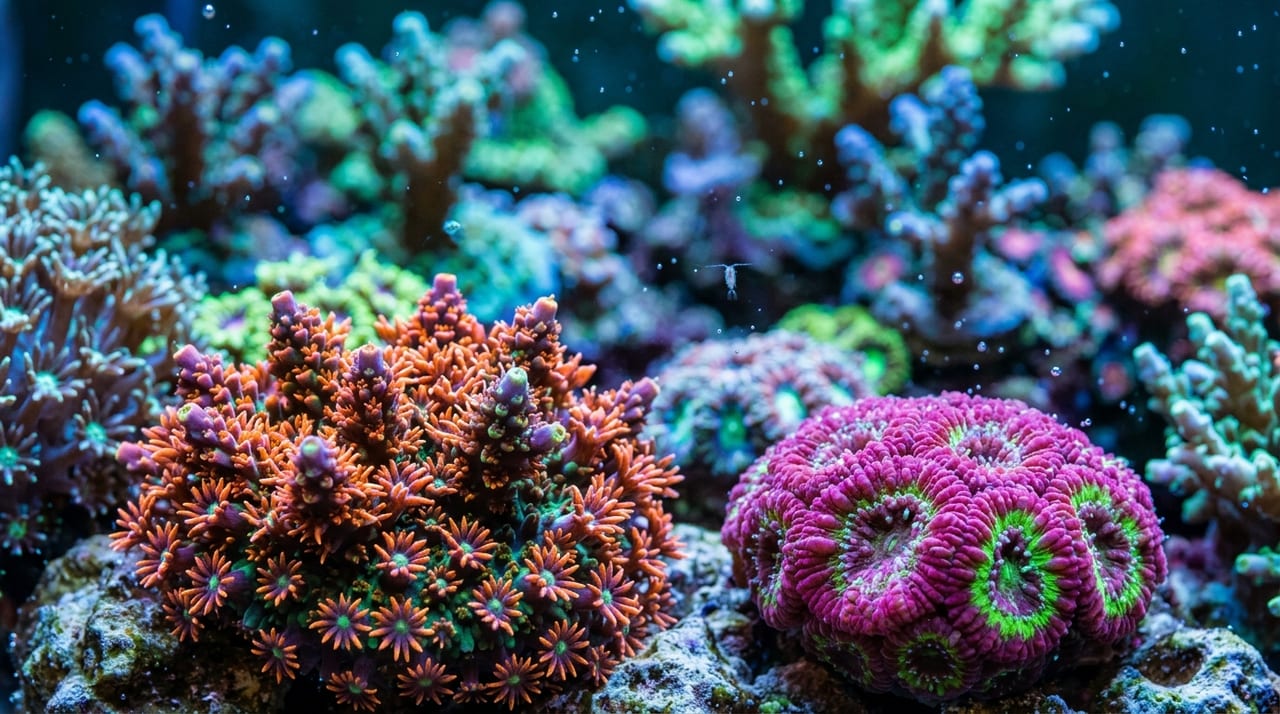
Coral color is determined primarily by chromoproteins (pigment proteins) and fluorescent proteins (GFP-related proteins) within their tissues. These proteins reach full expression only when three key factors are in balance: light, water quality, and nutrition. Conversely, if even one of these elements falters, vibrant corals can become dull or bleach. Color enhancement is the technique of intentionally controlling these three elements to unlock the full color potential that corals naturally possess. As of 2026, advances in lighting technology and additives have made pursuing coral color enhancement more accessible than ever.
Light Spectrum Adjustment — The Most Critical Factor in Color Enhancement
The most direct influence on color enhancement comes from "light spectrum (wavelength)." Natural sunlight contains a broad range of wavelengths, but in an aquarium, you can freely adjust its composition through your lighting system.
Utilizing Blue and Ultraviolet LEDs
Coral fluorescent proteins absorb light at specific wavelengths and re-emit it at longer wavelengths. In particular, 420–460 nm blue LEDs are well-known for strongly eliciting coral fluorescence and are widely used in color-enhancement lighting. Adding small amounts of 370–410 nm ultraviolet LEDs (UV) further enhances fluorescent vibrancy.
Reducing the Proportion of White Light
While white LEDs appear bright to the human eye, they don't necessarily benefit coral color enhancement. By reducing the proportion of white light and increasing the ratio of blue to violet, coral colors visually intensify and fluorescence is enhanced. However, eliminating white light entirely can reduce photosynthetic efficiency in symbiotic zooxanthellae algae, so it's important to adjust the balance carefully.
Lighting Duration and Intensity
Rapidly increasing light intensity to rush color enhancement will stress corals and backfire. When introducing new lighting, always perform an "acclimation" phase over 2–4 weeks, gradually increasing light intensity. Aim for 8–10 hours of daily lighting, maintaining consistency with a timer.