Pleco (Loricariidae) Complete Care Guide | Environment, Feeding, and Breeding for Nocturnal Large Fish
A comprehensive guide covering pleco (Loricariidae) care environments, substrate selection, the necessity of wood (driftwood), feeding schedules, nocturnal care, differences between common plecos and bushy plecos, and breeding shelter setup.
Key Takeaways
A comprehensive guide covering pleco (Loricariidae) care environments, substrate selection, the necessity of wood (driftwood), feeding schedules, nocturnal care, differences between common plecos and bushy plecos, and breeding shelter setup.
About Plecos
Plecostomus are tropical fish with sucker mouths belonging to the order Siluriformes, family Loricariidae. Distributed primarily throughout the Amazon River basin in South America, over 700 species have been identified to date.
The most commonly kept species are primarily:
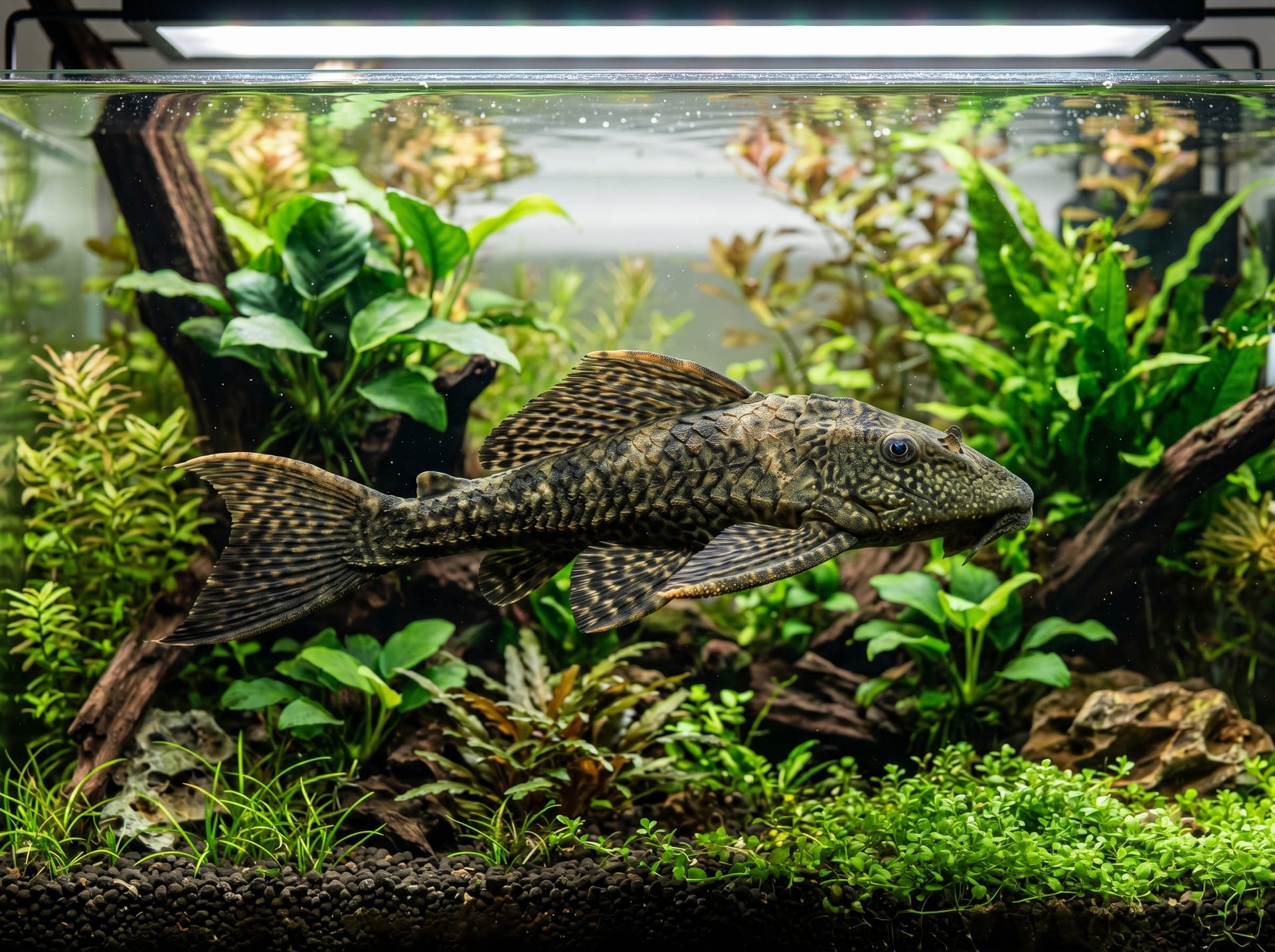
- Common Pleco (Hypostomus plecostomus): Most widely available in the trade; grows to 40–60 cm when mature, a large species
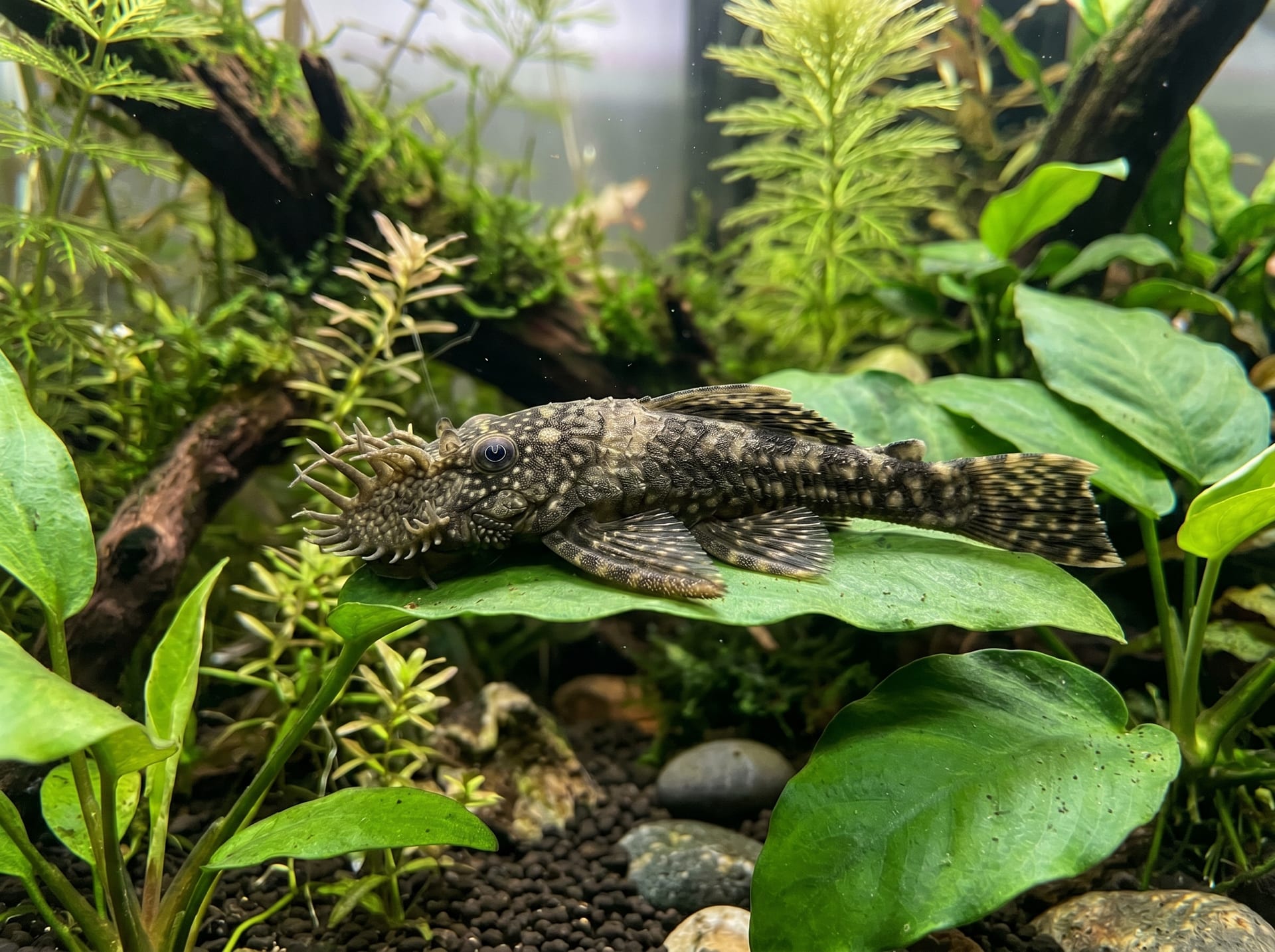
- Bushy Pleco (Ancistrus genus): Medium-sized species reaching 15–20 cm; characterized by whisker-like barbels on the head
- Royal Pleco (Panaque genus): Medium to large species with black coloring and white stripe patterns; strong wood-eating tendencies
✍️
BreederDirect Editorial
The BreederDirect editorial team specializes in care information for animals, covering veterinary care and breeding to deliver beginner-friendly guides.
Find Tropical Fish on BreederDirect
Buy directly from verified breeders
Browse Related Listings
Find Tropical Fish listings related to this article on BreederDirect. Buy directly from verified breeders.
Related Tools
Related Articles
Browse by Category
🪸Coral
🐠Marine Fish
🐟Tropical Fish
🐡Goldfish
🐟Medaka
🦎Reptiles
Share
---
Tank Size and Environment
Required Tank Size
Species
Minimum Tank Size
Bushy Pleco
60 cm tank (approximately 60 L or more)
Common Pleco (Adult)
120 cm tank or larger
Royal Pleco
90 cm tank or larger
Common plecos are often sold as "small fish algae eaters," but once grown, they require an extremely large space and substantial filtration capacity. Always confirm the adult size before purchasing.
Water Quality Parameters
Parameter
Recommended Value
Temperature
24–28°C
pH
6.5–7.5
Hardness
Soft to moderately hard water (5–15 dGH)
Ammonia/Nitrite
0 mg/L
Substrate and Hideouts
Since plecos roam the bottom, sand or fine gravel substrate is appropriate. Sharp-edged gravel can damage their ventral surface.
Additionally, cave-like or tube-shaped hideouts (shelters) are essential. They are necessary for both stress reduction and breeding behavior. Materials include:
- Terracotta tubes
- Holes in driftwood
- Commercial pleco shelters (Pleco Cave)
The ideal inner diameter of the shelter is slightly larger than the width of the fish.
---
The Importance of Driftwood
Plecos, particularly royal plecos and Panaque species, are among the few fish capable of digesting wood. They possess specialized gut bacteria that aid cellulose breakdown, obtaining nutrition by scraping and consuming driftwood.
Driftwood is essential in tanks housing these species. Without driftwood, they may gradually weaken.
For common plecos and bushy plecos, driftwood is also beneficial as a stress reducer, hideout, and source of microorganisms. Before use, boil or soak driftwood for 1–2 weeks in advance to remove tannins.
---
Feeding Schedule
Diet and Preferred Foods
Plecos are omnivorous, but a plant-based diet is fundamental:
Vegetables: Zucchini, cucumber, spinach, carrots (2–3 times per week)
Specialized pellets: Sinking tablets such as Hikari Pleco and Tetra Wafers
Driftwood (primary food for some species such as royal plecos)
Live food: Occasionally as treats, such as bloodworms and brine shrimp
Consideration for Nocturnal Behavior
Since plecos are nocturnal, feeding after turning off the lights makes eating easier. An effective method is to drop tablets to the tank bottom just before turning off the light.
During the day, they usually hide in the shadows of driftwood or rocks, so even if they appear not to be eating during daylight, it is rarely a problem.
---
Breeding
Breeding Preparation
Bushy plecos breed relatively easily. The conditions are:
1. A male-female pair (males have more barbels on the head)
2. Breeding shelter: A tube-shaped shelter with an inner diameter of 5–7 cm and length of 15–20 cm
3. A slight temperature drop (lowering from 25°C to 23°C can be effective in triggering spawning)
Spawning and Parental Care
The male takes up residence in the shelter and lures the female inside for mating. Eggs are laid inside the shelter, and the male guards them until hatching (fanning with his mouth to supply oxygen).
Stage
Duration
Until hatching
5–10 days (temperature-dependent)
Until fry swim independently
7–10 days after hatching
Fry independence
2–3 weeks after hatching
Fry should be constantly provided with finely crushed tablets and driftwood.
---
Notes on Tank Mates
Same species: Multiple common plecos may fight over territory. In a 60 cm tank, one individual is ideal.
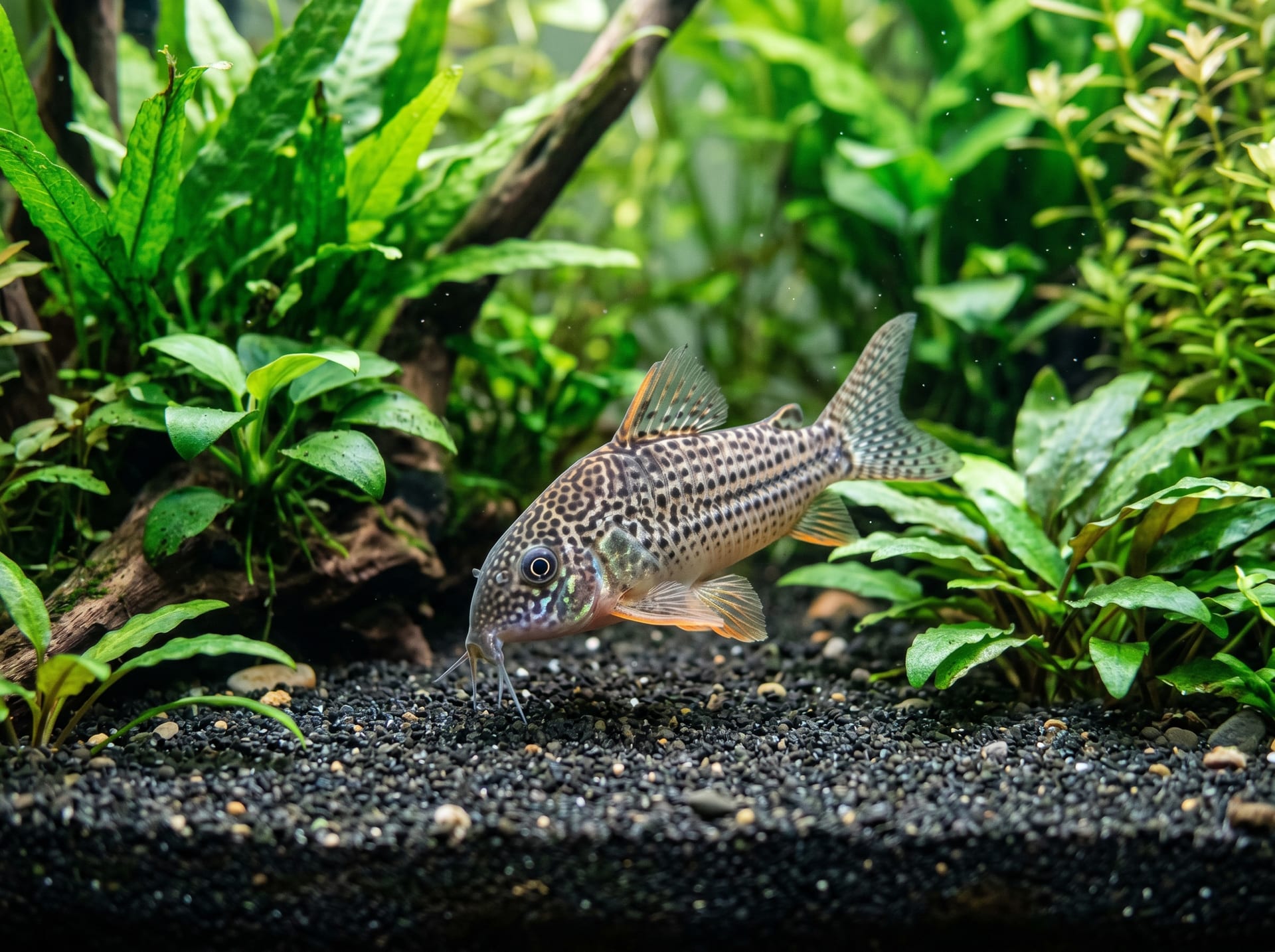
With other bottom-dwellers: Competition for substrate space may occur with corydoras and loaches.
Impact on small fish: Be careful as some individuals may attach to their bodies at night (especially large plecos).
---
Summary
Plecos are hardy and long-lived (many individuals exceed 10–15 years), making them potential long-term companions. However, success in keeping them depends on planning the tank to accommodate their adult size and providing driftwood and shelters. Respecting their nocturnal habits and developing a routine of observing and feeding them after lights off allows you to enjoy plecos in their natural active state.