Peruvian Guinea Pig Care Guide | Daily Long-Coat Grooming & Housing
How to care for a Peruvian guinea pig: daily brushing and trimming routines for the long coat, cage setup, temperature control, diet, and what to check when buying from a breeder.
Key Takeaways
How to care for a Peruvian guinea pig: daily brushing and trimming routines for the long coat, cage setup, temperature control, diet, and what to check when buying from a breeder.
Related Species
Peruvian Guinea Pigs Explained | Complete Guide to Characteristics, Care, Lifespan, and Long-Hair Grooming
Peruvian Guinea Pigs are a long-haired guinea pig breed native to Peru in South America. Their coats grow to 20–30cm or longer, and they are known for their calm, gentle temperament, making them suitable even for beginners. With a lifespan of 5–8 years and body weight around 700–1,200g, they are a medium-sized breed. The most important consideration is that daily grooming (brushing) is essential, making this breed best suited for those willing to invest time and effort.
Peruvian Guinea Pigs are a popular breed known for their luxurious long coats and calm disposition. In Japan, many people search for information using keywords like "モルモット ペルビアン" (Peruvian Guinea Pig) and "ペルビアン寿命" (Peruvian lifespan), showing growing interest in keeping this breed. This article provides a comprehensive guide covering Peruvian Guinea Pig characteristics, care methods, long-hair grooming, and health management.
Peruvian Guinea Pig Characteristics and Temperament
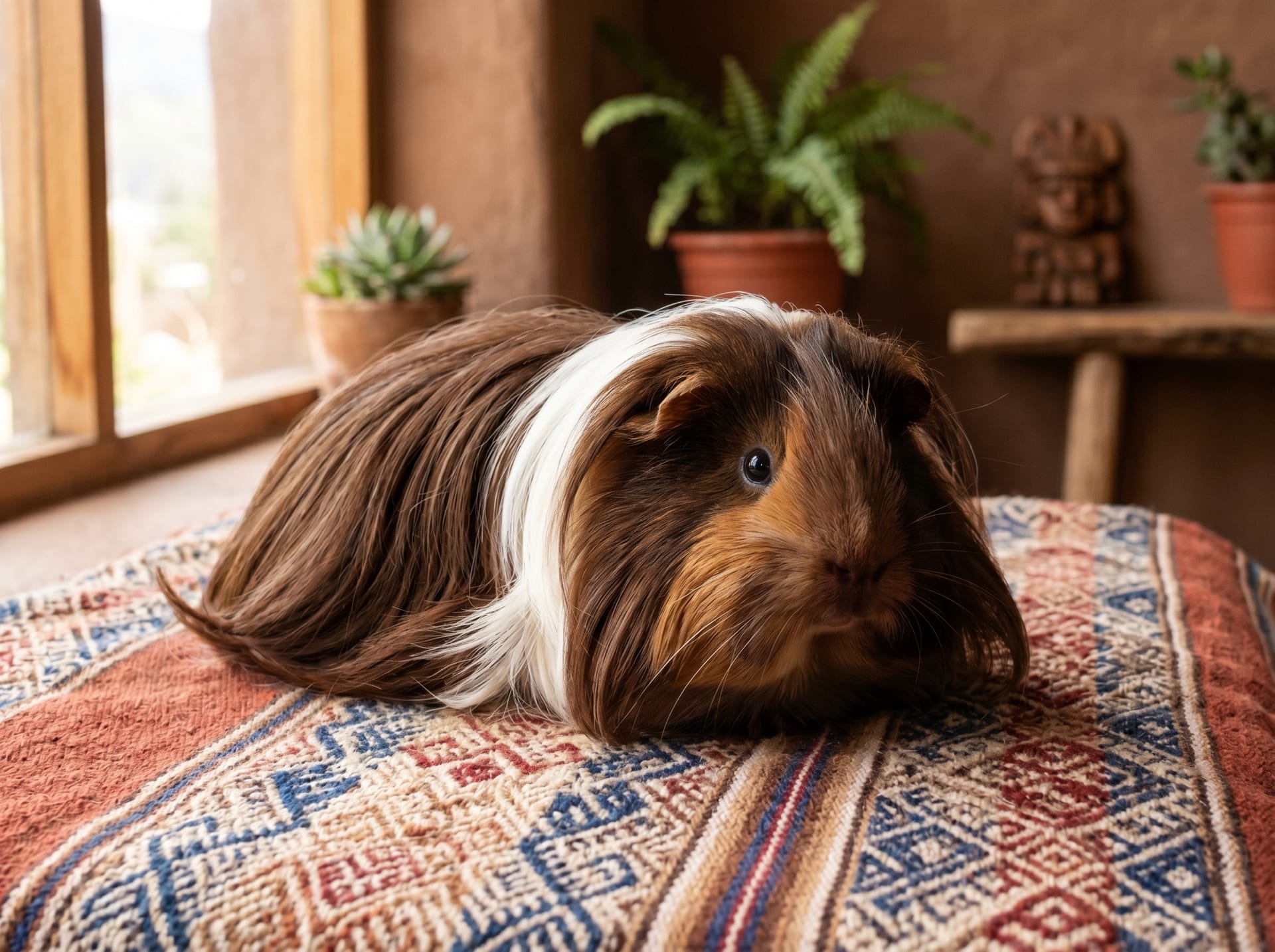
Peruvian Guinea Pigs are especially known within the guinea pig breed family for their particularly long coats. Their fur grows to cover the entire body, and with proper care can reach 20–30cm or more. The breed originates in South America, particularly Peru, and gained popularity in Europe as an ornamental breed during the 18th century.
Physical Characteristics
- Body Weight: 700–1,200g (males are slightly larger)
- Body Length: 20–25cm
- Coat: Extremely long, growing from the head forward and backward in a neat pattern
- Color Variations: White, tortoiseshell (three-color: white, black, and brown), golden, black, and many other varieties
Personality and Behavior
Peruvian Guinea Pigs often have calm, gentle personalities and are reported to readily accept handling and physical affection. However, individual variation exists, and they may appear shy until acclimated.
- Express emotions through vocalizations ("wheek" when happy, "brr" when alert)
- Generally calm and easy to keep, suitable for children and beginners
- Social animals that live in groups, often preferring multi-guinea pig environments
Peruvian Guinea Pig Basic Data
| Item | Details |
|---|---|
| Body Weight | 700–1,200g (males slightly larger) |
| Body Length | 20–25cm |
| Coat | Long hair (grows to 20–30cm or more) |
| Lifespan | 5–8 years (longer-lived than standard guinea pigs) |
| Temperament | Calm and gentle, highly social |
| Colors | White, tortoiseshell, golden, black, and others |
| Key Care Points | Daily brushing, maintain 22–26°C in summer |
Peruvian Guinea Pig Lifespan and Health Management
Average lifespan is 5–8 years. They tend to live slightly longer than standard guinea pigs (4–6 years), and with proper care, some individuals live beyond 8 years.
Health Issues to Monitor
1. Malocclusion (Misaligned Teeth) Guinea pig teeth grow continuously throughout their lives. Insufficient hay consumption leads to inadequate tooth wear, which can result in malocclusion. Providing timothy hay constantly is the foundation of prevention.
2. Heat Stress Guinea pigs have poor temperature regulation, and heat stress risk rises sharply above 28°C. Maintain 22–26°C during summer using air conditioning.
3. Skin Conditions (Matted Fur, Dermatitis) Long-haired Peruvians are prone to tangled, matted fur that causes skin moisture and dermatitis. Regular grooming is essential.
4. Respiratory Illness Breeding in environments with temperature fluctuations or high humidity increases the risk of pneumonia and other respiratory diseases. Maintain appropriate temperature (20–26°C) and humidity (40–60%).
Regular Health Check Points
- Daily weight monitoring (note significant drops of 100g or more)
- Check eyes, nose, and ears for discharge
- Monitor tooth condition (excessive drooling suggests malocclusion)
- Observe stool size and frequency (small or reduced output indicates loss of appetite)
Peruvian Guinea Pig Housing Environment
Cage Selection and Size
Guinea pigs are active animals requiring spacious cages. Even for a single guinea pig, provide at least 60×90cm of floor space. Since Peruvians have long coats, bedding selection is particularly important to prevent matting.
- Recommended Bedding: Pet pads (prevents fur matting) or fleece mats
- Bedding to Avoid: Sawdust (fine particles tangle in fur), mesh flooring (risks nail and leg injuries)
- Water Dispenser: Bottle-type (bowl-type water causes wet fur and dermatitis risk)
Temperature and Humidity Management
| Item | Recommended Range |
|---|---|
| Temperature | 18–26°C |
| Humidity | 40–60% |
| Dangerous Temperatures | 30°C+ (heat stress risk), 10°C or below (hypothermia risk) |
Cage Placement
- Away from direct sunlight
- Not directly in air conditioning drafts
- In a quiet location away from TVs and audio equipment (stress reduction)
- In a location where family presence can be felt (prevents isolation)
Peruvian Guinea Pig Grooming (Coat Care)
The most important and distinctive aspect of Peruvian Guinea Pig care is grooming their long coats.
Daily Brushing
Essential Tools:
- Slicker brush (removes fine tangles)
- Comb (finishing and coat alignment)
- Small rounded-tip scissors (for trimming if needed)
Brushing Steps:
- Gently work through tangles from root to tip, gradually
- For severe matting, apply a small amount of pet conditioner rather than pulling forcefully
- Pay special attention to hair around the anal area, which soils easily
- Finish by combing the entire coat
Regular Trimming
While Peruvians showcase their long coats at exhibitions, home-kept guinea pigs benefit from trimming to 3–5cm. Especially during summer or in multi-guinea pig environments, prioritize hygiene with regular trims.
Trimming Frequency: Every 1–3 months depending on coat growth
Anal Area Care
Because of their long hair, Peruvians easily get feces caught in their coats. Leaving soiled hair untreated can lead to dermatitis and parasites (fly strike, etc.).
- Check the anal area daily
- Perform partial washing with lukewarm water if soiled
- Trim hair around the anal area as needed
Peruvian Guinea Pig Diet Management
Basic Diet Composition
| Food Type | Proportion | Purpose |
|---|---|---|
| Hay (Timothy 1st cutting) | 70–80% | Dental health and intestinal motility |
| Pellets (Guinea pig formula) | 10–20% | Nutritional balance |
| Fresh vegetables and fruits | Small amounts | Vitamin C supplementation |
The Importance of Vitamin C
Guinea pigs cannot synthesize vitamin C internally, making daily vitamin C intake essential. Vitamin C deficiency causes scurvy, resulting in poor coat quality, bleeding gums, joint pain, and other symptoms.
Vitamin C-Rich Vegetables:
- Bell peppers (especially red): highest in vitamin C
- Broccoli
- Bok choy and Chinese broccoli
- Cabbage (small amounts)
Welcoming a Peruvian Guinea Pig from a Breeder
Choosing a trustworthy breeder is essential when welcoming a healthy Peruvian.
Identifying a Quality Breeder
- Maintains clean, spacious cages with proper breeding conditions
- Provides health records and pedigree information for parent guinea pigs
- Performs health checks before sale
- Offers post-purchase support
- Answers questions thoroughly and in detail
Arrival Checklist
- Bright, clear eyes with no nasal discharge or eye crust
- Well-groomed coat with no bald patches or skin irritation
- Firm body with elastic skin, ribs not overly prominent
- Active movement and good appetite
- At least 6–8 weeks old (early weaning causes behavioral problems)
Conclusion
Peruvian Guinea Pigs are attractive for their beautiful long coats, but require significant grooming effort. Daily brushing and regular trimming demand dedication, yet these become opportunities for bonding and deepening your connection with your guinea pig.
By maintaining proper temperature and humidity, providing nutritionally balanced food, and keeping the environment clean, Peruvian Guinea Pigs can live their 5–8 year lifespan in good health. When acquiring a Peruvian from a breeder, prioritize bloodline and health status, and select a healthy individual from a reputable breeder.