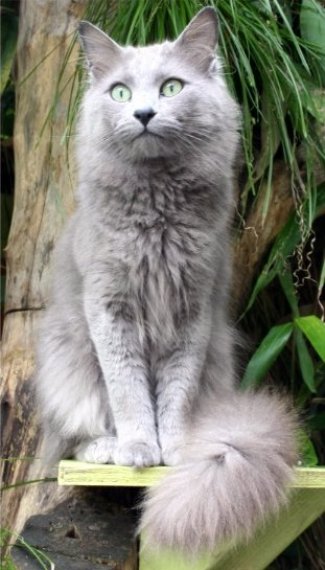
The Nebelung is a cat breed named after the German word meaning "creature in the mist," possessed of a mystical beauty. Characterized by long hair with a silver-blue shimmer (reflected light) and emerald-green eyes, they carry an air of elegance as if stepped from a noble portrait. A relatively new breed that emerged in America during the 1980s, it has grown increasingly popular among enthusiasts worldwide due to its unique charm.
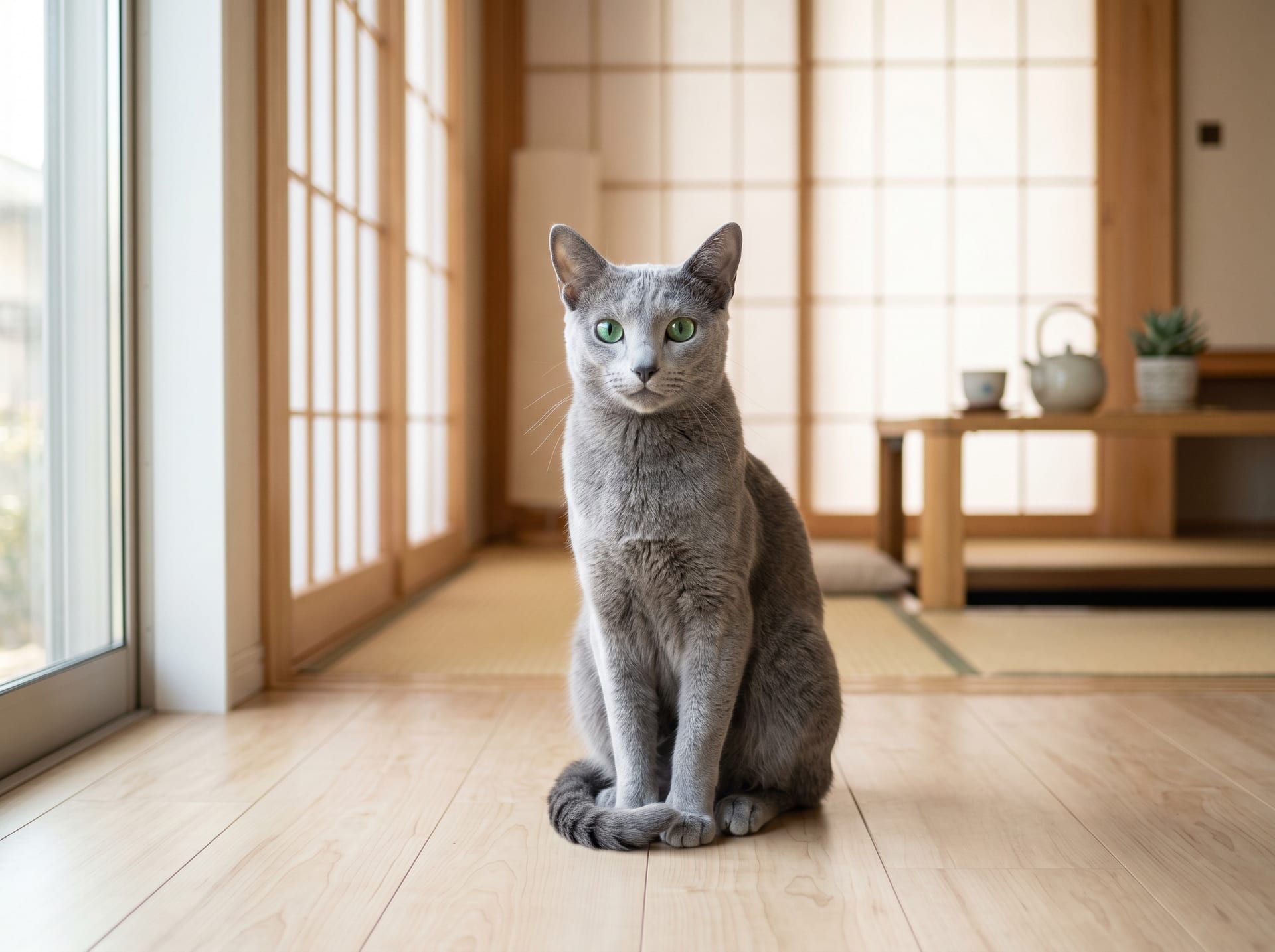
The Nebelung is a breed developed by establishing a long-haired variant of the Russian Blue (shorthair).
Physical Characteristics:
- Coat: Beautiful blue-gray semi-long hair with silver-tipped guard hairs that create a lustrous sheen
- Eye Color: A gradient that transitions from bright green to yellow-green (kittens are born with yellow eyes that gradually shift to green as they mature)
- Body Type: Medium-sized, slim semi-foreign type
- Weight: Males 4–6 kg, females 3–5 kg
- Ears: Large, erect triangular ears
- Tail: Long, plume-like tail with abundant feathering
The coat color is exclusively blue; other colors are not recognized by breed standards (per the American Nebelung Association and similar organizations).
Lifespan: Generally 15–18 years, with some individuals exceeding 20 years in proper environments.
Temperament and Behavioral Traits
The Nebelung shares many temperamental traits with the Russian Blue, while also possessing unique characteristics of its own.
Personality Traits:
- Strong Bond to Specific People: Deeply loyal and bonded to their owners, yet reserved and cautious with strangers
- Intellectual Curiosity: Intelligent and highly attuned to environmental changes
- Calm and Quiet: They vocalize infrequently and thrive in peaceful household environments
- Moderate Activity Level: Playful as kittens but become more settled as adults
- Balance of Independence and Affection: Not overly clingy; they prefer a certain degree of personal space
- Sensitivity: They are easily stressed by environmental changes (moving, new pets, changes in routine)
Response to Unfamiliar People:
Similar to Russian Blues, Nebelungs are often quite shy upon first meeting and may hide. With time and gradual acclimation, they will gradually warm up. This is a breed characteristic, not a sign of poor temperament.
If you expect your cat to quickly warm to visitors, another breed may be more suitable. However, for those seeking a partner with deep loyalty and a strong bond to a single owner, the Nebelung is ideal.
Creating the Right Environment
While Nebelungs are relatively calm and adaptable, their sensitive nature requires thoughtful environmental design.
Comfortable Living Spaces:
- Feed, house the litter box, and provide resting areas in quiet locations (they are sensitive to noise and vibrations)
- Tall cat towers or shelves where they can climb (they enjoy observing the household from vantage points)
- Hiding spots (cardboard boxes, under beds, cat houses, etc.)
- Sunny windowsill spots (they love basking in sunlight)
Temperature Control:
- Ideal Temperature: 18–25°C
- Due to their long coat, beware of summer heat; temperatures above 28°C require ventilation and air conditioning
- Winter: Their abundant coat provides good insulation against cold
Indoor-Only Housing Recommended:
Nebelungs should be kept indoors exclusively. Their sensitive temperament makes outdoor stimuli (traffic, other animals, territorial disputes) a significant source of stress.
Dietary Management
While Nebelungs don't require special dietary restrictions, food selection should account for their coat care needs.
Recommended Diet:
- Complete and balanced high-protein, low-carbohydrate food (wet or dry)
- Food containing omega-3 and omega-6 fatty acids (to maintain coat shine)
- Hairball control formula (designed for long-haired breeds)
Feeding Amount and Calorie Management:
- Daily Guidelines: Approximately 60–80 kcal per kg of body weight (for adult cats)
- To prevent obesity, measured portions are recommended over free-feeding
- Feed twice daily on a fixed schedule
Hydration:
As with all cats, inadequate water intake can lead to kidney and urinary issues. Always provide fresh water, incorporate wet food to boost hydration, and offer multiple water stations or a flowing fountain, which many cats find attractive.
Coat Care and Grooming
Semi-long-haired Nebelungs require regular grooming, though not as frequently as fully long-haired breeds.
Daily Care:
- Brushing: 2–3 times per week (daily during shedding season)
- Brush Types: A slicker brush combined with a stainless steel comb works best
- Shedding Season (spring and autumn): Daily brushing is necessary due to heavy fur loss
- Pay special attention to the belly, underarms, and neck area, which mat easily
Hairball Prevention:
Long-haired cats risk ingesting loose fur, leading to hairballs. Hairball control food and regular hairball remedies (such as malt extract) can help.
Other Care:
- Nail Trimming: 1–2 times per month
- Ear Cleaning: About once per week (gently wipe inner ear with a cotton swab)
- Tooth Brushing: Establish this habit from kittenhood (to prevent periodontal disease)
Health Management and Conditions to Watch For
Since Nebelungs are based on the Russian Blue, attention to health issues common in that breed is important.
Genetic and Constitutional Concerns:
- Hypertrophic Cardiomyopathy (HCM): A cardiac condition found in many breeds, including the Russian Blue. Regular cardiac ultrasound (echocardiogram) is recommended
- Urinary Tract Disease (FLUTD): Stones and cystitis resulting from inadequate water intake; increasing water intake helps prevent this
- Overeating and Obesity Tendency: Quiet, less active individuals are prone to weight gain
Stress-Related Conditions:
Due to their sensitive nature, environmental changes, noise, and introduction of new pets can cause stress, leading to immune suppression and loss of appetite. Introduce environmental changes gradually and carefully.
Regular Check-ups:
Annual veterinary examinations (including weight check, dental assessment, physical exam, and blood work) are the baseline; increase to twice yearly after age 5.
Multi-Cat Compatibility
Due to their reserved nature, Nebelungs may or may not do well in multi-cat households.
- Compatible Breeds: Calm, quiet cats (Russian Blues, British Shorthairs, etc.)
- Incompatible Situations: Very active or aggressive breeds can cause stress
- Introduction Method: Introduce new cats gradually over an extended period (minimum 2–4 weeks of acclimation)
In multi-cat homes, it's important to provide separate food areas, litter boxes, and resting spots so each cat has its own safe retreat.
Purchasing from Breeders and Important Considerations
Nebelungs are still rare in Japan, with few specialized breeders.
Items to Verify Before Purchase:
- Health certifications for parents (HCM negative test results, etc.)
- Kitten's socialization history
- Records of vaccinations and deworming
- Breeder's facility hygiene and care standards
Fraudulent representations of Russian Blue long-haired variants as Nebelungs do occur, so verify registration with official Nebelung organizations (such as TICA).
Trusted platforms like BreederDirect allow you to review breeder profiles, ratings, and ask direct questions, providing peace of mind when purchasing rare breeds.
Summary
The Nebelung is a captivating breed that combines the intelligence and sensitivity inherited from the Russian Blue with a beautiful long coat. While they may be reserved with strangers and have delicate natures, the depth of their bond with their owner—and the special relationship that develops over years—is their greatest appeal. For those who can provide a quiet environment and thoughtful communication, this "aristocrat of the mist" becomes the perfect companion.