Moorish Idol (Zanclus cornutus) Care Guide | Feeding Challenges and Long-Term Husbandry Practices
Moorish Idol (Zanclus cornutus) is renowned for its striking beauty among tropical marine fish, but is known to be highly challenging to keep due to difficult feeding requirements and specialized dietary habits. This guide provides practical explanations of tank setup, feeding procedures, tank mates, and health management for successful long-term care.
Key Takeaways
Moorish Idol (Zanclus cornutus) is renowned for its striking beauty among tropical marine fish, but is known to be highly challenging to keep due to difficult feeding requirements and specialized dietary habits. This guide provides practical explanations of tank setup, feeding procedures, tank mates, and health management for successful long-term care.
What is the Moorish Idol?
✍️
BreederDirect Editorial
The BreederDirect editorial team specializes in care information for animals, covering veterinary care and breeding to deliver beginner-friendly guides.
Find Marine Fish on BreederDirect
Buy directly from verified breeders
Browse Related Listings
Find Marine Fish listings related to this article on BreederDirect. Buy directly from verified breeders.
Related Tools
Related Articles
Browse by Category
🪸Coral
🐠Marine Fish
🐟Tropical Fish
🐡Goldfish
🐟Medaka
🦎Reptiles
Share
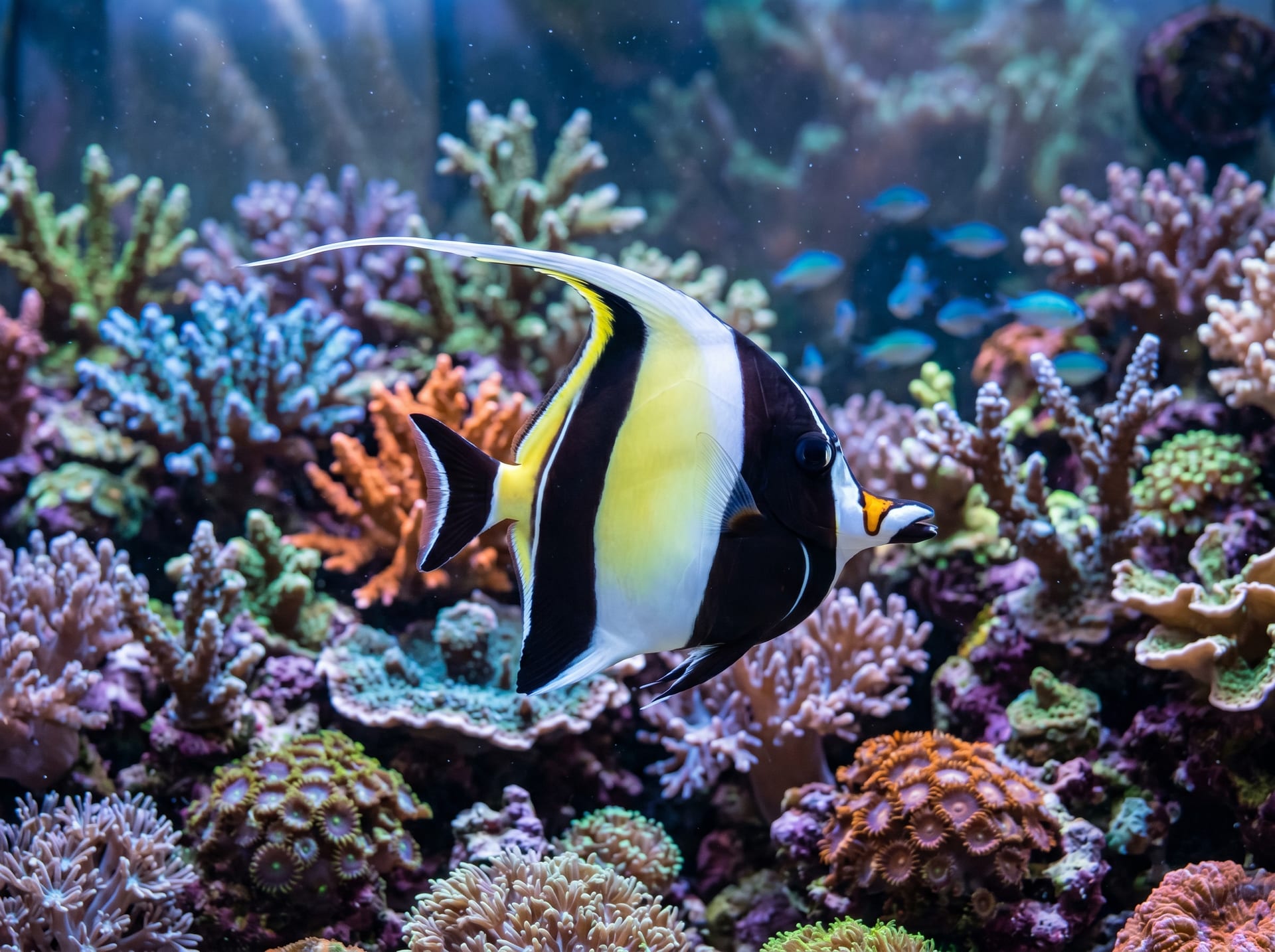
The Moorish Idol (Zanclus cornutus) is the sole species (monotypic genus) belonging to the order Perciformes, family Zanclidae. Known worldwide by its English name Moorish Idol, it is a beautiful tropical marine fish characterized by striking contrasts of black, white, and yellow coloration, and a distinctively long dorsal fin filament.
Distributed widely throughout the Indian and Pacific Oceans, it is found in warm waters south of Okinawa in Japan. With high visibility—having been featured in the movie "Finding Nemo" (serving as a model for the character "Gill")—many marine aquarium enthusiasts attempt to keep it.
Basic Information
Item
Details
Scientific Name
Zanclus cornutus
Common Name
Moorish Idol
Family
Zanclidae
Size
Max ~23cm (15–20cm in aquariums)
Lifespan
Wild: estimated 5–7 years / Aquarium: 2–5 years (7+ years in successful care)
Difficulty Level
Advanced aquarists only
Price Range
¥3,000–¥8,000 (mostly wild-caught specimens)
Why is it difficult to keep?
The Moorish Idol is considered a "representative difficult-to-keep fish" for three main reasons:
1. Specialized dietary requirements
In the wild, Moorish Idols feed on sponges, algae, and sessile organisms scraped from rock surfaces. Many aquarium-sourced specimens refuse commercial pellets and frozen foods, and starvation is a common cause of death.
2. Sensitivity to transport stress
Most specimens are wild-caught, and many have compromised immune systems due to disease exposure (ich, velvet) during transport. Quarantine immediately after acquisition is essential.
3. Sensitivity to water quality
They are intolerant of high nitrate levels and low dissolved oxygen, and may die suddenly if tank conditions are not fully established.
Tank Setup
Tank Size
Moorish Idols are active swimmers and require ample space to account for their full length (including the dorsal filament) and swimming behavior.
Number of Fish
Recommended Tank
1 specimen
90cm+ (170L+) minimum
2+ specimens
Not recommended (territorial disputes)
A 120cm tank or larger is ideal. Long-term care in a 60cm tank is extremely rare.
Water Parameters
Parameter
Target
Temperature
24–26°C (avoid sudden changes)
Specific Gravity
1.023–1.025
pH
8.1–8.3
Ammonia / Nitrite
0 ppm
Nitrate (NO₃⁻)
10ppm or below (ideally 5ppm or less)
Dissolved Oxygen
High (maintain via protein skimmer + circulation)
High nitrate environments directly impair feeding response and immune function. Long-term success requires maintaining consistently low nitrate levels through regular water changes combined with natural filtration via live rock.
The Importance of Live Rock
In the wild, Moorish Idols feed on sessile organisms and sponges on rock surfaces. Providing a sufficient amount of high-quality cured live rock dramatically increases available food sources and lowers the care difficulty.
Live rock should comprise 10–15% of tank volume (by weight in kg)
Prefer live rock abundant in coralline algae and filamentous algae
Periodically add used live rock to maintain ecosystem health
Feeding Procedures (Critical)
Success or failure in Moorish Idol keeping depends 90% on proper feeding.
Step 1: Quarantine and Recovery (2–4 weeks)
Immediately after purchase, isolate the specimen in a bare quarantine tank.
Maintain zero nitrate, high dissolved oxygen, and stable 25°C temperature
Treatment with praziquantel (antihelmintic) is recommended—Moorish Idols commonly carry intestinal parasites
Do not force-feed at this stage; place fresh live rock fragments and allow natural grazing
Step 2: Acclimation through live foods
Once health stabilizes, begin feeding with live foods.
Effective live and semi-live foods
Food
Method
Benefit
Live macroalgae
Attach to live rock
Most natural feeding option
Live copepods
Direct feeding via syringe
Stimulates appetites in picky eaters
Live brine shrimp (Artemia)
Release into water column
Swimming action stimulates feeding
Frozen krill (additive-free)
Syringe feeding
Effective transition food
Step 3: Transition to prepared foods
Once live food consumption is established, gradually introduce prepared foods.
Recommended prepared foods
Ocean Nutrition Formula One: Well-established for Moorish Idol feeding
New Life Spectrum (NLS): High nutrition, highly palatable
Algae flakes (containing spirulina and chlorella): Effective for this herbivorous species
Mixed feeding method: Coat frozen krill with powdered pellet food and gradually reduce krill ratio over time.
Step 4: Establish stable feeding routine
Feed 2–3 times daily in small amounts (consumed within 2–3 minutes). Since Moorish Idols are light feeders, increasing feeding frequency is more effective than increasing portion size.
Tank Mates
Moorish Idols must be kept one per tank as a general rule.
Compatible species
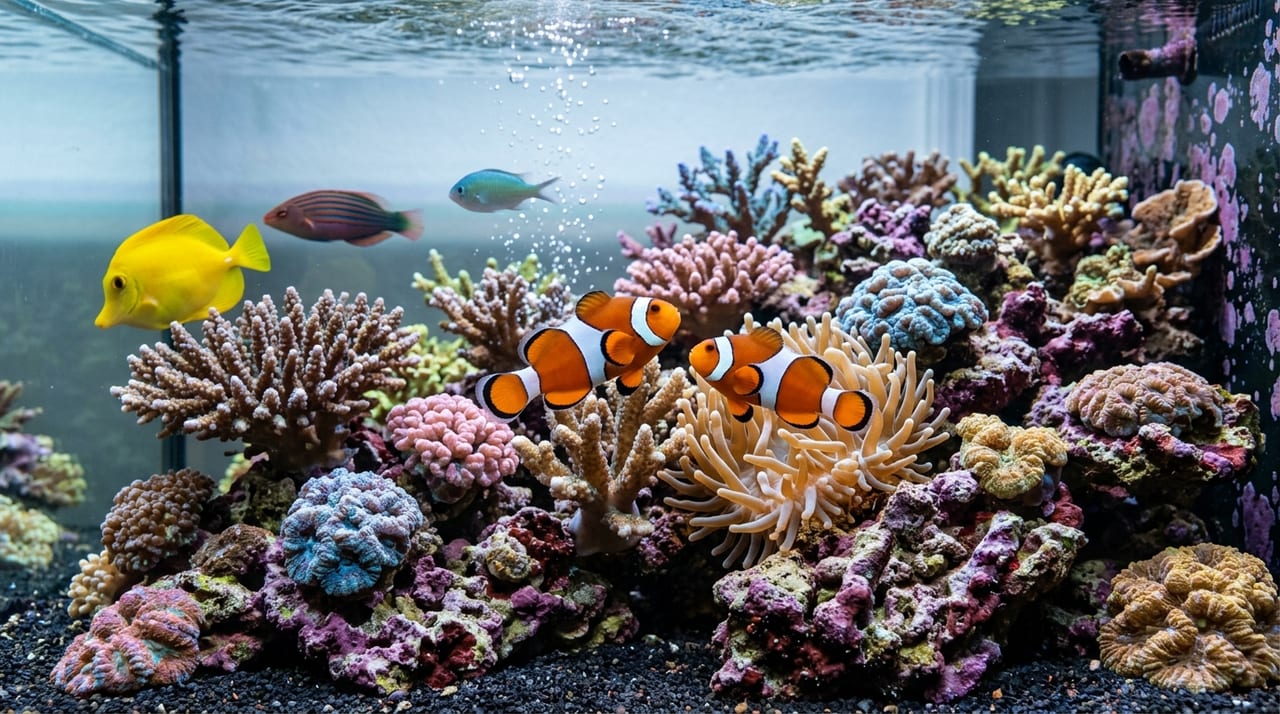
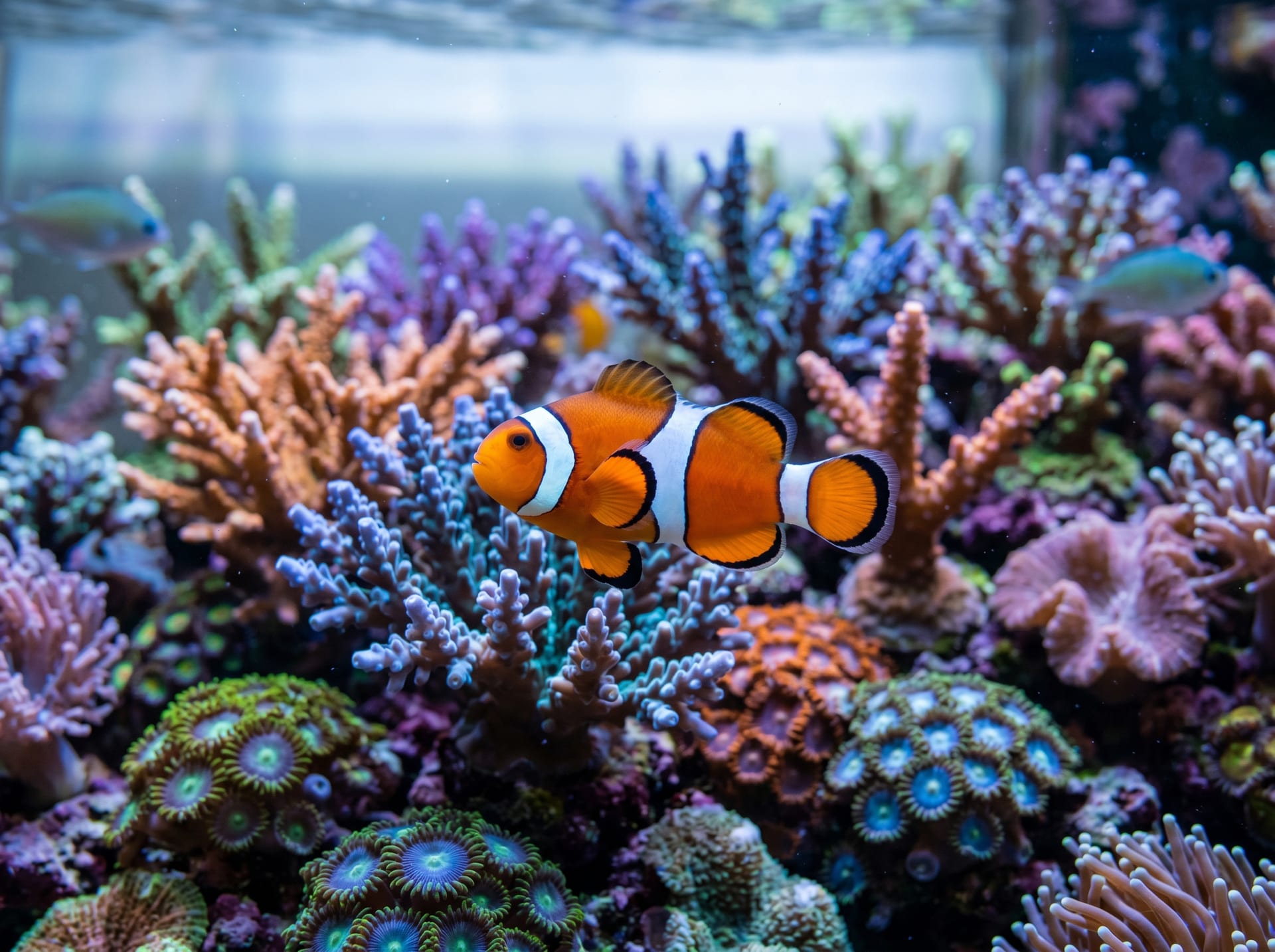
Small to medium peaceful marine fish (clownfish, damselfish, goby species)
In large tanks, some compatibility with surgeonfish has been documented, though territorial behavior toward conspecifics is common
Incompatible species
Conspecifics (other Moorish Idols): Intense territorial fighting causes weakening of one individual
Large, aggressive fish that steal food (wrasses, wall-eyed pike): Outcompete Moorish Idols at feeding time
Pufferfish and porcupinefish: Known to nip at fins
Health Management and Common Diseases
Ich (Cryptocaryon irritans)
Moorish Idols are extremely prone to ich. Outbreaks commonly follow temperature fluctuations, poor water quality, or recent transport.
Treatment: Never use copper-based treatments—Moorish Idols are highly copper-sensitive. Use chloroquine phosphate or hyposalinity (low specific gravity) therapy instead.
Velvet disease (Amyloodinium)
A parasitic infection called "marine velvet" characterized by a fine, sand-like coating on the body. Progresses rapidly. Treat with praziquantel and hyposalinity.
Anorexia and wasting
Starvation is the leading cause of death in Moorish Idol aquaculture. Usually results from insufficient feeding quantities or food being stolen by tank mates. Monitor body condition regularly (weight loss is a danger sign) and establish a dedicated feeding area.
Conclusion: A Challenge Worth Pursuing
Once the two major hurdles—feeding and water quality management—are overcome, the Moorish Idol becomes one of the most visually striking centerpieces in any marine aquarium. While 2–5 years is typical, advanced aquarists maintaining sufficient live rock, proper feeding protocols, and low-nitrate environments have achieved 7+ year lifespans.
Rather than an "impossible fish," think of it as a fish that simply requires proper preparation. We recommend establishing a 90cm+ tank with robust live rock before attempting care.