Tri-color and Night Sakura Medaka Care Guide | Color Enhancement and Pattern Fixation Methods
This guide explains the care and color enhancement methods for popular tri-color and night sakura medaka. It covers water quality management, feed selection, and culling tips for maintaining and developing beautiful tri-color patterns, as well as how to assess patterns in fry.
Key Takeaways
This guide explains the care and color enhancement methods for popular tri-color and night sakura medaka. It covers water quality management, feed selection, and culling tips for maintaining and developing beautiful tri-color patterns, as well as how to assess patterns in fry.
Why Tri-color and Night Sakura Medaka Are Popular
✍️
BreederDirect Editorial
The BreederDirect editorial team specializes in care information for animals, covering veterinary care and breeding to deliver beginner-friendly guides.
Find Medaka on BreederDirect
Buy directly from verified breeders
Browse Related Listings
Find Medaka listings related to this article on BreederDirect. Buy directly from verified breeders.
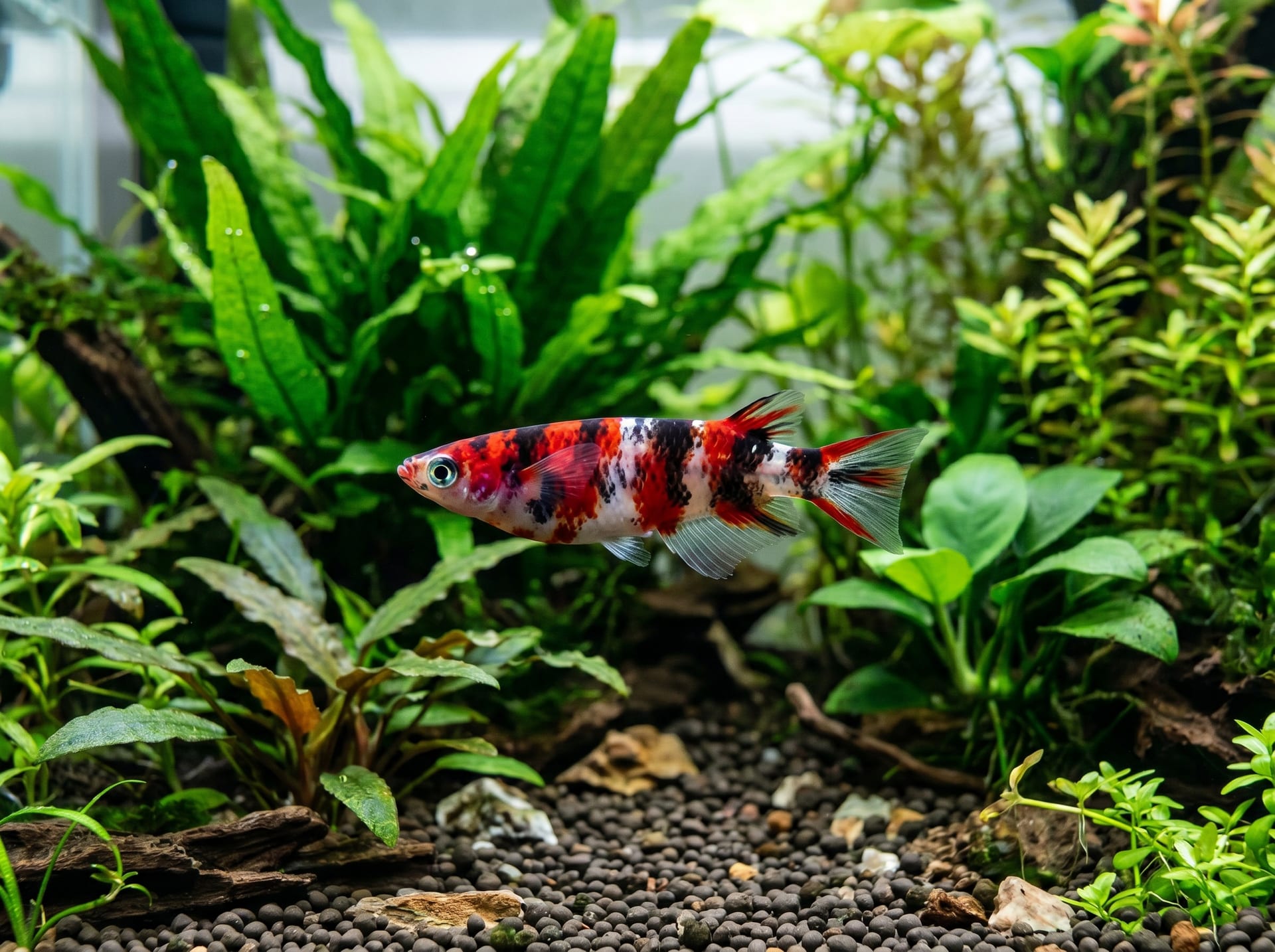
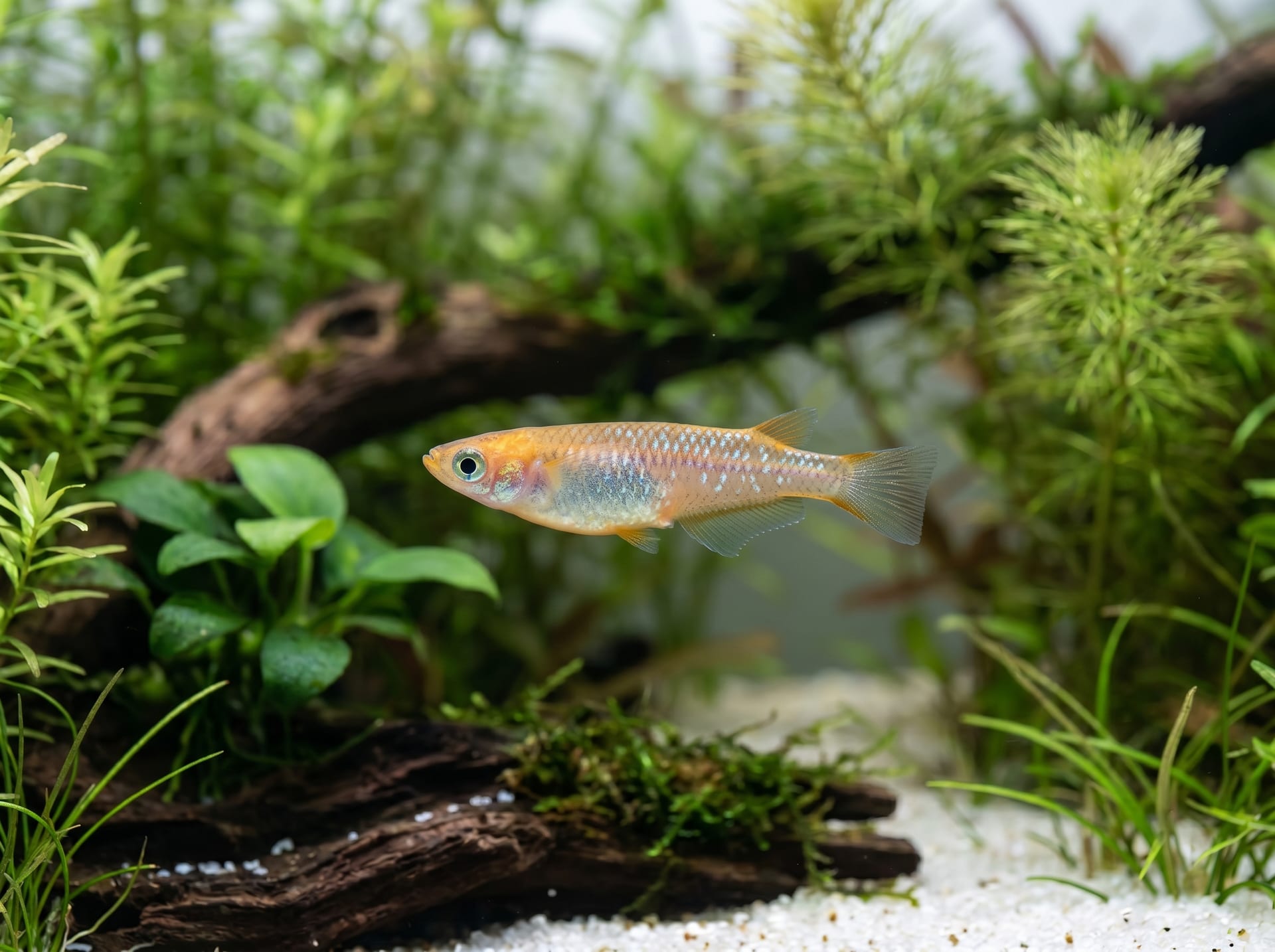
Tri-color medaka have white, red, and black coloring on their bodies, and each individual has a completely unique pattern—a "one-of-a-kind" appeal. Their distinctive markings, which cannot be replicated in mass-produced specimens, captivate collectors. Night sakura medaka take this further by adding shimmer, creating a variety with a fantastical brilliance reminiscent of cherry blossoms blooming in the night sky. Their appearance changes depending on how light strikes them, making them visually striking whether kept outdoors or in indoor aquariums.
High-quality specimens of these varieties command prices ranging from several thousand to tens of thousands of yen. This is precisely why purchasing directly from a breeder ensures the reliability of both lineage and quality. To enjoy beautiful tri-color patterns for a long time, both proper husbandry setup and planned selective breeding management are essential.
How Tri-color Medaka Color Works and Changes
Tri-color medaka body color is determined by the distribution and quantity of three types of chromatophores: melanophores (black), xanthophores (yellow), and iridophores (white). These are influenced not only by genetic factors but also significantly by husbandry conditions such as water temperature, light exposure, and mineral balance.
In particular, black coloring is sensitive to environmental changes. It develops deeper color during cool periods or when exposed to sunlight, but fades easily in high temperatures or dark environments. Red coloring, on the other hand, is enhanced by incorporating carotenoid pigments from the diet.
Importantly, even if color appears pale immediately after purchase or during seasonal changes, proper husbandry conditions can restore the original coloration within a few weeks. Rather than judging quality immediately based on pale color, prioritize establishing the right environment first.
Creating a Husbandry Environment for Color Enhancement
Ensuring Sunlight
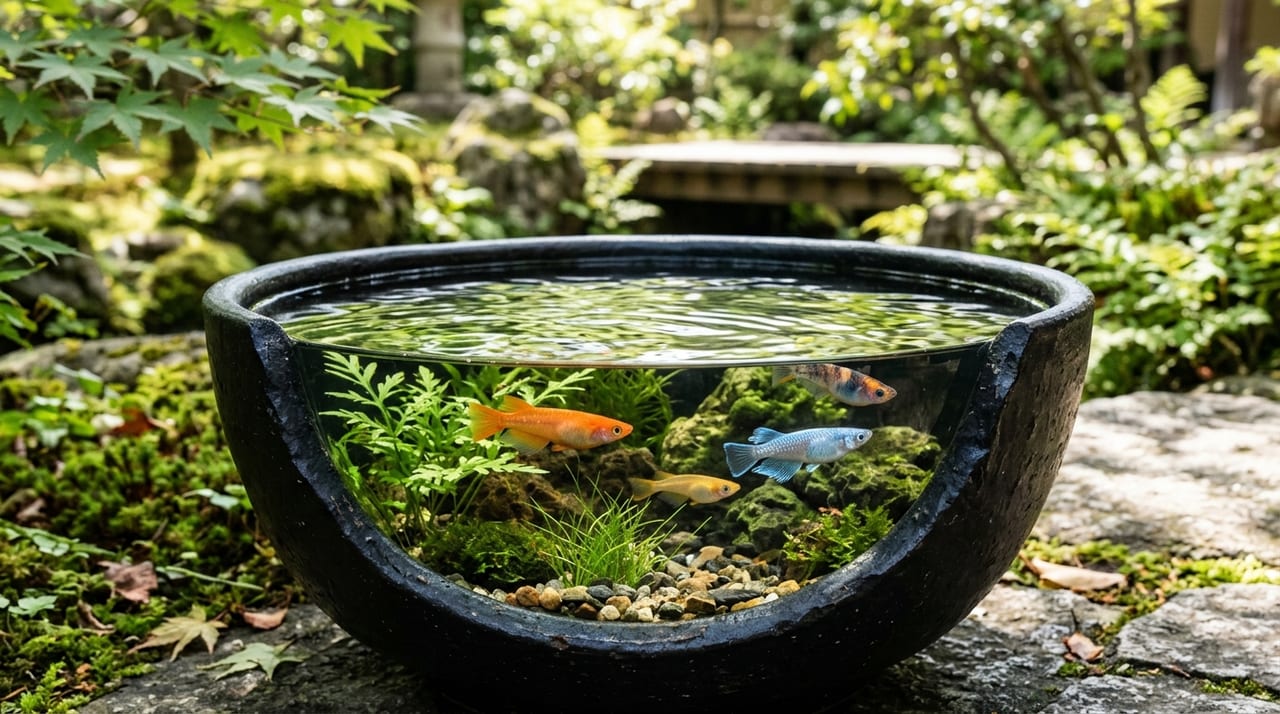
Natural light is the most effective for color enhancement in tri-color and night sakura medaka. When placed in outdoor tubs or large containers (60L or larger) in locations receiving 4–6 or more hours of direct sunlight daily, both color and shimmer improve dramatically. During summer when direct sunlight is intense, adjust with shade cloths or shading nets to prevent water temperature from exceeding 35°C.
Container Color Selection
Using black or dark blue containers causes medaka to develop darker coloration as a protective response. White or transparent containers cause color to fade easily, and black coloring especially tends to become pale, so care is needed.
Water Quality Management
Slightly alkaline water (pH 7.0–7.5) is considered optimal for tri-color medaka coloration. Raising medaka in green water (water where plant plankton has proliferated) supplies minerals and trace nutrients, making it effective for both color enhancement and body color stability. However, excessively dense green water carries risk of oxygen depletion, so supplemental aeration provides peace of mind.
Using Color-Enhancement Feeds
Using specialized medaka color-enhancement feed formulated with carotenoids, spirulina, and astaxanthin boosts red and orange tones. To enhance shimmer in night sakura medaka, feeds rich in B-group vitamins and minerals (calcium and magnesium) are effective. Feeding small amounts 2–3 times daily and managing to prevent uneaten food improves water quality maintenance.
Culling and Pattern Assessment in Fry
Tri-color medaka patterns cannot be assessed immediately after hatching. Body color stabilizes around 1–1.5 months of age, and the full pattern first becomes visible at around 3 months. Patient, long-term observation is important.
Culling Points
Black Quality: Top-quality specimens have black evenly distributed across the back, belly, and fins with "bleeding" or "blurred" edges. Black scattered throughout the body is more highly valued than concentrated in one spot
Red Vibrancy: Specimens with vivid vermillion red around the mouth and body sides. Saturated red is ideal rather than pale orange-tinged red
White Clarity: White areas should be free from yellowing and have a clear appearance
Overall Balance: The three colors are evenly distributed and the pattern remains visually interesting from different viewing angles
Night Sakura Specific: Confirm that shimmer particles are fine and evenly distributed across the entire body. Finer shimmer creates more of a night sky effect than coarser shimmer
"Off-type" individuals (those with broken patterns, lacking black, or close to single-color) should be moved to separate containers early and kept separate from the main breeding population—this is the cardinal rule for maintaining quality.
Pattern Fixation Over Multiple Generations
Stabilizing tri-color patterns requires planned selective breeding over multiple generations. Combine males and females with patterns close to the ideal, then select individuals close to the ideal from their offspring and breed them—repeating this cycle.
"Line breeding"—pairing siblings from the same parents—can accelerate pattern fixation, but carries risk of weakening constitution through inbreeding. Introducing external quality stock every 3–4 generations maintains genetic diversity and supports long-term healthy breeding.
Importance of Record Keeping
Recording breeding pairings, generations produced, and reasons for culling makes it possible to review and improve later. Simply photographing individuals on a smartphone helps you grasp trends across generations.
Because tri-color and night sakura patterns are difficult to completely fix, each generation brings new surprises. The very process of developing your own unique line is the greatest charm of this variety.
Purchasing and Acquisition Checkpoints
When purchasing directly from a breeder, I recommend confirming the following points.
Points to Confirm Before Purchase
Whether photos of parent fish and pedigree information are provided
The packaging method at shipment (presence of heat retention and oxygen saturation)
Confirm that the fish for sale are not enhanced for appearance by the photography environment (lighting and background)
Precautions After Arrival
Transport stress may temporarily fade color. After arrival, conduct water acclimation carefully and keep the fish in a quiet environment with dimmed lighting for the first 1–2 weeks. Color returns naturally once conditions settle. Ideally, withhold food until the day after arrival and resume feeding gradually once water quality stabilizes.