Summer Medaka Care Management | Heat Management Guide
The key concerns for summer medaka care are high water temperatures and oxygen depletion. This guide explains heat protection strategies using reed screens and water plants, how to add aeration, and tips for water changes and feeding during summer months.
Key Takeaways
The key concerns for summer medaka care are high water temperatures and oxygen depletion. This guide explains heat protection strategies using reed screens and water plants, how to add aeration, and tips for water changes and feeding during summer months.
Outdoor Medaka in Summer | Understanding the Mechanism of Water Temperature Rise
Summer is the harshest season for caring for medaka outdoors. Water in containers exposed to direct sunlight can reach 35°C or higher, which is lethal for medaka. Medaka thrive comfortably at water temperatures of around 18–28°C. Once temperatures exceed 30°C, loss of appetite and immune suppression begin to occur. Above 35°C, the risk of rapid decline and death increases sharply.
Particularly dangerous are containers with small water volumes. Small pots and shallow trays experience dramatic temperature swings when exposed to sunlight. A container may be at a safe temperature in the morning, yet reach dangerous levels by early afternoon—a common occurrence during summer. Larger water volumes have greater heat capacity, leading to more gradual temperature changes. Maintaining a minimum of 10 liters of water is a basic rule for successfully overwintering medaka through the summer.
Container color requires attention as well. Dark or deep-colored containers absorb sunlight more readily, causing water temperatures to rise more easily. During summer, transfer your medaka to light-colored containers, or wrap the outside of the current container with reed screens or insulating material. Avoid placing containers directly on concrete or asphalt. The reflection from these surfaces heats the bottom of the container. Place containers on racks or shelves to create air space between the container and the ground.
Complete Shade Protection with Reed Screens, Shade Nets, and Floating Plants
The most effective and convenient measure for managing water temperature in summer is shade provision (shading). Simply placing reed screens or woven bamboo screens over the container to block direct sunlight significantly suppresses water temperature rise.
The key is "not to cover completely." Sealing the container impedes airflow and can cause stuffiness and oxygen depletion. Partial shade is ideal, allowing morning sunlight while blocking the harsh afternoon western sun. Try adjusting the angle of the screens based on the direction of sunlight, or create additional shade coverage from the sides.
Reconsidering the placement location is also important. Simply moving the container to a spot that receives morning sun but afternoon shade from a building or fence can lower water temperature by 2–4°C. Since sun exposure changes with the seasons, consider the sun's angle around the summer solstice when deciding placement.
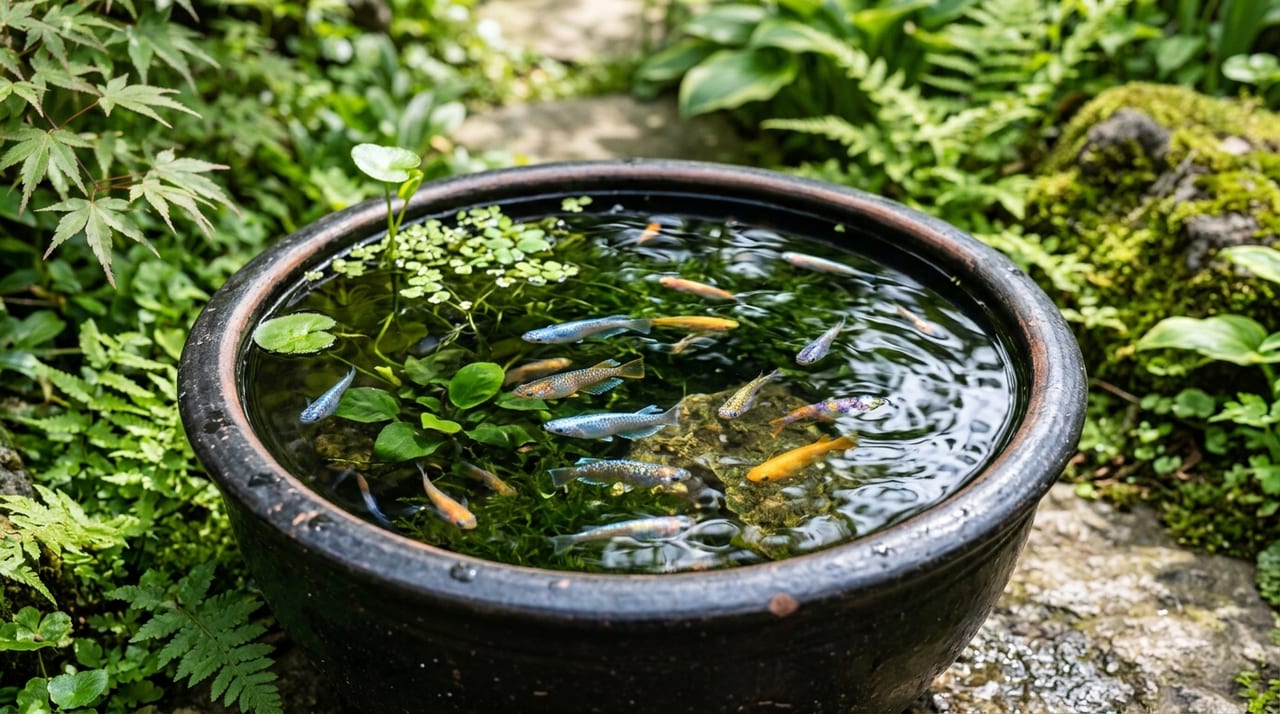
Introducing floating plants at the water surface is also recommended. Water hyacinth, amazon frogbit, water lilies, and similar plants provide natural shade by covering the water surface. Through photosynthesis, they supply oxygen and absorb excess nutrients, stabilizing water quality. They can also serve as spawning beds, making them doubly beneficial for those interested in breeding. However, if they proliferate excessively and completely cover the water surface, they can interfere with aeration. Thin them out regularly. For detailed information on breeding season, see Medaka Breeding Methods and Precautions | From Egg Collection to Fry Rearing.
Securing Dissolved Oxygen through Aeration
At high water temperatures, the amount of oxygen dissolved in water (dissolved oxygen) drops significantly. The amount of oxygen dissolved in 28°C water is roughly 80% of the amount dissolved at 20°C; as water temperature rises, this amount decreases further. If you observe medaka breathing at the water surface—a behavior called "nose-up"—this is a sign of oxygen depletion.
Even in outdoor settings, solar-powered air pumps provide an easy way to add aeration. Moving the water surface allows atmospheric oxygen to be absorbed into the water and also helps equalize water temperature. If a power source is available, a combination of a standard air pump and air stone is more stable and highly recommended.
If aeration is not available, choosing a container with a wide water surface area is effective. A shallow, wide container allows more active gas exchange at the water surface than a deep, narrow one. However, if the container is too shallow, water temperature can fluctuate rapidly. Aim for a water depth of at least 15 cm.
Water Changes and Feeding | Proper Summer Routine
High water temperature and intense sunlight accelerate water quality deterioration. Ammonia and nitrite released during the decomposition of uneaten food and waste are more toxic at higher water temperatures. Summer requires particularly careful water quality management, which is the key to keeping medaka long-lived. For fundamentals of water quality management, see Complete Medaka Care Guide and Common Medaka Diseases and Prevention Methods.
Change water in small amounts frequently as a basic rule. Changing a large amount at once can shock medaka due to temperature and water quality fluctuations. Limit changes to approximately 1/5 to 1/4 of the container volume, and aim for once every 2–3 days. Always prepare water that has been dechlorinated and leave it outside to match the temperature of your medaka container before use.
During midsummer, water evaporates quickly, so don't forget top-ups for lost water. The water used for top-ups should also be at the same temperature. Establishing a routine of adding small amounts each morning helps prevent sudden temperature changes.
Feed during mild temperatures in early morning or evening. Feeding medaka during high daytime temperatures tends to cause digestive issues, and uneaten food becomes a source of water quality deterioration. Limit the amount given to what can be consumed in 2–3 minutes. Remove any remaining food promptly with a dropper or similar tool.
Summer Breeding Management and Fry Protection
Medaka spawn most actively during summer when water temperature and daylight hours increase. For those who enjoy breeding, this is an exciting season, but high temperatures can cause developmental abnormalities in eggs and reduce hatch rates, so caution is necessary.
Move eggs from spawning beds (roots of water hyacinth or commercial spawning mats) to a separate container as soon as possible. Ideal management keeps them in a cool, shaded place with water temperature maintained at 28°C or below. Egg incubation depends on accumulated temperature (water temperature × number of days); at high temperatures, eggs hatch more quickly, but quality may suffer.
Fry are far more sensitive to high water temperatures than adult medaka and require special care. Use a larger water volume for fry containers than for adult containers, and manage them so the water temperature does not exceed 30°C during the day. Since fry have small mouths, feed them powdered food in small quantities 2–3 times daily. Poor water quality from uneaten food is a common cause of fry death, so make it a habit to remove debris frequently. Also refer to How Long Do Medaka Live? | Tips for Longevity and Breed-Specific Lifespan and maintain management practices with long-term care in mind.
Summary | Master Summer Management for Successful Medaka Summer Care
Here's a quick review of measures needed for medaka summer care:
- Maintain at least 10 liters of water to increase heat capacity
- Use reed screens and floating plants to block direct sunlight and create a half-shaded environment
- Ensure dissolved oxygen through aeration or wide containers
- Change water in small, frequent amounts, and feed early morning or evening
- Manage fry separately, keeping temperatures below 30°C
By combining these measures, you can keep your medaka healthy even through intense summer heat.
BreederDirect allows you to purchase premium medaka varieties directly from breeders nationwide. In addition to a diverse selection of varieties such as Mikiyoshi, Tri-color, and Daruma, you can consult directly with breeders about care methods and summer management techniques—a major advantage. Beginners are also welcome to inquire casually. We've also established systems to support safe and reliable transactions, making our platform ideal for first-time medaka purchases. If you're unsure which variety to choose, check out Medaka Variety Encyclopedia | Characteristics and Selection Guide for Popular Breeds.