Guide to Outdoor Biotope Cultivation of Medaka | How to Recreate a Natural Ecosystem
Explains how to create an outdoor biotope for medaka. Introduces natural occurrence of aquatic plants and microorganisms, and how to build a maintenance-free environment.
Key Takeaways
Explains how to create an outdoor biotope for medaka. Introduces natural occurrence of aquatic plants and microorganisms, and how to build a maintenance-free environment.
Related Species
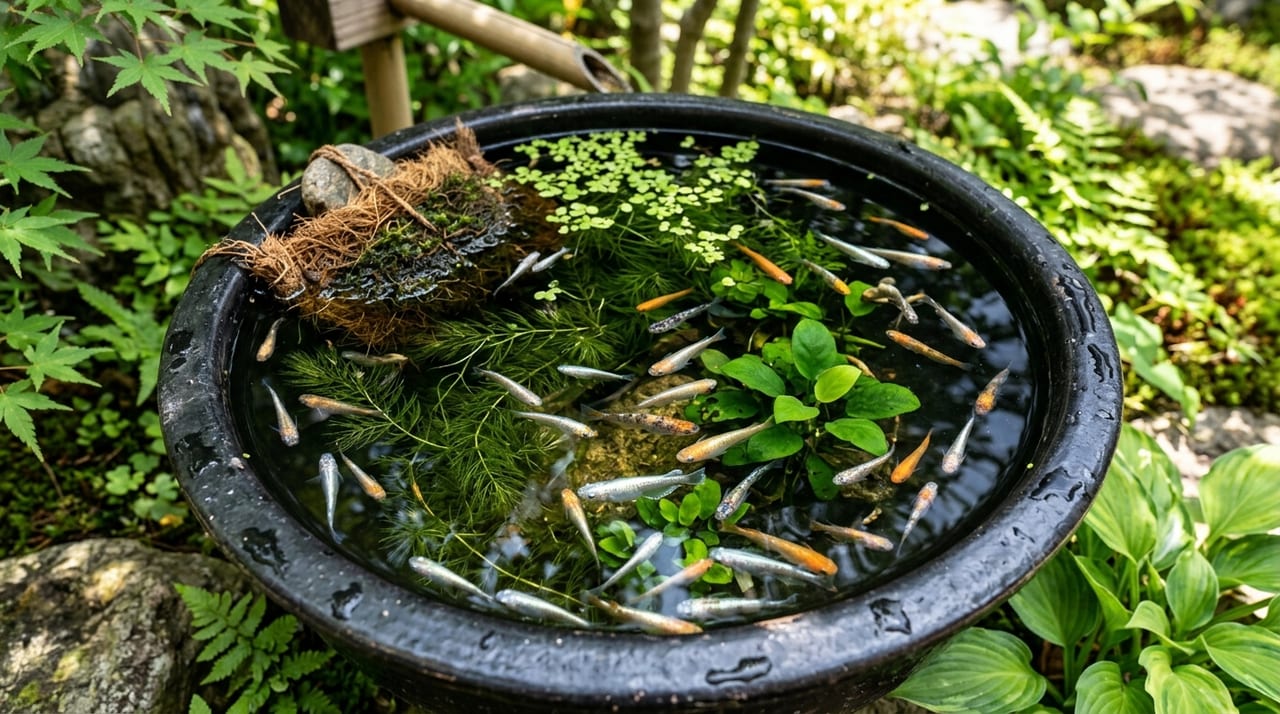
Biotope cultivation is a style of keeping medaka that recreates a "miniature nature" in your home, where aquatic plants, microorganisms, and medaka live in relationship with one another. Unlike traditional aquarium keeping, biotopes maintain water quality through the ecosystem itself, without relying on filter systems or aeration. Since medaka originally inhabited Japanese rice paddies and streams, a biotope represents a form of keeping that closely mimics their natural habitat.
While beginners may think it sounds difficult, once a stable biotope is established, it actually requires less maintenance than conventional aquarium keeping. This article provides thorough guidance on everything from selecting containers, combining aquatic plants, cultivating a natural ecosystem, to seasonal maintenance.
Choosing the Right Container for a Biotope
The success of a biotope depends significantly on container choice. The basic principle is to choose the largest possible container, as greater water volume ensures more stable temperature and water quality.
Common Container Types
- Water lily basins (20–40 L): Usually made of ceramic or stone and blend naturally into Japanese gardens. Heavy and difficult to move, but aesthetically charming.
- Plastic trays (40–80 L): Originally designed for agricultural and construction use, these plastic containers offer large capacity at affordable prices. They make it easy to maintain adequate water volume and are ideal for keeping multiple medaka varieties.
- Half-cut wooden barrels: The texture of wood enhances a natural aesthetic. Choose ones with rot-resistant treatment, and insert a bucket-type liner inside to prevent leaks.
- Polystyrene foam boxes: Excellent insulation helps buffer temperature drops in winter. While aesthetically plain, they perform well functionally.
Site Selection Tips
The ideal location receives 4–6 hours of direct sunlight daily. Insufficient light makes aquatic plants difficult to grow and can cause excessive algae blooms. On the other hand, with increasingly frequent heat waves, summer water temperatures often exceed 35°C, making a location with partial shade that avoids strong afternoon western sun ideal. Additionally, avoid locations under trees with heavy leaf drop, as falling leaves degrade water quality.
Selecting and Combining Aquatic Plants
The heart of a biotope is its plant composition. By balancing four types—submerged, floating-leaf, free-floating, and emergent plants—you achieve both aesthetic beauty and water purification.
Submerged Plants (plants with stems and leaves submerged)
- Anacharis (Egeria densa): Grows vigorously and serves as both shelter and spawning medium for medaka. A classic beginner-friendly plant.
- Hornwort: Requires no roots—simply suspend it in the water. Excellent for oxygen production via photosynthesis and water purification.
- Cabomba: Features delicate, attractive foliage with high ornamental value. More sensitive than anacharis, so monitor temperature and light carefully.
Floating-Leaf Plants (plants with leaves on the water surface)
- Water lily (temperate species): Blooms in summer and its broad leaves create shade that mitigates temperature rise. A star player in biotopes.
- Nymphaea tetragona (Japanese pygmy water lily): A native Japanese miniature water lily that adapts well to smaller containers.
Free-Floating Plants (plants that float on the water surface)
- Water hyacinth: Boasts powerful water purification and is popular as a spawning medium. However, it reproduces rapidly and requires regular thinning.
- Duckweed and Amazon frogbit: Compact floating plants useful for filling gaps on the water surface.
Emergent Plants (rooted in water with stems and leaves above the surface)
- Japanese parsley: A wild edible vegetable native to Japanese wetlands that creates a natural look at the biotope's edge.
- Lythrum salicaria (Purple loosestrife): Produces purple flowers in summer and attracts insects like honeybees, further enriching the ecosystem.
- Water mushroom plant: Features cute round leaves that serve as an accent at the water's edge.
How the Self-Sustaining Ecosystem Works
The greatest appeal of a biotope is that organisms help one another without human intervention, and water quality is naturally maintained. After setup, an ecosystem like the following naturally develops over time.
Bacteria and Water Purification
Nitrifying bacteria that neutralize harmful ammonia and nitrite proliferate in the water and on plant surfaces. Medaka waste becomes plant nutrients, and as plants grow, a "nitrogen cycle" that further purifies the water is completed.
Daphnia and Plankton
Daphnia and green algae that naturally arise via rainwater and wind currents are ideal live food for medaka. They contain nutrients unavailable in artificial foods, which is one reason why medaka raised in outdoor biotopes display such vibrant coloration.
Snails and Other Fauna
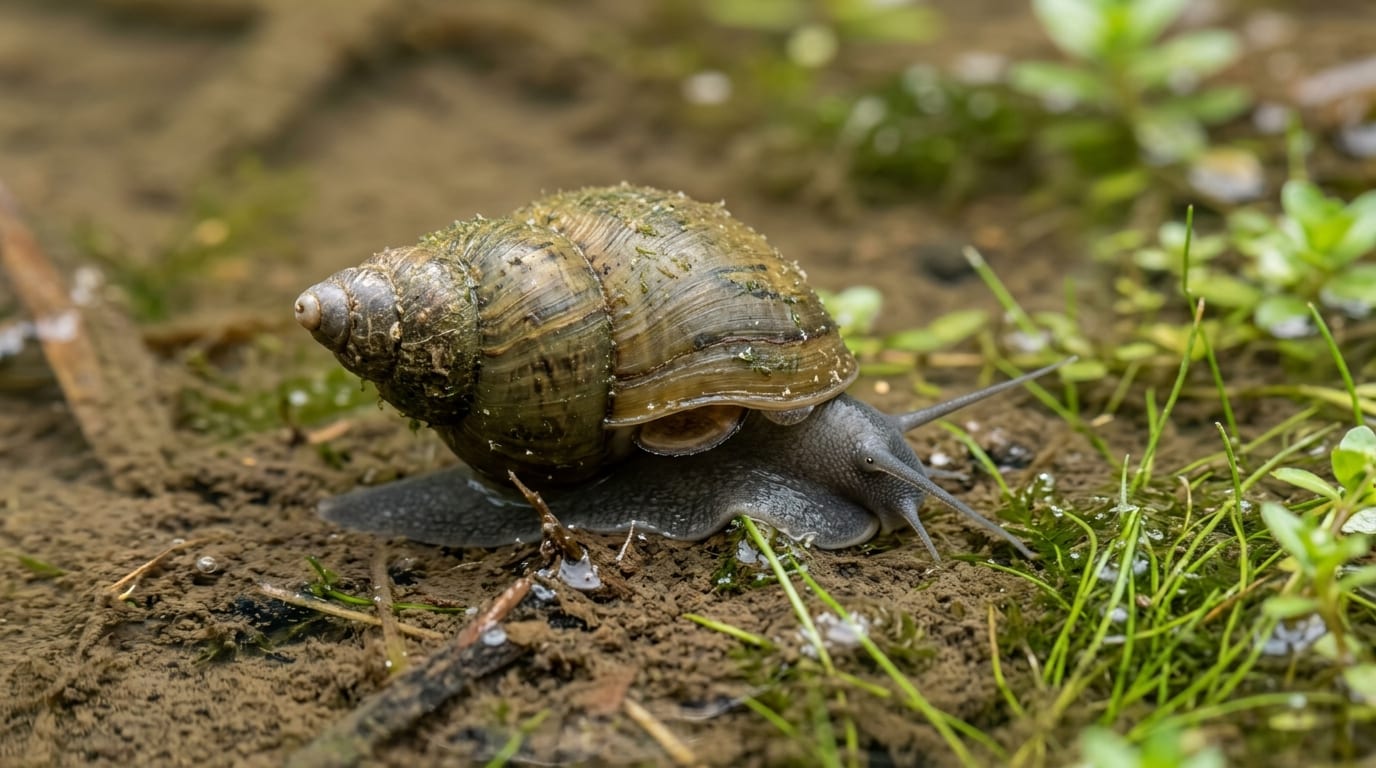
Apple snails (Pomacea spp.) and river snails clean the container by consuming algae. In particular, dwarf apple snails are ovoviviparous and do not multiply explosively, with excellent water purification ability, making them ideal for biotopes. Dragonfly nymphs prey on medaka, so develop the habit of checking near spawning areas to ensure none have appeared.
Seasonal Maintenance and Tips
Fundamentally, a biotope thrives on benign neglect, but seasonal transitions require appropriate care.
Spring (March–May): Establishment and Recovery
Spring is ideal for tidying post-winter plants and introducing new aquatic vegetation. Once water temperature exceeds 15°C, medaka activity increases and breeding season begins. Prepare spawning media such as water hyacinth or specialized spawning sponges.
Summer (June–August): Temperature Management and Water Replacement
This is the most critical season. Heat waves are increasingly common, and when water temperature exceeds 30°C, oxygen levels drop and medaka become lethargic. Cover 30–50% of the water surface with water lilies or floating plants to provide shade. Replenish water lost to evaporation with dechlorinated water or rainwater. Water changes are generally unnecessary, but if the water becomes excessively green, replace about 1/4 of it. In years with prolonged heat waves, having a rain barrel on hand is convenient—it allows you to immediately replenish evaporation losses without waiting for water to dechlorinate during the day.
Fall (September–November): Winter Preparation
As water temperature drops, medaka appetite declines. Gradually reduce feeding and stop entirely once temperature falls below 10°C. Remove dead plants promptly to prevent water quality degradation, and repot water lilies during this season.
Winter (December–February): Dormancy Management
Medaka can overwinter at the bottom even when ice forms, but take care to prevent complete container freezing. Wrapping the container in polystyrene foam or adding a small layer of leaves for insulation works well. The best approach through winter is to leave everything undisturbed.
The Safety and Trust Behind BreederDirect
The quality of a biotope depends significantly on the quality of the medaka you introduce. Under natural outdoor light, medaka colors and luster shine with exceptional beauty. Ornamental varieties such as Hikarinoys, Yohkihi, and Tricolor lame reach their full aesthetic potential in biotope settings.
BreederDirect allows you to purchase directly from breeders who actually raise medaka in biotopes and outdoor environments. Unlike mass-produced stock from chain retailers, you get healthy individuals carefully selected and managed by dedicated breeders.
Moreover, you can ask breeders directly before purchase—questions like "Which varieties are best for outdoor biotopes?" or "What should I watch out for with this variety?"—and receive specific advice while choosing. This is a major advantage. Through interaction with breeders, enjoy creating your own ideal biotope.