Choosing LED Lighting for Saltwater Aquariums: Specs Explained by Coral Type and Saltwater Fish | ブリちょく
Marine Fish| ✍️ BreederDirect Editorial
Choosing LED Lighting for Saltwater Aquariums: Specs Explained by Coral Type and Saltwater Fish
A comprehensive guide to selecting LED lighting for saltwater aquariums. We explain the required specs, color temperature, PAR values, and manufacturer comparisons for different coral types (SPS/LPS/Soft Corals) and saltwater fish-only setups in detail.
Key Takeaways
A comprehensive guide to selecting LED lighting for saltwater aquariums. We explain the required specs, color temperature, PAR values, and manufacturer comparisons for different coral types (SPS/LPS/Soft Corals) and saltwater fish-only setups in detail.
When setting up a saltwater aquarium, many people struggle with "choosing the right lighting." Unlike freshwater fish, saltwater aquariums require different light intensity and color temperature depending on the type of livestock. Especially when keeping corals, the quality of lighting can literally determine life or death. This article breaks down LED lighting selection criteria for different coral types and fish-focused saltwater tanks in an easy-to-understand way.
✍️
BreederDirect Editorial
The BreederDirect editorial team specializes in care information for animals, covering veterinary care and breeding to deliver beginner-friendly guides.
Find Marine Fish on BreederDirect
Buy directly from verified breeders
Browse Related Listings
Find Marine Fish listings related to this article on BreederDirect. Buy directly from verified breeders.
What Does Saltwater Aquarium Lighting Actually Need?
Saltwater aquarium lighting must fulfill three main requirements.
PAR value (Photosynthetically Active Radiation) is a measure of the amount of light available for photosynthesis in plants and corals. The unit is µmol/m²/s (micromoles per square meter per second). The required PAR value varies by coral species, and this is the biggest determining factor when choosing lighting.
Color temperature (Kelvin value) represents the color of the light. Saltwater aquariums typically favor blue-white light in the 10,000K to 20,000K range. This mimics natural seawater light and enhances the vibrant colors of corals.
Spectrum (wavelength) indicates the light's composition. Coral symbiotic algae (zooxanthellae) require light in specific wavelength bands for photosynthesis. Blue light (420–490nm) and red light (640–700nm) are particularly important.
Choosing LED Lighting for Soft Corals
Soft corals (toadstool corals, branching corals, finger leather corals, etc.) are the least demanding coral type in terms of light intensity.
Required PAR value: 50–150µmol/m²/s
They are beginner-friendly and can be kept without investing heavily in lighting. However, if light is too weak, growth will stall and color will fade. For a 60cm tank, ensure at least 30W of LED output.
We recommend mid-range domestic or Chinese LEDs explicitly marked "reef-compatible" or "marine-compatible." Products available on Amazon or at specialty shops for ¥10,000–30,000 are sufficient.
A color temperature of 14,000–16,000K looks good and suits soft corals' biology. The key is choosing models with abundant blue LED components.
Choosing LED Lighting for LPS Corals
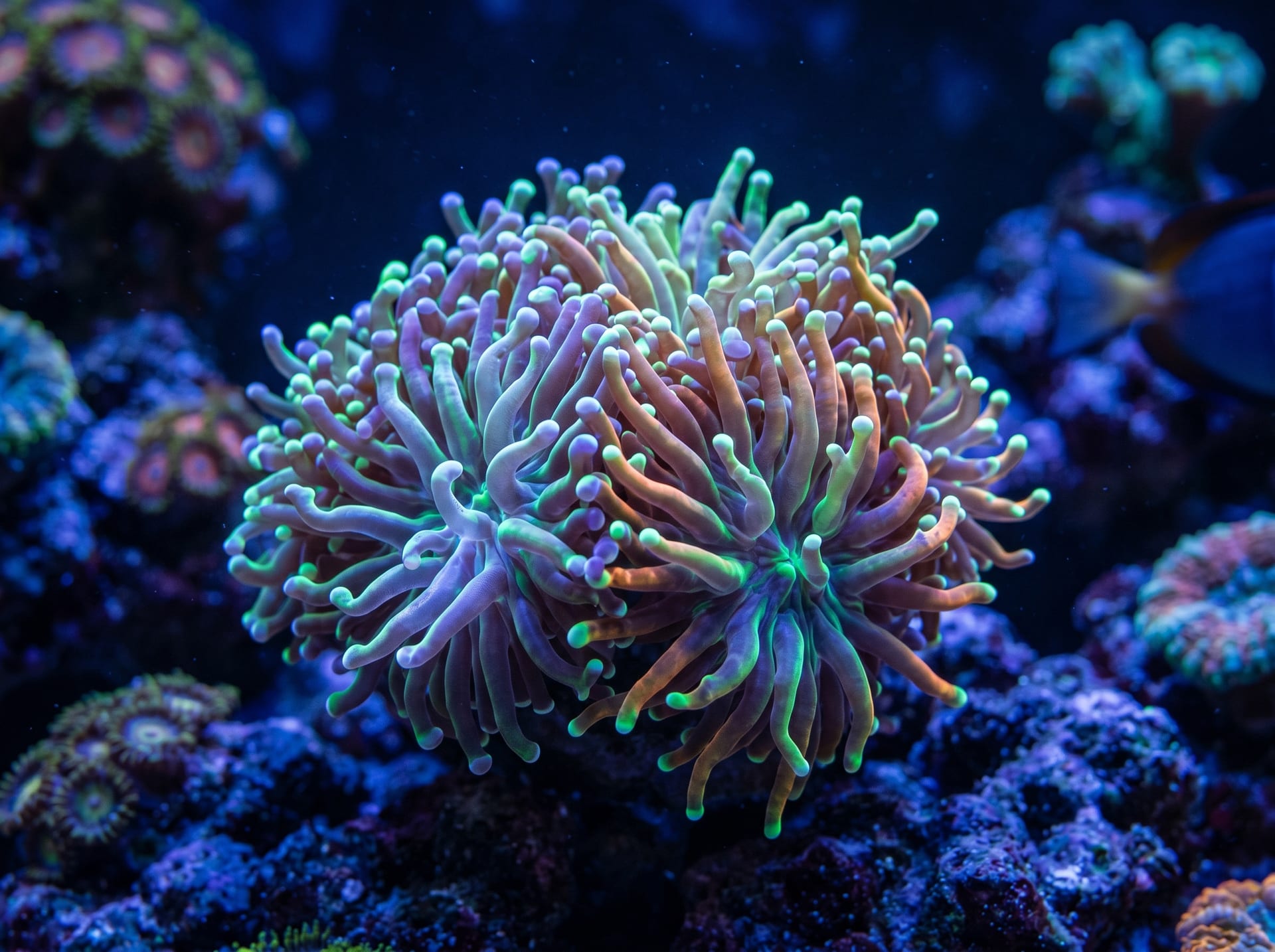
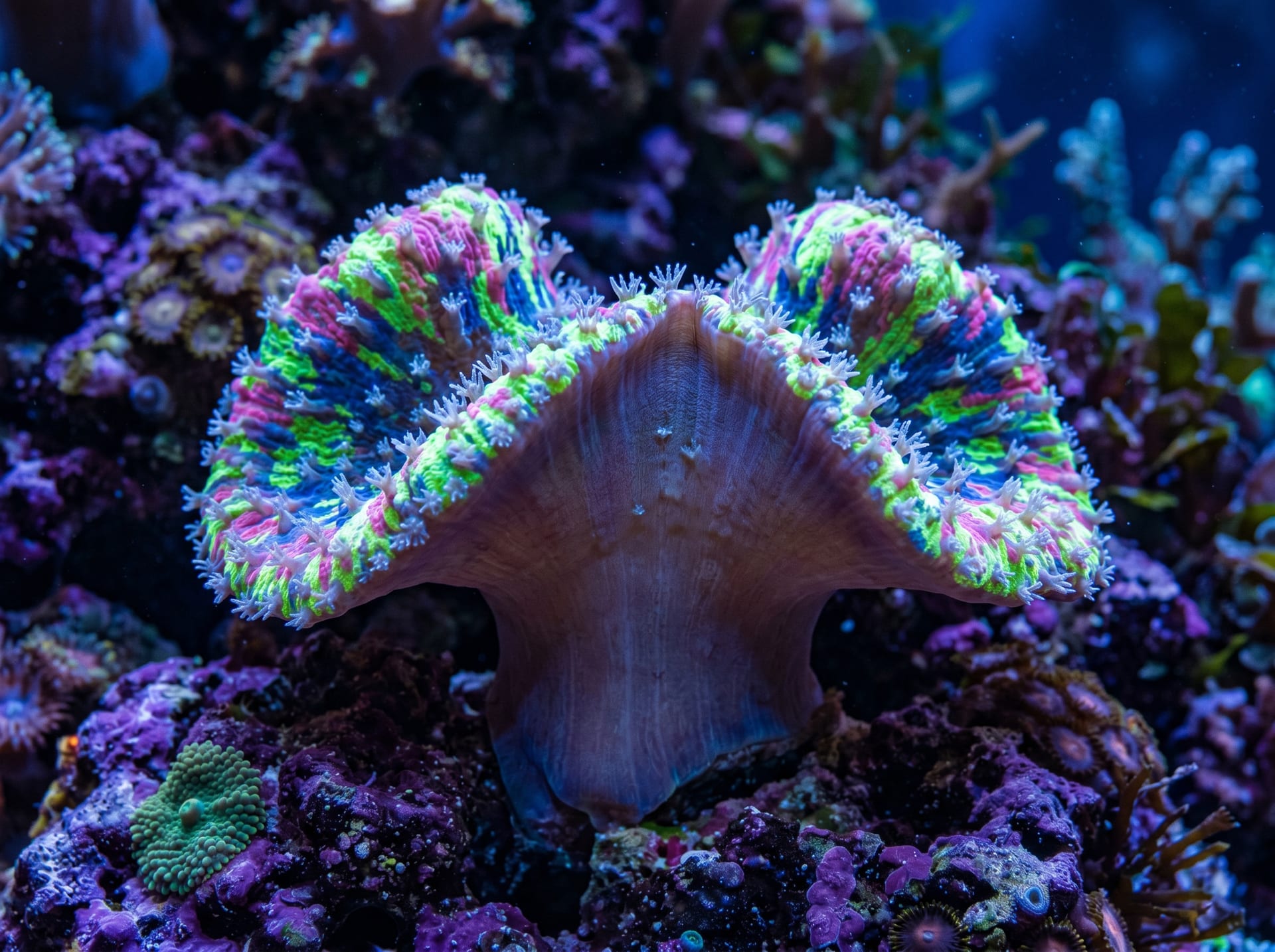
LPS (Large Polyp Stony corals) include open brain corals, hammer corals, and trumpet corals. They require more light than soft corals but less than SPS.
Required PAR value: 100–250µmol/m²/s
LPS corals are sensitive not only to light but also to water flow and water quality, so lighting alone won't solve all issues. However, lighting remains crucial. For a 60cm standard tank, aim for 50–80W of LED output.
Popular options include AI Prime HD (AI Aquariums) and Kessil A160WE. These single units cover tanks up to 60cm and feature high-quality spectrum. Prices range from ¥30,000–60,000; they're worth the investment for long-term LPS maintenance.
Kessil's proprietary "dense matrix LED" technology creates light spread similar to natural sunlight, with excellent coral color expression. App-controlled sunrise and sunset effects make management easier too.
Choosing LED Lighting for SPS Corals
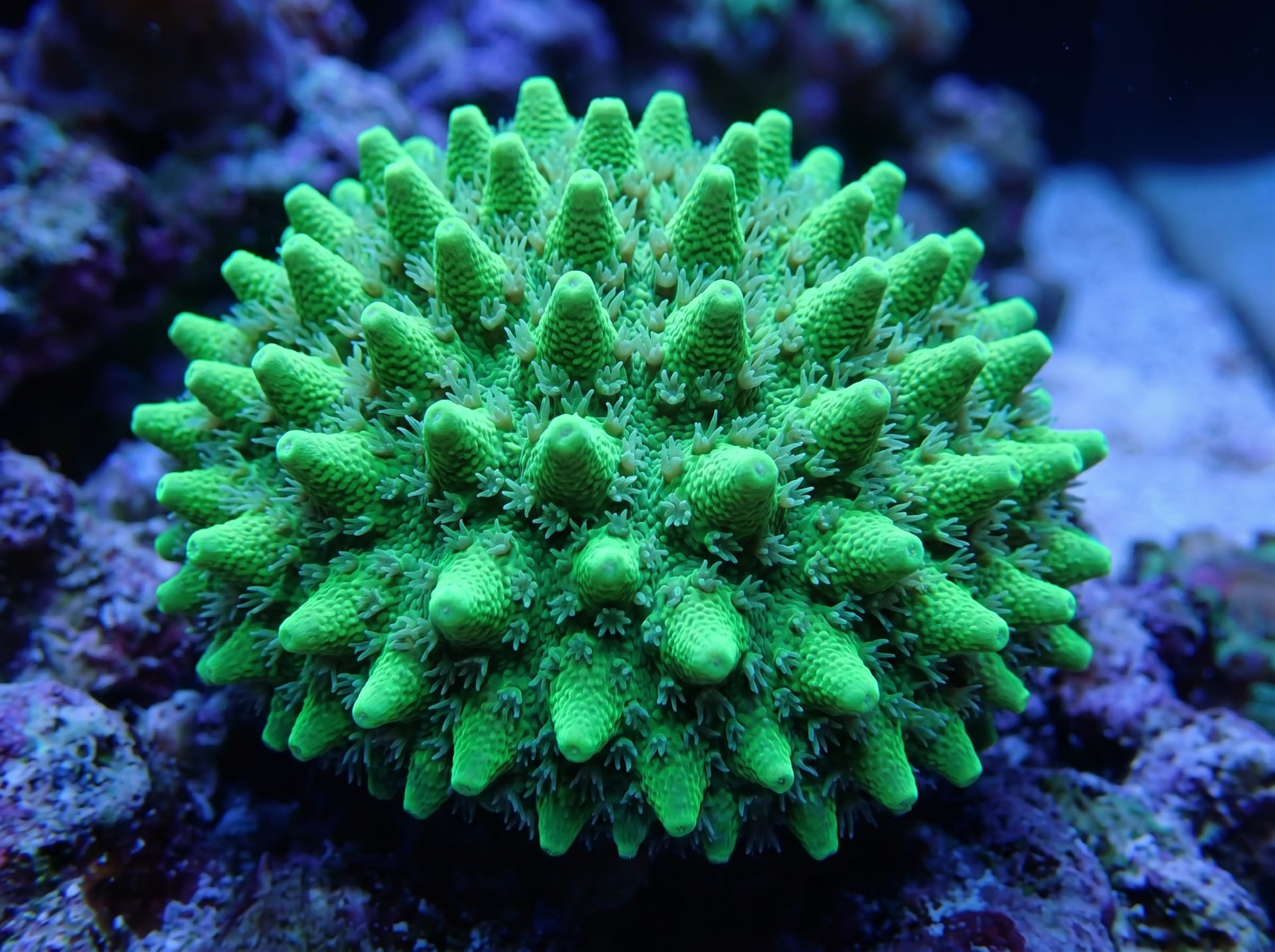
SPS (Small Polyp Stony corals), represented by Acropora and similar species, are the most challenging coral group. Found in shallow natural reefs, they require intense light.
Required PAR value: 200–400µmol/m²/s (some species require 500+)
SPS keeping demands a serious lighting system. Even 60cm tanks need 100W+ LEDs, and deeper 90–120cm tanks typically use multiple fixtures.
Standard products in this category include:
Radion XR15/XR30 (EcoTech Marine): The industry standard for premium LED. Fine-tuned spectrum control and smartphone app scheduling. XR15 for small tanks, XR30 for 60–90cm tanks. At ¥70,000–150,000 per unit, it's expensive, but trusted by SPS hobbyists for years.
AI Hydra 32/64 (AI Aquariums): Popular alongside Radion. Slightly more affordable, favored by budget-conscious SPS keepers.
Maxspect Recurve/Ethereal (Maxspect): A Chinese brand with high quality, increasingly stocked at domestic specialty shops.
For serious SPS keeping, consider a PAR meter to measure PAR in-tank. Some specialty shops offer rentals.
Lighting Selection for Fish-Only Saltwater Tanks
Without corals, lighting requirements drop significantly. Fish-focused tanks only need brightness suited to fish vision and aesthetic appeal.
Required PAR value: No specific requirement (50 or below is fine)
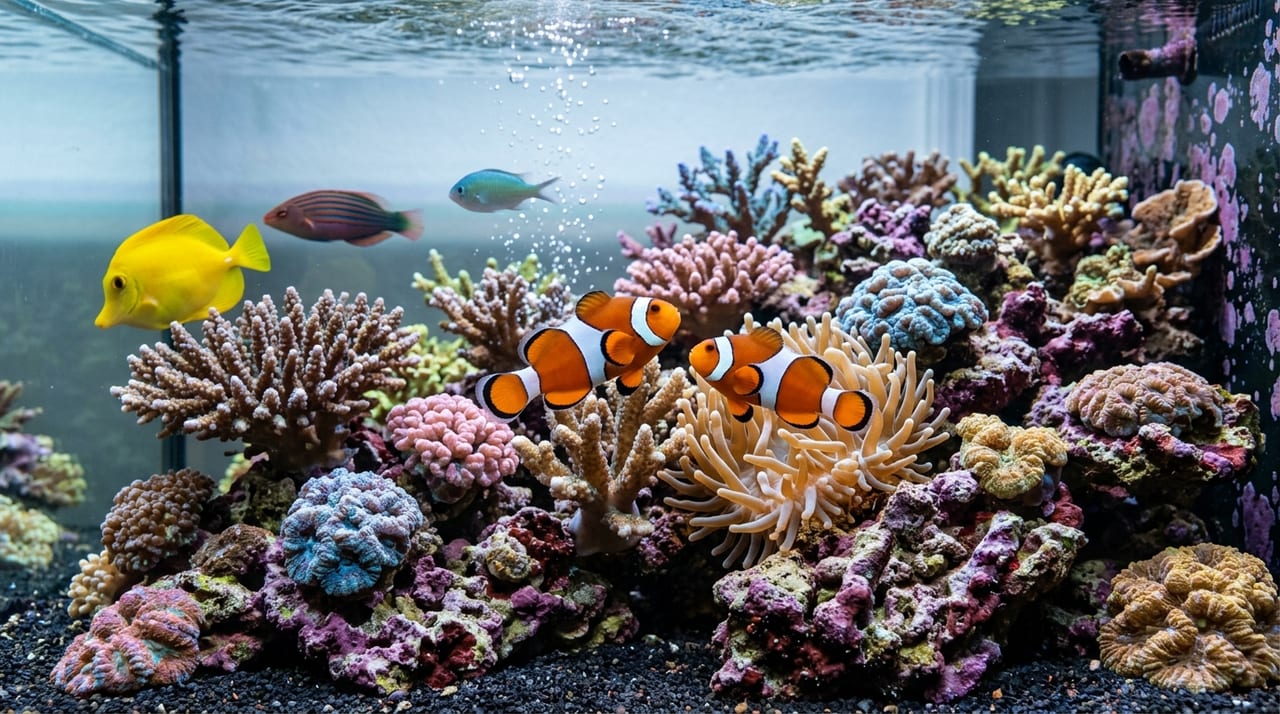
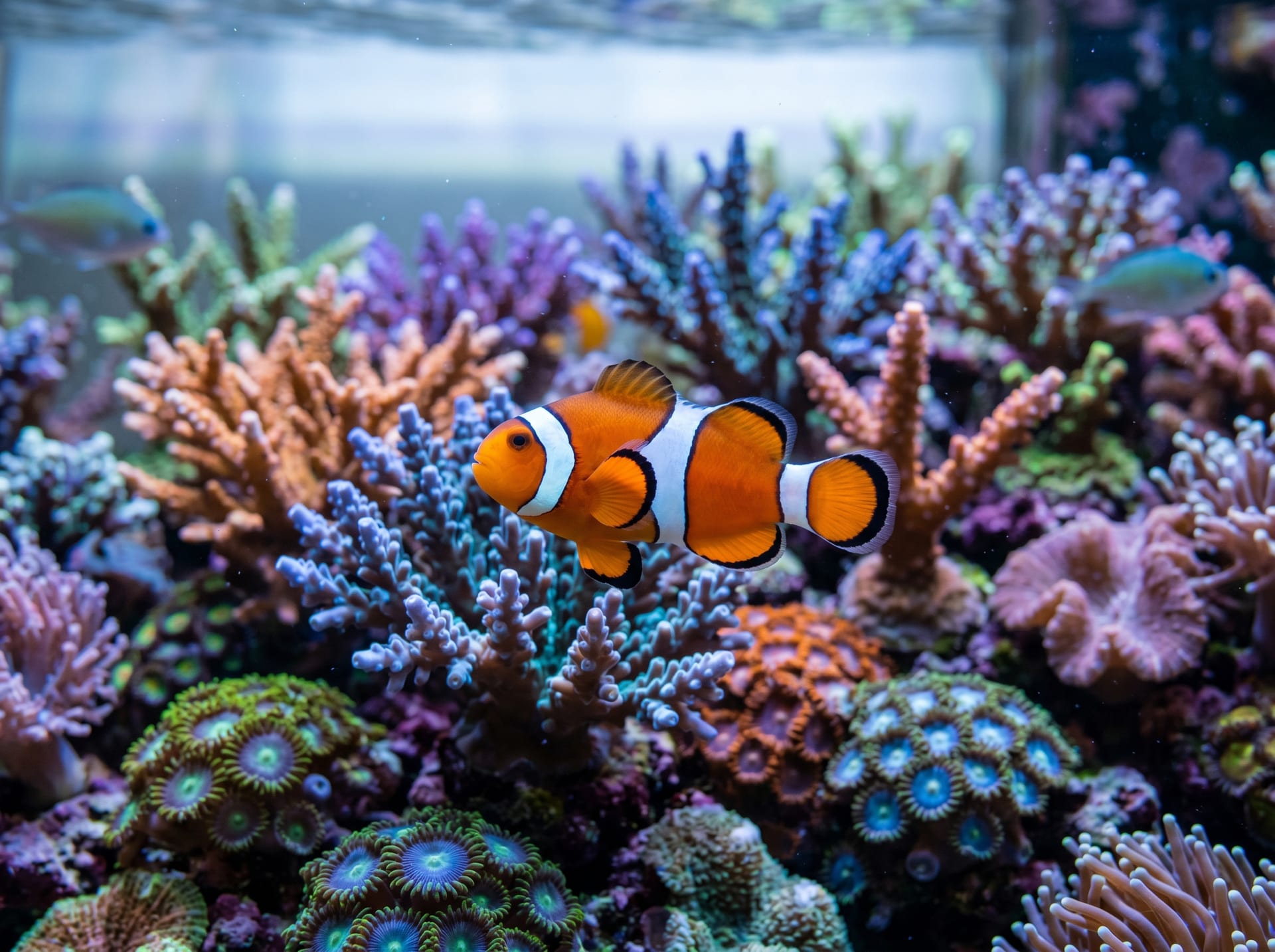
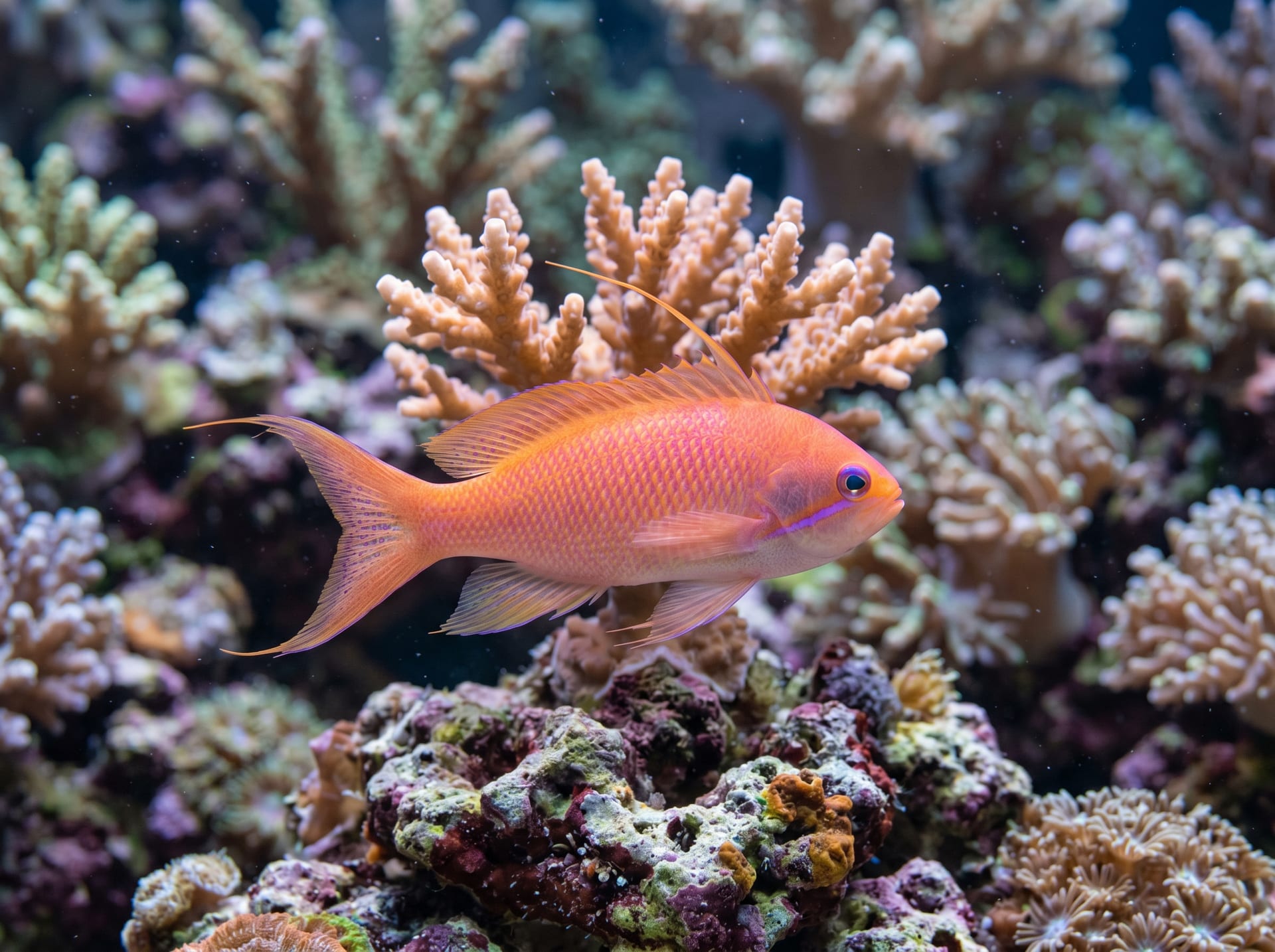
Color temperature of 10,000–16,000K makes fish colors look vibrant. LEDs heavy in blue components particularly enhance colors of species like ocellaris clownfish and fairy wrasses.
For budget-conscious setups, mid-range products like Viparspectra or Fluval Marine series (¥10,000–30,000) suffice. Since fish don't photosynthesize, prioritize "looks good," "reliable," and "energy-efficient" over spectral precision.
Regarding algae control on live rock (diatoms and cyanobacteria), limiting photoperiod to 8–10 hours daily is important. We strongly recommend using lighting timers.
Budget-Friendly LED Recommendations
Here's a quick guide based on budget and use case.
~¥30,000: Fish-only and soft coral starter
Fluval Marine 3.0, Viparspectra, Nicrew SkyLED+ Marine, etc. Perfect budget options for first-time setups.
¥30,000–60,000: Serious LPS and soft coral keeping
Kessil A160WE, AI Prime HD, Maxspect Ethereal, etc. Higher spectrum quality—differences show with long-term keeping.
¥60,000+: Serious SPS keeping and high-end
Radion XR15/XR30, AI Hydra 32/64, etc. For SPS collectors and reef tank enthusiasts.
---
Lighting selection depends not just on "what livestock you keep now" but on "what kind of tank you want in the future." If you plan to start with soft corals and graduate to SPS, buy mid-range or better from the start to avoid regret. Conversely, if you're sticking with fish only, invest that budget in the tank and filtration system instead.
Lighting affects ongoing costs (electricity). LED is more energy-efficient than fluorescent or metal halide, but high-output models aren't free to run. Calculate monthly costs from wattage and daily hours before purchasing—this helps you approach your ideal long-term aquarium.