Why Manage Spawning Induction?
In the wild, marine fish are triggered to reproduce by a complex set of environmental signals—seasonal changes, lunar cycles, tidal patterns, water temperature, and photoperiod. In the closed environment of an aquarium, these natural cues are lost, leading to irregular or absent spawning in many individuals.
By controlling spawning frequency and timing, breeders can establish mass hatchery operations and run breeding programs predictably. This guide systematizes spawning induction techniques across three key areas: environmental control, nutrition management, and tank design.
---
Basic Principles of Spawning Induction
Environmental Signals That Trigger Reproductive Behavior
The five primary environmental factors controlling marine fish spawning are:
| Environmental Factor | Role in the Wild | Aquarium Implementation |
|---|
| Photoperiod (day length) | Detects seasonal changes | Timer-controlled LED lighting |
| Lunar cycle (moonlight) | Synchronizes spawning timing | Lunar-cycle lighting controller |
| Water temperature change | Signals breeding season onset | Annual cycle programming with chiller + heater |
| Tidal & current fluctuations | Triggers spawning and spermiation | Programmable variable-flow pump |
| Nutritional status | Gamete (egg & sperm) maturation | Conditioning with high-protein, high-fat foods |
By managing these factors in combination, breeders can achieve planned, year-round reproduction.
---
Lighting Management: Photoperiod and Lunar Cycles
Photoperiod Control
Many temperate and tropical marine fish use lengthening photoperiod (spring–summer) as a breeding signal. In aquariums, dedicated timers can simulate this seasonal shift in day length.
Annual Photoperiod Program Example
| Month | Daily Photoperiod | Effect |
|---|
| Nov–Jan (winter) | 8–10 hours | Breeding rest period; gamete maturation preparation |
| Feb–Apr (spring) | 10–13 hours | Spawning initiation signal |
| May–Aug (summer) | 13–15 hours | Peak season; maximum spawning frequency |
| Sep–Oct (autumn) | 10–13 hours | Late breeding; gradual decline |
While it's possible to artificially repeat spring–summer conditions year-round, this leads to long-term exhaustion of the fish. Instead, it's recommended to include 2–3 months of simulated winter (breeding rest period) annually.
Implementing Lunar-Cycle Lighting
Many coral reef fish synchronize spawning to the lunar cycle (29.5 days), particularly coastal species such as clownfish, dottybacks, and grammas.
Setting Up Lunar-Cycle Lighting
- Install a low-intensity moonlight LED (2000–4000K, ~5–10 lux) independent of main lighting
- Program the timer for a 29.5-day cycle
- Set the brightness to gradually transition from full moon (maximum) to new moon (off)
Commercial lunar controllers automate this cycle. Most spawning occurs within 3–5 days before or after the full moon.
---
Temperature Management: Reproducing Seasonal Variation
Annual Temperature Cycling
Temperature fluctuation is a powerful breeding stimulus for most marine fish. By pairing a chiller and heater with a controller, breeders can simulate natural annual temperature patterns.
Annual Temperature Cycle Example (Tropical Species like Clownfish)
| Season | Target Temperature | Meaning |
|---|
| Fall–Winter (Oct–Feb) | 23–25°C | Breeding rest; low-temperature stimulus |
| Spring (Mar–Apr) | 25–27°C | Breeding initiation signal |
| Summer (May–Sep) | 27–29°C | Peak breeding season |
Critically, avoid rapid temperature swings. Safe rates of change are 0.5–1°C per week or less. Abrupt temperature shifts cause stress and disease.
Considerations for Temperate and Subtropical Species
Some subtropical species, such as rainford's goby and peacock wrasses, require larger seasonal temperature swings (20–27°C range) for effective spawning. Research each species' native seasonal patterns and tailor your settings accordingly.
---
Nutrition Management: Conditioning Feeding
Importance of Pre-Spawning Conditioning
Even with perfect environmental cues, poor parental nutrition yields low-quality eggs. Intensive conditioning feeding for 2–3 months before spawning is essential for reproductive success.
Breeding-Season Feeding Protocol
Target-Based Feed Combinations
| Feed Type | Function | Feeding Frequency |
|---|
| Frozen copepods (Cyclops/calanoid) | Egg yolk protein source; EPA/DHA supplementation | 3–4× per week |
| Frozen white shrimp | High protein; ovarian development | 2–3× per week |
| Enriched brine shrimp (adult) | Vitamin & mineral supplementation | 2–3× per week |
| High-quality breeding pellets | Added vitamin E & astaxanthin | Daily |
| Frozen squid/octopus (diced) | High protein & lipid supplementation | 1–2× per week |
Feed twice daily as a baseline, increasing portion size to 1.3–1.5× normal during pre-spawning conditioning. As females develop a rounded body profile, this indicates developing ovaries.
Vitamin & Mineral Supplementation
Vitamins C, E, and astaxanthin (pigment and antioxidant) cannot be adequately supplied by commercial foods alone. Use commercial multivitamin supplements (e.g., Furan-O, Selco-Vita) by soaking or dusting feeds. Vitamin E particularly improves egg fertilization rates.
---
Breeder Tank Design
Requirements for Dedicated Breeder Tanks
For optimal spawning success, move breeding pairs from general adult tanks into dedicated, independent breeder tanks.
Recommended Specifications
| Item | Specification |
|---|
| Volume | 60–120 L (depending on species size) |
| Lighting | Independent lunar-cycle LED controller |
| Temperature | Precision controller (±0.1°C accuracy) |
| Flow | Variable-flow wavemaker with tidal simulation |
| Filtration | Protein skimmer + sump-fed external filter |
| Spawning substrate | Species-appropriate substrate (rock, cave, tile, etc.) |
Preparing Spawning Substrate
Spawning substrate preferences vary significantly by species:
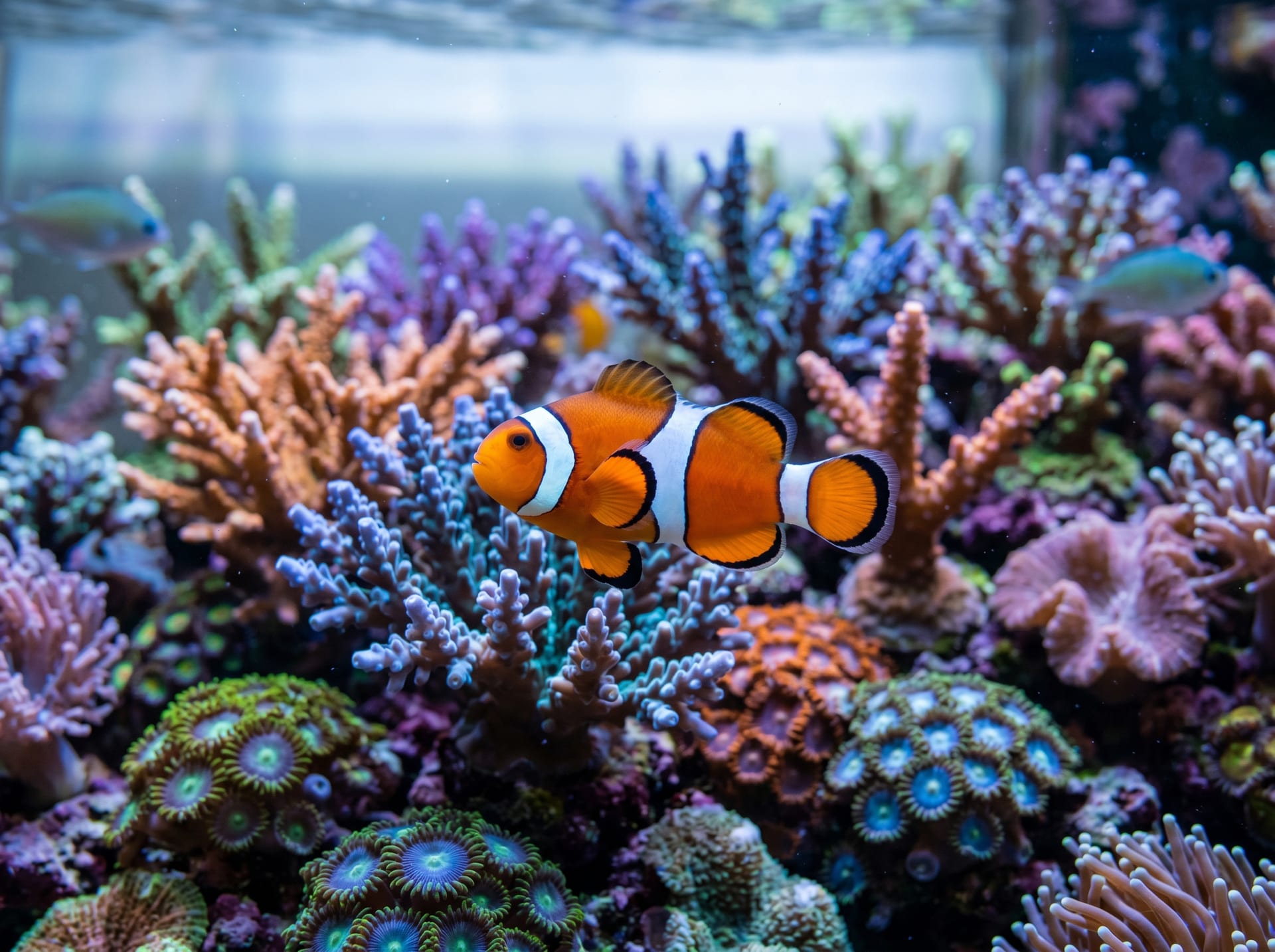
- Clownfish: Anemone or ceramic anemone-like structure; flat slate also acceptable
- Dottybacks & grammas: Caves or rock crevices (PVC pipe sections work)
- Gobies: Deep sand bed (10+ cm)
- Fairy wrasses & cardinalfish: Less dependent on substrate; prioritize ample hiding and low-stress environment
---
Observing and Recording Spawning Behavior
Pre-Spawning Behavioral Signs
As breeding approaches, watch for these behavioral changes:
- Substrate cleaning: Pairs (especially clownfish) repeatedly clean rocks and tiles with their mouths
- Trailing & courtship displays: Males position close to females and flare fins in courtship
- Abdominal distension: Females develop a rounded belly as ovaries mature
- Territory restriction: Behavior centers increasingly on the spawning site
Keeping Spawning & Rearing Records
Detailed record-keeping is essential for cycle improvement. Log the following for each spawn:
- Spawn date & time (note relation to lunar phase)
- Estimated egg count (based on substrate area and density)
- Hatch date (days post-spawn)
- Hatch rate (noting fungal/unfertilized loss)
- Number of viable larvae produced
Over multiple cycles, patterns emerge linking pre-spawn behavior to subsequent hatch rates.
---
Managing Multiple Species' Reproductive Cycles in Parallel
Serious breeders often manage multiple species simultaneously. Key considerations:
Standardizing Photoperiod & Temperature Across Species
Ideally, each species has independent environmental control, but space and cost constraints often force compromise. Base parameters on overlapping native ranges and adjust minimally. Clownfish and dottybacks are nearly identical in their requirements.
Using a Spawning Log
Maintain a monthly spawning log tracking each pair's output, egg quality, and larval rearing success. Use this data to prioritize prolific, high-quality pairs in your breeding program, increasing overall efficiency.
---
Troubleshooting Reproductive Cycles
| Problem | Likely Cause | Solution |
|---|
| No spawning at all | Insufficient environmental cues / poor pair compatibility | Introduce lunar lighting / verify pair pairing |
| Spawning but high infertility | Poor male sperm viability / malnutrition | Increase conditioning / verify temperature |
| Eggs consumed post-spawn | Stress / first-time spawners | Isolate substrate (move eggs only) |
| Low spawning frequency (<1×/month) | Insufficient photoperiod/temperature seasonality | Revisit annual cycle program |
| Eggs turning white mid-incubation | Bacterial infection / low fertilization | Move to dedicated hatchery unit / light aeration |
---
Getting Started with Spawning Induction Management
Spawning induction management sounds complex, but meaningful improvements come from just two initial steps: installing lunar lighting and improving conditioning diets.
If you already maintain breeding stock, start by tracking current spawning frequency, then add lunar lighting and monitor for 2–3 months. Most cases show increased spawning frequency and hatch rate improvements. The greater your environmental precision, the more reproducible your success.