Saltwater Fish Osmoregulation Guide | Coping with Salinity Stress, Acclimation, and Specific Gravity Changes
This guide explains the osmoregulation mechanisms that saltwater fish use to maintain internal salt concentration, and presents solutions and prevention strategies for osmotic stress caused by specific gravity fluctuations, failed acclimation, and low-salinity treatment (hyposalinity).
Key Takeaways
This guide explains the osmoregulation mechanisms that saltwater fish use to maintain internal salt concentration, and presents solutions and prevention strategies for osmotic stress caused by specific gravity fluctuations, failed acclimation, and low-salinity treatment (hyposalinity).
Related Species
Saltwater Fish Osmoregulation Explained
Saltwater fish are constantly battling salinity. Because seawater's salt concentration (approximately 3.5%) is higher than that of fish body fluids, fish constantly tend to lose water from their bodies. To compensate, saltwater fish drink large quantities of seawater and excrete sodium through their kidneys to maintain constant internal osmotic pressure.
This "drinking → excreting" mechanism is osmoregulation. It's the opposite system from freshwater fish, which expel large quantities of urine to prevent excess water from entering their bodies.
The Role of Gills
Gills serve not only as respiratory organs but also as the primary site for salt exchange. The chloride cells in gills actively excrete sodium and chloride ions, maintaining body fluid concentration. When gills are damaged (by ich, bacterial infection, etc.), osmoregulatory capacity declines and salt stress increases.
Situations Where Osmotic Stress Occurs
1. Failed Acclimation
When the specific gravity difference between shop water and home tank water is large, abruptly transferring fish causes acute osmotic pressure changes.
Example symptoms:
- Lethargy and inability to swim
- Increased white mucus on body surface
- Death within hours to days
Solution: Drip acclimation
Pour the water from the bag into a container, then gradually add tank water over one hour (2–3 drops per minute). Once the container's water volume has increased 2–3 times, use a net to gently transfer only the fish into the tank.
2. Sudden Specific Gravity Changes
Salt concentration increases from evaporation and rapid decreases from RO water additions are both dangerous.
| Change per day | Risk |
|---|---|
| 0.001 or less | Low risk |
| 0.002–0.003 | Moderate risk (caution advised) |
| 0.005 or higher | High risk (osmotic shock) |
The ideal approach is to add water gradually each day or install an ATO system (auto top-off) to minimize specific gravity fluctuations.
3. Risks During Hyposalinity Treatment
During hyposalinity (low-salinity) treatment for ich, where specific gravity is reduced to 1.009–1.011, fish are placed in an environment similar to freshwater.
Keys to success:
- Lower gradually over 3–5 days (avoid abrupt drops)
- Use a separate treatment tank to protect corals and invertebrates in the main tank
- When returning to original specific gravity after treatment, increase gradually over 3–5 days
Tolerance Differences by Species
Not all saltwater fish have the same osmotic tolerance.
| Species | Tolerance to SG Changes | Notes |
|---|---|---|
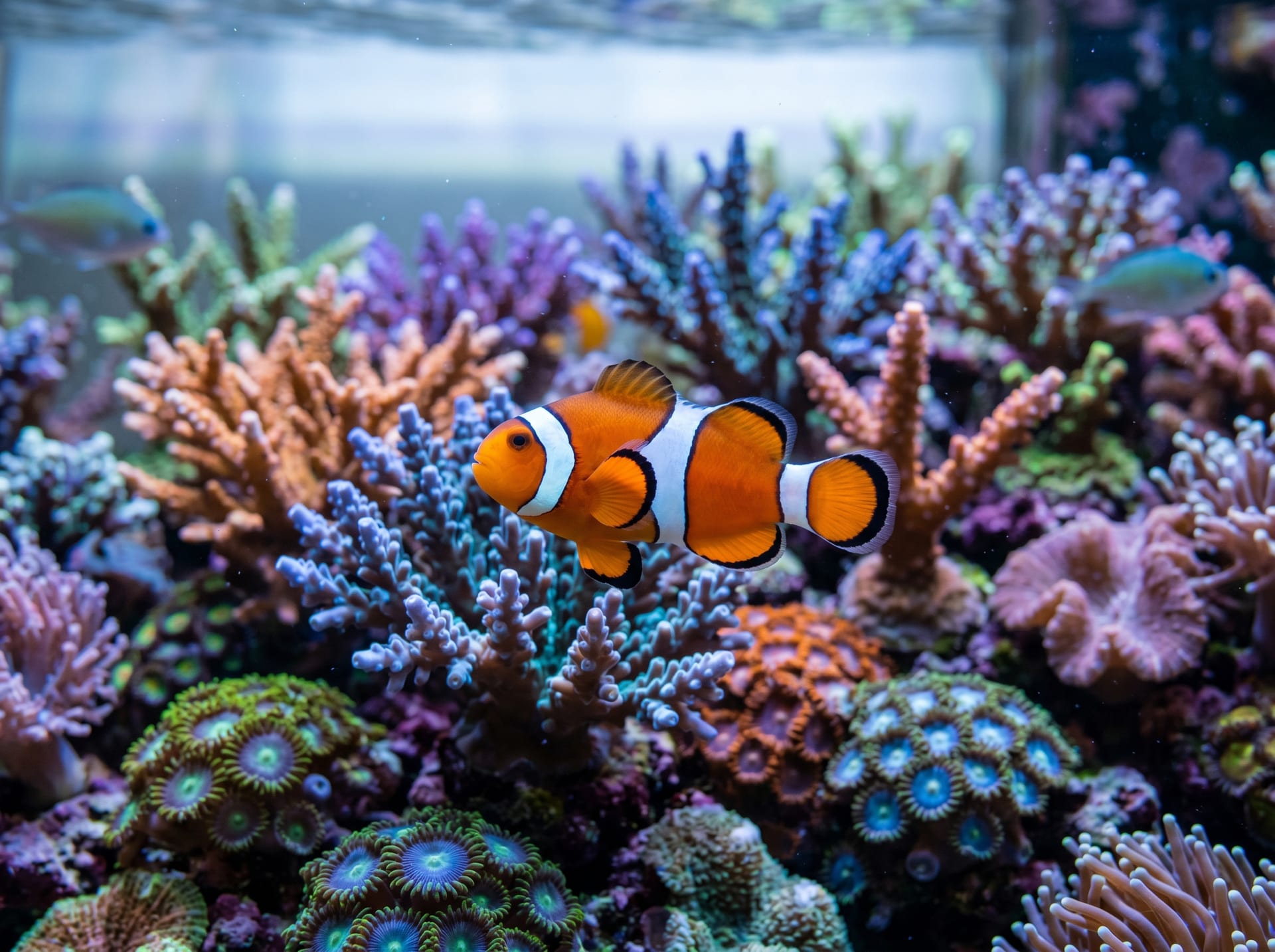
| Ocellaris Clownfish | Relatively strong | Adapts well to brackish water |
| Surgeonfishes (Yellow Tang, etc.) | Somewhat weak | Thin mucous membrane; prone to ich |
| Deep-sea / delicate species | Weak | Small Centropyge angels, etc. |
| Gobies | Relatively strong | Benthic; accustomed to environmental fluctuations |
The more delicate the species, the more important it is to spend extra time on acclimation and minimize specific gravity changes.
Signs of Osmotic Stress and Management
Early signs (don't overlook)
- Rapid breathing: Gill movement faster than normal (more than 2× normal rate)
- Aimless swimming: Restless movement along tank walls
- Excessive mucus secretion: Slimy body surface with whitish coating
Management
- Check specific gravity: Measure current SG with a digital hydrometer (refractometer)
- Correct gradual changes: Adjust at a pace of 0.001 per day rather than all at once
- Use stress coat: Assist recovery with mucus protectants like SeaChem Stresscoat
- Isolate and monitor: Move stressed fish to a separate tank and minimize disturbance
Best Practices for Specific Gravity Management
Daily Checklist
- Check ATO tank water level (refill if empty)
- Verify hydrometer zero point (refractometer has temperature correction)
- Check for unusual evaporation (sudden excess may indicate equipment failure)
Monthly Checklist
- Calibrate hydrometer (verify with NaCl calibration solution)
- Comprehensive water quality check (review relationships between SG, pH, KH, Ca, and Mg)
Recommended Specific Gravity Ranges
| Tank Type | Recommended SG |
|---|---|
| Saltwater fish only | 1.020–1.025 |
| Saltwater fish + corals | 1.025–1.026 |
| Coral-focused (SPS, etc.) | 1.025–1.026 |
Summary: Osmotic Pressure Management is Key to Long-Term Care
Most saltwater fish deaths are caused by water quality management failures (specific gravity fluctuations, failed acclimation) rather than disease. Understanding osmoregulation mechanisms will help you see why fish weaken.
Daily specific gravity monitoring and maintaining gradual changes are the most important management practices for keeping saltwater fish healthy long-term.