Complete Guide to Algae Control in Saltwater Fish Tanks | Causes and Root Solutions by Type | ブリちょく
Marine Fish| ✍️ BreederDirect Editorial
Complete Guide to Algae Control in Saltwater Fish Tanks | Causes and Root Solutions by Type
Explains algae in saltwater fish tanks (green algae, diatoms, cyanobacteria, filamentous algae) by type, including causes and solutions. Covers optimal nitrate and phosphate levels and how to reduce them, utilizing protein skimmers and refugiums, a list of cleanup crews (turbo snails, hermit crabs, fighting conch, etc.), lighting time optimization, and RO/DI water use—a practical guide to maintaining a beautiful tank long-term.
Key Takeaways
Explains algae in saltwater fish tanks (green algae, diatoms, cyanobacteria, filamentous algae) by type, including causes and solutions. Covers optimal nitrate and phosphate levels and how to reduce them, utilizing protein skimmers and refugiums, a list of cleanup crews (turbo snails, hermit crabs, fighting conch, etc.), lighting time optimization, and RO/DI water use—a practical guide to maintaining a beautiful tank long-term.
Algae Problems in Saltwater Fish Tanks
✍️
BreederDirect Editorial
The BreederDirect editorial team specializes in care information for animals, covering veterinary care and breeding to deliver beginner-friendly guides.
Find Marine Fish on BreederDirect
Buy directly from verified breeders
Browse Related Listings
Find Marine Fish listings related to this article on BreederDirect. Buy directly from verified breeders.
One of the biggest challenges aquarists face when maintaining saltwater fish tanks is algae bloom. From green algae on glass surfaces to brown diatoms covering live rock to red cyanobacteria staining the entire tank, unchecked algae growth degrades the tank's appearance and harms the health of corals and fish.
However, algae blooms are also a sign that tank conditions are out of balance. Accurately identifying the type of algae and addressing its root cause is key to long-term success.
Types of Algae and Their Characteristics
Green Algae
Appearance: Green film to filamentous algae adhering to glass and rocks
Solutions:
- Mechanically remove from glass using a scraper
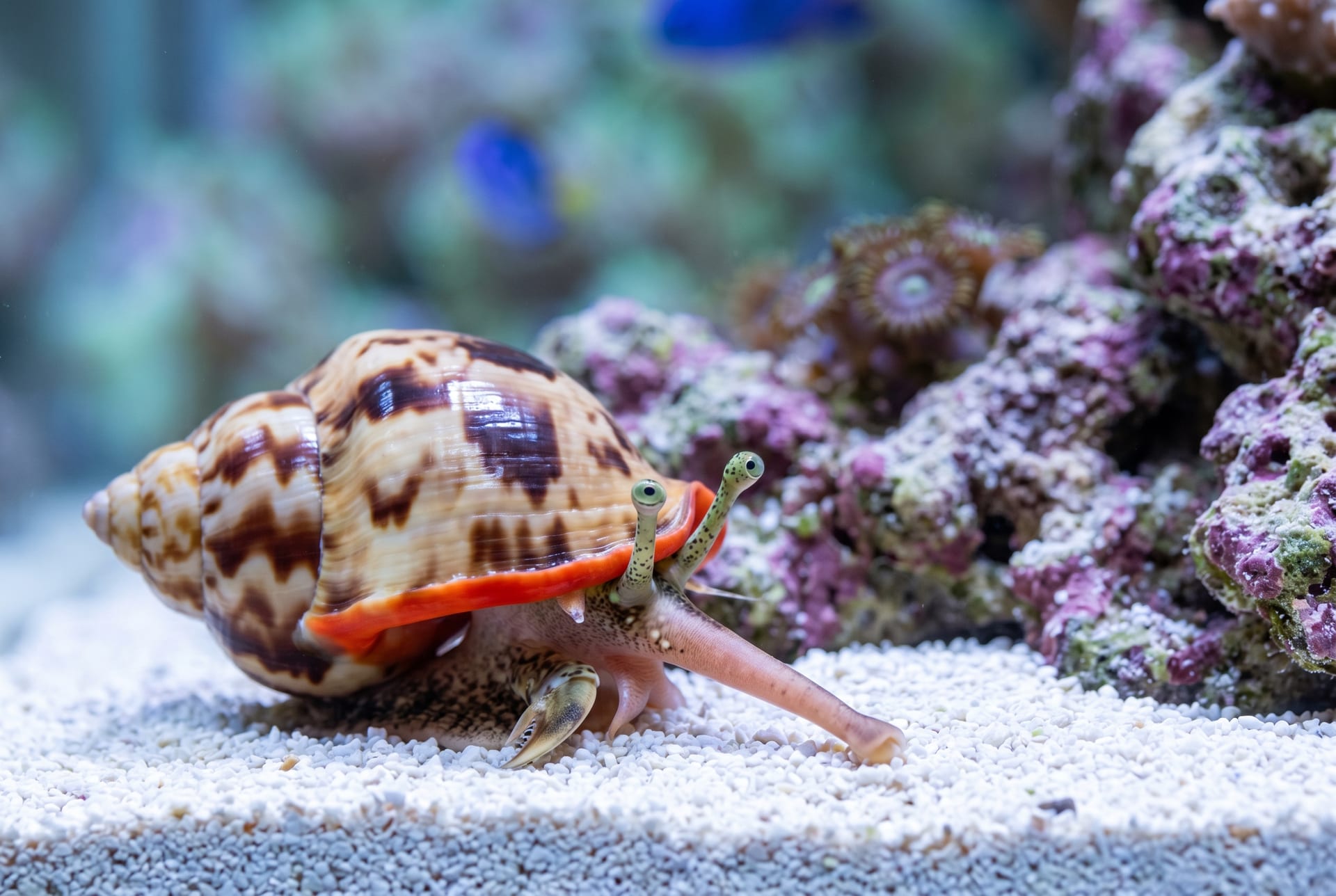
- Use cleanup crews like fighting conch, hermit crabs, and turbo snails
- Reduce lighting by 1–2 hours (keep within 10–12 hours total)
- Add phosphate-absorbing media (GFO, etc.)
Brown Diatoms
Appearance: Brown, powdery film on glass, sand, and live rock
Causes: Early tank cycling, nutrient leaching from substrate and live rock; excessive silicate (silica) is the main factor
Characteristics: Often appears naturally within 1–3 months of tank setup and often resolves on its own as bacteria stabilize
Solutions:
- Introduce diatom-eating creatures like hermit crabs, turbo snails, and magaki snails
- Switch from tap water to RO/DI water (removes silicate)
- Use siphon cleaning on substrate to remove accumulated organic debris
Cyanobacteria (Red Slime Algae)
Appearance: Bright red, purple, or blue-green slimy film with a distinctive smell
Causes: Nitrate and phosphate accumulation, insufficient water flow, and excess organic matter are common triggers
Characteristics: A photosynthetic bacterium—fundamentally different from algae. Reproduces extremely rapidly
Solutions:
- Direct strong flow at the affected area (eliminate dead zones)
- Perform large water changes (30–50%)
- Turn off lights completely at night (cyanobacteria rely on photosynthesis)
- Use Chemi-Clean (red slime treatment) as a last resort
- Strengthen protein skimming and add activated carbon
Green Filamentous Algae (Hair Algae)
Appearance: Long, hair-like green strands extending from live rock
Causes: Phosphate accumulation is the primary factor
Solutions:
- Test phosphate levels (ideal: 0.01–0.05 mg/L)
- Install a GFO (iron oxide phosphate binder) reactor
- Review feeding amounts (reduce uneaten food)
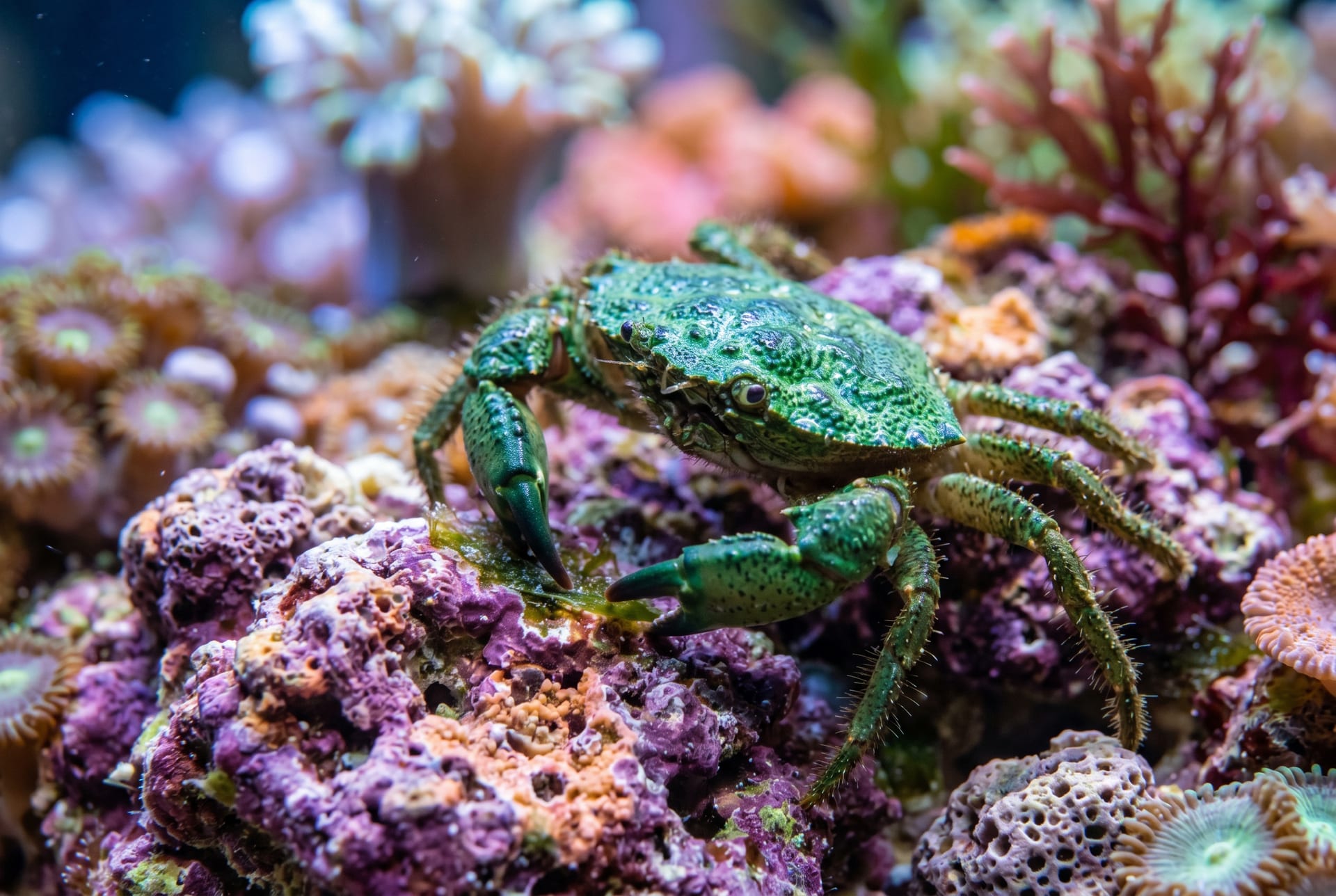
- Use emerald crabs, urchins, and other cleanup crews
Root Causes and Long-Term Algae Prevention
Strict Water Quality Management
The primary cause of algae blooms is nutrient accumulation (nitrates and phosphates).
Parameter
Target (Fish-Focused Tank)
Test Frequency
Nitrate (NO₃)
5–20 mg/L (lower is better)
Weekly
Phosphate (PO₄)
0.01–0.1 mg/L
Weekly
Ammonia (NH₃)
0 mg/L
When needed
How to Reduce Nutrients
Strengthen protein skimming: Increase bubble production to remove dissolved organic matter before water changes
Use live rock: Aerobic and anaerobic bacteria break down nitrates
Cultivate macroalgae in a refugium: Grow Chaetomorpha and similar species under lighting to absorb nutrients
Since cleanup crews starve once algae is completely gone, supplemental feeding (algae wafers, etc.) is needed before algae is fully eliminated.
Conclusion: Managing Algae Wisely
No completely algae-free tank exists in nature. Moderate algae is actually a sign of a living ecosystem. The key is keeping it under control.
Short-term solutions: Mechanical scraping, cleanup crews, water changes
Long-term solutions: Reduce feeding, strengthen skimming, use RO/DI water, optimize lighting, install a refugium
Keeping consistent records of water parameters helps you understand your tank's patterns. Early detection and treatment of algae signs is the secret to maintaining a beautiful saltwater tank for years to come.