Complete Guide to Raising Maine Coons | Large Cat Coat Care, Diet Management, and Common Health Issues
A comprehensive beginner's guide to raising Maine Coons. Learn about the feeding requirements of the world's largest cat breed, coat brushing techniques, prevention of hypertrophic cardiomyopathy (HCM), joint care, and how to set up an ideal indoor environment.

Key Takeaways
A comprehensive beginner's guide to raising Maine Coons. Learn about the feeding requirements of the world's largest cat breed, coat brushing techniques, prevention of hypertrophic cardiomyopathy (HCM), joint care, and how to set up an ideal indoor environment.
Related Species
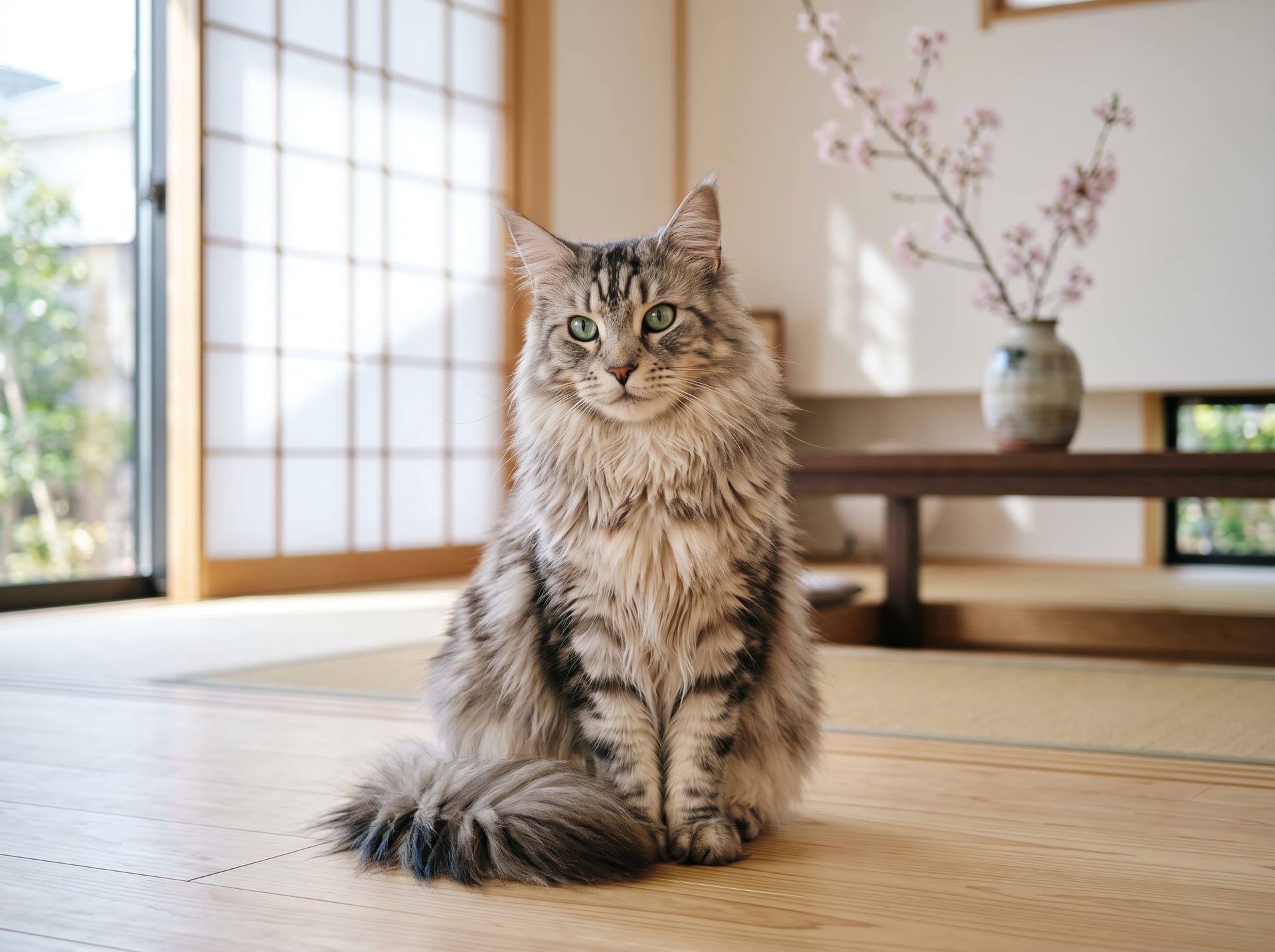
Maine Coon Characteristics and Basic Information
Maine Coons are native to Maine, USA, and are known as a naturally occurring cat breed on the North American continent. Through natural selection to adapt to harsh winter climates, they developed rich double coats and large body frames. As one of the world's largest domestic cats, adult Maine Coons can weigh 7-10 kg (with larger individuals exceeding 11 kg).
Basic Data
- Weight: Males 6-10 kg (larger individuals may exceed 11 kg), females 4-7 kg
- Height: 25-40 cm
- Lifespan: 12-15 years
- Coat: Semi-long to long. Double coat with a silky texture. Characteristic ruff (mane-like hair) around the neck
- Temperament: Dog-like obedience, sociable, playful—also called "dog cats"
Maine Coons are known as "dog-like cats"—many will remember their names and respond when called, follow their owners around, and enjoy playing in water. They are highly intelligent and excel at trick training.
Diet Management—Nutrition Required for Large Cats
Maine Coons have a long growth period, taking 3-5 years to reach full maturity. During this time, proper nutrition management directly affects healthy skeletal and muscular development.
Kitten to Young Cat Stage (up to 2 years old)
It's important to choose food formulated specifically for large cat breeds. Ideal products have properly balanced calcium and phosphorus and include joint-supporting nutrients (glucosamine and chondroitin).
- Feeding frequency: 3-4 times daily (from weaning to 6 months old), gradually reducing to 2-3 times as they grow
- Calories: Approximately 80-100 kcal per kg of body weight per day (higher during growth periods)
Adult Cat Stage
Weight management is crucial. Even with their large frame, obesity in Maine Coons puts strain on the heart, joints, and urinary system.
Recommended Nutrients
- High protein (products with 30-40% or more protein)
- Omega-3 fatty acids (EPA and DHA): Support coat shine and heart health
- Taurine: An essential amino acid for cats that also relates to cardiomyopathy prevention
Water Management
While this applies to all cats, Maine Coons also face a higher risk of kidney disease and urinary issues. They tend to prefer flowing water, so installing an automatic water fountain can be effective in increasing their water intake.
Coat Care—Managing Their Rich Semi-Long Coat
Brushing
Maine Coon coats are dense, and the ruff around the neck, belly, and underarm areas are particularly prone to matting.
- Frequency: 3-4 times per week (daily during shedding seasons in spring and fall)
- Tools: Slicker brush + wide-tooth comb (for mats) + undercoat comb
- Process: Loosen coat with comb → brush entire coat with slicker brush → remove undercoat
Neglected mats can cause dermatitis. Pay special attention to the areas where mats form most easily, such as where the hind legs attach and around the belly.
Bathing
Bathing 1-2 times per month keeps the coat clean. Due to their large size, drying completely with a hairdryer takes considerable time.
- Use cat-specific shampoo (gentle and moisturizing)
- Use lukewarm water (38-40°C), creating a good lather and washing to the roots
- Rinse thoroughly to remove all shampoo residue
- Use a hairdryer at a temperature your cat tolerates to dry completely
Nail Trimming and Ear Cleaning
- Nail trimming: 1-2 times per month, trim 1-2 mm from the tip with cat nail clippers
- Ear cleaning: Once per week, gently wipe with ear cleaner and cotton balls (not cotton swabs)
Indoor Environment—Space Design for Large Cats
Because Maine Coons are large, standard cat furniture may not be appropriately sized.
Cat Trees
- Overall height: 150 cm or more recommended
- Platform size: Wide enough for large cats to rest comfortably (40 cm or more)
- Stability: Ensure the structure is solid and doesn't wobble even under 10 kg or more
Litter Box
- Provide a large litter box (60 cm x 40 cm or larger)
- Standard commercial boxes are often too small; using a plastic container as an alternative is an option
Play Space and Exercise
Maine Coons are active and need to move their large bodies. Installing cat walks (wall-mounted shelves and paths) and large cat trees provides an environment for adequate vertical movement and exploration.
Enrichment toys: Given their high intelligence, mental stimulation through puzzle feeders and automatic laser pointers is important.
Common Health Issues
Hypertrophic Cardiomyopathy (HCM)
The most important genetic condition to watch for in Maine Coons is hypertrophic cardiomyopathy (HCM). Thickening of the heart muscle reduces cardiac function and can ultimately lead to heart failure.
Genetic mutation: A MYBPC3 gene mutation (A31P) specific to Maine Coons has been identified, and DNA testing can determine carrier status.
Breeder Selection Tips
- Choose kittens from parents who have undergone HCM genetic testing (MYBPC3)
- Ideal breeders regularly perform cardiac screening via ultrasound
Symptoms and regular checkups: Early stages are often asymptomatic, and sudden death can occur. Beginning at 2-3 years of age, annual to bi-annual cardiac ultrasound examinations are recommended.
Hip Dysplasia (HD)
Hip dysplasia is reported at higher rates in Maine Coons than in other cat breeds. Symptoms include joint pain, abnormal gait, and reduced jumping ability.
Management: Progress can be slowed by maintaining proper weight, providing supplements containing glucosamine and chondroitin, and engaging in low-impact exercise (primarily play on flat surfaces).
Spinal Muscular Atrophy (SMA)
An autosomal recessive condition causing muscle wasting and gait instability from kittenhood. DNA testing can identify carriers.
Polycystic Kidney Disease (PKD)
A genetic condition where cysts form in the kidneys, which has been reported in Maine Coons. DNA testing is effective for identifying carriers.
Summary—Preparing Before Welcoming a Maine Coon
Maine Coons are large and require considerable care, but they form deep bonds with their owners.
Pre-adoption Checklist
- Choose a breeder whose cats have been genetically tested for HCM, SMA, and PKD
- Prepare large-cat appropriate litter box, cat tree, and carrier
- Prepare high-quality food formulated for large cats
Daily Care Tips
- Brush 3-4 times per week to prevent matting
- Have cardiac ultrasound examinations 1-2 times per year for early HCM detection
- Maintain proper weight to minimize strain on joints and heart
Life with a Maine Coon—their large body and gentle nature—is a special experience in cat ownership. Prepare well and enjoy many years together.