Leaf Insect (Phyllium) Care Guide | How to Raise and Breed Mimicry Insects That Look Just Like Leaves
Leaf insects (Phyllium spp.) are representative examples of insects that perfectly mimic leaves. This guide explains the fundamental knowledge needed to successfully raise leaf insects, from precise temperature and humidity management to choosing host plants, supporting molting, and breeding methods through parthenogenesis.
Key Takeaways
Leaf insects (Phyllium spp.) are representative examples of insects that perfectly mimic leaves. This guide explains the fundamental knowledge needed to successfully raise leaf insects, from precise temperature and humidity management to choosing host plants, supporting molting, and breeding methods through parthenogenesis.
Related Species
What Kind of Insect is the Leaf Insect?
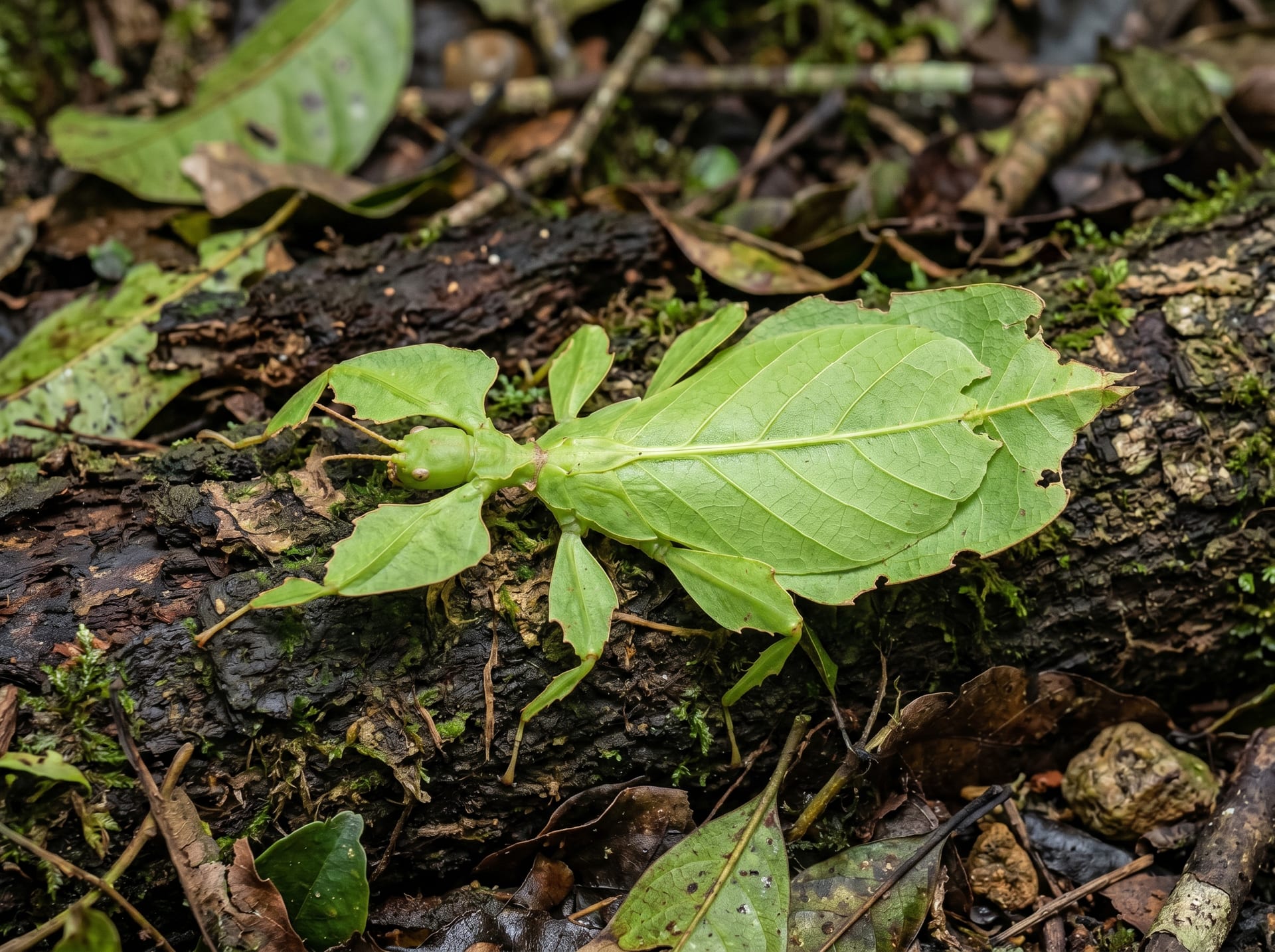
Leaf insects (Phyllium spp.; Family Phylliidae) are insects found from Southeast Asia to South Asia and northern Australia, possessing a unique appearance perfectly mimicking "tree leaves" as their name suggests. Their wings are so intricately designed to replicate leaf veins that when they are stationary, they are indistinguishable from real leaves.
The main species currently available as pets are as follows.
| Species Name | Origin | Body Length | Characteristics |
|---|---|---|---|
| Phyllium giganteum | Malaysia | 10–11cm | Largest species; vibrant green |
| Phyllium philippinicum | Philippines | 6–7cm | Readily available; classic species |
| Phyllium bioculatum | Sri Lanka, India | 7–8cm | Distinctive reddish markings |
| Phyllium westwoodii | Malaysia | 8–9cm | Serrated leaf margins |
Many leaf insect species are capable of parthenogenesis (reproduction without mating), meaning females can breed without males. Males are rarely available commercially, making all-female colonies standard practice.
Housing and Environment Setup
Housing
Leaf insects move vertically while feeding on host plants, making the height of the enclosure critical.
- Enclosure with height at least 3 times the insect's body length (30–35cm or more for adults)
- Well-ventilated mesh lids or teraria with mesh sides
- Space at the top (mesh lid or upper mesh section) for hanging upside down during molting
Butterfly enclosures with double-hinged doors or glass teraria with front-opening doors are more popular and easier to manage than plastic insect cages.
Temperature and Humidity Management
Since leaf insects are native to tropical and subtropical regions, supplemental heating is necessary during winter in Japan.
| Condition | Target |
|---|---|
| Temperature | 25–28°C |
| Humidity | 60–80% |
| Minimum Nighttime Temperature | 20°C or higher |
Maintaining Humidity
Mist the enclosure walls 1–2 times daily. Leaf insects obtain water by licking water droplets, so this misting serves as their primary water source. However, excessive moisture can promote mold growth, so ensure proper ventilation after misting.
Host Plant Selection and Management
Leaf insects feed only on live plants. The main host plants are listed below.
Primary Host Plants (Relatively Easy to Source in Japan)
- Raspberry species (blackberry, raspberry, etc.) leaves
- Rose leaves (pesticide-free)
- Smilax (Smilax spp.) leaves
- Star fruit (Averrhoa carambola) leaves (can be potted in warm climates)
Tips for Providing Host Plants
- Use pesticide-free leaves (homegrown or organic store-bought plants are ideal)
- Keep leaves fresh longer by placing stems in water within the enclosure (cover the water cup to prevent leaf insects from falling in)
- Remove old, dried leaves and replace with fresh ones
Nymph Management and Molting Support
Newly hatched leaf insects (first instar nymphs, L1) are the most delicate stage.
Important Notes for Nymphs
- Temperature and humidity management is more critical for nymphs than for adults
- A location to hang from above is essential during molting (inability to hang is the main cause of molting failure)
- Do not touch or disturb them during molting
- Keep them undisturbed for 24 hours after molting, as their bodies are soft and easily damaged
Dealing with Molting Failure
If molting stops midway, it is usually due to insufficient humidity. Gently increase humidity by misting and observe quietly. In cases of incomplete molting where skin remains on the body, you can soften the retained skin with a cotton swab dampened in warm water (around 30°C) before carefully removing it.
Breeding Method (Parthenogenesis)
Female leaf insects can lay eggs and produce offspring without mating (parthenogenesis). Egg-laying typically begins several weeks to several months after reaching adulthood.
Egg-Laying Environment
No special substrate is needed for egg-laying; leaf insects randomly deposit eggs on the floor or walls. The eggs are extremely small (approximately 5mm), resembling tree seeds (seed mimicry), and are brown to black in color.
Egg Incubation Management
- Transfer eggs to a separate incubation container (place on damp vermiculite or sphagnum moss)
- Maintain temperature of 25–28°C and humidity of 70–80%
- Incubation period varies by species, averaging 4–8 months
- Newly hatched first instar nymphs are extremely small (1–1.5cm) and require immediate access to host plants
Tips for Long-Term Care
The most important factors in leaf insect care are "proper humidity management" and "ensuring pesticide-free host plants." Molting failure due to insufficient humidity and pesticide-related deaths are the primary causes of problems.
Adult lifespan varies by species, but females typically live 8–12 months. With proper care, you can raise the next generation from laid eggs and enjoy keeping leaf insects for an extended period.
Leaf insects, which are stationary, have modest appetites, and blend perfectly into leaves, are unusual pets, but their elaborate mimicry continues to astound observers. They are highly recommended for those who want to enjoy keeping a unique insect species.