Initial Breeding Setup Cost Breakdown: Comprehensive Species-by-Species Comparison
Breeding setup costs vary significantly depending on the species you keep. Here we explain three representative species patterns with specific product lines and price ranges.
In the Case of Large Stag Beetles (Ohkuwa)
Large stag beetles primarily lay eggs in wood, and the quality of breeding wood determines success or failure. Oak wood (Konara oak) is the standard, with prices varying by grade. Here are the typical retail price ranges.
- Breeding wood (L-size, Konara oak): ¥350–¥600 per piece. Branded products (such as D-Line from Nara wood specialist shops) run around ¥800 per piece
- Fermented substrate (bedding): Goto substrate 10L ¥1,200–¥1,500. Standard substrate (stag beetle-specific) 10L around ¥800
- Breeding container (Kobasha medium): ¥1,000–¥1,500
- Tipping prevention materials, spray bottle, etc.: ¥200–¥500
Total: approximately ¥3,500–¥5,000 (with 2-piece breeding wood set)
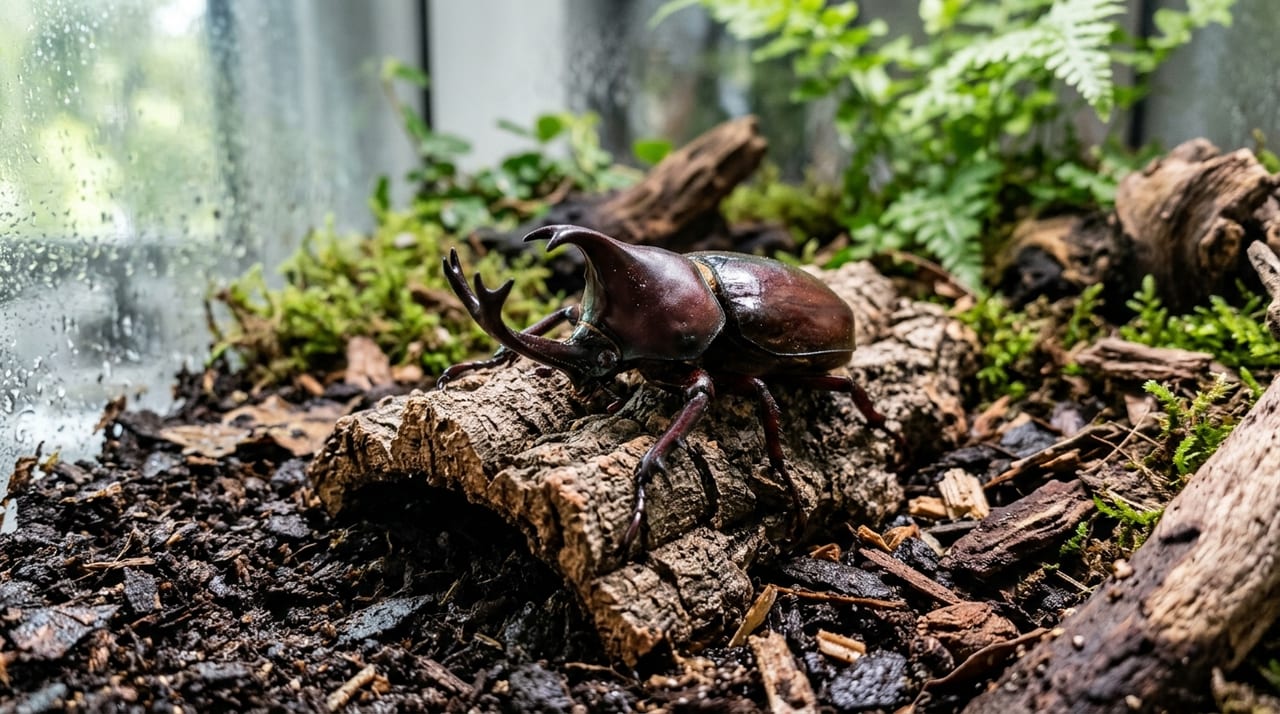
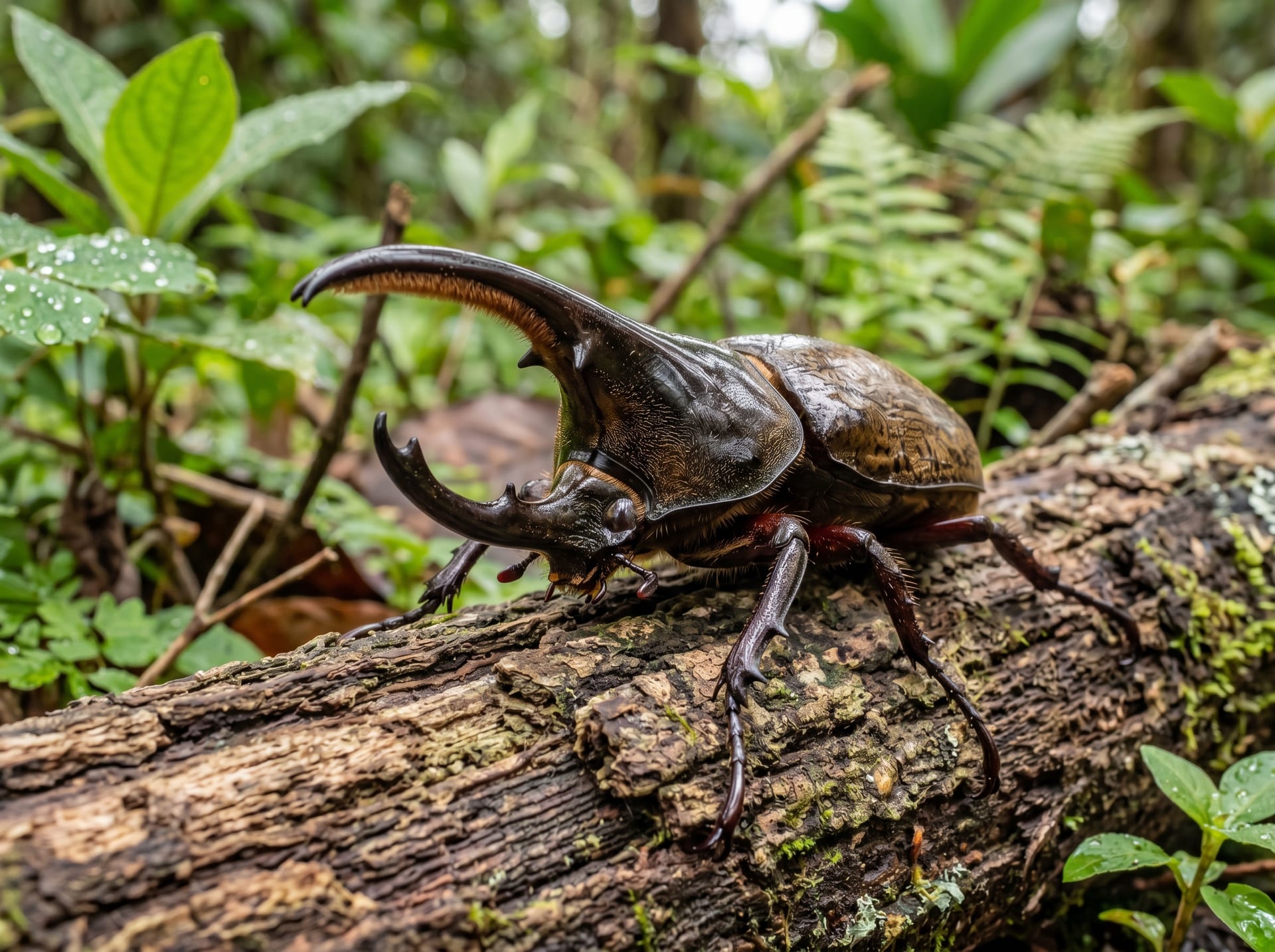
In the Case of Hercules Beetles (Hera-Beetles)
Hercules beetles lay eggs in substrate, making the quantity and quality of fermented substrate critical. Due to their large size, they require deeper egg-laying layers, consuming more substrate.
- Fermented substrate (Tsukiyono Kinokouen Hera-specific substrate, etc.): 50L ¥3,000–¥4,500
- Breeding container (Kobasha large, deep): ¥2,000–¥2,800
- Heater & temperature control cost (maintaining 27–30°C): ¥500–¥1,500 per month (electricity)
Total: approximately ¥6,000–¥10,000 (temperature control equipment separate)
In the Case of Japanese Rhinoceros Beetles
Japanese beetles are the most cost-effective. You can assemble a complete breeding setup using only items available at home improvement stores.
- Fermented substrate (beetle-specific, retail): 10L ¥600–¥900 (Kohnan PB, etc.)
- Breeding container (medium plastic case): ¥400–¥700
- Insect jelly: ¥200–¥300
Total: approximately ¥1,500–¥2,000 for a realistic budget setup.
---
Initial Investment Simulation: Total Cost by Species
Including breeding setup costs plus adult beetle purchase price and management fees, here's a breakdown of the "total investment at the start of breeding" by species.
| Species | Adult Purchase Cost | Breeding Setup Cost | Total Estimate |
|---|
| Japanese Rhinoceros Beetle | ¥0–¥500 (wild-caught individuals) | ¥1,500–¥3,000 | ¥1,500–¥3,000 |
| Japanese Stag Beetle (Large stag, etc.) | ¥1,500–¥5,000 | ¥3,000–¥5,000 | ¥4,500–¥8,000 |
| Foreign Large Species (Hercules, etc.) | ¥5,000–¥15,000 | ¥6,000–¥10,000 | ¥11,000–¥25,000 |
Foreign large species may incur an additional ¥5,000–¥15,000 for separate temperature control equipment (reptile heaters, temperature controllers, etc.). Including equipment costs, the total initial investment often exceeds ¥30,000.
---
Realistic Data on Breeding Success Rates
Setting up a breeding container does not guarantee success. Failure rates vary significantly based on experience, environment, and species.
For Beginners (1–3 breeding attempts)
- Average success rate: 60–70%
- Includes cases where eggs are detected but fail to hatch
For Experienced Breeders (5+ breeding attempts)
- Average success rate: 80–90%
- Stable environmental management and proper specimen selection improve success rates
Major Causes of Failure and Their Proportions (estimated by experienced breeders)
| Cause | Percentage of Failures |
|---|
| Temperature/humidity management errors | ~35% |
| Poor adult condition (newly emerged, aged, unmated) | ~30% |
| Breeding wood/substrate quality or species mismatch | ~20% |
| Insufficient container size or breeding space | ~10% |
| Other (mite infestation, etc.) | ~5% |
Beginners most often struggle with "temperature management" and "adult condition assessment." Temperatures outside the breeding range cause many species to lose their reproductive drive.
---
Calculating Per-Adult Production Cost
Calculating how much each larva cost to produce helps reveal the cost-effectiveness of home breeding.
Formula: Total cost ÷ number of hatched larvae = production cost per larva
Japanese Rhinoceros Beetle Example (successful case):
- Total cost: ¥2,000
- Average number hatched: 30–50 larvae
- Production cost per larva: ¥40–¥67
Large Stag Beetle Example (successful case):
- Total cost (including adults): ¥8,000
- Average number hatched: 10–20 larvae
- Production cost per larva: ¥400–¥800
Hercules Beetle Example (successful case):
- Total cost (including adults, partial equipment): ¥25,000
- Average number hatched: 15–30 larvae
- Production cost per larva: ¥833–¥1,667
If the number of hatched larvae is low or mortality occurs, the cost per larva increases significantly. Hercules beetles in particular have a lengthy larval period of 18–24 months, during which substrate and electricity costs accumulate separately, often bringing the final cost per emerged adult to ¥3,000–¥6,000.
---
Additional Costs Upon Failure and Re-setup Expenses
If eggs fail to appear, re-setting up incurs additional costs.
Typical Additional Costs for Re-setup
- Breeding wood replacement (1 piece of Konara oak): ¥350–¥600
- Substrate addition (~5L): ¥400–¥600
- Re-setup container (¥0 if reusing existing): ¥0
Single re-setup cost: approximately ¥700–¥1,500
Multiple failures accumulate to ¥1,500–¥3,000 in additional costs. Additionally, adults have a limited breeding season, so repeated failures risk missing the optimal breeding window.
If failures persist, three options are considered effective: (1) changing the breeding wood or substrate brand, (2) using a larger container, or (3) adding additional breeding pairs before re-attempting. Most of these options stay within ¥1,000–¥5,000 in additional costs.
---
Shop Purchase vs. Home Breeding: Break-Even Point Analysis
"Is it more economical to breed or buy from a shop?" is actually a hotly debated topic. Breaking down the break-even point by species makes the decision clearer.
Japanese Rhinoceros Beetles
- Shop purchase price: Adults ¥300–¥800, larvae ¥200–¥500
- Home breeding cost per larva: ¥40–¥70 (successful case)
- Conclusion: Home breeding is overwhelmingly advantageous if raising 3+ larvae. The initial ¥2,000 cost is quickly recovered by purchasing just 3–4 individuals from a shop.
Large Stag Beetles
- Shop purchase price: Larvae ¥800–¥3,000 (varies by bloodline and size)
- Home breeding cost per larva: ¥400–¥800 (successful case)
- Break-even: Home breeding becomes cheaper than shop purchase if 10+ larvae hatch. However, if the adult purchase cost is high (¥10,000+), few hatchlings make the cost per larva more expensive.
Hercules Beetles
- Shop purchase price: Larvae ¥2,000–¥8,000 (size and bloodline)
- Home breeding cost per larva: ¥1,500–¥2,500
- Break-even: 15+ larvae must hatch and survive to break even. However, roughly two years of substrate and electricity costs weigh heavily, making this strategy better suited for those planning to hatch many and sell or give away rather than raise a small elite group.
The greatest benefit of home breeding lies not in "cost reduction" but in "bloodline management" and "breeding fulfillment." The key to sustainability is accurately understanding initial costs and starting at a manageable scale.