Complete Guide to Stick Insect Care | Species, Cages, Food, Breeding | ブリちょく
Insects| ✍️ BreederDirect Editorial
Complete Guide to Stick Insect Care | Species, Cages, Food, Breeding
Comprehensive explanation of stick insect care methods. From domestic Japanese stick insects to overseas spiny stick insects and leaf insects, this complete guide covers cage setup, food plants, molt management, the mechanism of asexual reproduction, and hatching—useful for both beginners and experienced keepers.
Key Takeaways
Comprehensive explanation of stick insect care methods. From domestic Japanese stick insects to overseas spiny stick insects and leaf insects, this complete guide covers cage setup, food plants, molt management, the mechanism of asexual reproduction, and hatching—useful for both beginners and experienced keepers.
✍️
BreederDirect Editorial
The BreederDirect editorial team specializes in care information for animals, covering veterinary care and breeding to deliver beginner-friendly guides.
Find Insects on BreederDirect
Buy directly from verified breeders
Browse Related Listings
Find Insects listings related to this article on BreederDirect. Buy directly from verified breeders.
Related Tools
Related Articles
Browse by Category
🪸Coral
🐠Marine Fish
🐟Tropical Fish
🐡Goldfish
🐟Medaka
🦎Reptiles
Share
What Kind of Insect is the Stick Insect?
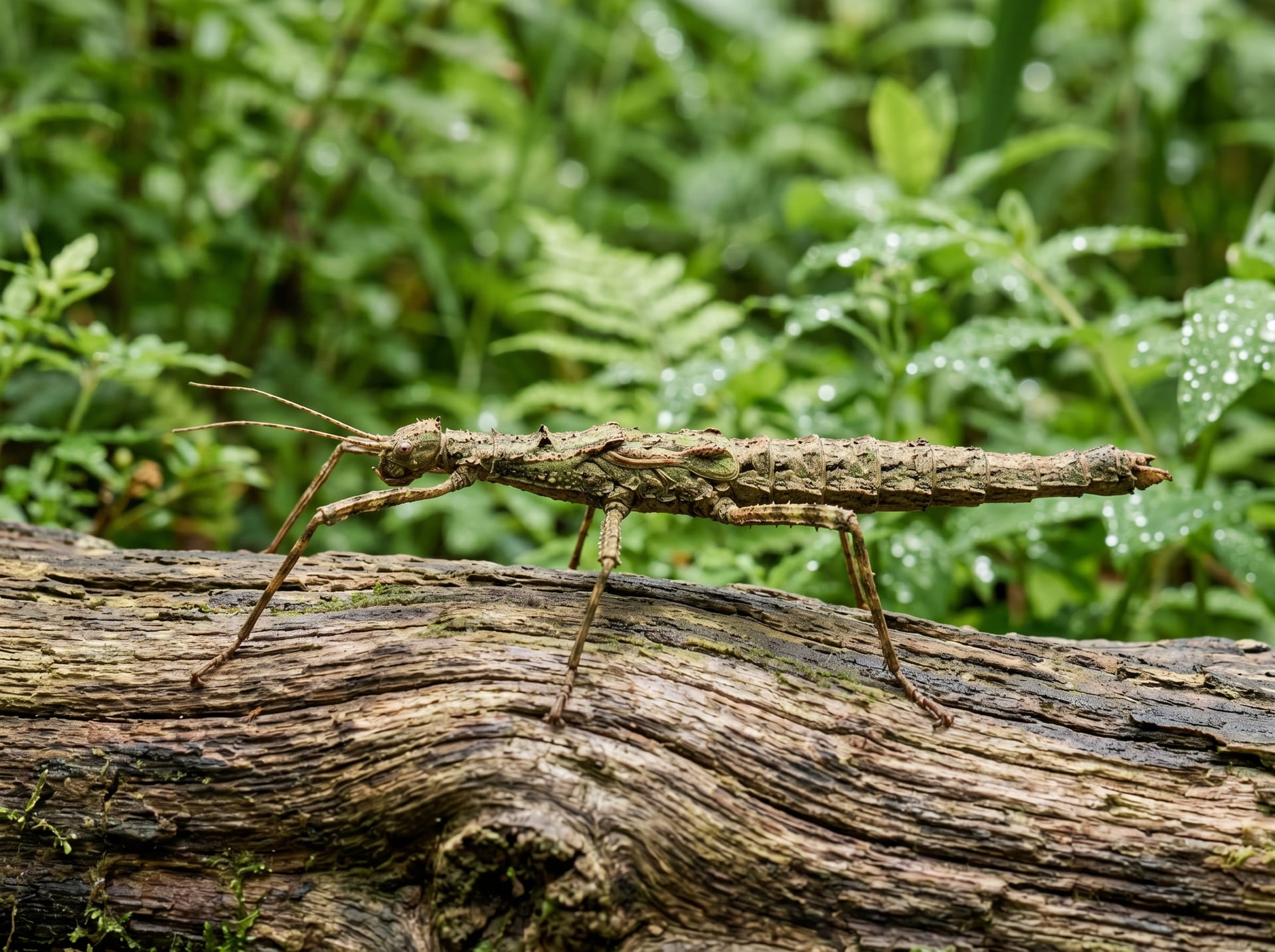
Stick insects (Order Phasmatodea) are a major group of insects that mimic tree branches and leaves. Over 3,000 species are distributed worldwide, and about 20 species inhabit Japan, including the Japanese stick insect, long-legged stick insect, and spiny stick insect.
The greatest characteristic is exceptionally high mimicry ability. Their body color, shape, and posture when stationary closely resemble plants—so much so that even experienced observers might overlook them. Additionally, the fact that many species can reproduce asexually (reproduce as females only) is one of the reasons they are popular with insect enthusiasts.
The difficulty level of keeping them is relatively low, and large-scale breeding facilities are unnecessary, making them a popular beginner species for insect keeping worldwide. However, "easy to keep" and "staying healthy long-term" are two different things—neglecting molt management, food freshness, and proper humidity will result in a short lifespan. This guide explains everything systematically from basics to breeding.
---
Characteristics and Difficulty of Major Species
Domestic Species
Japanese Stick Insect (Ramulus mikado)
The most common stick insect in Japan. With a slender green to brown body measuring 10-13cm in length. Feeds on Chinese hackberry, oak, and Rosaceae plants, with the lowest breeding difficulty. Relatively easy to collect from the wild. Capable of reproducing through asexual reproduction only.
Long-legged Stick Insect (Phraortes elongatus)
Similar to the Japanese stick insect but with a body shape closer to branches and longer antennae. Prefers roses, cherry blossoms, heavenly bamboo, and similar plants.
Spiny Stick Insect (Neohirasea japonica)
Females have thorns on their body surface and appear heavier. Feeds on Chinese hackberry, oak, and Rosaceae plants. Prefers higher humidity than the Japanese stick insect.
Popular Overseas Species
Australian Giant Spiny Stick Insect (Extatosoma tiaratum)
A large species reaching up to 20cm. Females prefer eucalyptus leaves and require temperature control (25-28°C). Both sexual and asexual reproduction are possible. Captive-bred individuals are also available in Japan.
Leaf Insect (Phyllium spp.)
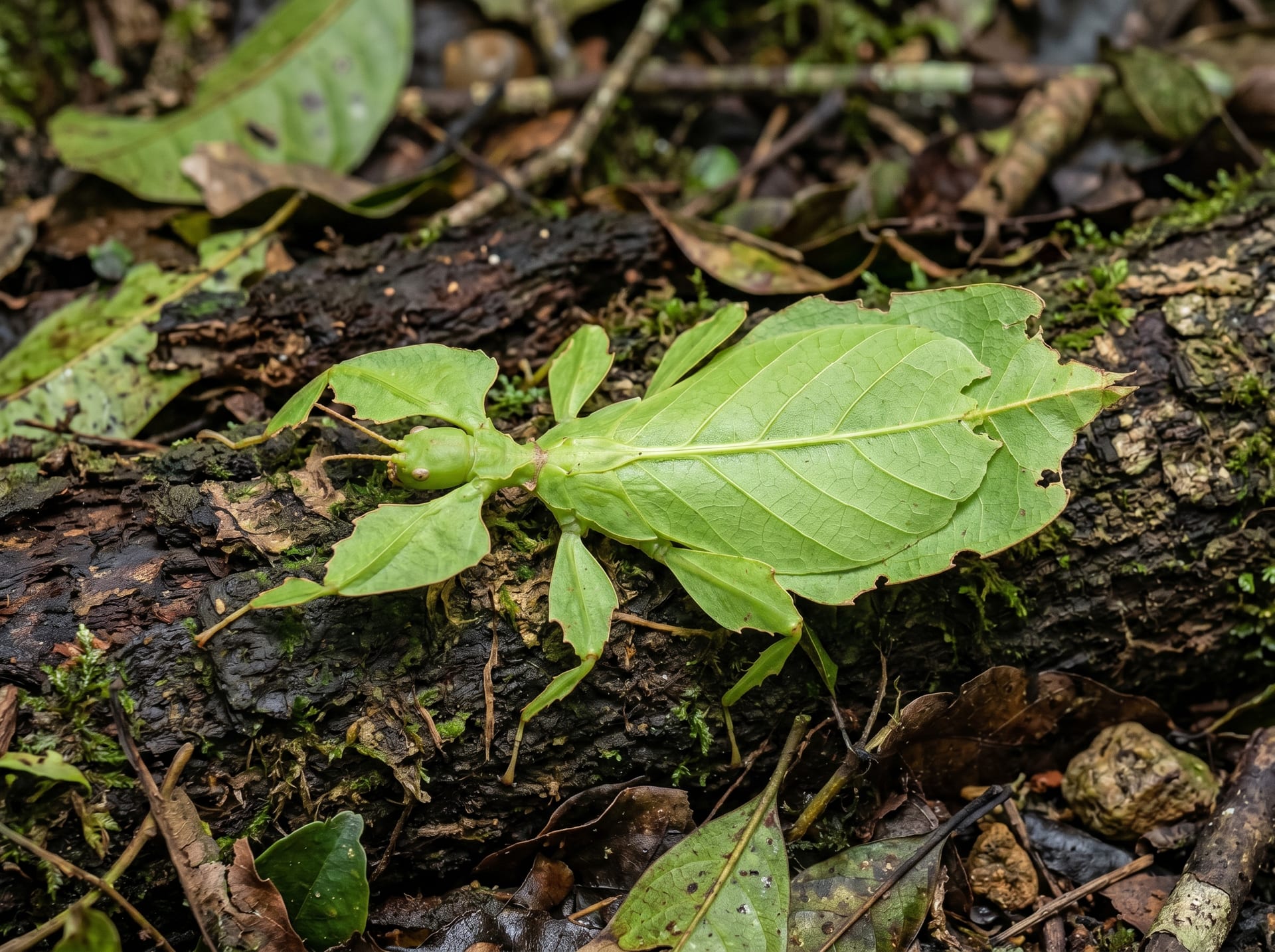
Has a flat body that perfectly mimics dead and green leaves. Breeding difficulty is relatively high, requiring a well-ventilated high-humidity environment and specific food plants (guava, mango, rambutan, etc.).
---
Setting Up the Breeding Environment
Cage Selection
Stick insects need vertical space most critically during molting. Ensure a height of at least 3 times the length of an adult insect's body.
Species Size
Recommended Cage Size (Minimum)
Small (up to 8cm)
Width 20 × Depth 20 × Height 45cm
Medium (8-15cm)
Width 30 × Depth 30 × Height 60cm
Large (15cm+)
Width 40 × Depth 40 × Height 80cm
Since ventilation is important, mesh-topped reptile cages with mesh sides are more suitable than full acrylic enclosures.
Temperature and Humidity
Species
Ideal Temperature
Ideal Humidity
Domestic species (Japanese stick insect, etc.)
20-28°C
50-70%
Extatosoma tiaratum
24-30°C
60-80%
Leaf insect species
24-28°C
70-90%
For humidity management, mist the cage sides once daily is the standard approach. Avoid misting the floor; instead, create water droplets on the sides to enable natural drinking.
Layout
Place food plants in a vase or plastic container within the cage (cover the water container with cotton to prevent drowning)
Arrange branches and driftwood three-dimensionally to ensure space for molting and movement
Spread water moss or coconut husk soil 1-2cm on the floor to help maintain humidity
---
Managing Food Plants
Recommended Food Plants for Domestic Species
Consistently usable species (easy to obtain)
- All Rosaceae (roses, cherry blossoms, plums, apples, pears)
- Fagaceae (Chinese hackberry, oak, acorn trees)
- Savin berry, privet
Species usable depending on season
- Spring to autumn: Camellia, sasanqua, raspberry species
- Year-round: Ficus species grown as houseplants (specific species only)
Food Freshness Management
Stick insects strongly prefer fresh leaves and may refuse wilting foliage.
Keep branches in water in a cool dark place (replace every 3-5 days)
Never use leaves that may have pesticide residue—use homegrown plants or pesticide-free vegetables from supermarkets
Fallen leaves and dried leaves are basically unsuitable (with some exceptions for certain leaf insect species)
---
Molt Management
Molting is the phase requiring the most care in stick insect keeping. Most molt failures result from insufficient vertical space or low humidity.
Signs Before Molting
Sudden drop in appetite (1-3 days before)
Movements become sluggish and they spend extended time stationary in high positions
Body color becomes slightly darker (some species may become more transparent)
Precautions During Molting
Never touch or disturb (interference during molting can result in loss of limbs or death)
Maintain temperature and humidity at the higher end of the normal range (near the upper limit of ideal temperature, with elevated humidity)
Newly molted insects often consume their shed skin—this is normal behavior and should not be removed
When Molting Fails
If limbs don't fully emerge, use a cotton swab moistened with lukewarm water to slowly soften and remove the old skin. Pulling forcefully can cause injury, so work carefully and take your time.
---
Reproduction: Asexual and Sexual Reproduction
How Asexual Reproduction Works
Many domestic species, such as the Japanese stick insect, have no males or males are extremely rare. Females can produce and hatch eggs on their own (all hatched individuals are female).
Because of this, there's no need to distinguish male from female; however, since genetic diversity does not arise, care is needed during extended successive breeding.
Egg Laying and Egg Management
Females lay eggs scattered across the floor material, cage walls, and the base of plants.
Egg characteristics
- Shape that mimics seeds (some species have an "eleiosome" that ants carry and help disperse)
- Small hard particles 1-4mm in size
- Incubation period for domestic species: 2-4 months (depending on species and temperature)
Managing for Hatching
1. Check the floor material at the bottom of the cage approximately once a month and collect eggs
2. Arrange them on moistened water moss and place in a small covered container (with air holes)
3. Maintain around 25°C (avoid major temperature fluctuations)
4. Lightly mist the surroundings every 2-3 days
Newly hatched nymphs (first instar) are very small and delicate. Use finely chopped new shoots and tender leaves for food, and rely on misting water droplets for hydration.
---
Points to Consider When Purchasing from Breeders
While many insect enthusiasts collect domestic wild stick insect species, obtaining captive-bred individuals from breeders for overseas species and leaf insects is safer in terms of health status and legal risk management.
Points to confirm
- Whether they are captive-bred or wild-caught
- Whether they are covered under the Foreign Species Act or Plant Protection Act (some spiny stick insect species may be regulated)
- Information on hatching date and instar
- Types of food plants and whether they can be switched
Reliable breeders provide detailed information on food plant types, molting frequency, and breeding temperature. The first step to healthy care is setting up your breeding environment and securing food plants before bringing them home.