Techniques for Producing Large Beetles: Optimizing Substrate, Temperature, and Breeding Line Management | ブリちょく
Insects| ✍️ BreederDirect Editorial
Techniques for Producing Large Beetles: Optimizing Substrate, Temperature, and Breeding Line Management
A guide for breeders aiming to produce beetles exceeding 80mm in Japanese stag beetles and 150mm in Hercules beetles. This article covers specialized techniques for achieving record-breaking sizes, including substrate selection, long-term low-temperature rearing, nutritional supplements, the relationship between parent size and genetics, and breeding line management.
Key Takeaways
A guide for breeders aiming to produce beetles exceeding 80mm in Japanese stag beetles and 150mm in Hercules beetles. This article covers specialized techniques for achieving record-breaking sizes, including substrate selection, long-term low-temperature rearing, nutritional supplements, the relationship between parent size and genetics, and breeding line management.
The Purpose and Goals of Producing Large Beetles for Breeders
In beetle breeding, producing large specimens represents the culmination of technical skill and genetic management, and is one of the highest achievement goals for breeders.
Guidelines for Large Specimens:
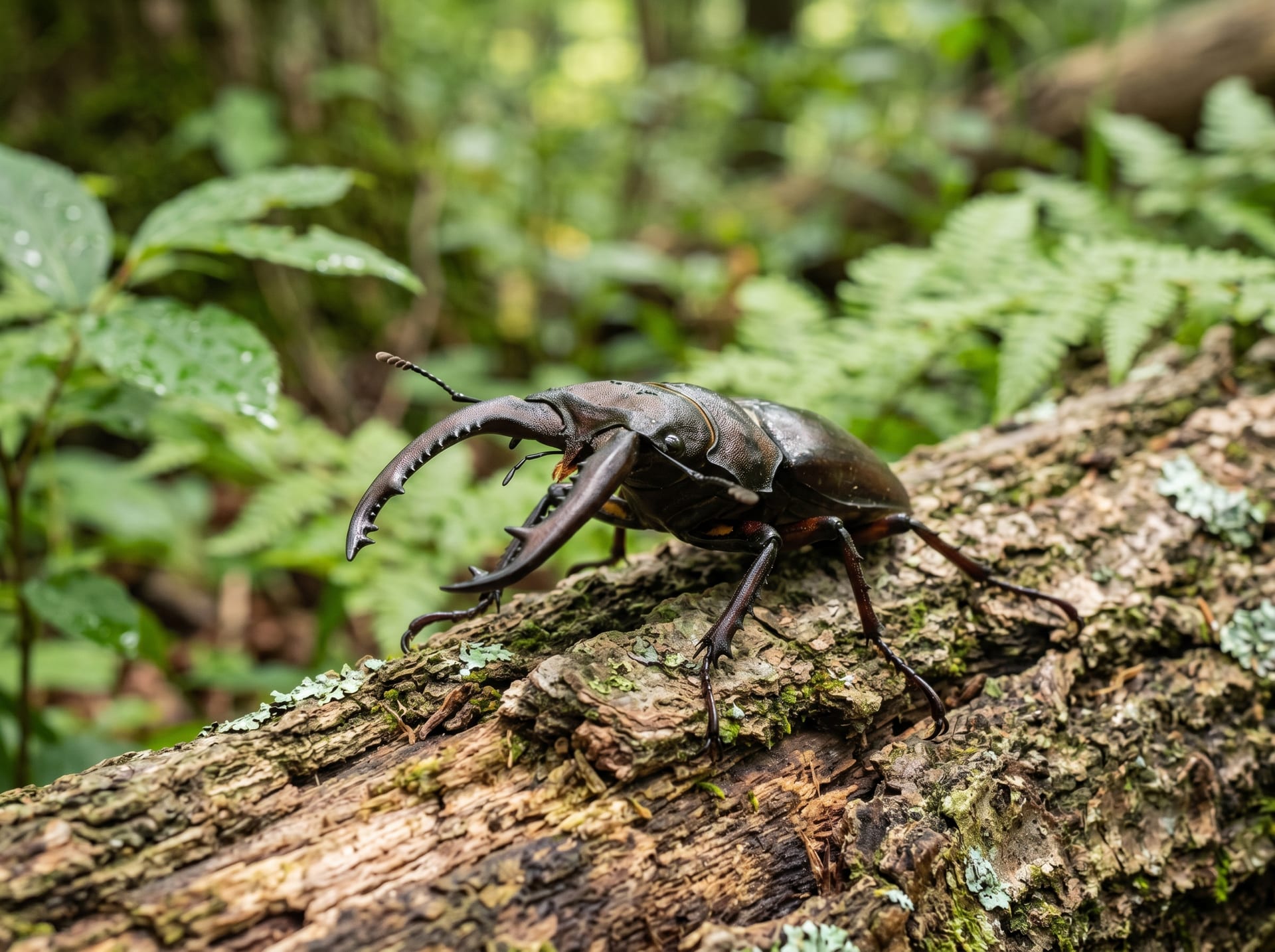
- Japanese stag beetles (Ohkuwa): Wild specimens are around 70mm; in captivity, specimens exceeding 80mm are considered large, and those exceeding 85mm are considered extremely large
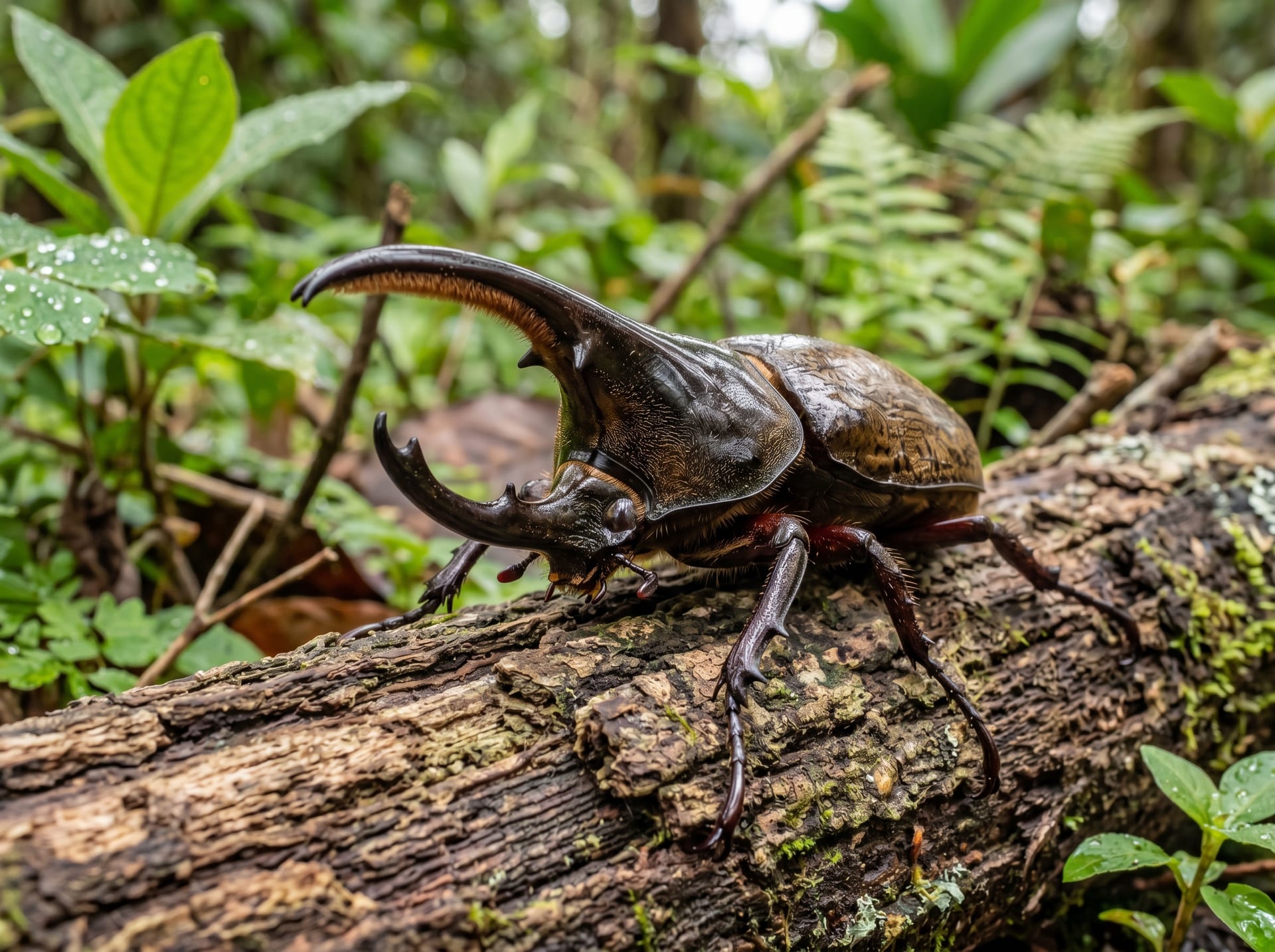
- Hercules beetles: Wild specimens are around 140mm; in captivity, specimens exceeding 160mm are considered large, and those exceeding 170mm are considered extremely large
- Giraffe stag beetles: Specimens exceeding 110mm are considered large, and those exceeding 120mm are considered extremely large
Large specimens are not only larger in size but also tend to be healthier, longer-lived, and have higher reproductive capacity, making them extremely valuable as the foundation of a breeding line. This article explains specialized rearing techniques for achieving record-breaking sizes.
The Three Critical Factors for Producing Large Specimens
Producing large specimens requires the following three factors to work together:
Genetics (parent breeding line): Genetic potential for large size
Nutrition (substrate and media quality): Sufficient nutrition for growth
Environment (temperature, humidity, rearing duration): Conditions that maximize growth
These three factors are interconnected, and large specimens cannot be produced if any one is lacking. The following explains how to optimize each factor.
Genetics: Parent Selection and Breeding Line Management
Correlation Between Parent Size and Offspring Size
Parent specimen size is the most critical factor in producing large offspring.
✍️
BreederDirect Editorial
The BreederDirect editorial team specializes in care information for animals, covering veterinary care and breeding to deliver beginner-friendly guides.
Find Insects on BreederDirect
Buy directly from verified breeders
Browse Related Listings
Find Insects listings related to this article on BreederDirect. Buy directly from verified breeders.
Male size is strongly inherited in offspring (especially mandible size and body length)
Female size is also important (larger females produce larger eggs, leading to better initial growth)
Selecting both parents with large size is the basic principle
Recommended Sizes (Japanese stag beetles example):
- Males: 75mm or larger (ideally 80mm or larger)
- Females: 48mm or larger (ideally 50mm or larger)
Breeding Line Management: Inbreeding vs. Outbreeding
Inbreeding: Crossing the same bloodline for multiple generations
- Advantage: Can fix large-size genes
- Disadvantage: Risk of miniaturization and weakening as generations progress
Outbreeding (crossbreeding different bloodlines): Crossing different bloodlines
- Advantage: Hybrid vigor improves size and health
- Disadvantage: Genetics become unstable, size becomes difficult to predict
Practical Example for Breeders:
- Inbreed for 3–4 generations, selecting large specimens each time
- From generation 5 onward, introduce another large bloodline
- Repeat the selection process to establish a new large bloodline
Importance of Record Keeping
Always record parent specimen size, emergence date, and generation number, and manage this in a spreadsheet. This allows you to analyze which combinations are most likely to produce large specimens.
Nutrition: Optimizing Substrate and Media
Substrate Selection for Stag Beetles
The "brand" of substrate directly influences size. The type of fungus and additive formulation determine growth speed and final size.
Types of Fungus:
- King oyster mushroom fungus: Fast growth, suitable for beginners; works for medium to large specimens
- Turkey tail fungus: Essential for special species like Tarandus or Golden Stag beetles
- Improved oyster mushroom varieties: Some manufacturers have developed versions specifically for maximizing size
Advantageous Brands for Large Size (Japanese stag beetles example):
- "Tsukuyono Kinoko-en XL Mat"
- "Foretec G-pot"
- "KB Farm Pro Jelly Substrate"
Substrate Volume and Timing:
- 1st instar: 200–400ml
- 2nd instar: 800ml
- 3rd instar (for large size): 1400–2000ml (larger containers lead to larger final size)
- Replacement timing: Replace before substrate deteriorates (change when white color turns yellow)
Media Selection for Rhinoceros Beetles
Rhinoceros beetles are typically reared in media, and fermentation level and additive formulation are critical.
Media Advantageous for Large Size:
- "Tsukuyono Kinoko-en Fully Fermented Media"
- "Kinoko Mat Improved Version"
- "Dorcus King Hercules Mat" (Hercules-specific)
Additive Applications:
- Trehalose (insect sugar): Energy source and growth promoter
- Wheat germ: Provides protein and B vitamins
- Avoid excess to prevent fermentation heat and gas buildup; keep additives to 5% or less of media weight
Environment: Low-Temperature Long-Term Rearing for Maximum Size
Theory Behind Low-Temperature Long-Term Rearing
High-temperature rearing (28–30℃): Growth is fast, but pupation occurs quickly, resulting in small emergence
Low-temperature rearing (18–22℃): Growth is slow, but larval period extends, allowing weight gain and larger emergence
For record-breaking sizes, the rule is to extend the larval period at low temperatures and allow sufficient nutrient accumulation.
Temperature Guidelines:
| Species | Standard Rearing | Large Size Target (Low Temp) | Larval Period |
|---|---|---|---|
| Japanese stag beetles | 24–26℃ (8–12 months) | 20–22℃ (12–18 months) | Extended period produces larger size |
| Hercules beetles | 25–28℃ (18–24 months) | 22–24℃ (24–30 months) | Extended period produces larger size |
| Giraffe stag beetles | 24–26℃ (12–15 months) | 20–22℃ (15–20 months) | Extended period produces larger size |
Practical Low-Temperature Management Methods
Wine cooler: Can be set to 16–22℃; most reliable option
Simple greenhouse + cooling fan: Use fan for cooling in summer, heater for warming in winter
North-facing room or basement: Naturally maintains low temperature
Substrate Replacement Frequency in Low-Temperature Rearing
In low-temperature rearing, substrate deteriorates more slowly, allowing fewer replacements (reducing growth interruption stress from replacement).
Standard rearing: Every 2–3 months
Low-temperature rearing: Every 3–4 months (replace when substrate color turns yellow)
Recording Larval Maximum Weight
Maximum larval weight correlates strongly with adult size. When aiming for large specimens, measuring larval weight is critical.
Target Weights (3rd instar maximum):
- Japanese stag beetles aiming for 80mm+: Males 25g or more, females 15g or more
- Hercules beetles aiming for 160mm+: Males 120g or more, females 60g or more
- Giraffe stag beetles aiming for 110mm+: Males 40g or more
If weight doesn't reach these targets, possible causes are insufficient nutrition (substrate deterioration or delayed media changes) or temperatures that are too high.
Common Failures and Solutions
Failure Example ①: Early Emergence Leading to Small Size
Cause: High-temperature rearing or substrate deterioration causing nutritional deficiency
Solution:
- Lower temperature to 22℃ or below
- Replace substrate early (switch to fresh substrate before deterioration)
Failure Example ②: Emergence Defects
Cause: Large specimens have higher emergence defect risk (large body size, insufficient pupation chamber, wing expansion takes time)
Solution:
- Prepare a large container (20cm or taller height) before pupation
- Prepare an artificial pupation chamber as backup
Failure Example ③: Size Reduction Across Generations
Cause: Continuing inbreeding too long
Solution:
- Introduce a different bloodline every 5 generations
- Select only maximum-size individuals as parents each generation
Practical Record Examples for Breeders
Example 1: Japanese Stag Beetle 83mm Achievement (Breeder Case Study)
Parent specimens: Male 158mm × Female 75mm (different bloodline cross)
Media: Fully fermented media + 3% trehalose additive
Temperature: 22–24℃ for 28 months
Maximum larval weight: 135g
Result: Male 165mm
Summary
Producing large specimens is achieved by optimizing all three factors: genetics, nutrition, and environment.
Five Key Techniques for Large Size Production:
1. Careful parent selection: Select both parents with large size
2. High-quality substrate and media: Choose carefully by brand and replace before deterioration
3. Low-temperature long-term rearing: Extend larval period at 20–22℃
4. Larval weight recording: Measure maximum weight and verify it reaches target levels
5. Breeding line management: Keep generation records and introduce outbreeding every 5 generations
Achieving record-breaking sizes requires time and investment, but the satisfaction felt when an extremely large specimen emerges from your own bloodline is the highest joy for any breeder. Apply these techniques from this article and create your own record-breaking specimens.