Can Rhinoceros Beetles and Stag Beetles Be Kept Together? Cohabitation Guide | Combinations and Precautions
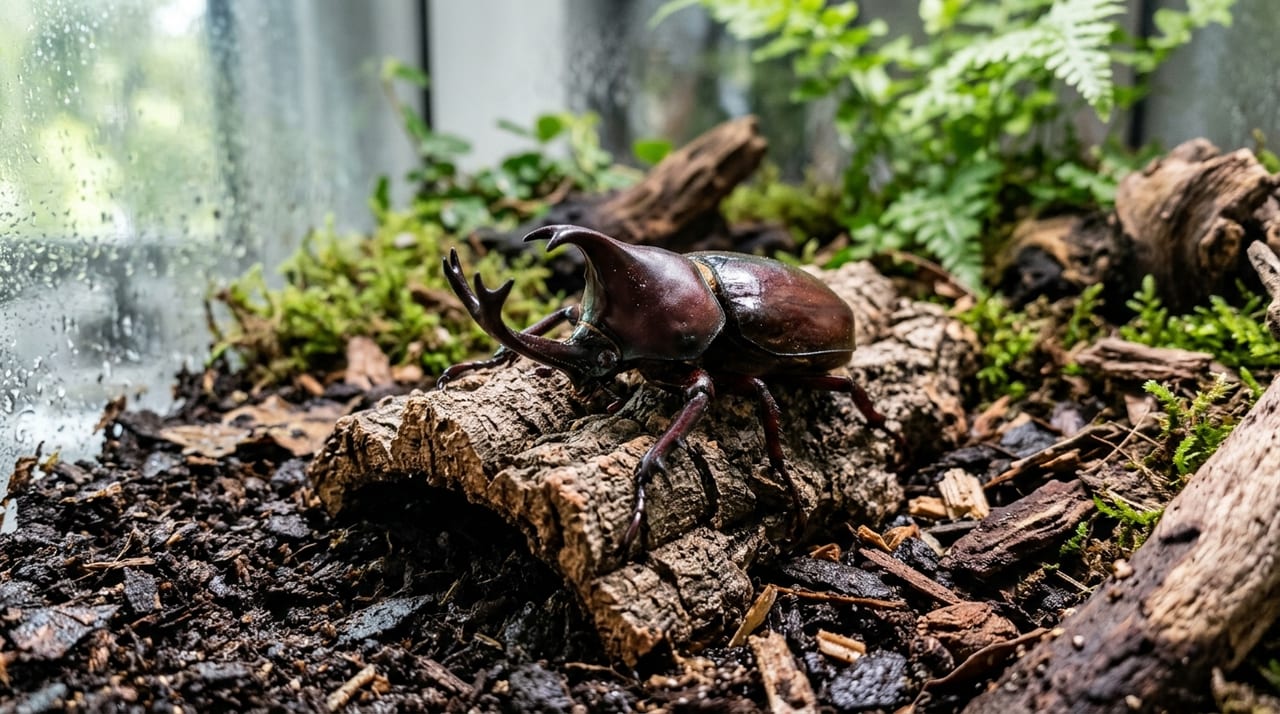
Can rhinoceros beetles and stag beetles be kept together? This guide explains why interspecific cohabitation is difficult, which combinations to especially avoid, the case of dwarf stag beetles, and conditions if cohabitation is necessary. It introduces safe combinations, environment setups to prevent fighting, and pairing methods for breeding purposes.
Key Takeaways
Can rhinoceros beetles and stag beetles be kept together? This guide explains why interspecific cohabitation is difficult, which combinations to especially avoid, the case of dwarf stag beetles, and conditions if cohabitation is necessary. It introduces safe combinations, environment setups to prevent fighting, and pairing methods for breeding purposes.
Related Species

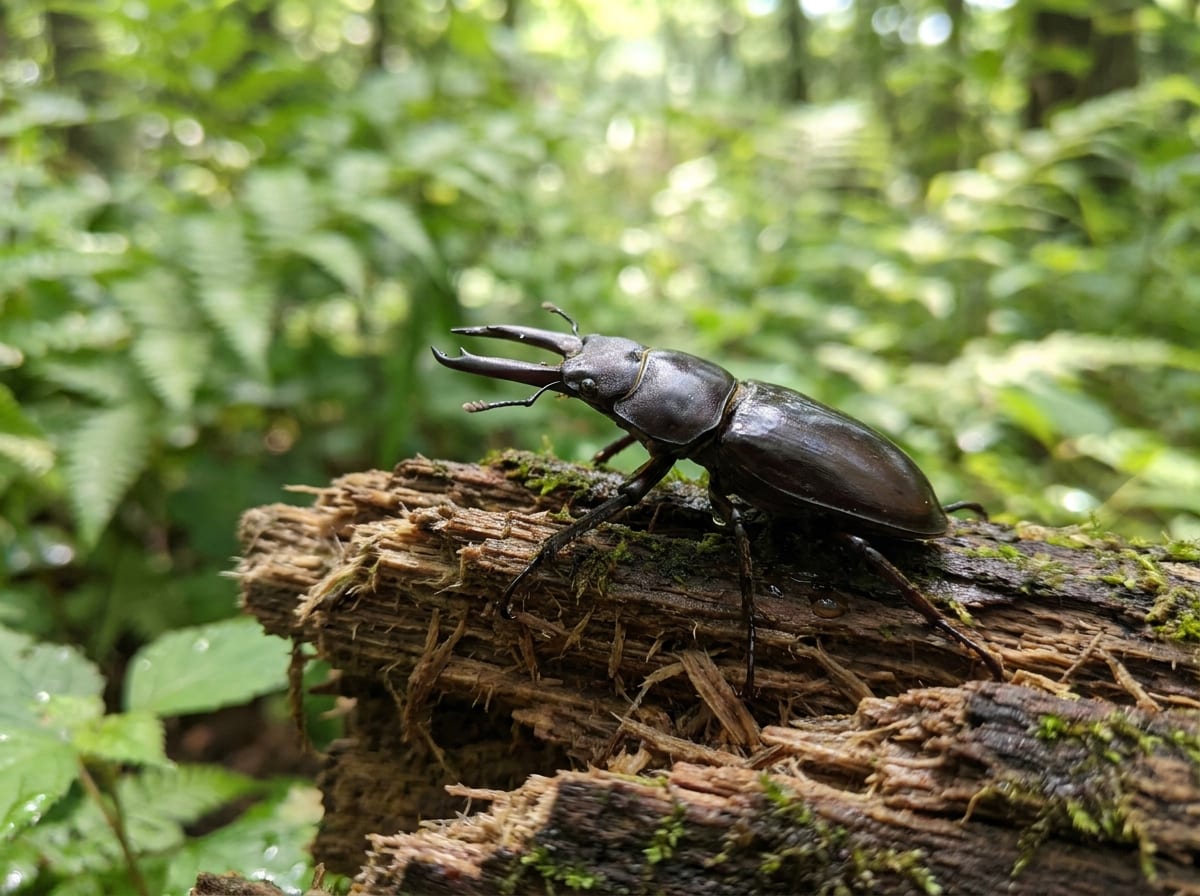
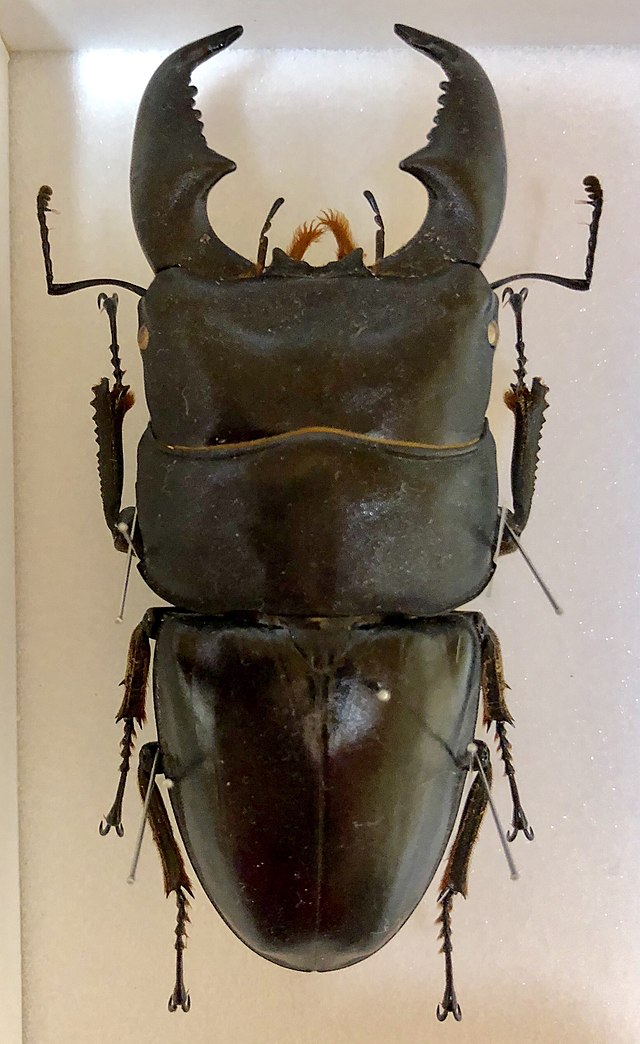
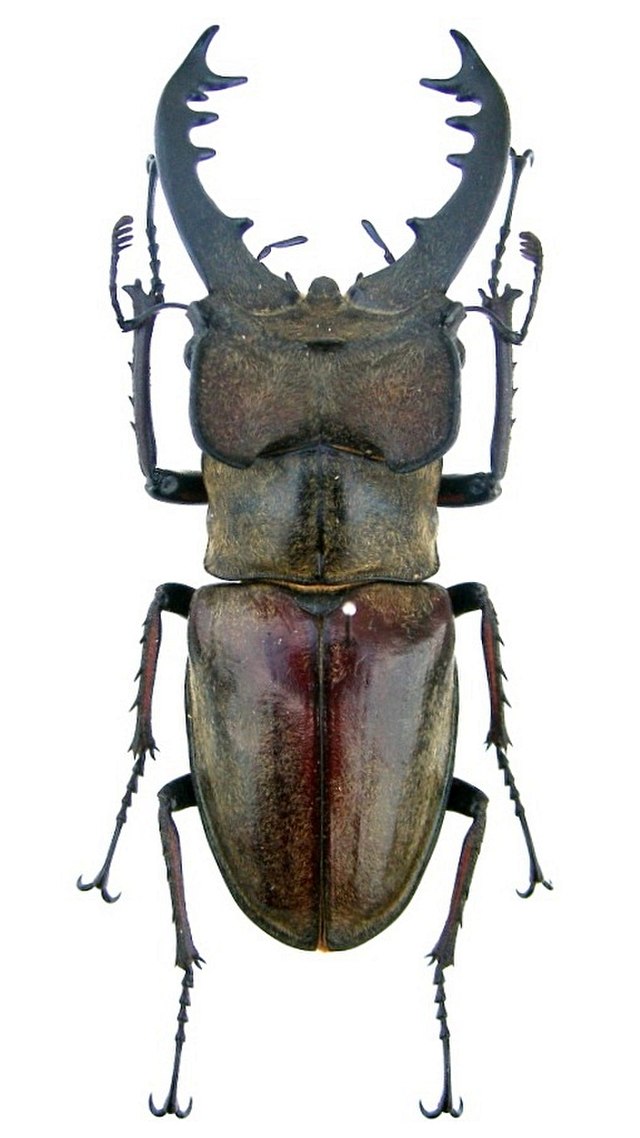
When keeping multiple rhinoceros beetles or stag beetles, many people wonder if they can be kept together in the same enclosure. However, insect cohabitation has clear risks, and unplanned cohabitation can lead to injury or death. On the other hand, with proper conditions, there are combinations that can be safely cohabited. This article explains the knowledge needed to determine whether cohabitation is possible and safe rearing methods.
Basic Principles of Cohabitation: Why Fighting Occurs
The main reasons rhinoceros beetles and stag beetles fight are to secure feeding sites and mating partners. In the wild, males engage in fierce battles over limited resources at sap sites. Inside a rearing enclosure, the space is far narrower than in nature, so the frequency of collisions increases dramatically.
Fighting between males is particularly intense, and they may use their mandibles to pinch their opponent and throw them, or sever body parts. Stag beetles are more aggressive than rhinoceros beetles, and cohabitation between males should generally be avoided. Flattened stag beetles are especially temperamental and may even kill females of their own species.
Cohabitation between females is relatively safe, but stress still accumulates from competition for feeding sites, and there is a tendency for lifespan to shorten. In interspecific cohabitation, if there is a size difference, there is a risk that the smaller species will be attacked unilaterally.
Relatively Safe Cohabitation Combinations
With the understanding that no cohabitation is completely safe, here are some combinations with relatively low risk.
| Combination | Reason | Conditions and Precautions |
|---|---|---|
| Female rhinoceros beetles together | Lacking horns for combat and having a docile temperament, this is one of the safest combinations | If you provide a spacious enclosure and multiple jelly foods, they can cohabit without problems |
| One male and multiple female rhinoceros beetles | Possible for short periods | After mating, move the females to an egg-laying enclosure. Long-term cohabitation hastens female exhaustion |
| Female dwarf stag beetles together | Having a mild temperament among Japanese stag beetles with small mandibles, they have lower aggression | Provide jelly in numbers equal to or greater than the number of individuals and create sufficient hiding places |
Note that males together should be absolutely avoided. Even male rhinoceros beetles can cause serious injury by thrusting their large horns at their opponent.
Can Rhinoceros Beetles and Stag Beetles Be Kept Together? Feasibility of Interspecific Cohabitation
When you acquire both rhinoceros beetles and stag beetles in summer, you may want to keep them together in the same enclosure. The answer to "Can I keep rhinoceros beetles and stag beetles in the same enclosure?" is possible for short periods with conditions, but permanent cohabitation is not recommended. To put it plainly, interspecific cohabitation carries higher risks than same-species cohabitation, and the safest approach is to keep different species separately. If you absolutely must house them together, limit it to short-term cohabitation under the conditions described below.
The reasons interspecific cohabitation is difficult are as follows.
- Combat methods are completely different: Rhinoceros beetles use their head and thoracic horns to scoop up and throw opponents, while stag beetles pinch with their mandibles. Stag beetles thrown by rhinoceros beetles often only turn over, but rhinoceros beetles pinched by stag beetles may have their legs, antennae, or wings severed. Lost body parts do not regenerate, so a single accident directly affects lifespan.
- Size and power differences: Adult male rhinoceros beetles often win in terms of weight and pushing force, and stag beetles of similar size may be knocked away. Conversely, species with strong pinching force like giant stag beetles and flattened stag beetles can inflict fatal injuries on rhinoceros beetles despite being smaller. The problem is not which is stronger, but that either can harm the other.
- Activity level differences: Rhinoceros beetles consume large amounts of food and actively move around by digging up the substrate. This restlessness becomes a stress for stag beetles, which prefer to stay still under substrate or bark during the day. When rhinoceros beetles occupy the feeding site for extended periods, stag beetles may not get enough food.
- Different environmental requirements: Rhinoceros beetles need deeply fermented substrate and lay eggs within it. In contrast, giant stag beetles, dwarf stag beetles, and flattened stag beetles use rotten wood or egg-laying wood, so they cannot display natural behaviors in a substrate-centered layout. Additionally, species sensitive to high temperatures like mountain stag beetles are exhausted even at temperatures that rhinoceros beetles find tolerable. A combined environment ultimately is not optimal for either.
Combinations to Especially Avoid and the Case of Dwarf Stag Beetles
The combinations to especially avoid are as follows.
- Male rhinoceros beetles and male stag beetles: Since both assert territorial and feeding claims, collisions are nearly unavoidable in a confined enclosure
- Rhinoceros beetles with species having developed mandibles like giant stag beetles or flattened stag beetles: Damage from being pinched is severe
- Cohabitation with mountain stag beetles: Temperature requirements don't match before any fighting occurs
The rhinoceros beetle and dwarf stag beetle combination frequently seen online has relatively lower risk of fatal injury from fighting, as dwarf stag beetles are milder-tempered than most Japanese stag beetles with smaller mandibles. However, the issue is more about size differences than aggression—dwarf stag beetles can be stepped on, knocked back, or pushed away from feeding sites as rhinoceros beetles move about. Because dwarf stag beetles are small, they are also more susceptible to exhaustion, so this pairing is not actively recommended either.
If you absolutely must house them together in the same enclosure, meet the following conditions.
- Limit males to a total of one (do not put a male rhinoceros beetle and a male stag beetle in at the same time)
- Use a large enclosure at least 40 centimeters wide
- Distribute jelly in separate locations at 1.5 to 2 times the number of individuals
- Install more than the usual number of anti-tip branches, bark, and hiding places
- Observe during nighttime when both are active
- If you notice signs such as missing legs or antennae, or one individual remaining buried in the substrate, separate them immediately
- Keep the duration to a few days at most and do not consider it a permanent rearing environment
If you collect or purchase multiple individuals all at once during summer, ultimately the least labor-intensive approach is to divide them by species and, as a general rule, by male. Rather than preparing one large enclosure, having multiple medium and small-sized ones helps prevent accidents. By separating enclosures, you can individually adjust for differences in substrate depth, temperature, and presence or absence of egg-laying wood for each species.
Pairing for Breeding: Correct Method
Pairing males and females for breeding must be done deliberately. As a basic step in pairing, first confirm that both males and females are sufficiently mature. The maturation period after eclosion varies by species and is roughly as follows.
| Species | Maturation Period Estimate |
|---|---|
| Rhinoceros beetle | 1–2 weeks after eclosion |
| Giant stag beetle | 3–6 months after eclosion (ideally after overwintering) |
Use a small to medium-sized enclosure for pairing, laying substrate shallowly (about 5 centimeters) and placing 2–3 jelly foods. Be sure to also include branches or bark for preventing tip-overs. The pairing period is generally 1–2 weeks. Once mating is confirmed, move the female to an egg-laying setup. Even if you cannot directly confirm mating, after 1–2 weeks of cohabitation, mating is usually complete in most cases.
For pairing aggressive species like flattened stag beetles, "hand pairing" is recommended. This method involves directly introducing males and females under owner supervision and immediately separating them once mating is complete. If the male shows signs of attacking the female, separate them immediately.
Key Points for Creating an Environment That Prevents Fighting
When cohabiting insects, creating an environment that minimizes fighting risk is important. First, use the largest possible enclosure. Reducing encounter frequency between individuals is the most effective prevention strategy. As a guideline, two to three female rhinoceros beetles fit well in a large enclosure (at least 40 centimeters wide).
Place 1.5 to 2 times as many jelly foods as the number of individuals, distributing them in different locations within the enclosure. If the feeding site concentrates in one place, it becomes the focus of conflict. Also prepare plenty of hiding places (under bark, in tree hollows, under fallen leaves, etc.) so weaker individuals can shelter.
For layout, ensure at least 10 centimeters of substrate depth to create an environment where insects can burrow and rest. While burrowed in the substrate, they avoid encounters with other individuals. Standing multiple perches at angles to utilize the space three-dimensionally is also effective.
Signs and Responses When Cohabitation Is Not Working
After starting cohabitation, observe carefully for the first few days. If you see any of the following signs, separate the individuals immediately.
- Missing body parts (legs, antennae, mandible tips): Evidence that intense fighting has already occurred. Missing legs in particular interfere with movement and feeding, shortening lifespan
- Jelly consumption is extremely skewed: One individual may be monopolizing the feeding site
- Weaker individuals remain burrowed in the substrate and become debilitated
- An individual frequently remains flipped over in the enclosure and cannot right itself: Likely being thrown by other individuals
When separating, prepare individual enclosures of appropriate size for each insect and install fresh substrate and jelly. For injured individuals, there is a risk of infection from wounds, so manage them with clean substrate and monitor the drying of the wound.
At BreederDirect, breeders knowledgeable about insect behavior teach you about the temperament and care considerations of the individuals you purchase. You can also get specific advice based on breeder experience about whether cohabitation is feasible and breeding pair compatibility, so even beginners can enjoy rearing with confidence.