Outdoor Goldfish Care Guide | Complete Manual for Ponds, Water Lily Tubs, Plastic Tubs, and Overwintering | ブリちょく
Goldfish| ✍️ BreederDirect Editorial
Outdoor Goldfish Care Guide | Complete Manual for Ponds, Water Lily Tubs, Plastic Tubs, and Overwintering
A comprehensive guide to outdoor goldfish care methods for ponds, water lily tubs, and plastic tubs. Learn seasonal management through spring, summer, autumn, and winter, predator protection strategies, and detailed overwintering techniques.
Key Takeaways
A comprehensive guide to outdoor goldfish care methods for ponds, water lily tubs, and plastic tubs. Learn seasonal management through spring, summer, autumn, and winter, predator protection strategies, and detailed overwintering techniques.
✍️
BreederDirect Editorial
The BreederDirect editorial team specializes in care information for animals, covering veterinary care and breeding to deliver beginner-friendly guides.
Find Goldfish on BreederDirect
Buy directly from verified breeders
Browse Related Listings
Find Goldfish listings related to this article on BreederDirect. Buy directly from verified breeders.
Outdoor goldfish keeping is a husbandry style that offers natural light, spacious environments, and vibrant coloration that indoor aquariums cannot provide. Especially in breeder cultures of ranchu and wakin, outdoor keeping in tubs and troughs remains a traditional method passed down to this day.
This article explains outdoor goldfish keeping methods for ponds, water lily tubs, and plastic tubs, along with management tips tailored to Japan's four seasons.
Choosing Outdoor Goldfish Containers
Garden Ponds
Proper garden ponds, dug into the ground, allow for larger setups and are ideal for long-term keeping of many goldfish. Options include FRP (fiber-reinforced plastic), concrete, and plastic in-ground pond basins.
Capacity: Ideally 200–500+ liters minimum
Depth: 50+ cm allows for more stable water temperatures
Filtration: External filters or filtration systems with settling tanks are necessary
Water Lily Tubs
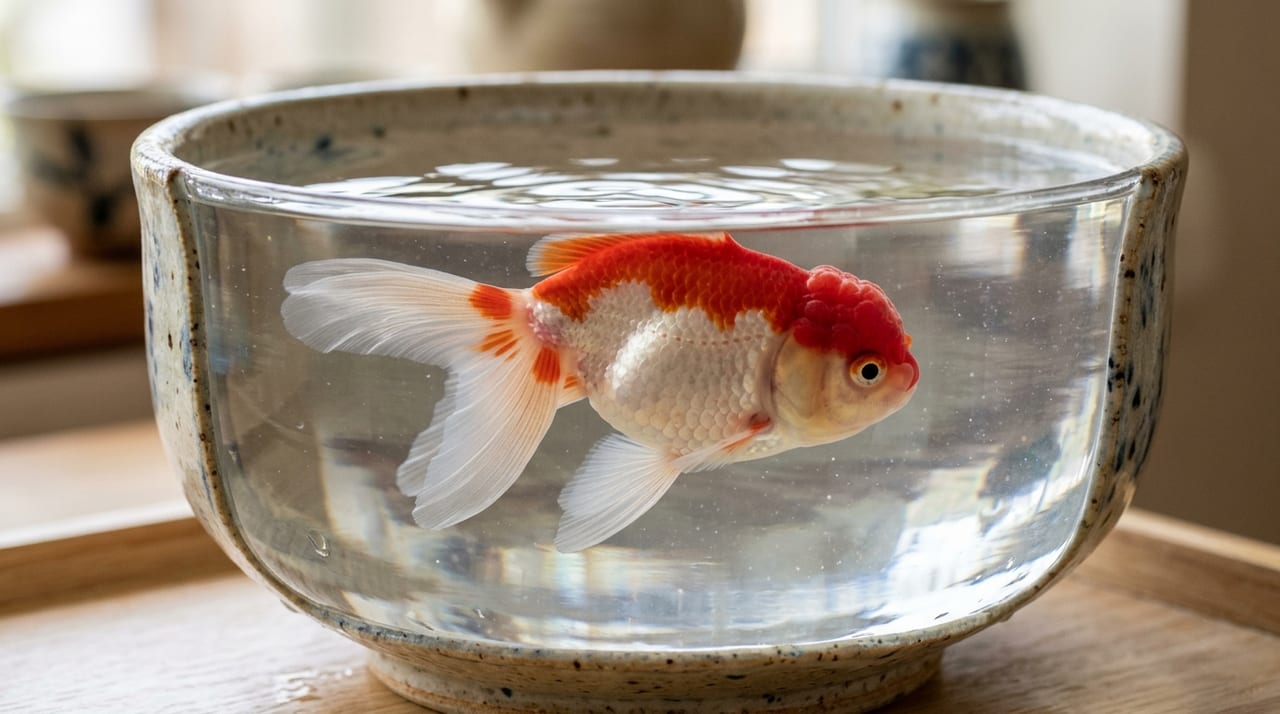
These are ceramic or plastic containers that can be placed on a balcony or in a garden corner. Typical water volumes range from 50–200 liters. They suit relatively hardy varieties such as wakin, kohaku, and telescope-eyed goldfish. A popular style is to enjoy them as a shared ecosystem (biotope) with water lilies.
Appropriate stocking: Approximately 2–3 small individuals per 50 liters
Filtration: Aeration plus bacterial filtration through substrate is the foundation
Plastic Tubs (Troughs)
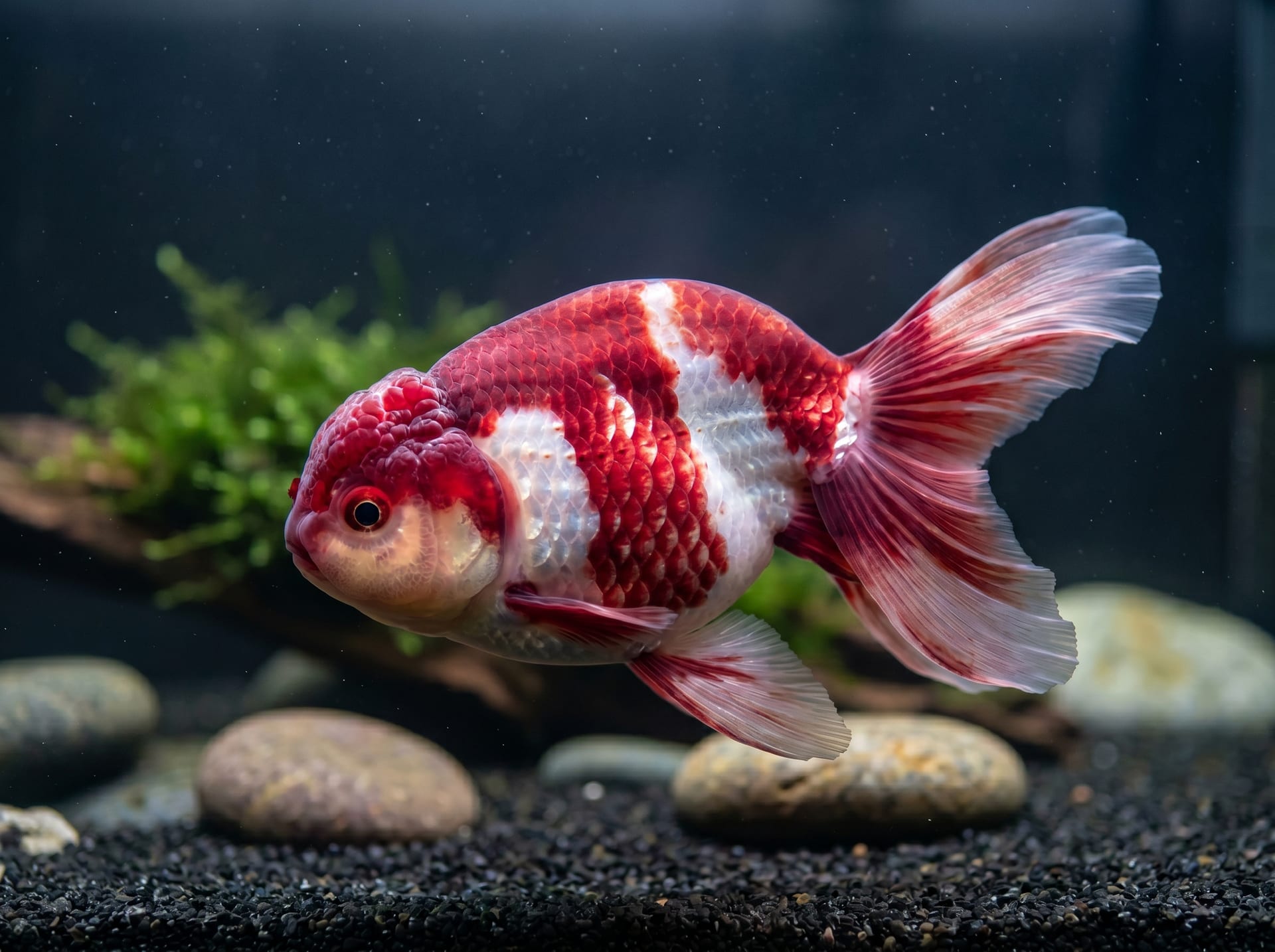
These are repurposed plastic containers originally used for construction or agriculture, and are ideal for breeding "top-view" varieties such as ranchu. Their shallow, wide design makes it easy to observe goldfish body shape, making them widely used by breeders.
Capacity: 60–120 liters is most manageable
Color: Black plastic tubs are best for viewing body coloration
Filtration: Aeration and sponge filters are standard
Spring Management (March–May)
Spring, as goldfish emerge from hibernation, is when their vitality returns and activity increases. Feeding gradually resumes once water temperature exceeds 15°C.
Resume feeding: Begin with small amounts once water temperature exceeds 15°C, returning to normal portions at 17–20°C
Resume water changes: Perform water changes approximately once weekly once temperatures stabilize
Breeding preparation: Goldfish begin spawning around 20°C water temperature. If breeding is desired, prepare spawning beds (such as water sprite)
In early spring when water temperature fluctuates sharply, white spot disease is common, so regularly observe the goldfish's body surface.
Summer Management (June–August)
In summer, when water temperature exceeds 30°C, goldfish vitality declines and dissolved oxygen decreases, requiring careful attention.
Shade control: Cover approximately half the water surface with reed screens or shade netting to prevent water temperature rise
Enhanced aeration: During high-temperature periods, oxygen depletion is likely, so increase air pump capacity
Adjust feeding amounts: Reduce feeding once water temperature exceeds 30°C. Consider stopping feeding entirely above 33°C
Water change frequency: High water temperatures accelerate water quality degradation. Water changes may be needed 2–3 times weekly
Autumn Management (September–November)
Autumn is when water temperature begins to drop and goldfish build up strength for overwintering.
Gradually reduce feeding: Once water temperature drops below 18°C, decrease feeding and switch to highly digestible food
Remove fallen leaves: Dead leaves falling into ponds and water lily tubs degrade water quality, so remove them regularly
Strengthen predator protection: Predators such as herons and cats become active in autumn. Set up netting to protect against them
Overwintering is the biggest challenge in outdoor goldfish keeping. As ectotherms, goldfish enter a hibernation-like state as water temperature drops and metabolism slows.
Hibernation below 5°C: Stop feeding completely. Undigested food remaining in the body can cause death
Safe even if surface freezes: If water depth is 30+ cm, the bottom won't freeze and goldfish can overwinter. Open holes in the ice to allow gases to escape
Water changes not needed: During cold periods, water quality deteriorates slowly, so stop water changes and leave it undisturbed
Gas venting: If the surface freezes completely and becomes sealed, harmful gases accumulate, so ensure partial opening through aeration
Wakin and kohaku excel at overwintering, but round-bodied varieties such as ranchu and ryukin are cold-sensitive and may need to be brought indoors depending on your region.
Predator Protection
Predation is a major risk in outdoor goldfish keeping. Pay special attention to the following:
Great and little herons: They stand at the pond's edge in the morning to eat goldfish. Netting or fishing line can prevent this
Cats: They reach into water lily tubs and shallow ponds to catch fish. Use covers or place spiky plants around the perimeter
Crows: They may eat fish if they can reach into the water. Netting is effective
Dragonfly nymphs: They eat goldfish fry and small goldfish at the pond bottom. Regularly check the bottom
Summary
Outdoor goldfish keeping requires seasonal management, but in return offers the joy of raising goldfish in a more natural setting. Spring and summer focus on growth and breeding; autumn and winter on maintaining vitality and preparing for overwintering. By attuning yourself to seasonal rhythms, you'll discover a deeper appreciation impossible with indoor keeping.
When purchasing goldfish from breeders, ask for advice on selecting varieties suited to outdoor keeping and on overwintering management. Understanding breed-specific characteristics leads to successful long-term keeping.