Elegance Coral (Catalaphyllia) Care Guide | Placement, Water Flow, Feeding, and RTN Prevention
Complete guide to Elegance Coral (Catalaphyllia jardinei) care. Covers sand bed placement, creating weak indirect water flow, night feeding techniques, early detection and treatment of RTN (rapid tissue necrosis), and prevention of browning out—all essential knowledge for long-term success.
Key Takeaways
Complete guide to Elegance Coral (Catalaphyllia jardinei) care. Covers sand bed placement, creating weak indirect water flow, night feeding techniques, early detection and treatment of RTN (rapid tissue necrosis), and prevention of browning out—all essential knowledge for long-term success.
The Elegance Coral (scientific name: Catalaphyllia jardinei) is a popular LPS coral among saltwater enthusiasts, prized for its elegant appearance and the unique movement of its tentacles. However, it has a high difficulty level in care—many hobbyists report buying one only to see it collapse within weeks. This article provides a thorough guide to the aquarium environment, placement, feeding, and troubleshooting needed to maintain Elegance Coral long-term.
Characteristics and Appeal of Elegance Coral
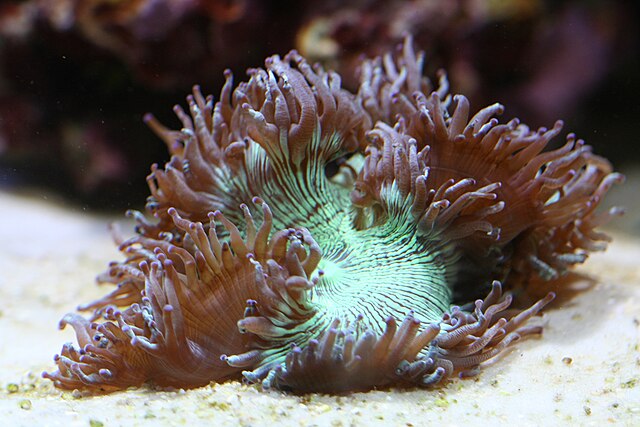
Elegance Coral belongs to the family Euphyllidae and is distinguished by its thick, long tentacles that resemble octopus arms. The tips of the tentacles feature colorful polyp tips (distal ends), with numerous color variations including green, purple, white, and tan. It is particularly known for extending its tentacles at night, making it highly prized for its "night show" display value.
The skeleton has a deep bowl-shaped to conical cup structure and is typically placed individually on a sand bed. In the wild, it inhabits sandy-muddy substrates in the Indian and Western Pacific Oceans, most commonly found in relatively deep areas (10–30 m depth).
Basic Care Parameters
| Parameter | Target Range |
|---|---|
| Temperature | 24–26°C |
| Salinity | 1.024–1.026 |
| pH | 8.1–8.3 |
| Alkalinity (KH) | 8–10 dKH |
| Calcium | 380–450 ppm |
| Magnesium | 1,260–1,350 ppm |
| Lighting | Moderate (PAR 50–150) |
| Water Flow | Weak to moderate (indirect) |
Placement and Lighting Considerations
The most critical aspect of placement is positioning on sand bed or low rock structures. Since its natural habitat is sandy-muddy substrate, it is recommended to either place it directly on the sand bed in your aquarium or position it on live rock near the sand bed. Placing it on high rock structures near the water surface exposes it to too much light and increases the risk of bleaching.
Moderate lighting with a PAR value of 50–150 is ideal. Lighting that is too strong (PAR 200 or higher) can cause browning or color fading, while lighting that is too weak compromises the photosynthesis of zooxanthellae (symbiotic algae). With commercial LED lighting, a blue-spectrum-centered setup can beautifully enhance the polyp's fluorescent coloration.
Water Flow Management
Elegance Coral strongly dislikes strong direct water flow. Direct impact from strong flow will cause the tentacles to contract and can ultimately lead to RTN (rapid tissue necrosis). The ideal setup is to position the flow pump at a distance from the coral, creating only gentle, indirect movement.
Using wave mode or pulse mode to maintain gentle, continuous movement throughout the day encourages natural feeding behavior.
Feeding — The Key to Long-Term Success
Among LPS corals, Elegance Coral is one where active feeding is particularly effective. While zooxanthellae photosynthesis provides baseline energy, direct supplementation of proteins, fats, and minerals significantly improves growth rate, coloration, and long-term health.
Recommended Feeding Items and Methods
- Frozen adult brine shrimp: The most common choice. Thaw and gently place small amounts near the tentacles.
- Frozen copepods and rotifers: Add 2–3 times per week as a protein source.
- Liquid food supplements: Add once per week with reduced water flow.
- Coral paste food: Apply commercial coral food directly near the tentacles using a syringe.
Feeding is most effective when done at night with reduced water flow, just before or after lights out. The tentacles will be fully extended and feeding response will be heightened. Maintain reduced flow for about 30 minutes after feeding to allow proper digestion.
Health Monitoring and Troubleshooting
Assessing Health by Polyp Extension
The health status of Elegance Coral can be assessed daily by observing polyp (tentacle) extension.
- Healthy: Tentacles are fully extended with firm, turgid tips.
- Needs monitoring: Prolonged tentacle contraction or recession of the coenosarc (tissue covering the skeleton).
- Critical: Tentacles beginning to dissolve or white skeleton becoming visible.
Managing RTN (Rapid Tissue Necrosis)
RTN is a particularly common problem with Elegance Coral. Tissue rapidly dissolves and recedes over hours, exposing the skeleton. Common causes include direct water flow impact, sudden water quality changes, or bacterial infection.
If RTN is detected, immediately do the following:
- Check water parameters and correct KH, Ca, and Mg to target levels.
- Verify that water flow is not striking the coral directly; adjust pump direction if needed.
- Remove dead tissue with a soft brush or targeted water flow to prevent spread.
- Iodine dip is a last resort: add a few drops to 500 ml of seawater for 5–10 minutes.
Early detection and quick action make the difference between survival and loss.
Browning Out and Color Enhancement
The primary cause of browning out in Elegance Coral is excessive lighting that promotes overgrowth of zooxanthellae. Address this by reducing PAR values or lowering the coral's position. Conversely, to enhance coloration, adding trace elements such as iodine, vanadium, and iron is considered effective.
Summary: Key Points for Long-Term Elegance Coral Success
By properly managing three elements—water flow, lighting, and feeding—Elegance Coral becomes one of the most impressive LPS corals to keep. The key to long-term success is maintaining sand bed placement, gentle indirect flow, moderate lighting, and consistent feeding, while observing polyps daily. When purchasing directly from a breeder, requesting videos or photos that clearly show coloration and tentacle condition before purchase reduces risk.