Doberman Care Complete Guide | Training and Health Management Leveraging Intelligence and Loyalty | ブリちょく
Dogs| ✍️ BreederDirect Editorial
Doberman Care Complete Guide | Training and Health Management Leveraging Intelligence and Loyalty
Comprehensive guide to Doberman care. From positive reinforcement training leveraging their intelligence and loyalty, to prevention of genetic disorders such as dilated cardiomyopathy (DCM) and von Willebrand disease, ensuring daily exercise and mental stimulation—presented in an easy-to-understand format for first-time large breed dog owners.
Key Takeaways
Comprehensive guide to Doberman care. From positive reinforcement training leveraging their intelligence and loyalty, to prevention of genetic disorders such as dilated cardiomyopathy (DCM) and von Willebrand disease, ensuring daily exercise and mental stimulation—presented in an easy-to-understand format for first-time large breed dog owners.
Dobermans are large dogs that combine "a striking appearance with deep loyalty." While they have a long history as police and protection dogs, they display an affectionate and gentle side toward their families. When raised properly, they become extremely manageable companions, but given their considerable strength and sharp intelligence, they require experienced owners and thorough preparation. This article provides a detailed explanation of the Doberman's temperament, necessary living environment, training, and health management.
✍️
BreederDirect Editorial
The BreederDirect editorial team specializes in care information for animals, covering veterinary care and breeding to deliver beginner-friendly guides.
Find Dogs on BreederDirect
Buy directly from verified breeders
Browse Related Listings
Find Dogs listings related to this article on BreederDirect. Buy directly from verified breeders.
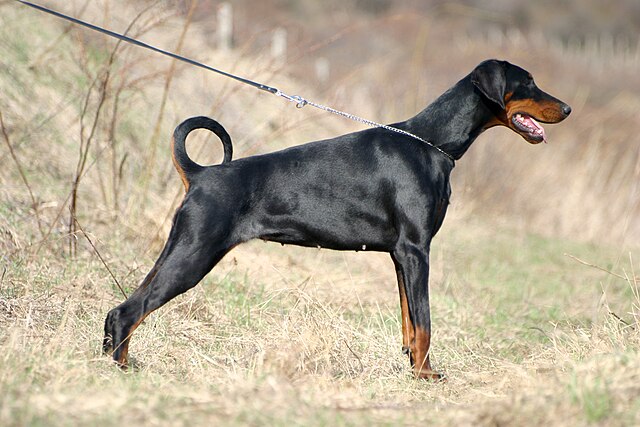
Height at shoulder: Males 68–72 cm / Females 63–68 cm
Weight: Males 40–45 kg / Females 32–35 kg
Lifespan: 10–13 years
Coat color: Black & tan (black and rust) is most popular. Red & tan, blue & tan, and fawn & tan also occur
Coat: Short-haired and close-fitting. Shedding is minimal but not absent
Country of origin: Germany (developed in the late 19th century by Friedrich Louis Dobermann)
While erect ears are the iconic style, ear cropping and tail docking are not recommended in Japan from an animal welfare perspective, and practices vary by breeder and region. Dobermans with naturally floppy ears are equally charming and have no functional issues.
Temperament and Disposition
While Dobermans are often portrayed as "fierce guard dogs," properly socialized individuals are extremely friendly with their families. They are highly regarded as family dogs and can build good relationships with children and other pets. However, you should understand the following traits before bringing one home.
High intelligence: They learn commands exceptionally quickly, as evidenced by their work in police and military roles. When bored, they tend to develop behavioral problems (destructive behavior, barking, separation anxiety), so continuous mental stimulation is necessary.
Strong loyalty: They have a strong tendency to protect their owners and families. Insufficient socialization can lead to excessive wariness.
High energy level: At least 2 hours of daily exercise is ideal. Satisfaction is enhanced by combining diverse activities such as agility, ball play, and swimming in addition to walks.
Required Living Environment
Living Space
A medium to large house with a yard is ideal for Dobermans, but they can be kept in apartments if sufficient exercise is provided. However, the following points require attention.
Escape-proof fencing (180 cm or higher is safe)
Heat stroke prevention in summer (while short-coated dogs regulate temperature easily, prolonged exposure to direct sunlight is strictly prohibited)
Keep indoors primarily and ensure interaction with family (they are a social breed, and prolonged isolation causes stress)
Diet Management
High-quality dog food appropriate to their large size is necessary.
Adult dogs: Approximately 20–25 kcal/kg of body weight daily (adjust for activity level)
Choosing food formulated for large breeds is preferable, as it contains nutrients for joint and cardiac care
Vigorous exercise immediately after eating can cause gastric dilatation-volvulus (GDV), so rest for 1–2 hours after meals
Obesity increases joint stress and heart disease risk, so weight management is important
Training: Positive Reinforcement is Key
While Dobermans are highly intelligent and trainable, harsh training methods are counterproductive. Physical punishment and yelling damage trust and can lead to aggression or fear. The most effective approach is positive reinforcement (rewarding with praise, treats, and play).
Basic Command Learning Order
Sit: The most basic command. Hold a treat above the head, and when the puppy naturally sits, say "Sit" and reward
Stay: An important command directly linked to impulse control
Down: Effective for calming excitement
Recall (Come): Most important for safety. Always teach it in a positive context
Loose-leash walking: Correct pulling habits early
Socialization Training
Weeks 3–12 of age are the golden period for socialization. Exposing puppies to various people, sounds, places, and other animals during this time helps them develop into well-balanced adults.
Experience with group play at dog parks
Positive interactions with children, elderly people, and people of various appearances
Exposure to urban noise, cars, and bicycles
Socialization should continue throughout adulthood.
Health Management: Be Aware of Genetic Disorders
While Dobermans are beautiful dogs, they are known to have a high risk of certain genetic disorders.
Dilated Cardiomyopathy (DCM)
The biggest health risk for Dobermans. It is a progressive disease in which heart muscle weakens and pumping function declines. It has a strong genetic component and often develops in middle-aged dogs (5–10 years old).
Symptoms: Reduced exercise tolerance, coughing, shortness of breath, fainting, sudden death
Prevention and management: Regular cardiac ultrasound screening (at least annually), weight management, and limiting strenuous exercise
It is important to confirm the parents' DCM screening history from the breeder when purchasing
von Willebrand Disease (vWD)
A genetic disorder that causes abnormal blood coagulation. Bleeding may be difficult to control during surgery or injury. Genetic testing can determine carrier status.
Degenerative Myelopathy (DM)
A progressive neurological disease beginning in the hind limbs. Often caused by genetic mutation, and risk can be determined by genetic testing beforehand.
Other Health Issues to Watch
Hip dysplasia (HD): Common in large breeds. Can be screened via radiography
Hypothyroidism: Symptoms include obesity, lethargy, and coat changes. Diagnosed via blood test
Skin problems: Allergic dermatitis is common due to their short coat
Regular Health Check Schedule
Period
Health Check Items
Monthly
Weight measurement, tooth brushing, coat and skin inspection
Every 3 months
Nail trimming, ear cleaning
Every 6 months
Veterinary health checkup
Once yearly
Cardiac ultrasound (mandatory after age 5), blood test
How to Choose a Breeder
When acquiring a Doberman, it is important to choose a trustworthy breeder who conducts health testing. Quality breeders provide the following:
Disclosure of parents' DCM, HD, vWD, and DM genetic test results
Puppies are socialized before release (from 8–10 weeks of age)
Pedigree documentation (JKC registration)
Post-purchase support
Through br-choku, you can acquire Dobermans directly from breeders who conduct health testing. We recommend contacting breeders directly before purchase to confirm the parents' health status and living conditions. With proper training and love, intelligent and loyal Dobermans become irreplaceable lifetime companions.