Soft Coral Beginner's Guide | Easy-to-Keep Species and Care Tips
Explaining soft coral species and care methods ideal for beginners wanting to start coral keeping. Introducing characteristics of popular, manageable species such as Star Polyps, Toadstools, and Zoanthus, key points for water quality, lighting, and water flow, and how to step up to SPS.
Key Takeaways
Explaining soft coral species and care methods ideal for beginners wanting to start coral keeping. Introducing characteristics of popular, manageable species such as Star Polyps, Toadstools, and Zoanthus, key points for water quality, lighting, and water flow, and how to step up to SPS.
What Are Soft Corals?
Corals are broadly divided into three types: "soft corals," "LPS (large polyp stony corals)," and "SPS (small polyp stony corals)." For beginners, soft corals are the most approachable, characterized by the absence of a hard skeleton and soft tissue bodies. They harbor symbiotic zooxanthellae within their bodies and obtain most of their nutrition through photosynthesis.
✍️
BreederDirect Editorial
The BreederDirect editorial team specializes in care information for animals, covering veterinary care and breeding to deliver beginner-friendly guides.
Find Coral on BreederDirect
Buy directly from verified breeders
Browse Related Listings
Find Coral listings related to this article on BreederDirect. Buy directly from verified breeders.
Most soft corals are relatively hardy, tolerant of water parameter fluctuations, and do not require intense lighting or precise water quality management. Many species also reproduce easily—you can even take fragments (frags) and sell them on BreederDirect. When reef tank beginners wonder "what should I add first?", soft corals are the most practical choice.
Recommended Species for Beginners
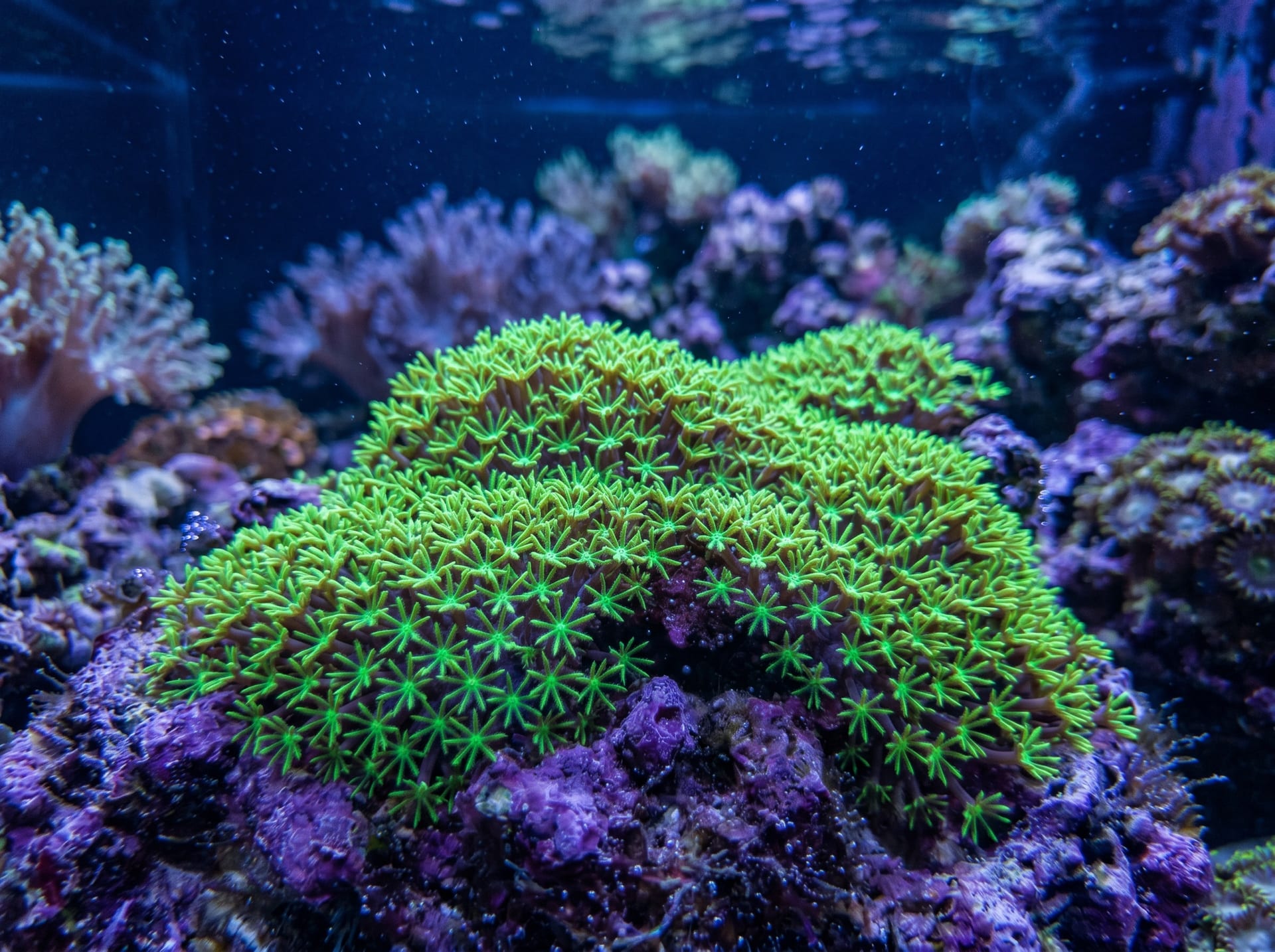
Star Polyps
The beautiful sight of small green to brown polyps opening across the surface, combined with rapid growth, makes them ideal. They thrive under weak lighting and have a wide tolerance range for water parameters, making them perfect as the first step into reef keeping. They spread across rocks like a carpet, creating a natural green aesthetic in your layout. However, due to their vigorous growth, regular trimming is important to prevent encroachment on other corals.
Toadstools (Devil's Hand / Leather Corals)
These distinctive finger-like toadstools are widely available at reasonable prices. Since photosynthesis is their primary nutrition source, feeding requires minimal effort. As they grow, they become a focal point of the tank. Even if polyps temporarily close, they recover quickly and show resilience to minor water parameter changes. Since their skin releases terpenoid compounds in mucus, perform thorough acclimation when introducing them.
Kenya Tree
A soft coral that grows in branch-like formations and is easily propagated through splitting or fragmentation. It is hardy with high tolerance to water parameter changes and thrives under both LED and metal halide lighting. It is commonly used for bartering among breeders and is ideal as a starter species for frag sales.
Zoanthus (Caviar Corals)
These plate-like corals feature small polyps arranged in rows with abundant color variations. Growth is somewhat slow, but colors can be maintained even under relatively low light. They have high collectibility, and unique color morphs can command high prices among breeders.
Basic Water Parameters, Lighting, and Flow
Recommended parameters for a soft coral tank are as follows:
Specific Gravity (Salinity): 1.023–1.025
Temperature: 24–26°C
pH: 8.1–8.3
Alkalinity (KH): 8–11 dKH
Nitrate (NO₃): 5–20 ppm (wider tolerance than LPS or SPS)
Phosphate (PO₄): 0.05–0.1 ppm
Most species can thrive under budget-friendly LED lighting. Star Polyps prefer slightly brighter conditions (around 100–200 PAR), while Toadstools and Kenya Trees open sufficiently at 50–100 PAR. When using full-spectrum LEDs, paying attention to the balance between blue (420–460nm) and white wavelengths improves polyp coloration. Using a timer for 8–10 hours daily stabilizes zooxanthellae rhythms.
For water flow, aim for 5–10 times the tank volume per hour. Installing a circulation pump to eliminate stagnant areas prevents detritus buildup and stabilizes water quality. However, direct strong currents will keep polyps closed, so directing flow against walls or rocks to create indirect movement is key.
Key Management Points for Husbandry
Water changes are fundamental to maintaining a soft coral tank. Making weekly 10–15% water changes a routine replenishes trace elements (iodine, strontium, magnesium, etc.) while controlling nitrate accumulation. Always aerate prepared artificial seawater beforehand to dechlorinate and adjust temperature. Abrupt water parameter changes are the primary cause of polyp closure.
Liverock selection is also important. Porous liverock with large surface area provides habitat for bacteria, enhancing biological filtration. When attaching soft corals, choose rocks with flat, stable surfaces. When introducing new rock, develop the habit of checking the underside and crevices for nudibranch eggs.
Installation of a protein skimmer is strongly recommended. By physically removing organic matter, water quality stabilizes significantly and nitrate accumulation is greatly reduced. Even for small 30–60L tanks, appropriately sized models are available at reasonable cost.
Common Issues and Solutions
Polyps remain closed and won't open
Causes include water parameters (especially rapid spikes in NH₃, NO₂, or NO₃), lighting changes, direct water flow strikes, or chemical contamination (sunscreen, pesticides). Recovery often occurs after stabilizing the environment and waiting a few days. Consider the possibility of coral-eating animals (certain nudibranchs or angelfish species) hiding in the tank.
Shrinking or reduction
In ultra-low nutrient conditions where nutrient salts (NO₃, PO₄) are extremely low, photosynthesis becomes unstable. Maintaining slight nutrient levels is important. Conversely, excessive levels cause browning and tissue breakdown. Develop the habit of checking parameters monthly.
Nudibranch predation
When introducing new corals, always observe them in a quarantine tank for 1–2 weeks and check carefully for nudibranch attachment. Since egg clusters may be deposited on rock undersides, careful inspection with a magnifying glass is essential.
Stepping Up to SPS
Once comfortable managing soft corals, the ideal progression is to try LPS (hammer corals, trumpet corals, etc.), then gradually step up to SPS. After confirming tank stability with soft corals and upgrading equipment while honing measurement techniques, maintaining SPS becomes realistic.
Successfully growing soft corals naturally deepens your understanding of tank management. Cultivate a breeder's perspective through frag sales and trimming, and begin with hardy species to experience the true joy of reef aquarium keeping.