Coral Tank LED Spectrum & Light Intensity Guide | ブリちょく
Coral| ✍️ BreederDirect Editorial
Coral Tank LED Spectrum & Light Intensity Guide
A guide to LED spectrum and light intensity for coral tanks, covering blue, UV, and white wavelengths for soft corals, LPS, and SPS.
Key Takeaways
A guide to LED spectrum and light intensity for coral tanks, covering blue, UV, and white wavelengths for soft corals, LPS, and SPS.
Coral tank lighting is far more than just illumination. It is essential for photosynthesis by the zooxanthellae (symbiotic algae) living within coral tissue, and the lighting spectrum (wavelength combination) and intensity (PAR value) significantly influence coral health, growth, and coloration. This article provides a detailed guide to selecting LED lighting from both spectrum and intensity perspectives.
Understanding the Light Spectrum Corals Need
Three main wavelength bands are important for coral keeping.
✍️
BreederDirect Editorial
The BreederDirect editorial team specializes in care information for animals, covering veterinary care and breeding to deliver beginner-friendly guides.
Find Coral on BreederDirect
Buy directly from verified breeders
Browse Related Listings
Find Coral listings related to this article on BreederDirect. Buy directly from verified breeders.
Related Tools
Related Articles
Browse by Category
🪸Coral
🐠Marine Fish
🐟Tropical Fish
🐡Goldfish
🐟Medaka
🦎Reptiles
Share
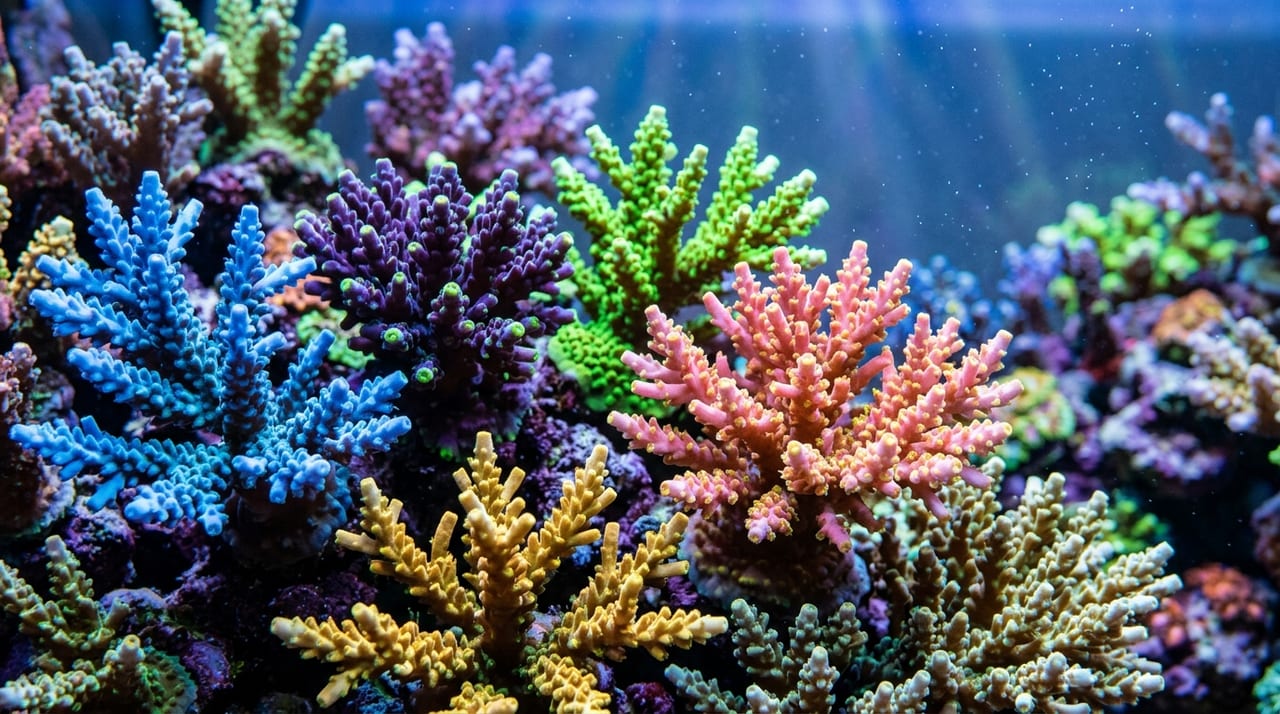
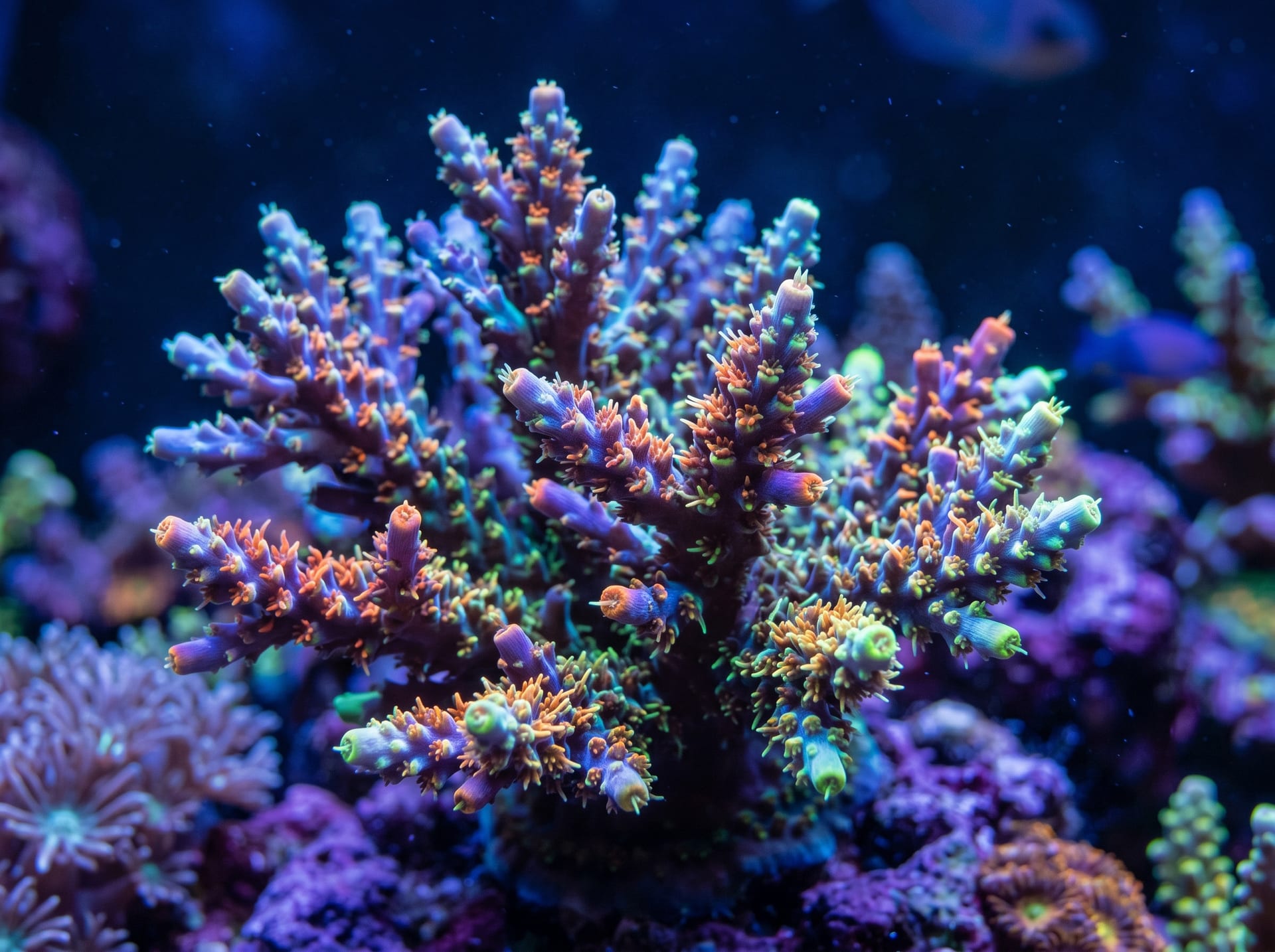
Blue light (420-480 nm) is the core spectrum for coral keeping. It is the most efficient wavelength band for zooxanthellae photosynthesis and excites fluorescent proteins in corals to produce beautiful fluorescent colors. This is why most LED manufacturers design around royal blue (around 450 nm) LED chips.
UV/Violet (380-420 nm) further intensifies fluorescent colors. For corals with green and orange fluorescent proteins in particular, adding UV LEDs can dramatically enhance color vibrancy. However, excessive UV light can stress corals, so keeping it to 10-15% of total output is safe.
White light (full spectrum) serves to correct the color appearance for the human eye. Blue light alone makes the entire tank look deep blue, so mixing in white channel at about 20-30% makes it easier to see the corals' true colors.
PAR Value Guidelines by Coral Type
PAR (Photosynthetically Active Radiation) quantifies the amount of photosynthetically usable light reaching the coral. Measured with a PAR meter in units of micromol per square meter per second.
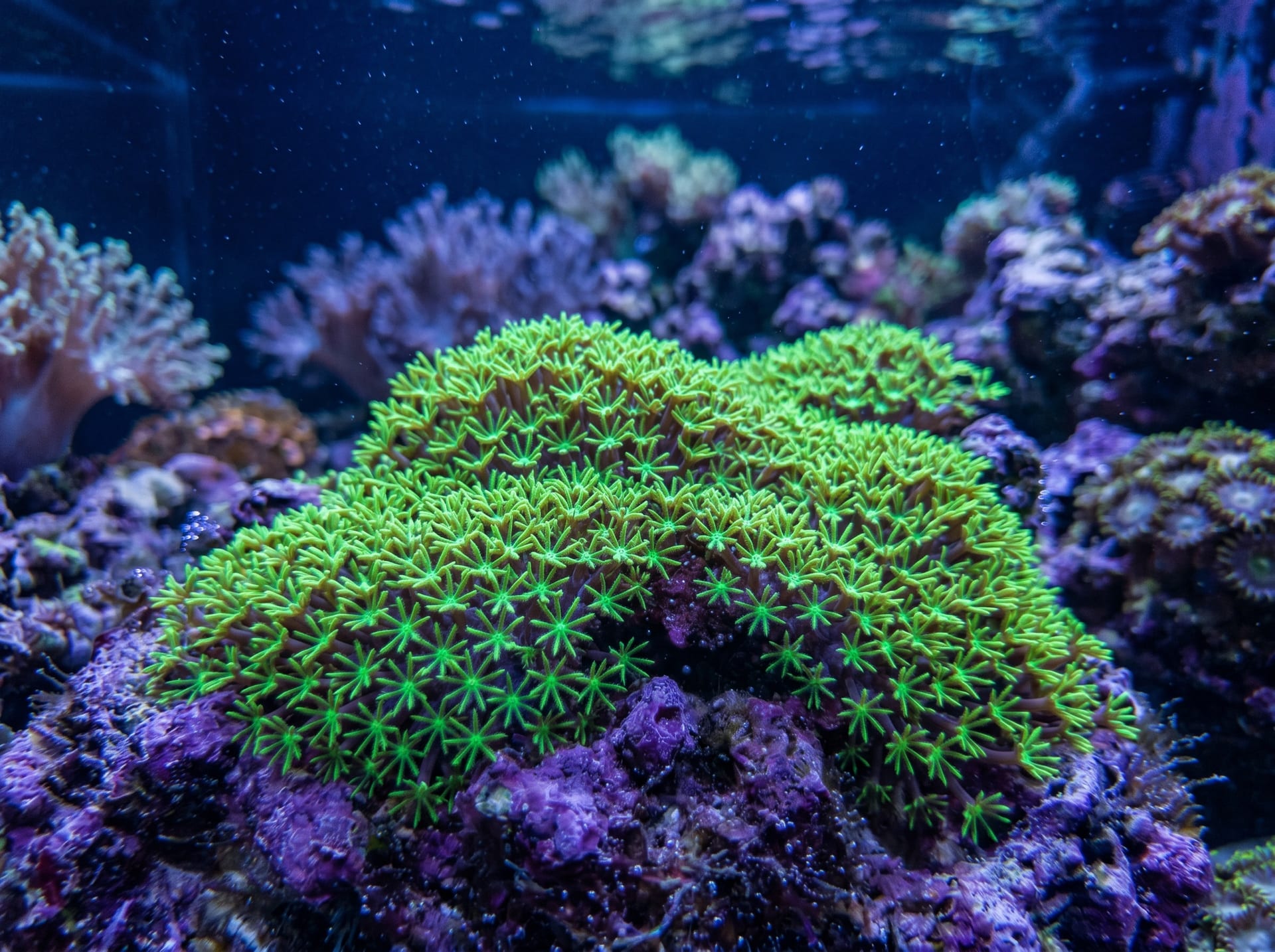
Soft corals have the lowest light requirements, thriving with PAR of 50-150. Zoanthids, Star Polyps, and Mushroom corals can be placed in the lower or side areas of the tank without issues.
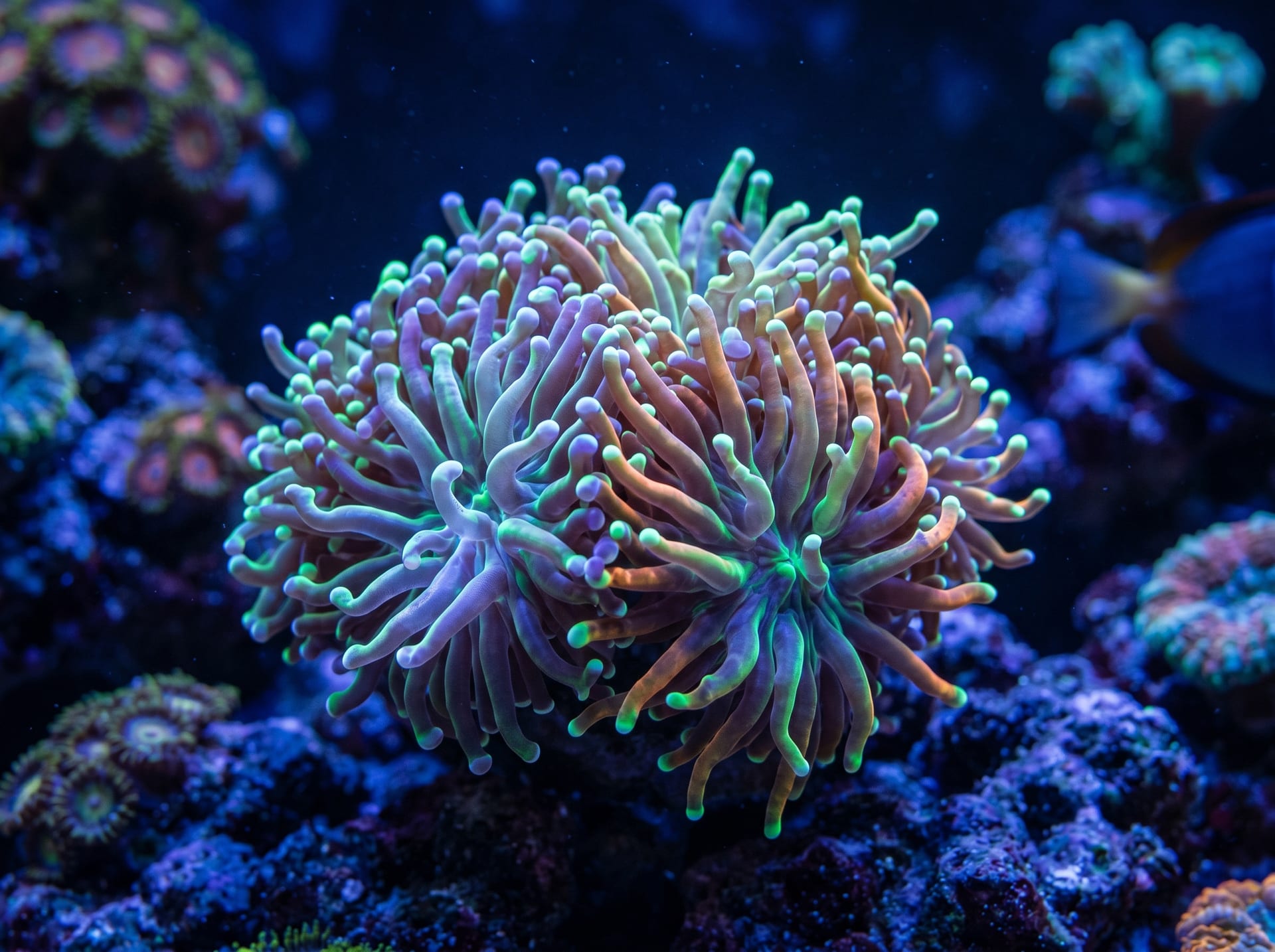
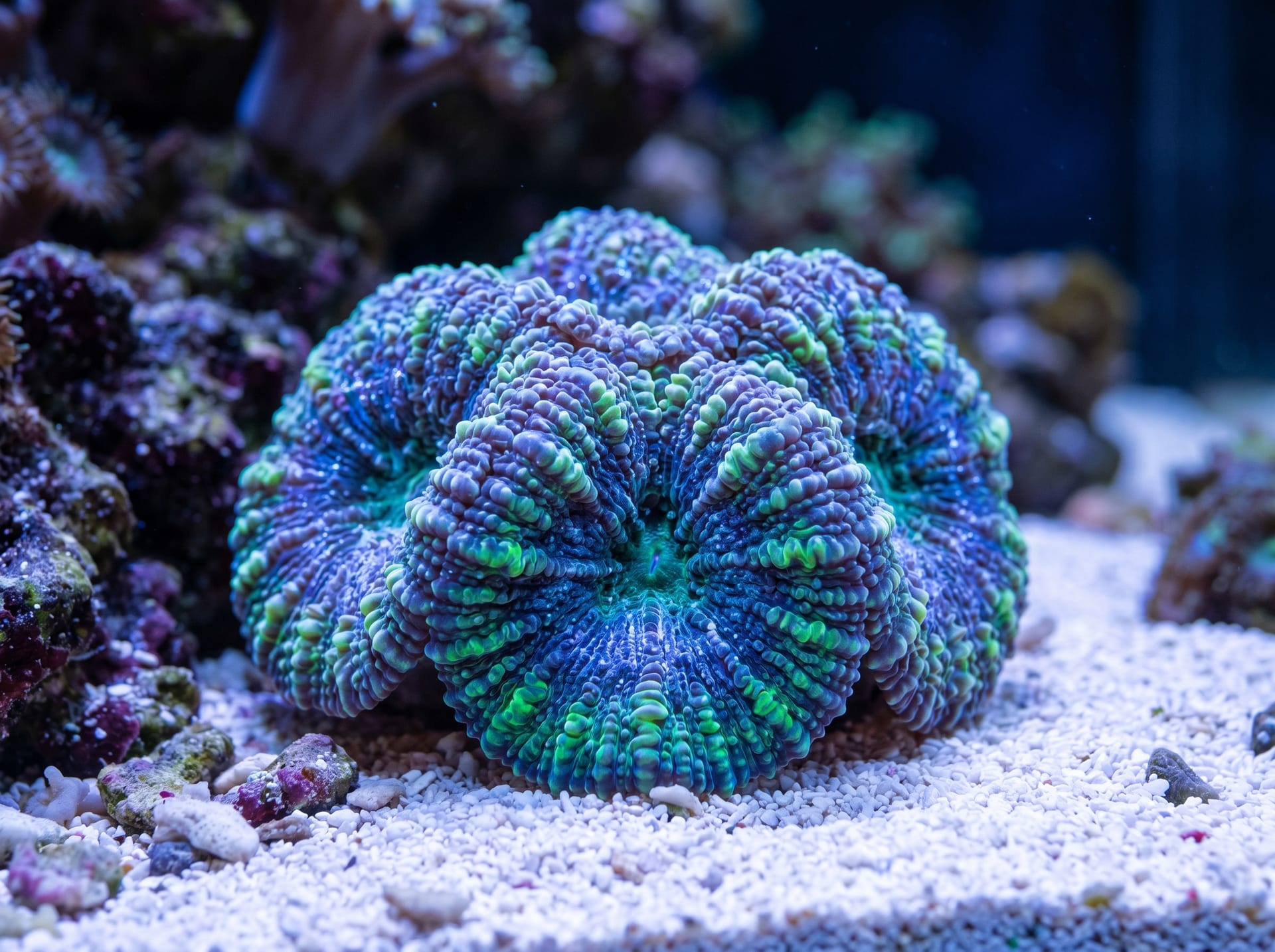
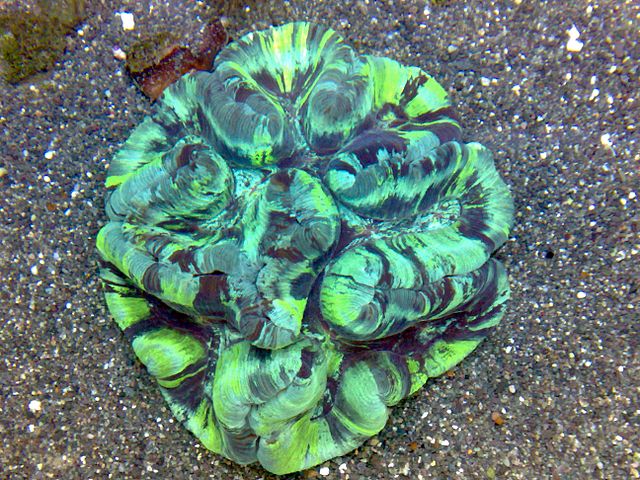
LPS (Large Polyp Stony corals) need PAR of 100-250. Brain corals and Open Brain corals prefer moderate light; excessive light can actually cause bleaching. Torch corals prefer somewhat higher light levels.
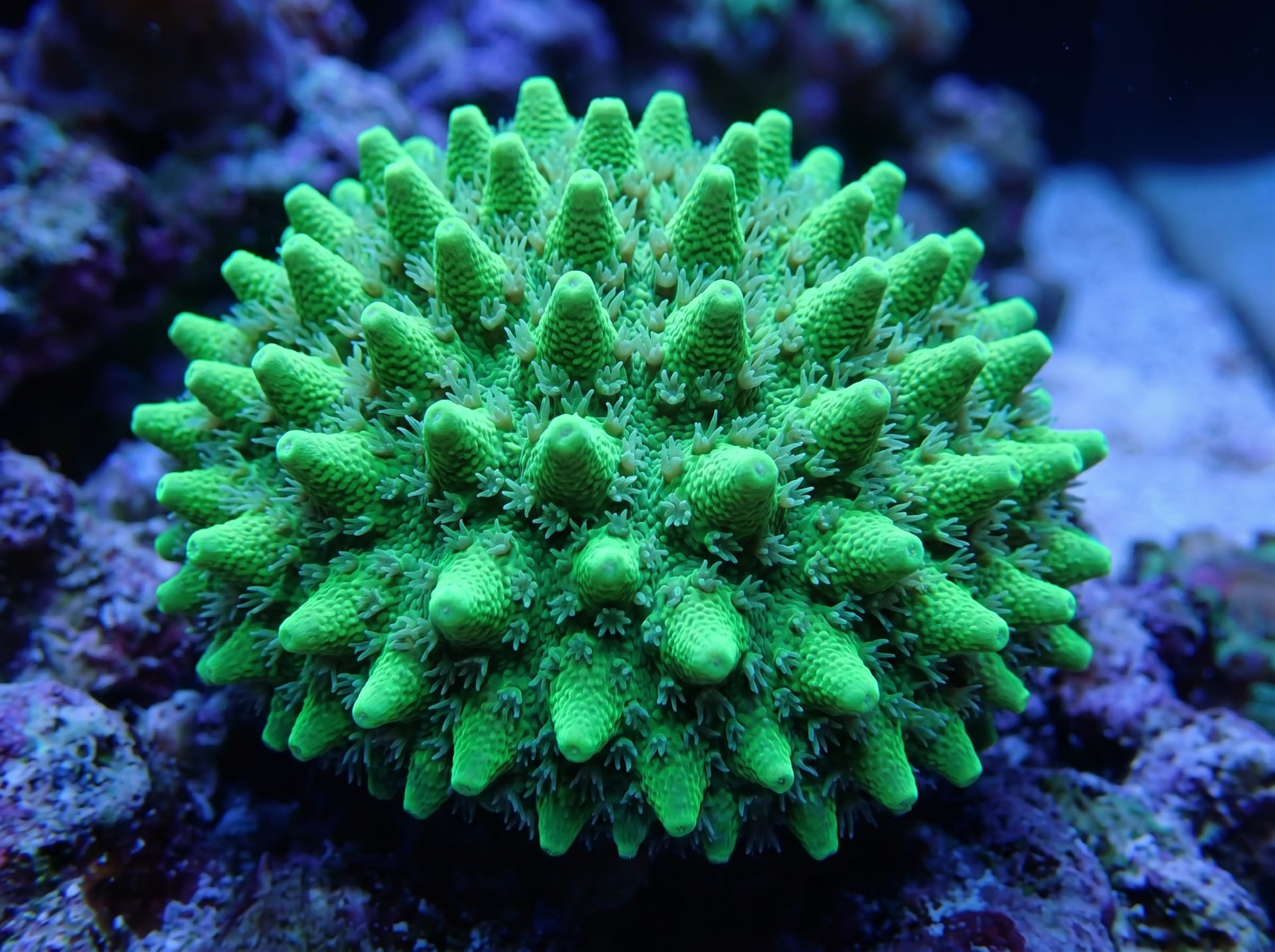
SPS (Small Polyp Stony corals) require PAR of 200-450. Acropora and Montipora should be placed in the high-light zone near the water surface with adequate light. However, exposing newly introduced specimens to high light immediately causes light shock, so gradual light acclimation is essential.
LED Lighting Selection Checklist
Key points to verify when choosing LED lighting.
Spectrum adjustment is essentially a must-have feature. Select a model with independently adjustable channels for blue, white, UV, red, and other colors, allowing you to create optimal lighting for different coral species and growth stages.
Timer with sunrise/sunset programming enables natural light cycle simulation. Sudden on/off switching stresses corals, so ideally the lights should ramp up over 30 minutes to 1 hour.
Coverage area and beam angle are also important. If the LED coverage is too narrow for the tank size, you get a bright center with dark edges. 120-degree lenses cover a wider area, while 90-degree lenses deliver higher PAR values in deeper tanks.
Heat dissipation directly affects LED lifespan and performance. Models with fan-cooled heatsinks maintain stable output during extended operation.
Common Mistakes and How to Avoid Them
One frequent mistake is "excessive light intensity." Running a new LED at maximum brightness immediately can cause coral bleaching or tissue dissolution. Start at 30-40% of target intensity and increase by 10% every 2 weeks for a safe transition.
Another mistake is "excessive photoperiod." Corals extend their polyps to feed during dark hours, so 24-hour lighting is counterproductive. Set the main lighting period to 8-10 hours, with 2-hour dim periods before and after.
Find Beautiful Corals on BriChoku
Once your lighting environment is set up, you are fully prepared to welcome corals. On BriChoku, you can purchase corals directly from dedicated breeders. Share your lighting setup details (LED model, PAR values, photoperiod) with the breeder, and they can recommend corals suited to your environment. Choosing corals that complement your lighting produces a stunning tank where fluorescent colors truly shine.