Coral Guide | Characteristics and Difficulty Levels of Popular Species for Beginners
A guide-style introduction to popular coral species for marine aquarium beginners. Covering soft corals, flower pot corals, star polyps, disc corals, and more—organized by species with easy-to-understand information on care difficulty, required light intensity, water flow, and feeding tips.
Key Takeaways
A guide-style introduction to popular coral species for marine aquarium beginners. Covering soft corals, flower pot corals, star polyps, disc corals, and more—organized by species with easy-to-understand information on care difficulty, required light intensity, water flow, and feeding tips.
Related Species
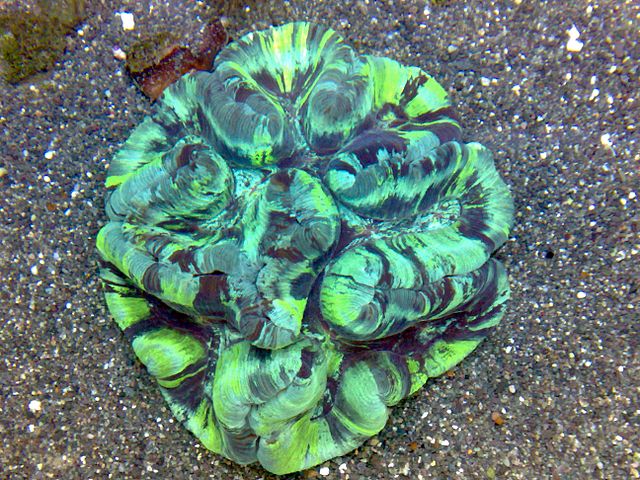
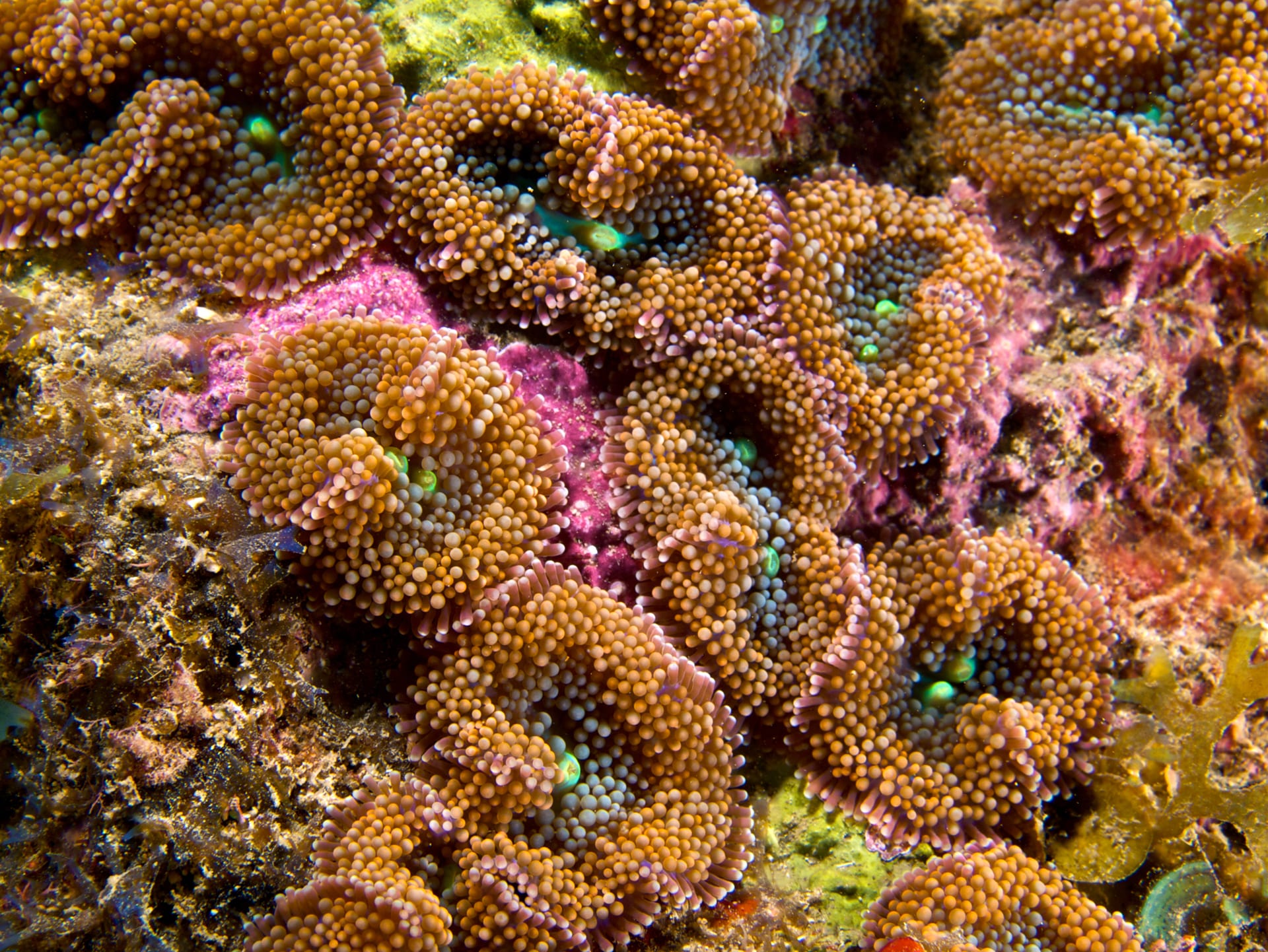
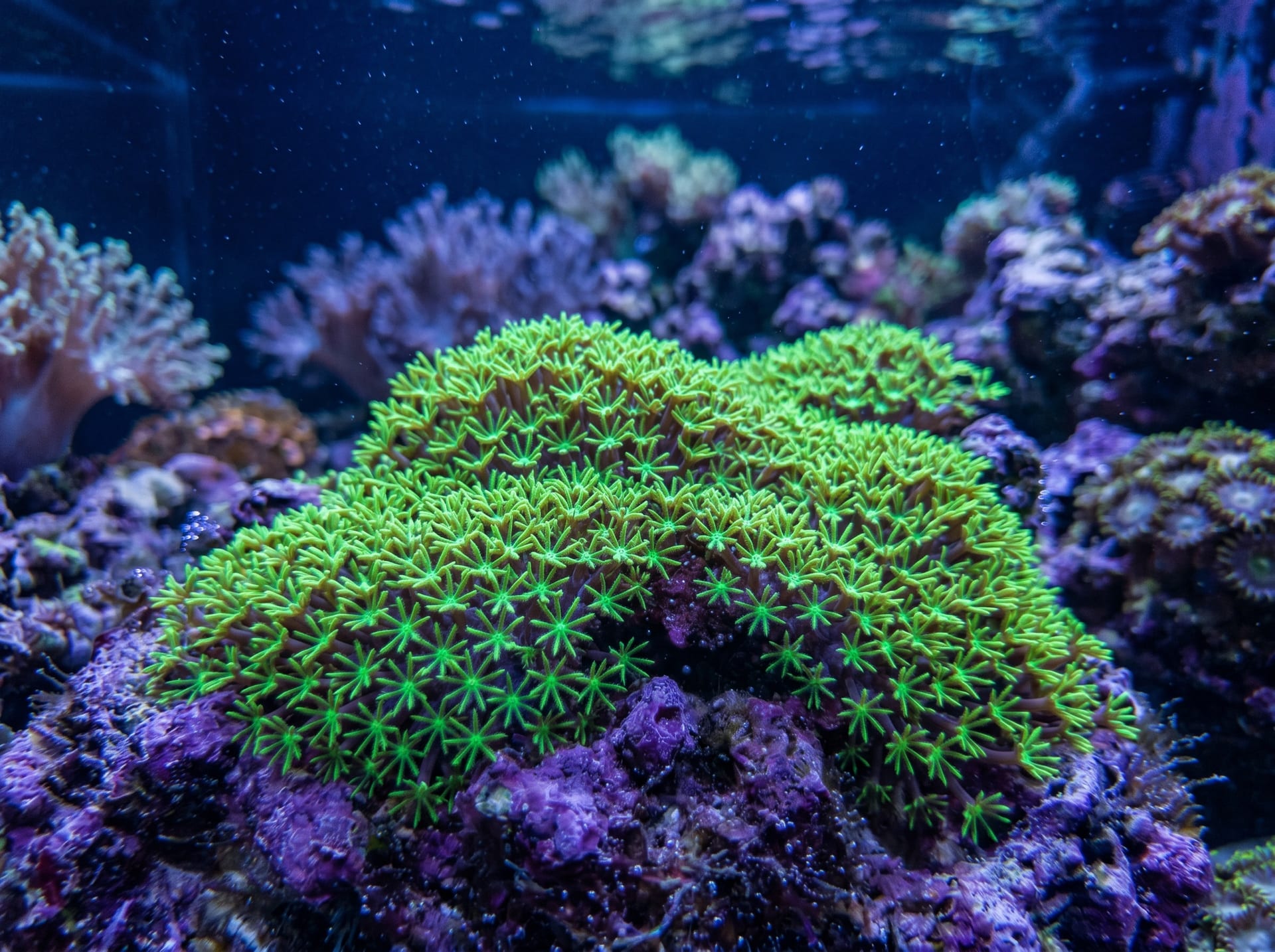
Coral keeping is the showpiece of marine aquariums, but care difficulty varies significantly by species. For beginners, it's recommended to start with hardy soft corals, then gradually progress to LPS and SPS as you gain experience. This article introduces popular corals in a guide format, explaining their characteristics and care tips.
Coral Classification and Care Difficulty Guide
Corals are broadly classified into three groups.
| Group | Characteristics | Care Difficulty | Representative Species |
|---|---|---|---|
| Soft Corals | No skeleton, soft-bodied. Relatively tolerant of water quality fluctuations | Beginner-friendly | Disc corals, star polyps, mushroom corals |
| LPS (Large Polyp Stony Corals) | Calcareous skeleton. Large, fleshy polyps | Intermediate | Flower pot corals, flowing corals, bubble corals |
| SPS (Small Polyp Stony Corals) | Calcareous skeleton. Small, delicate polyps | Advanced | Acropora, Montipora |
Since each group has different requirements for light intensity, water flow, and water quality stability, starting with a group that matches your tank setup and experience level is the shortest path to success.
Soft Corals: Species Recommended for Beginners
Star Polyps
- Care Difficulty: ★☆☆☆☆ (Very easy)
- Lighting: Low to moderate light intensity acceptable
- Water Flow: Weak to moderate
A beautiful coral that spreads in a green mat-like form and opens star-shaped polyps. With rapid growth that spreads across live rock, it can create a green carpet in your tank in a short time. It's relatively tolerant of poor water conditions, making it ideal as your first coral. However, its fast growth can encroach on other corals' space, so the trick is to place it on an isolated rock to control its spread.
Disc Corals
- Care Difficulty: ★☆☆☆☆ (Very easy)
- Lighting: Low light intensity acceptable
- Water Flow: Weak
A flat disc-shaped coral with an extremely wide range of color variations—red, blue, green, and purple. It reproduces naturally through division, so you may find the number increasing before you know it. It dislikes strong light and strong water flow, so place it in rock crevices or the lower part of the tank. Different impressions depending on species like Ricordea and Rhodactis, making it highly collectible.
Mushroom Corals
- Care Difficulty: ★★☆☆☆ (Easy)
- Lighting: Moderate light intensity
- Water Flow: Moderate
A mushroom-shaped coral with an endearing appearance as it extends polyps from the cap. Relatively tolerant of water quality fluctuations, it's popular as a beginner's first coral. It has a habit of shedding a mucus layer periodically, but this is normal behavior and nothing to worry about. Propagation through fragging is relatively easy, making it ideal as an introductory species for coral propagation.
Zoanthids
- Care Difficulty: ★☆☆☆☆ (Very easy)
- Lighting: Low to moderate light intensity
- Water Flow: Weak to moderate
The greatest appeal is its extremely wide range of colors and high collectibility. It reproduces rapidly and under good conditions can grow to cover the entire surface of live rock. Important note: some Palythoa species contain palytoxin, a toxin, so wear rubber gloves and protective eyewear when performing fragging work.
LPS: Popular Species for Intermediate Keepers
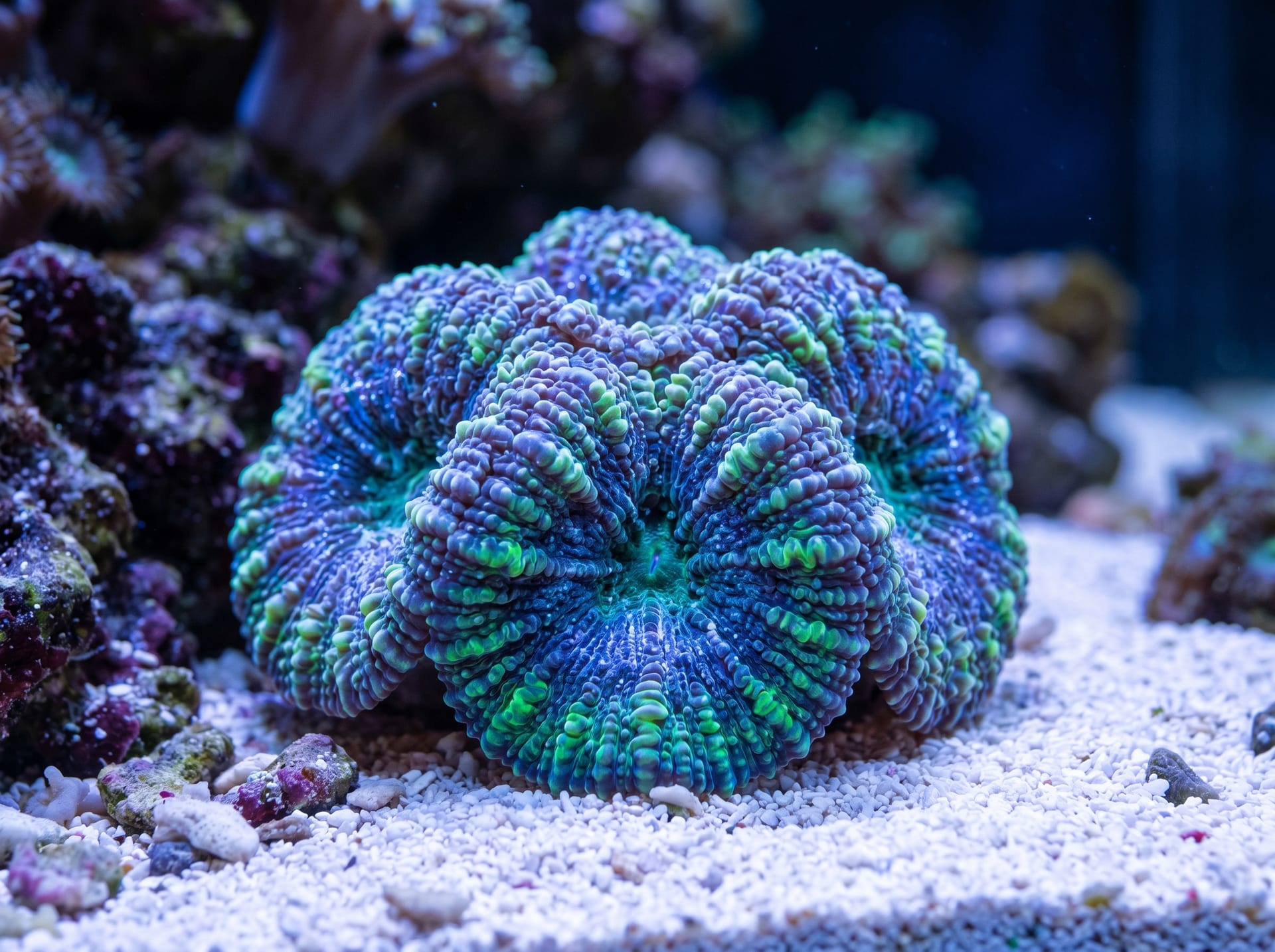
Flower Pot Corals
- Care Difficulty: ★★★☆☆ (Moderate)
- Lighting: Low to moderate light intensity / Water Flow: Weak
Characterized by large, fleshy polyps that inflate dramatically, with vibrant colors in red, green, and orange being popular. The sight of them inflating in response to feeding is impressive, and the ease of placing them directly on the substrate makes them ideal for LPS beginners.
Flowing Corals
- Care Difficulty: ★★★★☆ (Somewhat challenging)
- Lighting: Moderate light intensity / Water Flow: Moderate
A beautiful coral with rounded, separated polyps that sway as if flowing. Its skeleton is fragile, so careful handling is necessary. It's prone to Brown Jelly infection, so take immediate action if you notice any abnormalities. It uses sweeper tentacles to attack surrounding corals, so maintain a distance of at least 10cm.
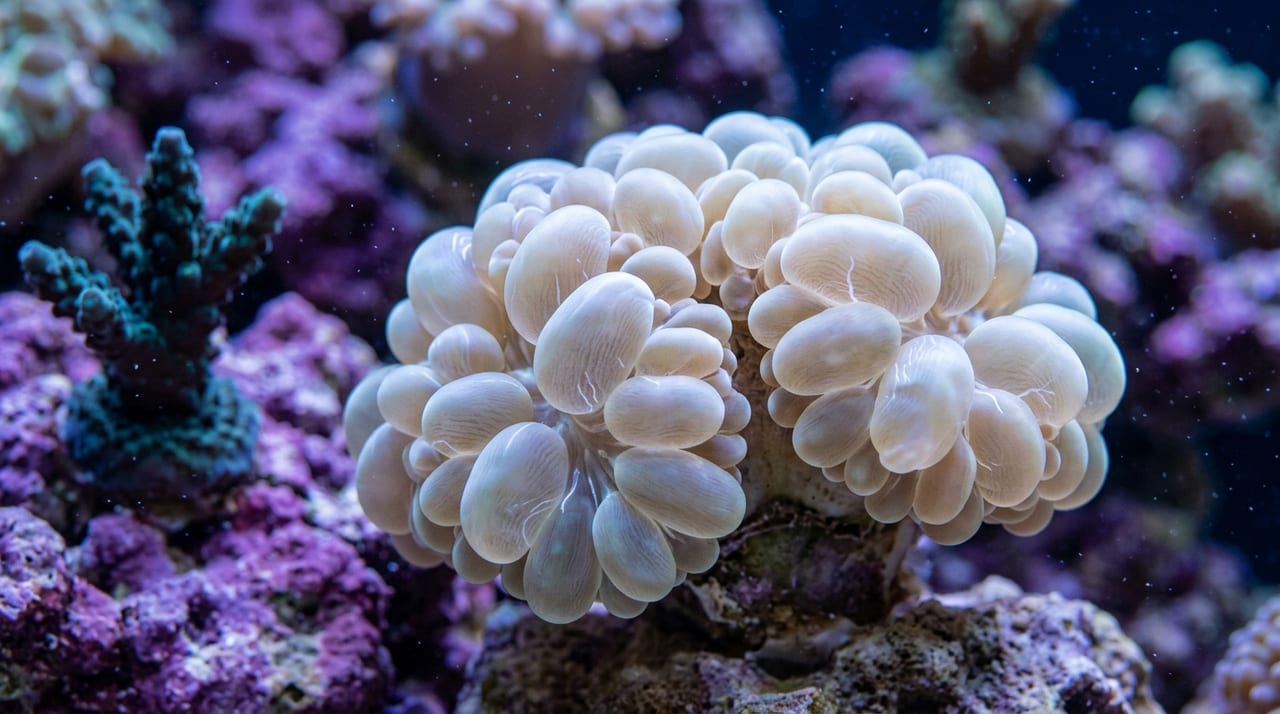
Bubble Corals
- Care Difficulty: ★★☆☆☆ (Easy)
- Lighting: Low to moderate light intensity / Water Flow: Weak
An LPS with large inflated polyps that create impressive volume. Hardy for an LPS and well-suited for your first LPS. It can be placed directly on the substrate and responds well to feeding.
SPS: Stunning Species for Advanced Keepers
Acropora
- Care Difficulty: ★★★★★ (Difficult)
- Lighting: Strong light intensity essential / Water Flow: Strong random flow
Considered the pinnacle of coral keeping, with unrivaled color beauty. Maintaining water quality (KH, calcium, and magnesium stability) is critically important, and high-performance lighting and a protein skimmer are essential. The sense of accomplishment when successful is exceptional, and it's the ultimate goal for many aquarists.
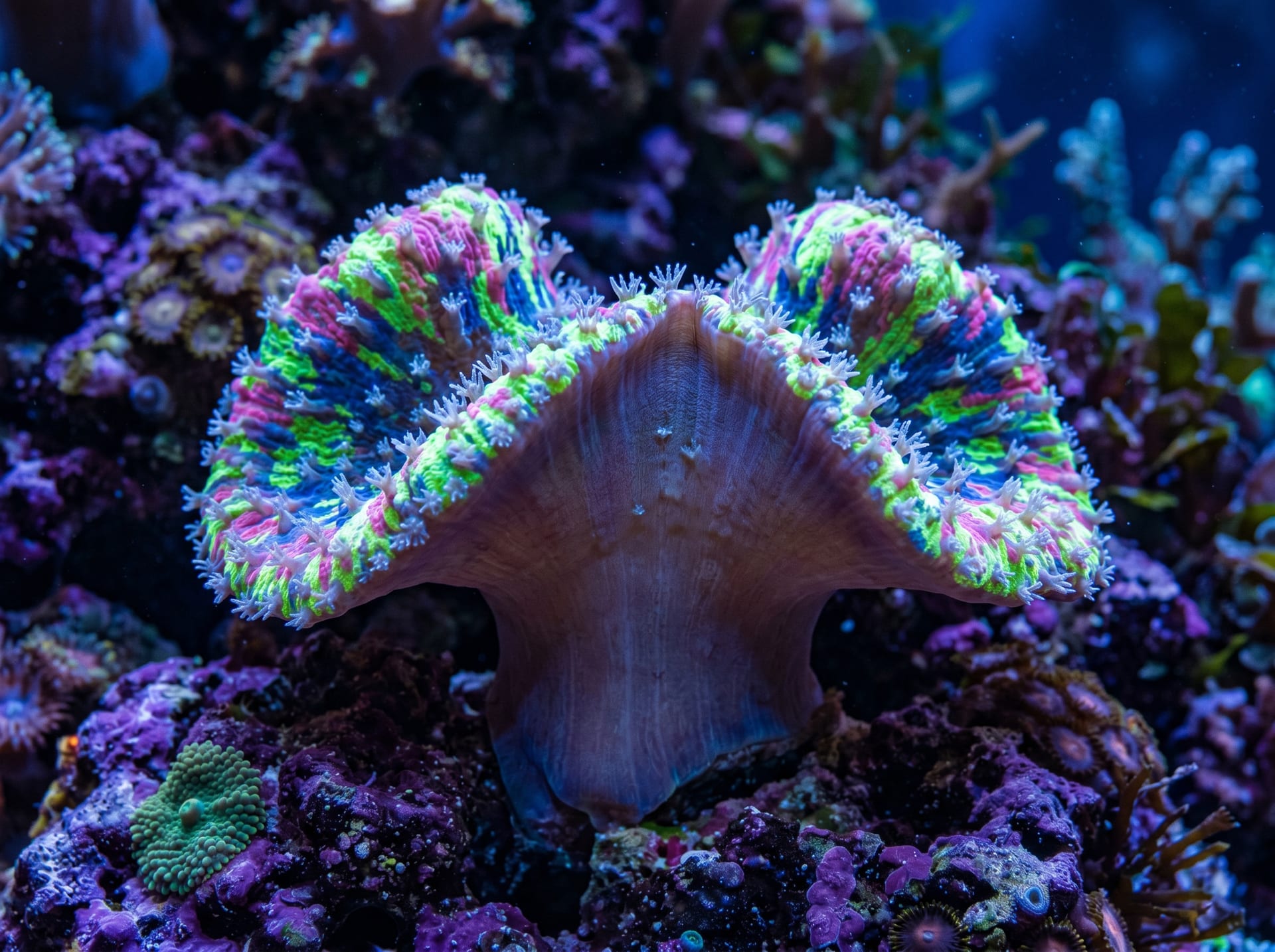
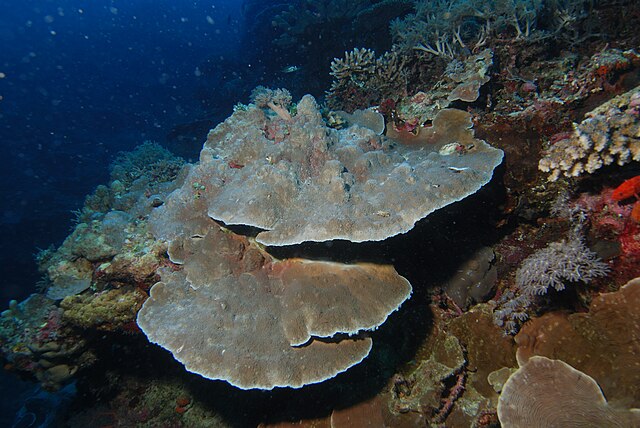
Montipora
- Care Difficulty: ★★★★☆ (Somewhat challenging)
- Lighting: Moderate to strong light intensity / Water Flow: Moderate to strong
Easier to keep than Acropora, it's popular as an SPS starter. Many species grow in plate or encrusting forms with diverse colors in purple, red, and green.
SPS keeping requires a well-established system, so gain sufficient experience with soft corals and LPS before attempting it.
How to Choose and Purchase Corals
When purchasing corals, consider not just care difficulty but compatibility with your tank environment. Specifically, confirm beforehand that your lighting type and PAR value, water pump output, and water quality parameters (KH, Ca, Mg, NO3, PO4) match the coral's requirements. When ordering online, check photos from multiple angles and request images under white light in addition to blue light to get a better sense of actual coloration. Choose healthy specimens with polyps that open well, uniform color, and no bleaching or browning.
Post-introduction care is equally important. After acclimating new corals, temporarily place them in a location with gentle light and water flow, such as the tank bottom or rock crevices. Gradually move them to their target position over 1-2 weeks in a process called "light acclimation" to minimize stress from environmental change.
Find Your Corals on BreederDirect
On BreederDirect, you can purchase directly from experts who specialize in coral cultivation and breeding. You can ask breeders directly about specimen condition and coloration, allowing you to choose corals suited to your tank environment. Find the perfect specimen for your first coral-keeping experience.