Star Polyp (Cladiella) Husbandry and Breeding Guide | Feeding, Propagation, and Precautions for Fast-Growing Beginner-Friendly Corals
Comprehensive guide to Star Polyp (Cladiella spp.) husbandry. Practical introduction to light conditions, nutrition, feeding schedules, fragging, and allelopathy management for fast-growing, beginner-friendly soft corals.
Key Takeaways
Comprehensive guide to Star Polyp (Cladiella spp.) husbandry. Practical introduction to light conditions, nutrition, feeding schedules, fragging, and allelopathy management for fast-growing, beginner-friendly soft corals.
Star Polyps (Star Polyp, Cladiella spp.) are soft corals beloved by both reef aquarium beginners and advanced hobbyists. They are characterized by beautiful star-shaped polyps and a relatively hardy nature, and are known as an easy-to-keep species due to their fast growth, even for beginners. This article provides a practical guide to long-term maintenance of Star Polyps and propagation through fragging.
What are Star Polyps?
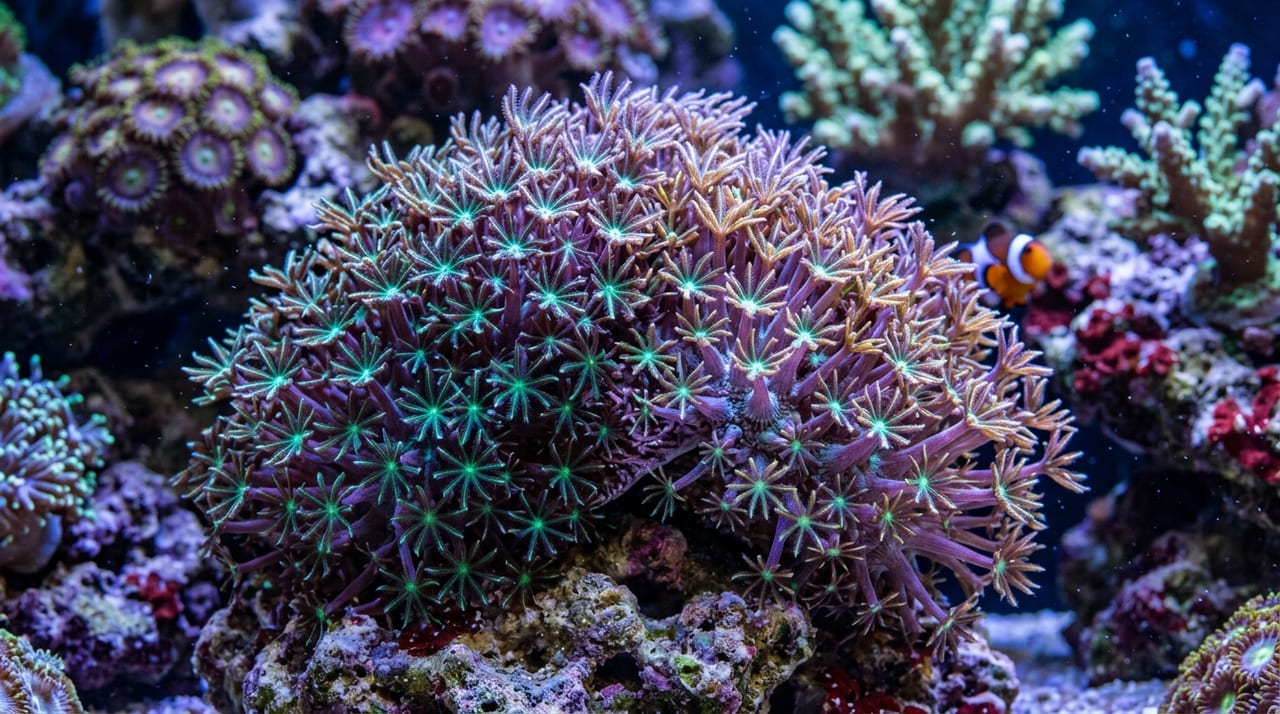
Star Polyps are soft corals belonging to the genus Cladiella (Cladiella spp.) and are classified in the family Xeniidae. They are characterized by unique star-shaped polyps that radiate outward, and come in a variety of colors including green, red, yellow, and pink. Unlike sea anemones, they do not exhibit pulsing behavior.
Habitat: Widely distributed in shallow waters (20 meters or less) throughout the Indo-Pacific region, they are relatively hardy in captivity and their water quality requirements are not as strict as those of other LPS and SPS species.
Husbandry Environment and Basic Parameters
Lighting
Star Polyps can thrive under relatively low light levels, so fluorescent or LED lighting is sufficient. However, lighting with blue spectrum above 20,000K is effective for bringing out coloration. Set the daily photoperiod to 8–10 hours as a guideline and use a timer for automatic control.
Water Quality Parameters
- Temperature: 24–26°C (maintaining stability with minimal fluctuation is important)
- pH: 8.0–8.3
- Ca (Calcium): 400–450 ppm
- Alk (Alkalinity): 7–10 dKH
- Mg (Magnesium): 1,200–1,300 ppm
Star Polyps do not have strict nutrient requirements and can thrive even if nutrient levels are not completely zero. In fact, moderate nutrient availability promotes coloration and growth.
Water Flow
Moderate water flow is ideal. If too weak, plankton feeding will be insufficient; if too strong, the polyps will remain constantly retracted. Create a gentle oscillating flow with a wave pump or balance flow by adjusting the return pipe flow rate.
Feeding Strategy
For Star Polyps, the key to growth and color maintenance is combining filter feeding with nutritional supplementation.
Plankton Feeding
Feed phytoplankton, rotifers, Reef-Roids, or similar products 3–4 times per week. Reduce or stop water flow during feeding to allow plankton to reach the polyps more easily. Resume water flow after approximately 5 minutes.
Nutritional Supplements
Administering calcium, trace element, and vitamin-based supplements once or twice weekly will intensify coloration. However, overdosing promotes algae growth, so follow dosage guidelines carefully.
Growth Stages and Propagation (Fragging)
Star Polyp growth is relatively rapid, extending approximately 5–10 mm per month under optimal conditions.
Polyp Expansion and Fragging Timing
Once the colony reaches sufficient size (10 cm diameter or larger), carefully cut 1–2 polyp frags using scissors or a scalpel. After fragging, mucus will be produced from the wound. Isolating the parent colony and frag for several days until the wound heals increases success rates.
For in-tank rooting and attachment, secure the frag to a rock using aquarium-safe coral adhesive and place it in a calm, low-flow area for 1–2 weeks.
Cloning Potential
Star Polyps can also reproduce asexually through budding, so small polyps may grow from the parent colony. These naturally separate and develop into new colonies.
Allelopathy (Chemical Warfare) and Tankmate Compatibility
Star Polyps exhibit weak allelopathy, and placing them near SPS species such as Acropora can create competition.
Recommended Placement:
- Keep at least 10 cm away from other soft corals (xeniids, mushroom corals)
- Maintain at least 5 cm distance from LPS species (Porites, octocorals, etc.)
- Isolate as much as possible from SPS species or maintain at least 10 cm distance
Common Issues and Solutions
Polyps Remain Closed
Possible causes are excessive water flow or insufficient feeding. Try reducing water flow or increasing feeding frequency.
Fading (Pale Coloration)
Caused by insufficient lighting or nutrition. Increase photoperiod and administer nutritional supplements.
Separation from Base Rock
Rapid growth can create stress at the adhesion point, causing separation. Re-glue or transplant to a different rock.
Rapid Shrinkage
If adjacent corals with strong allelopathy are present, consider relocating. Rapid temperature fluctuations or parameter swings can also cause this.
Star Polyp Color Variations
Star Polyps available in the market exhibit numerous color morphs. Red Star, Green Star, Yellow Star, and Purple Star are among the most common. Coloration is determined by both genetic traits and husbandry conditions, especially lighting.
Tips for Long-Term Care
Star Polyps are well-suited for long-term care in stable environments. Weekly partial water changes (20–30%), monthly parameter testing, and regular feeding form the basic maintenance routine. Consistent care is the key to keeping colonies healthy.
They are an excellent choice as a beginner's "first coral" to introduce shortly after establishing a reef tank, providing a foundation of success before advancing to more challenging species.