Alveopora & Goniopora (Octopus Coral) Care Guide | Challenges and Solutions for Raising Long-Tentacled Corals
Explains the differences between Alveopora and Goniopora (Octopus Corals), care difficulty, water flow, lighting, feeding, and secrets to long-term maintenance. A complete care guide for intermediate to advanced LPS corals.
Key Takeaways
Explains the differences between Alveopora and Goniopora (Octopus Corals), care difficulty, water flow, lighting, feeding, and secrets to long-term maintenance. A complete care guide for intermediate to advanced LPS corals.
Related Species
Alveopora & Goniopora Overview
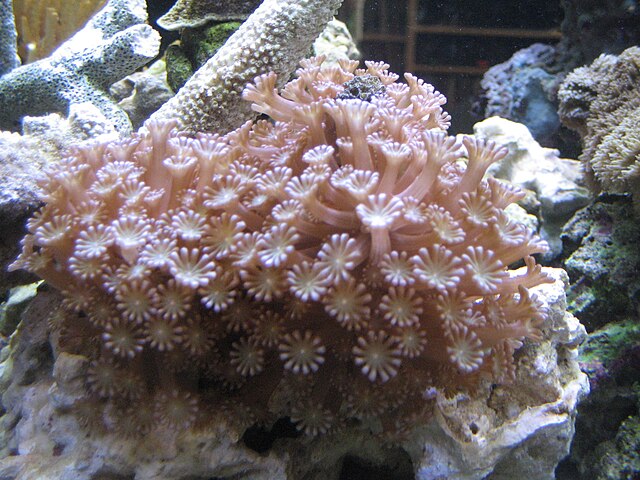
Alveopora (Alveopora spp.) and Goniopora (Goniopora spp.) are LPS (Large Polyp Stony) corals belonging to the Pocilloporidae family. They share the characteristic of having petal-like polyp structures at the tips of long tentacles, swaying beautifully in water currents, and are commonly called "Octopus Corals" or "Flowerpot Corals."
Differences Between the Two Species:
| Feature | Alveopora | Goniopora |
|---|---|---|
| Polyp petal count | 12 | 24 |
| Tentacle length | Moderate | Long (15-20cm+) |
| Care difficulty | Moderate (relatively easy) | High (advanced keepers) |
| Skeleton structure | Porous, lightweight | Large, heavy |
| Market availability | Limited | Widely available (but difficult to maintain long-term) |
The most reliable way to distinguish them is by counting the petals at the tentacle tips: 12 petals indicate Alveopora, while 24 petals indicate Goniopora. This difference directly correlates with care difficulty, and beginners are strongly recommended to start with Alveopora.
Why These Corals Are Challenging
Goniopora (especially the common green long-polyp variety) is infamous for being so difficult to maintain long-term that it's said to "die within six months." There are several reasons for this.
1. Dependence on Photosynthesis and Energy Depletion They host large quantities of zooxanthellae and rely heavily on strong photosynthetic activity. The polyps extend daily for extended periods to generate energy, but this process itself consumes significant energy. If water quality becomes unstable, polyps retract and the coral weakens.
2. Infection by Specific Bacteria They are particularly susceptible to tissue necrosis (Brown Jelly Disease) caused by bacteria such as Vibrio coralliilyticus. Physical trauma or water quality deterioration can trigger infection.
3. Trace Element Requirements Deficiencies in trace elements such as iodine, iron, and cobalt cause color changes and polyp withering.
4. Nutrient Salt Requirements Reports indicate these corals weaken in "overly clean water" (ultra-low nitrate and phosphate levels). They tend to prefer "natural" water quality with some organic content.
Setting Up the Proper Care Environment
Lighting
Goniopora prefers moderate to strong lighting. A PAR range of 100-250 is ideal, though sudden high-intensity light can cause bleaching.
Alveopora can thrive under slightly weaker lighting (PAR 75-200). For both species, allow a 2-3 week acclimation period when first introduced, gradually moving them from lower-light areas to their final position.
Color temperature should combine white-spectrum LED (14,000-20,000K) with blue LED to bring out vibrant coloration.
Water Flow
Gentle, swaying turbulent flow is ideal. Strong direct current can cause tentacle damage. If using a propeller-type flow pump, a lower setting aimed at walls to create turbulent flow is effective.
Gently swaying tentacles indicate good health. If tentacles are bent or retracted under strong current, reduce water flow.
Water Parameters (Strict Management Required)
- Salinity: 1.025-1.026 SG
- Temperature: 24-27°C (sudden changes forbidden)
- pH: 8.1-8.3
- KH (Alkalinity): 8-10 dKH (stability is most critical)
- Calcium: 400-430 ppm
- Magnesium: 1,280-1,350 ppm
- Nitrate: 2-10 ppm (not too close to zero)
- Phosphate: 0.02-0.08 ppm
- Iodine: Regular supplementation recommended (use dedicated additives)
Sudden water parameter changes (especially KH, pH, and temperature) trigger tissue breakdown. Measure parameters weekly and make gradual adjustments.
Feeding
For both Goniopora and Alveopora, active feeding is key to long-term survival. Photosynthesis alone is insufficient; consuming organic matter and plankton significantly increases survival rates.
Recommended Feeding Items:
- Copepods (live or frozen)
- Rotifers (brine shrimp)
- Marine snow (liquid plankton)
- Phosphorus-based liquid coral food
- Tiny brine shrimp nauplii
Feeding 2-3 times per week in the evening or up to 1 hour after lights out causes polyps to open wide and feed readily. Target feeding with a dropper directly around the polyps is most effective.
Reduce water flow for about 2 hours after feeding, and remove any uneaten food.
Common Problems and Solutions
Brown Jelly Disease (Tissue Necrosis)
The most serious problem. Polyps become covered in brown gelatinous slime and deteriorate.
Treatment Steps:
- Immediately remove from the main tank
- Perform "jet cleaning" with fresh seawater (blow off slime physically with a dropper or syringe)
- Move to an isolation tank with activated carbon and attempt treatment with low-dose doxycycline (antibiotic)
- Perform water change and add activated carbon to the main tank
Early detection and immediate isolation are the only solutions. Infection can spread to adjacent corals, so act quickly.
Polyps Remain Retracted and Won't Extend
Identifying the Cause:
- Water flow too strong → Reduce flow
- KH or pH fluctuations → Measure and correct
- Allelopathy from nearby corals → Reposition
- Lighting too intense → Move to shaded area
- Nitrate extremely low (ultra-low nutrient) → Add small amounts of fish food or rotifer culture
Practical Advice for Long-Term Maintenance
Common Traits of Successful Keepers:
- Prioritize water stability: Never skip weekly parameter testing and fine adjustments
- Maintain consistent feeding: Continuously provide organic matter even over months
- Maintain appropriate nutrient levels: Don't aim for zero (keep nitrate around 3-8 ppm)
- Keep lighting cycles natural: Ensure complete darkness at night
- Minimize handling: Unnecessary contact risks tissue damage
Alveopora is relatively hardy and can be maintained long-term (1-2+ years) by beginners to intermediates if proper conditions are met. Goniopora requires more advanced management but successful long-term care reports are increasing with stable tank environments.
Summary
Alveopora and Goniopora are corals with special presence and dynamic beauty in the aquarium. Because of their difficulty, the sense of achievement in successfully maintaining them long-term is exceptional, which explains why advanced keepers love them. For those starting out, begin with Alveopora and focus on three pillars: tank stability, consistent feeding, and regular water parameter monitoring to enjoy them for years. Equip yourself with knowledge of early Brown Jelly Disease management before attempting these corals.