How to Grow Coralline Algae and Management Guide | Ca, KH, Mg Targets and Steps
A guide to growing coralline algae in steps: adjust water quality first → introduce spores → reduce nutrients → optimize lighting. Includes target values for Ca, KH, and Mg, timeframe until color appears, what to suspect when it won't grow, and how to remove algae from glass surfaces.
Key Takeaways
A guide to growing coralline algae in steps: adjust water quality first → introduce spores → reduce nutrients → optimize lighting. Includes target values for Ca, KH, and Mg, timeframe until color appears, what to suspect when it won't grow, and how to remove algae from glass surfaces.
Related Species
What Is Coralline Algae
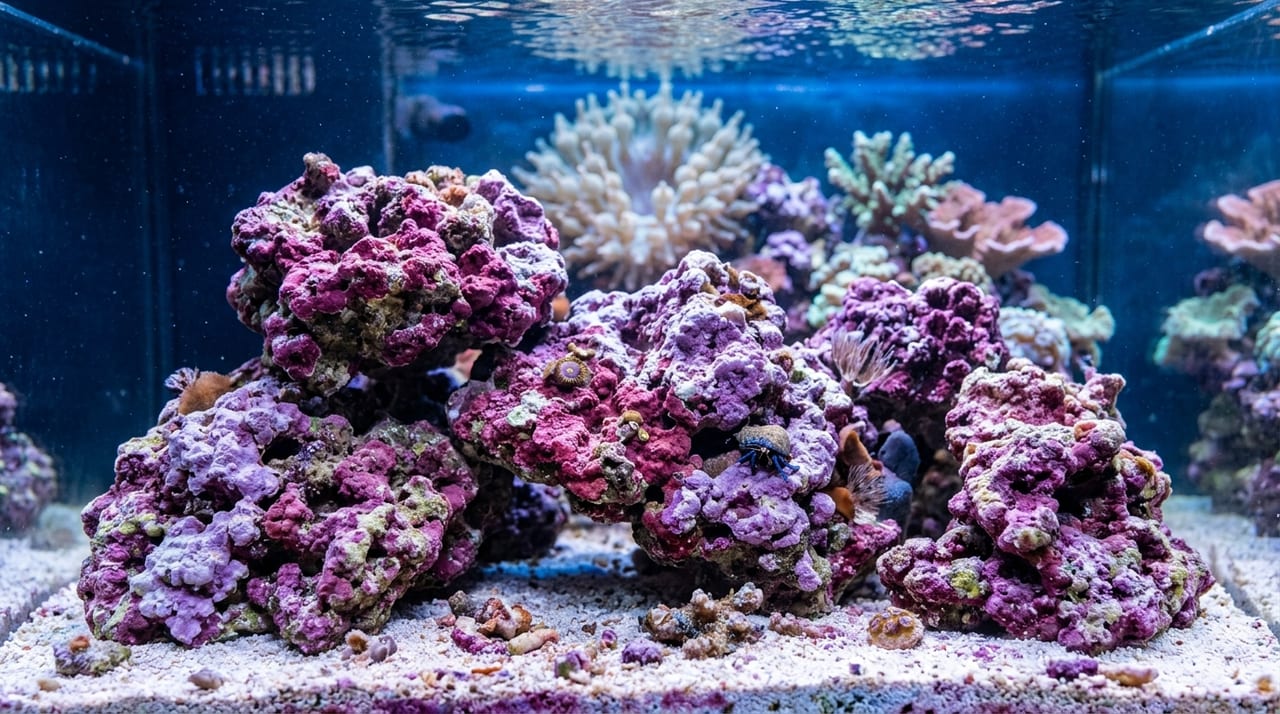
Coralline algae (石灰藻), commonly called "coralline algae," is a collective term for algae that attaches to live rock and glass surfaces in saltwater aquariums in vibrant colors of purple, pink, and pale violet. It is a "calcifying algae" that grows while accumulating calcium carbonate as its skeletal framework, and is a member of the coral family (red algae).
Why Coralline Algae Matters
Coralline algae is a bioindicator of reef aquarium health. A tank where coralline algae grows well indicates that KH (carbonate hardness), calcium, and magnesium are properly managed and that overall water quality is sound.
Benefits of Coralline Algae
- Promotes the calcium carbonate cycle within the aquarium and stabilizes water quality
- Serves as a settlement substrate for coral larvae (planula)
- Contributes to competitive suppression of harmful algae (cyanobacteria, hair algae, bubble algae)
- Enhanced aesthetics: live rock colored in pink and purple significantly improves the tank's appearance
Water Quality Management for Growing Coralline Algae
Coralline algae growth requires specific water quality parameters.
Calcium (Ca)
- Target value: 380–450 mg/L (ppm)
- Coralline algae consumes large amounts of calcium. Growth stops at low calcium levels
KH (Carbonate Hardness / Alkalinity)
- Target value: 8–12 dKH (German hardness)
- KH functions as a pH buffer and provides the foundation for coralline algae growth. At low KH, acidification occurs and coralline algae dissolves
Magnesium (Mg)
- Target value: 1250–1350 mg/L
- Low magnesium makes management of calcium and KH difficult. The balance of all three is important
Phosphate (PO₄)
- Maintain low levels (0.02–0.05 mg/L)
- Excessive phosphate inhibits coralline algae growth and makes glass surfaces prone to algae coverage
Nitrate (NO₃)
- Target is 10 mg/L or below (the lower the better for both coral and coralline algae)
Techniques for Propagating Coralline Algae
Introducing Live Rock
Adding live rock with abundant coralline algae to the aquarium is the most reliable method. Coralline algae spores from the live rock spread throughout the tank, attaching to pumps and glass surfaces where they grow.
Commercial Coralline Algae Spray / Water
"Live coralline liquid" containing coralline algae spores is commercially available and can be added directly to the tank to accelerate coralline algae reproduction. It is especially effective when setting up a new tank.
Supplementing Trace Elements
Trace elements like strontium and iodine contribute to coralline algae coloration and growth. The 2-part additive or coralline-specific additive methods are also options.
Optimizing Lighting
Coralline algae performs photosynthesis.
- Appropriate light intensity: PAR values appropriate for tank size and depth (coralline algae grows even at slightly lower light levels than what coral requires)
- Spectrum: Blue and purple wavelengths bring out coralline algae coloration
- Excessive light can cause green algae and other competing algae to dominate, so balance is important
Steps to Increase Coralline Algae | What to Start With and How Long Until Color Appears
For "how to grow coralline algae," what matters more than individual techniques is the order in which to proceed. If water quality is not established first, adding supplements alone will not result in colonization; proceed in the following order.
Step 1: Adjust the foundation water quality first (1–2 weeks)
In a tank lacking all three of Ca, KH, and Mg, spores will not establish even if introduced. First measure and bring the tank into range: Ca 380–450 mg/L, KH 8–12 dKH, Mg 1250–1350 mg/L. These three are interrelated, so attempting to raise only Ca and KH while Mg remains low will result in unstable values. Practically, adjust in the order: Mg → Ca → KH.
Step 2: Introduce spores (same day)
Coralline algae does not occur naturally. Without spores in the tank, none will appear no matter how long you wait, so a source is required.
- Add one live rock with coralline algae (most reliable and affordable)
- Add commercial coralline liquid (spore-containing)
- Take live rock with existing coralline algae, scrape off a small amount, and rub it in the water
Step 3: Reduce nutrients (2–4 weeks)
High phosphate favors green algae over coralline algae. Color will not spread until you reduce PO₄ to 0.02–0.05 mg/L and NO₃ to 10 mg/L or below. Lower them using GFO, refugium, or by reviewing feeding amounts.
Step 4: Stabilize lighting (ongoing)
Coralline algae grows even under weaker light than coral. In fact, light that is too strong favors competing algae, so maintaining the light intensity suited to existing coral while ensuring blue and purple wavelengths is sufficient.
How Long Until Color Appears
In a tank with conditions met, pink spots begin to appear in shaded areas such as the back of live rock or behind overflow pipes. The guideline is 1–2 months. It takes 3–6 months to spread to glass surfaces and piping. Coloration appears first in dark areas rather than on the front or high-light parts of live rock—this is normal progression. If you feel it is "not growing," check whether you are only looking at bright areas.
Order to Suspect When It's Not Growing
- Whether spores are even present in the first place (the most common cause in new setups)
- Whether Mg has dropped below 1250 mg/L
- Whether PO₄ exceeds 0.1 mg/L
- Whether you have scraped too much (freshly scraped surfaces take time to re-establish)
Controlling Coralline Algae (When Removal Is Needed)
Once coralline algae attaches to glass surfaces, it can obstruct visibility. Proper control is necessary.
Removing from Glass Surfaces
- Magnetic scraper: Regularly scrape away coralline algae from glass surfaces. A magnetic type is recommended to prevent scratching
- Plastic scraper: Less likely to damage glass. Since coralline algae is hard, a plastic scraper may require effort
- Removed fragments will attach elsewhere in the tank, so performing removal concurrent with water changes helps maintain cleanliness
Natural Control Organisms
Biological control using organisms that eat coralline algae is also possible.
- Certain sea stars (Astropecten sp. and similar): Eat coralline algae
- Sea urchins (especially long-spined urchins): Effectively clean coralline algae from glass surfaces but may damage coral
- Certain Megastrea-type snails: Some individuals eat coralline algae
However, if you introduce organisms that eat too much coralline algae, the coralline algae in the tank may drastically decrease, so care with balance is necessary.
Algae Commonly Confused with Coralline Algae
Cyanobacteria (Red Algae / Blue-Green Algae)
Spreads as a reddish-purple film on live rock and substrate. The color resembles coralline algae, but it easily peels off when touched (coralline algae is hard and doesn't peel). Cyanobacteria is a sign of water quality deterioration and excess nutrients, and removal is necessary.
Bubble Algae (Bubble Algae / Bubble Weed)
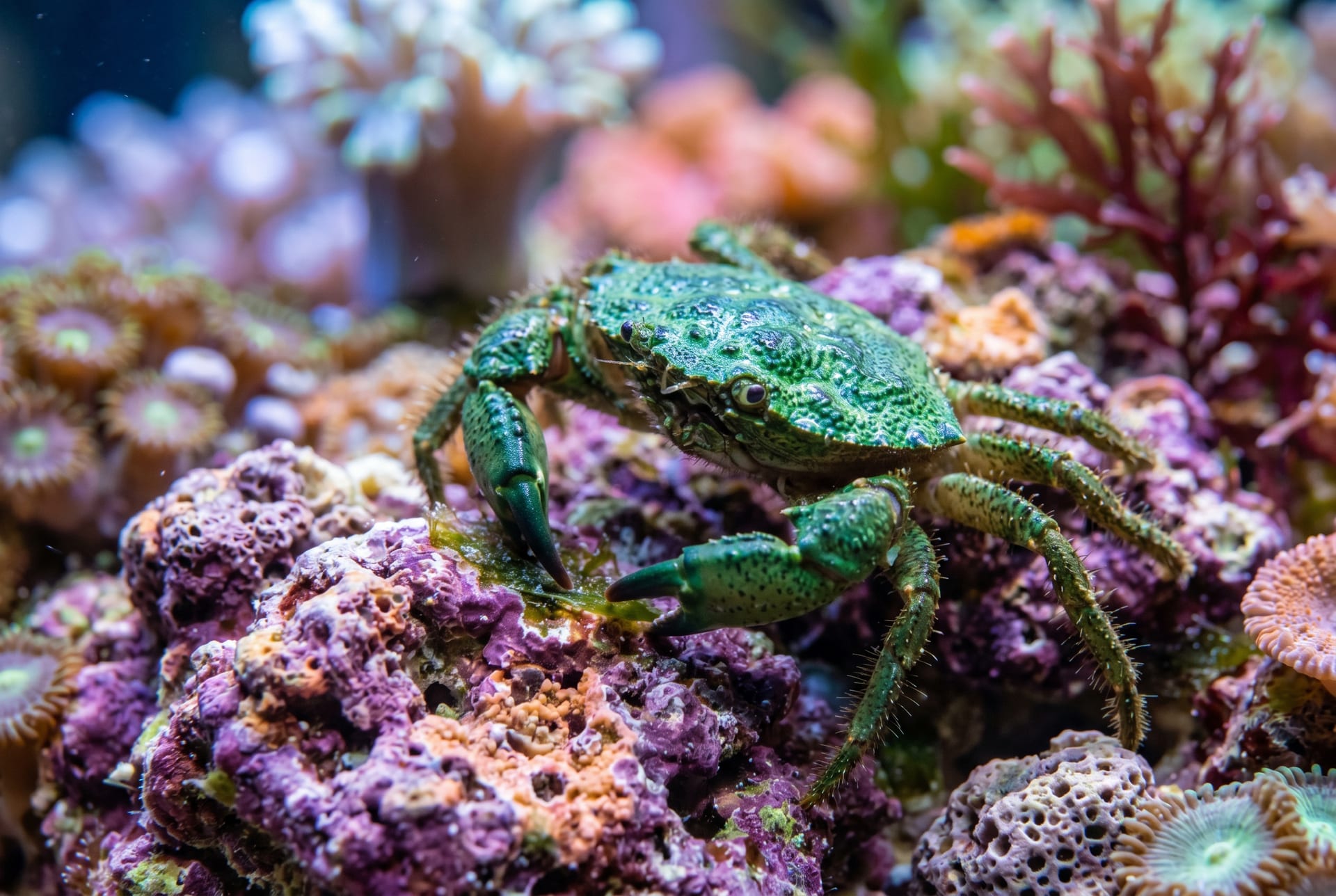
Small bubble-like green algae. A dangerous algae that reproduces explosively and is completely different from coralline algae. Handle with emerald green crabs or manual removal.
Causes and Solutions When Coralline Algae Won't Grow
| Symptom | Possible Cause | Solution |
|---|---|---|
| Coralline algae turns white / dissolves | KH or Ca is low | Correct with additive |
| Slow growth | Mg is low / phosphate is high | Mg correction / GFO reactor |
| Only attaches to glass | Phosphate is high / insufficient light | Nutrient management / review lighting |
| Coralline algae doesn't appear at all | New tank setup with no spores | Add live rock with coralline algae |
Coralline algae is the "sign of health" in a reef tank. By thoroughly managing water quality, you can create a beautiful reef environment where the entire tank becomes colored in vivid pink and purple, like a natural ocean.