Candy Cane Coral (Caulastrea) Care Guide | Lighting, Water Flow, Feeding, and Propagation Management
A guide to caring for the beginner-friendly LPS coral "Candy Cane Coral (Coral Beads)". This article covers everything from proper lighting intensity, water flow, and feeding methods to placement location and propagation through frag creation—all the basic knowledge needed to care for corals of the Caulastrea genus.
Key Takeaways
A guide to caring for the beginner-friendly LPS coral "Candy Cane Coral (Coral Beads)". This article covers everything from proper lighting intensity, water flow, and feeding methods to placement location and propagation through frag creation—all the basic knowledge needed to care for corals of the Caulastrea genus.
✍️
BreederDirect Editorial
The BreederDirect editorial team specializes in care information for animals, covering veterinary care and breeding to deliver beginner-friendly guides.
Find Coral on BreederDirect
Buy directly from verified breeders
Browse Related Listings
Find Coral listings related to this article on BreederDirect. Buy directly from verified breeders.
Related Tools
Related Articles
Browse by Category
🪸Coral
🐠Marine Fish
🐟Tropical Fish
🐡Goldfish
🐟Medaka
🦎Reptiles
Share
About Candy Cane Corals
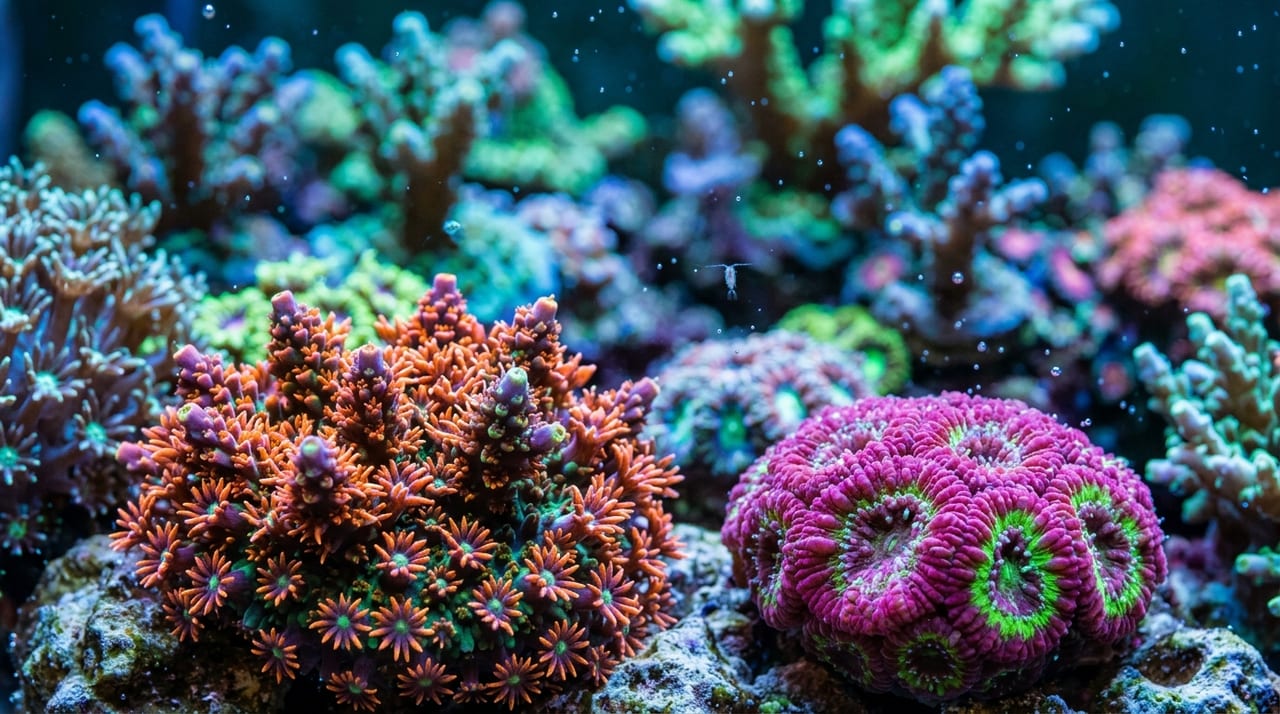
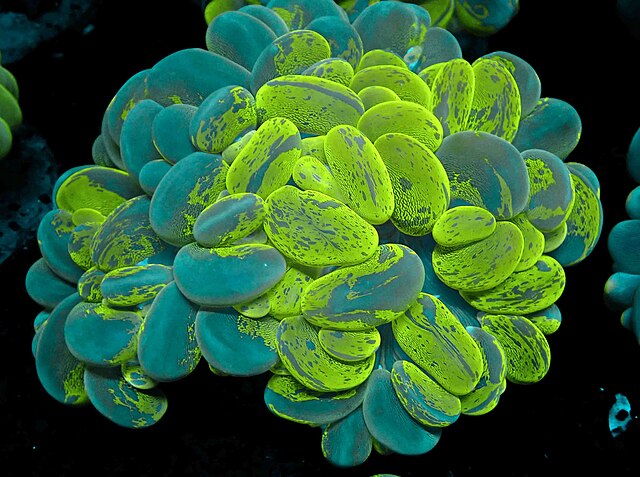
Candy Cane Corals (genus Caulastrea, also called Coral Beads or Bubble Corals) are beautiful LPS (large polyp stony corals) with vibrant green, blue, red, and purple polyps arranged in circular patterns. The name comes from the appearance of polyps arranged in a row, which resembles the striped pattern of candy. Among hard corals, they are relatively hardy and highly tolerant of water quality fluctuations, making them a popular beginner-to-intermediate entry-level LPS.
The main species in trade are as follows.
C. furcata
C. echinulata
The skeleton branches into multiple heads from the base, forming a colony that gradually expands horizontally as it divides. Healthy specimens expand during the day, with their polyp tissue swelling significantly and opening so fully that adjacent polyps may touch. Conversely, if polyps remain retracted and do not open, or if the skeleton appears translucent, this is a sign of environmental stress that should not be overlooked.
Lighting: Moderate PAR is Sufficient
Candy Cane Corals prefer moderate light levels of PAR 50–150 μmol/m²/s. Under strong light, polyps tend to shrink and fade, while insufficient light reduces zooxanthellae activity and slows growth.
For LED lighting: place them in low-PAR zones near the bottom or sides of the tank.
Light duration: aim for 8–10 hours per day, and adjust gradually to avoid stress from sudden lighting changes.
You can assess whether lighting is adequate by observing polyp condition. If polyps appear whitish and faded, the light is too intense—move them to a lower-PAR location or reduce lighting output. Conversely, if polyp color gradually becomes dull, insufficient light is likely—move them to a brighter location. When first introducing the coral, start with weaker lighting than their previous environment and gradually acclimate to target PAR levels over time for safety.
Water Flow: Gentle to Moderate
Strong direct water flow impedes polyp extension and can damage polyp tissue. Gentle-to-moderate indirect flow (wavelike movement) is ideal. Place water flow pumps diagonally across the tank to create random flow patterns, adjusting them so polyps sway gently while open.
Excessive flow keeps polyps constantly retracted, while insufficient flow allows detritus (organic matter) to accumulate on and around the polyps and surrounding substrate. Observe daily whether polyps sway gently while open and whether debris accumulates around the colony, making fine adjustments to pump direction and output as needed.
Water Parameters
Maintain standard reef tank water quality. Appropriate ranges are as follows.
Parameter
Optimal Range
Ca
400–450 ppm
KH
8–11 dKH
Mg
1250–1350 ppm
pH
8.1–8.3
Specific Gravity
1.025–1.026
Nitrate
≤25 ppm
Phosphate
~0.05–0.1 ppm
Target nitrate levels at 25 ppm or below, as high nitrogen compounds directly cause polyp fading (browning). They prefer phosphate levels around 0.05–0.1 ppm with slight nutrient presence; growth may slow in ultra-low-nutrient (ULNS) environments close to zero.
Acclimation Upon Introduction
When introducing a new coral, float the bag in the tank to equalize temperature, then use drip acclimation or similar methods to gradually acclimate it to the tank's water quality over time. Rapid water quality changes cause polyp retraction and fading, so proceed patiently. Polyps often remain closed immediately after being introduced to the tank, opening gradually over time. Do not worry if they do not open immediately; keep water flow and lighting moderate and observe them over time.
Feeding: Once or Twice Weekly is Effective
Candy Cane Corals are mixotrophic, obtaining nutrition from photosynthesis (via zooxanthellae) and also capturing organic particles with their polyps. Feeding once or twice weekly with a pipette (with flow turned off) promotes growth and color development.
Frozen copepods
Mysis
Brine shrimp
Reduce flow for about 30 minutes after feeding to allow polyps time to consume the food. Remove uneaten food to avoid water quality degradation from overfeeding. Timing feeding when polyps are fully extended increases the likelihood of successful feeding. Healthy specimens show clear feeding responses, with polyps reacting to food and using tentacles to transport it to the mouth. Conversely, if feeding responses are absent, this signals the need to reassess other factors such as flow strength or lighting conditions. In tanks with many fish and elevated phosphate or nitrate, reduce feeding frequency and adjust based on nutrient balance.
Placement and Propagation (Frag Creation)
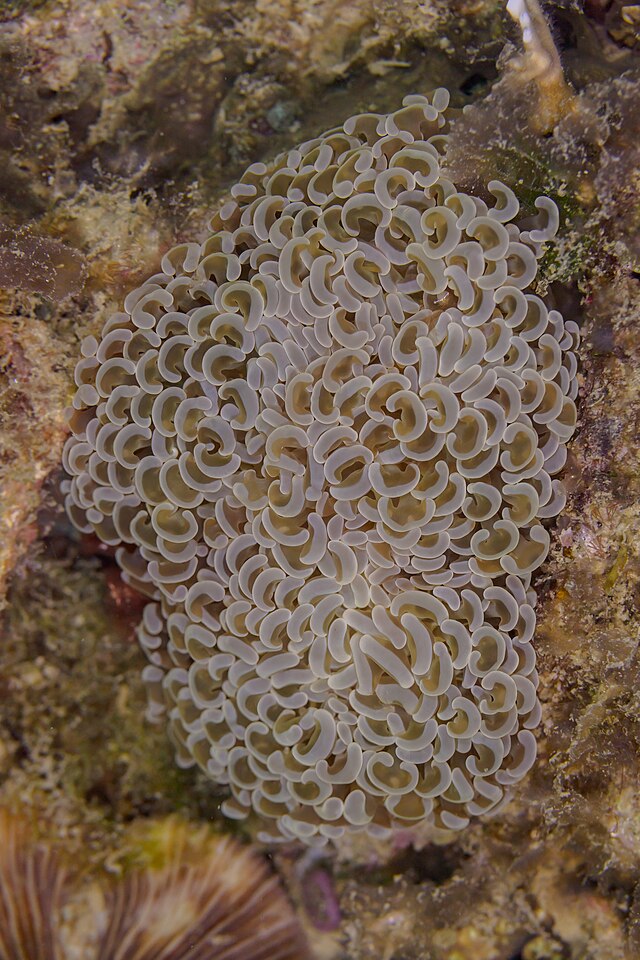
Place them in the mid-to-lower portions of the tank (near the substrate) with at least 5 cm spacing from adjacent corals. While Caulastrea species have relatively short sweeper tentacles and mild allelopathy (chemical aggression), avoid direct contact with other LPS corals such as hammer corals.
The steps for frag creation are as follows.
Cut the skeleton using a band saw or diamond blade (aim for 1–2 polyps per cut, cutting only the skeletal portion to avoid damaging polyps)
Attach the frag to a frag plug using coral-specific adhesive.
Avoid freshwater exposure after cutting; observe the frag in an isolation tank for 1–2 weeks.
Return to the main tank.
Wear safety glasses and gloves during cutting, as skeletal fragments may scatter. After applying adhesive, gently move the plug to ensure it is secure, and wait for full curing before placing it in the tank. Polyps may remain retracted temporarily after fragging, but gradually reopening over time indicates successful recovery. If polyps remain closed for an extended period, reduce flow and lighting intensity to minimize stress.