Cat Winter Cold Care Complete Guide | Indoor Environment, Cold-Protection Gear, and Health Management Tips
A complete guide to winter cold care for cats. We provide detailed explanations on proper temperature management, how to choose cold-protection gear, and methods to prevent winter-specific health risks (urinary tract disease, arthritis, and dry skin).
Key Takeaways
A complete guide to winter cold care for cats. We provide detailed explanations on proper temperature management, how to choose cold-protection gear, and methods to prevent winter-specific health risks (urinary tract disease, arthritis, and dry skin).
Although cats generally have the ability to adapt to cold, indoor cats, senior cats, and sick cats are particularly prone to health issues due to low winter temperatures. We provide detailed explanations on how to create an environment where cats can comfortably spend the winter and prepare for winter-specific health risks.
Ideal Winter Room Temperature and Temperature Management for Cats
✍️
BreederDirect Editorial
The BreederDirect editorial team specializes in care information for animals, covering veterinary care and breeding to deliver beginner-friendly guides.
Find Cats on BreederDirect
Buy directly from verified breeders
Browse Related Listings
Find Cats listings related to this article on BreederDirect. Buy directly from verified breeders.
The comfortable room temperature for cats is generally said to be 18–28°C, but this varies by individual. Generally, adult cats begin to feel cold below 15°C. Senior cats (10 years and older), kittens, short-haired breeds, and cats with underlying conditions are particularly sensitive to cold, and it is recommended to maintain temperatures above 20°C.
Room Temperature Checkpoints:
If a human feels "a bit chilly," that temperature is cold for cats too
If your cat refuses to leave a futon or heater, it's a sign the room is too cold
Watch for signs like shivering, staying curled up without moving, and cold ears or paw pads
Selecting and Using Heating Devices:
Air conditioning: The safest and most evenly warming option. Actual floor-level temperatures are typically 2–3°C lower than the set temperature, so check the temperature from your cat's perspective
Fan heaters (oil/gas): Risk of burns if your cat gets too close. Never leave unattended while in use
Electric blankets and heated carpets: Risk of low-temperature burns; design spaces so cats can escape (provide an area they can move to) to prevent them from staying on too long
Kotatsu: While cats famously love kotatsu, prolonged time in this enclosed space risks increased CO2 levels and dehydration
How to Choose Cat Cold-Protection Gear
Cat Heater Pads:
Heater pads and mats designed specifically for cats often include low-temperature burn prevention and some models automatically adjust temperature by sensing the pet's weight.
Selection Tips:
Surface temperature of 40°C or lower (to prevent low-temperature burns)
Bite and scratch-resistant cords
Removable, washable covers
Size that allows cats to get on and off freely (approximately 30–40 cm)
Recommended Product Types: Marukan "Hotto Attakai Mat" and Richell "Orusban Heater" and other cat-specific products
Insulated Beds and Sleeping Pods:
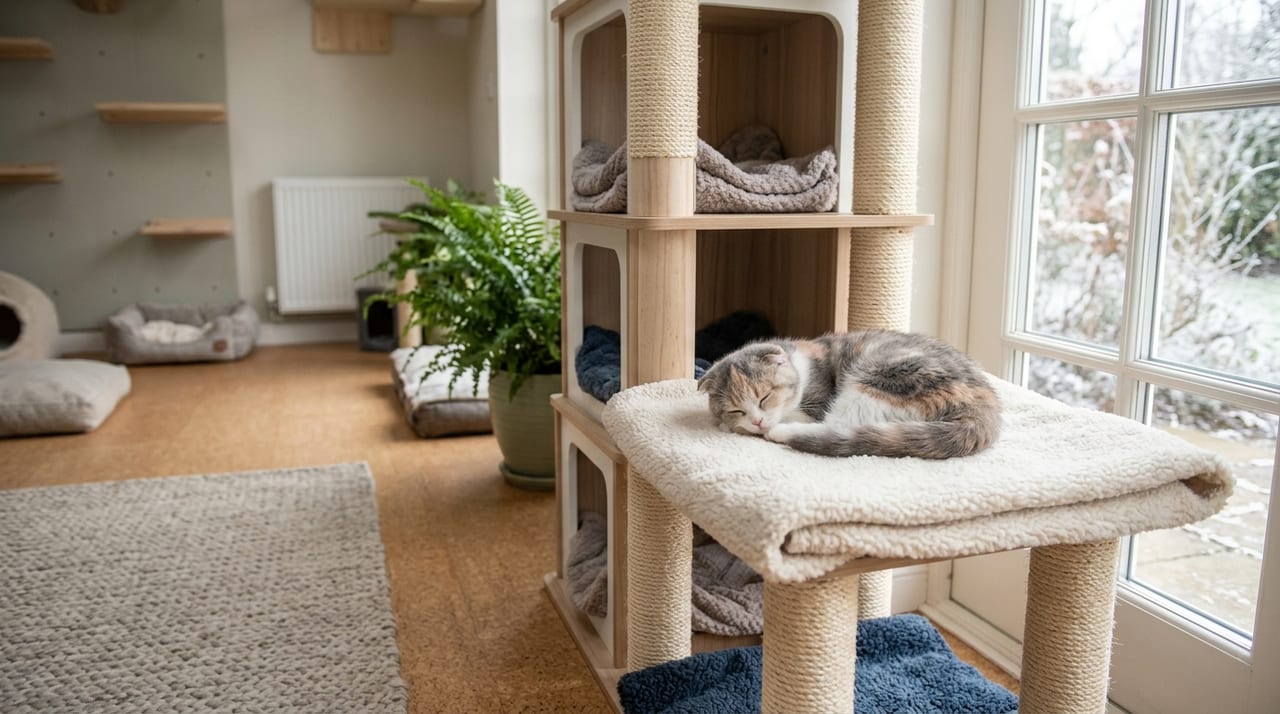
Cats prefer dark, warm, enclosed spaces. "Sleeping pods" and "dome-shaped beds" make use of this natural instinct, with the cat's own body heat warming the interior. They are especially effective in cold regions and for senior cats.
Fleece and boa materials are popular for their high insulation value. Types with water-repellent exterior coatings resist dirt and are easier to maintain.
Cat Clothing (Wear):
While cats generally dislike clothing, insulated garments are an option for senior cats, thin-haired cats, and cats recovering from illness. When dressing your cat, choose designs that are easy to escape from, use for short periods only, and watch for stress signals (body shaking, attempts to remove the garment).
Winter Health Risks for Cats and Prevention
1. Worsening of Urinary Tract Disease:
As temperatures drop, cats drink less water, and concentrated urine increases the risk of cystitis and urinary stones. Male cats, neutered/spayed cats, and those with a history of urinary tract disease are particularly at risk.
Countermeasures: Provide multiple water bowls in different locations (near heaters, near litter boxes, etc.), increase the proportion of wet food to promote water intake. Many cats prefer lukewarm water (body temperature), so in winter, diluting wet food with warm water is also effective.
2. Worsening of Arthritis:
In senior cats (80–90% of cats 9 years and older are said to have some degree of arthritis), cold increases joint pain and reduces activity levels. Watch for signs such as reduced jumping, reluctance to climb to high places, and changes in gait.
Countermeasures: Use low litter boxes (entry height of 5 cm or less for easy stepping), install steps and ramps, and use radiant floor heating or insulated mats to reduce cold floors.
3. Skin Dryness and Hair Loss:
Winter heating reduces indoor humidity (winter indoor humidity can drop to 20–30%), causing cat skin to dry out and flaking to increase.
Countermeasures: Use a humidifier to maintain indoor humidity at 50–60%. If excessive grooming is observed, suspect underlying skin or endocrine issues. Supplementing omega-3 fatty acids (from mackerel and salmon-based foods, fish oil) supports skin and coat health.
4. Weight Gain and Exercise Deficiency:
In winter, cats' activity levels decrease, and weight gain can occur even with the same food intake. Monitor weekly weight changes using a digital scale accurate to 0.1 g. If weight changes by 5% or more over two weeks, adjust food intake.
Increasing indoor playtime during winter is important. Engage in active play (feather wands, string toys, laser pointers, etc.) for 10–15 minutes, 2–3 times daily to maintain exercise levels.
Window, Floor, and Outdoor Management
Window Insulation:
Windowsills, where cats like to rest, can let in cold air in winter. Double-pane windows or window insulation film are effective. Simply switching to thick curtains can change the perceived temperature by 2–3°C.
Floor Insulation:
Hardwood floors draw away heat and become especially cold without radiant heating. Place rugs, mats, or cork mats in areas where your cat spends time to reduce cold floors.
Outdoor and Indoor-Outdoor Cat Management:
For cats that go outside, it is strongly recommended to keep them indoors at night. Cat freezing and accidents from icy road surfaces increase in winter. On cold days, limit outdoor time and check for wet or dirty fur when your cat returns home.
Help your beloved cat stay healthy and comfortable through winter by making it a habit to maintain your indoor environment, promote water intake, and regularly monitor weight and activity levels.