Complete Indoor Living Safety Guide for Cats | Escape Prevention, Hazard Removal, and How to Create a Comfortable Environment
Explains the safety measures necessary for keeping cats indoors full-time. Learn about escape prevention strategies, a list of household hazards, measures for windows and balconies, and how to create a comfortable indoor environment.
Key Takeaways
Explains the safety measures necessary for keeping cats indoors full-time. Learn about escape prevention strategies, a list of household hazards, measures for windows and balconies, and how to create a comfortable indoor environment.
Complete indoor living for cats is recommended by veterinarians and animal welfare experts as the best way to protect cats from outdoor risks such as traffic accidents, infectious diseases, and fights with other cats. However, the indoors is not always safe. The human living space contains many things that are dangerous for cats. This article explains in detail the safety measures needed to protect indoor cats.
Thorough Escape Prevention Measures
One of the greatest risks for indoor cats is escape. When a cat that has never been outdoors escapes, it often panics and runs far away, unable to find its way home on its own. Escape prevention should be treated as a fundamental prerequisite for indoor living.
| Location | Measure |
|---|---|
| Entrance | To prevent escape through the entrance door, installing a double-door system (escape prevention gate) in front of the entrance is the most effective method. Use commercially available pet gates or tension-rod fences to create a buffer zone between the entrance and living space. Choose a fence at least 180cm tall, taking into account the cat's jumping ability. Avoid horizontal rung types, as cats can easily climb them by gripping the rungs. Vertical rung or mesh types are recommended. |
| Windows | Preventing escape through windows is also important. Window screens alone are insufficient, as cats can easily tear them or push them out with their claws and body weight. Either replace screens with pet-grade reinforced screens (stainless steel mesh) or install an escape prevention fence on the inside of the window. Window stoppers that limit how far a window can be opened are also effective. |
| Balcony | To cat-proof the balcony, install netting to seal gaps in the balcony railing. Cats can squeeze through surprisingly narrow gaps, so if there are gaps of 10cm or more in the railing, you must seal them with netting. However, if your apartment building rules restrict balcony modifications, it is more reliable to completely prevent cats from accessing the balcony. |
Household Hazards and Poisoning Risks
The indoor environment contains far more toxic substances for cats than expected.
- Houseplants: Particularly dangerous are houseplants. Lily family plants (lilies, tulips, hyacinths, etc.) are deadly toxic to cats, and even licking the pollen can cause acute kidney failure. Pothos, dracaena, and dieffenbachia can also cause poisoning symptoms. In homes with cats, remove these plants or move them to places where cats absolutely cannot reach them.
- Food: Some human foods are also harmful to cats. Onion-family foods (onions, garlic, chives) destroy red blood cells and cause hemolytic anemia. Theobromine found in chocolate, caffeine in coffee, and grapes and raisins are also toxic. Store kitchen ingredients in sealed containers or keep them in closed shelves where cats cannot access them.
- Chemicals: Manage cleaning products, bleach, insecticides, and other chemical products strictly. In particular, chlorine-based bleach sometimes has a scent that strongly attracts cats, and accidents where cats lick it have been reported. Air fresheners and aroma oils (essential oils) are also dangerous for cats. Since cats lack the enzyme needed to metabolize phenols, even tiny amounts of tea tree oil, eucalyptus oil, and similar products can cause poisoning.
Preventing Falls, Crushing, and Entanglement Accidents
While cats prefer high places, indoor environments require attention to fall accidents.
- Falls (Feline High-Rise Syndrome): Falls from windows or balconies in high-rise apartments, known as "feline high-rise syndrome," often occur when cats chase birds or insects and jump out through open windows. For high-floor windows in rooms with cats, either do not open windows or limit the opening width to 5cm or less.
- Washing machines and dryers: Washing machine and dryer accidents are reported every year. Since cats prefer dark, confined spaces, they may climb into an open washing machine. Always check inside the machine before use and keep the lid closed when not in use. Drum-style washing machines are particularly dangerous.
- Blind and curtain cords: Blind and curtain cords pose a risk of suffocation if they become tangled around a cat's neck while playing. Clip cords short or replace with cordless blinds. The handles on plastic bags carry the same risk, so clean them up immediately after use.
- Accidental ingestion: Accidental ingestion of rubber bands, hair ties, string, and rope is very common. In particular, thread-like foreign objects can become tangled in the intestines, causing intestinal obstruction or perforation, which may require emergency surgery. Store sewing supplies, fishing line, dental floss, and similar items in places where cats cannot reach them.
Electrical Appliances and Cord Safety
Electrical cords pose a risk of electrocution if cats chew on them. Kittens in particular are prone to chewing on cords, treating them like toys, and electrocution can cause oral burns, arrhythmias, or in the worst case, death.
- Cord covers: Protect cords with cord covers such as spiral tubing or cable molding. Bundling cords together and running them along walls where cats cannot play with them is also effective. Develop the habit of putting charging cables away after use.
- Deterrent sprays: If a cat persistently chews a particular cord, applying a citrus-based deterrent spray to it can help. Cats tend to dislike citrus scents, making this effective at suppressing chewing behavior. However, do not rely on deterrent sprays alone; use them together with physical protection.
- Heaters and space heaters: Install a fence around heaters and space heaters to prevent cats from touching them directly. Cats sometimes suffer contact burns by sitting on heaters. Kotatsu (heated tables) are warm and attractive to cats, but prolonged time inside risks dehydration or heat stroke, so monitor your cat's movements as it leaves the kotatsu.
Key Points for Creating a Comfortable Indoor Environment
With safety measures in place, creating a comfortable and stimulating indoor environment for your cat is the key to successful complete indoor living.
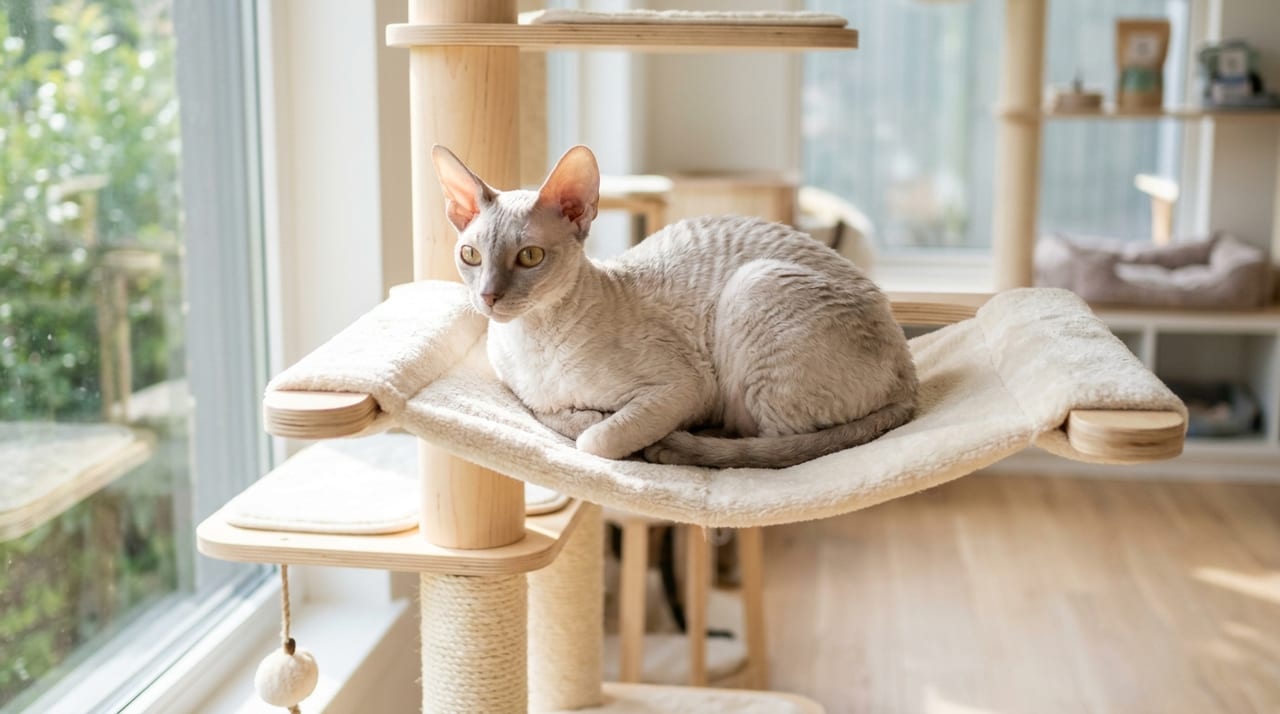
- Utilizing vertical space: Using vertical space greatly affects cat satisfaction. Building vertical territories with cat trees, wall-mounted cat steps, and pathways over bookshelves creates a three-dimensional living space that prevents boredom.
- Viewing platforms: Installing a cat window perch on a windowsill makes watching the outside scenery a major source of enjoyment for your cat. Observing birds, insects, and passersby—what some call "cat TV"—provides valuable visual stimulation for indoor cats. Simply placing a cushion on a sunny windowsill can greatly improve your cat's comfort.
- Scratching areas: Providing multiple scratching posts is also important. Cats' preferred scratching materials (sisal, cardboard, wood, etc.) and shapes (vertical or horizontal) vary by individual, so try several types to understand your cat's preferences. Most furniture scratching damage can be greatly reduced by providing appropriate scratching posts in suitable locations.
BreederDirect allows you to consult with breeders about cat breeds and temperaments suited for complete indoor living. If you are choosing a high-energy cat breed, sufficient exercise space and play opportunities are essential. Before bringing your cat home, consult with a breeder about preparing a safe and comfortable indoor environment suited to your cat's needs.