Exercise Solutions for Indoor Cats: Vertical Movement and Play Strategies
Indoor cats tend to lack exercise. We explain how to set up cat walks and steps, how to choose solo-play toys, recommended playtime with owners, and exercise habits that prevent obesity.
Key Takeaways
Indoor cats tend to lack exercise. We explain how to set up cat walks and steps, how to choose solo-play toys, recommended playtime with owners, and exercise habits that prevent obesity.
Related Species
The Silent Risk of "Exercise Deficiency" That Full Indoor Housing Creates
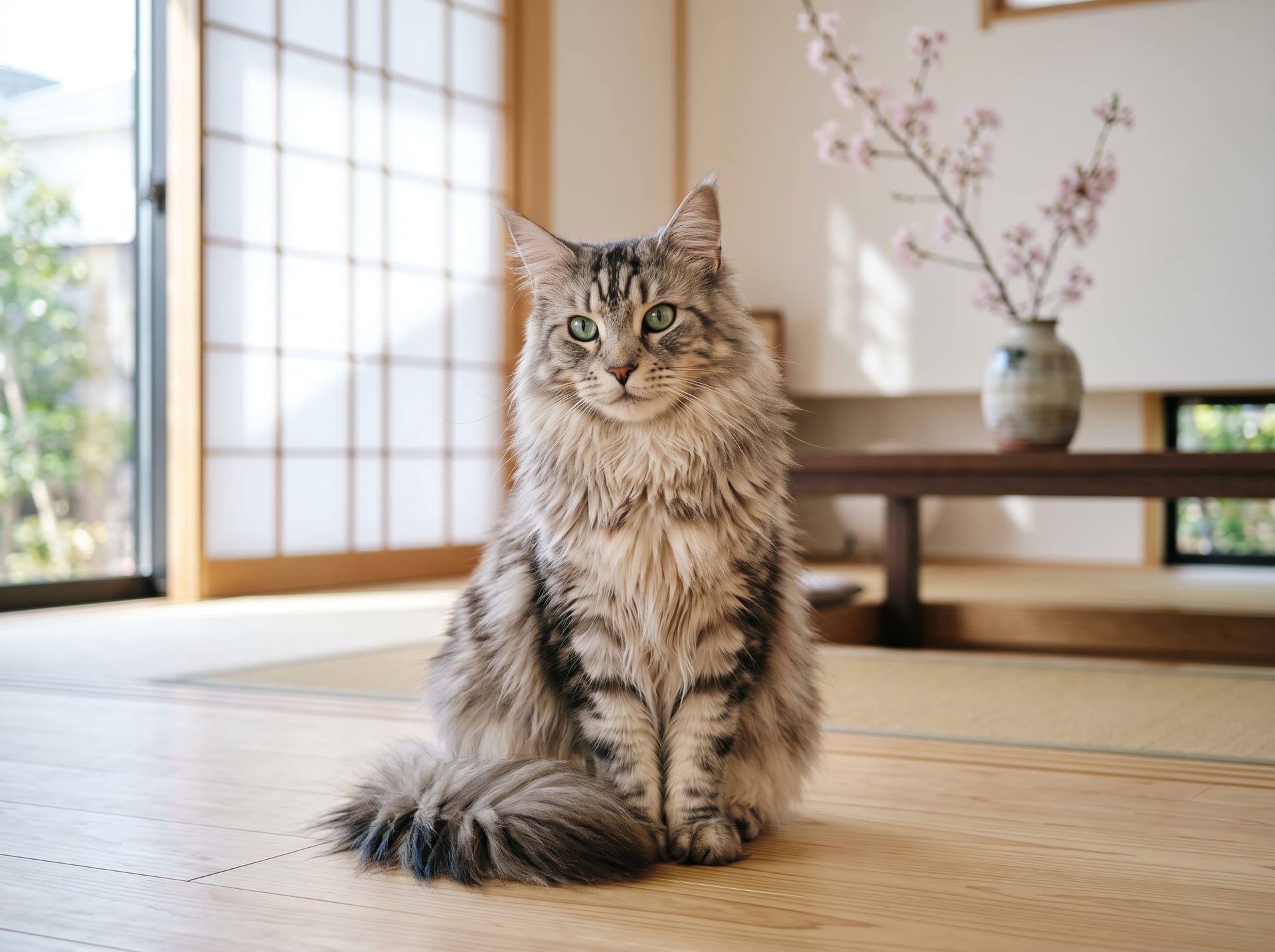
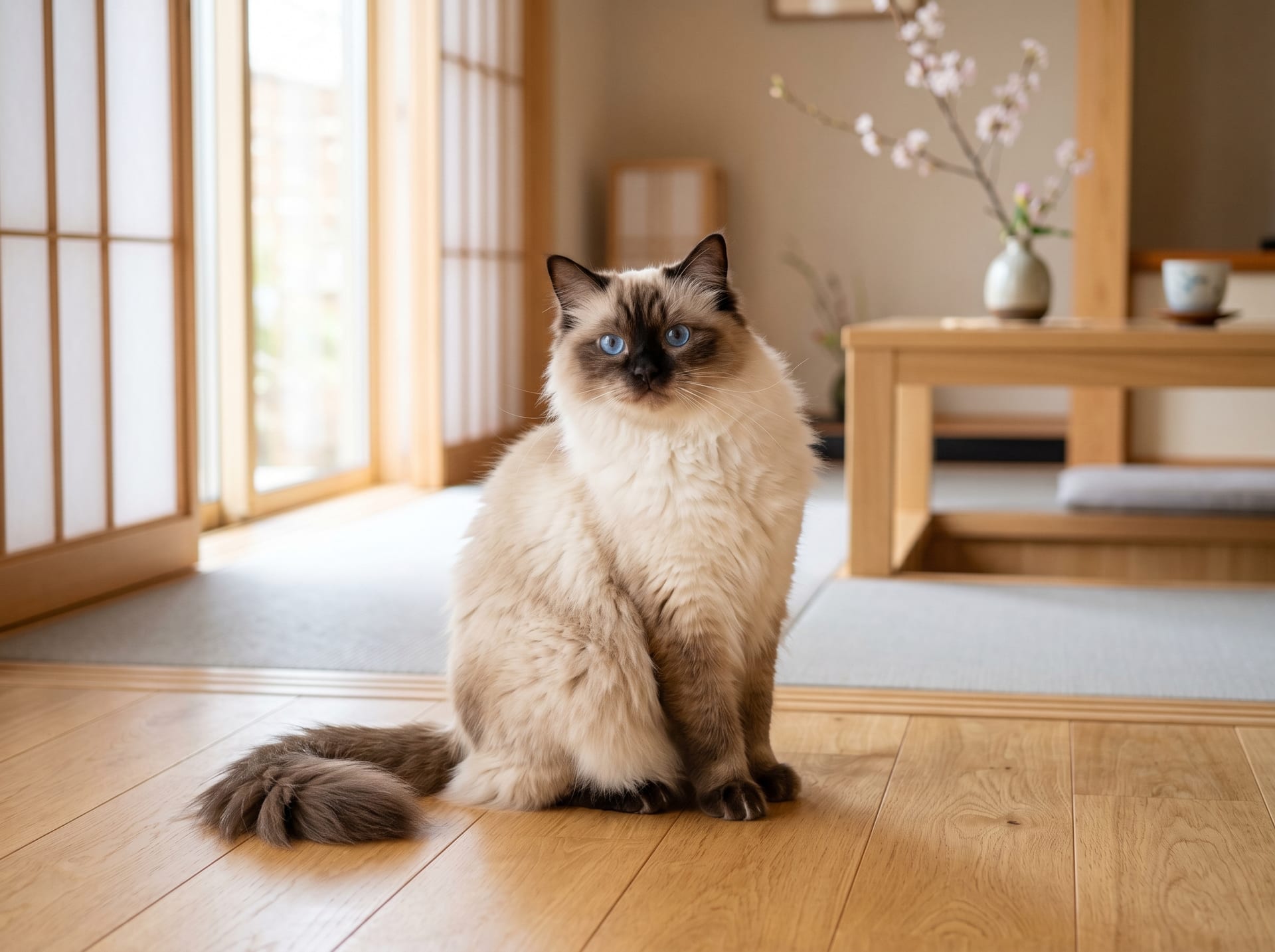
Indoor cats avoid traffic accidents, infections, and conflicts with stray cats, but they easily fall into chronic exercise deficiency. Wild cats move several kilometers a day and develop explosive power and concentration through hunting. When confined to a 4–6 tatami-mat room, calorie expenditure plummets, leading to muscle loss, obesity, and stress-related behavioral problems.
The particular problem is that they appear healthy on the surface. They have good appetite and a shiny coat. However, visceral fat accumulates, muscle mass declines, and by ages 3–5 the risk of diabetes, arthritis, and urinary tract disease skyrockets. Data shows that about 50% of obese cats have some metabolic disease. Addressing exercise deficiency is not a "luxury activity" but a fundamental part of health management.
Designing Essential "Vertical Movement" for Cat Exercise
The top priority for cat exercise is vertical movement. Climbing and descending puts greater muscle strain than horizontal movement and satisfies their instinctive sense of security (high-place dominance).
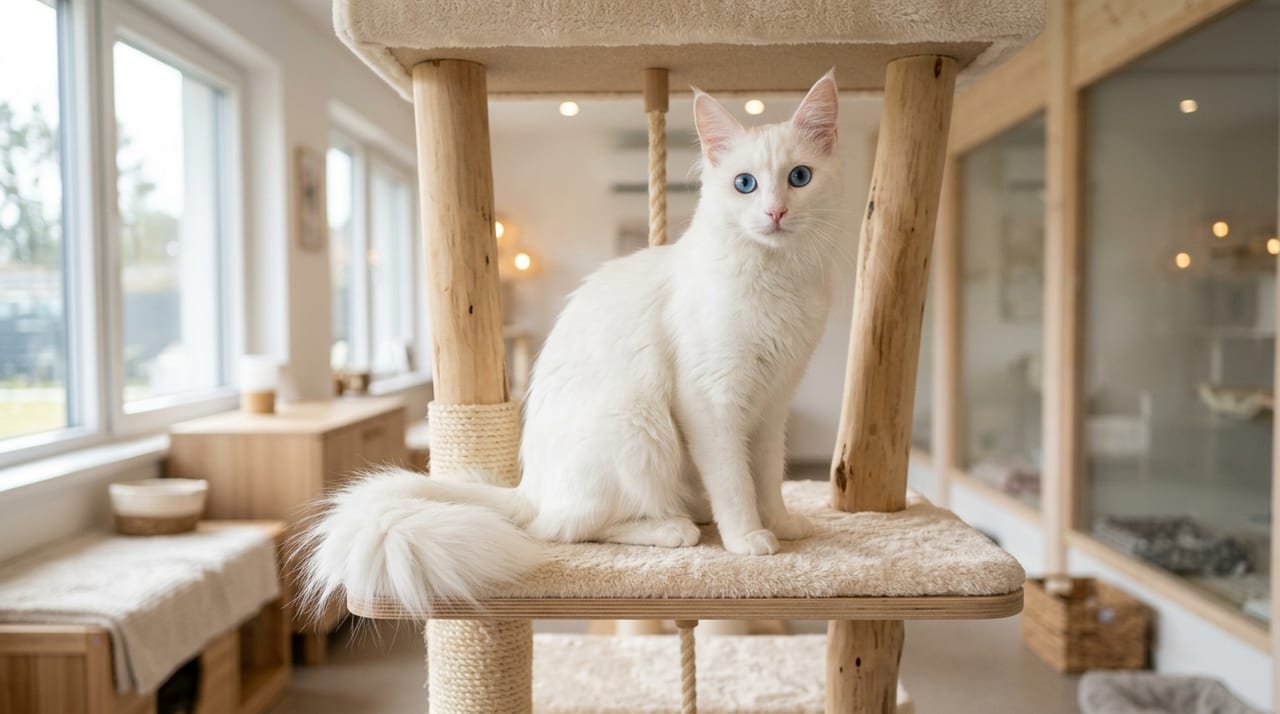
Cat Tower Placement Strategy Simply placing a single tower in a room corner is insufficient. Ideally, you should design a progressive route—"landing pad → step → mid-level → highest point"—across the entire room. Heights of 180–200 cm (reaching the ceiling) are preferable, positioned so cats can see the entire room from the top level. Placing it by a window adds intellectual stimulation from watching outdoor scenery, extending their time using it.
Utilizing Wall Steps In homes with limited floor space, wall-mounted "cat walks" are effective. They can be constructed by simply attaching 30×20 cm boards to commercial L-brackets (10 kg or higher weight capacity recommended). Install them at 30–40 cm intervals to create a route that circles three walls of the room, and cats will spontaneously run multiple loops. For materials, carpet or sisal rope wrapping works best since cats need their claws to grip.
Height "Safety Standards" An unstable tower risks tipping and fractures on landing. The principle should be choosing a model with screw-fastening or a tension-pole design anchored to the ceiling. For large cats over 10 kg (Maine Coons, Ragdolls, etc.), select models with higher weight capacity than their specifications require.
Designing Play to Unleash "Hunting Instinct"
Cat play is "hunting simulation." When the complete cycle—finding → chasing → catching → biting → satisfaction—is fulfilled within play, they achieve physical and mental fulfillment.
Proper Use of Feather Wands Simply swinging a wand bores cats quickly. Movements that mimic real prey are essential—a random pattern of "sudden stops → slow crawling → sudden acceleration → hiding" is highly effective. The "hiding" action (tucking under cushions or behind cardboard) maximizes predatory drive. Changing materials weekly (feathers, wool, shiso leaves, etc.) prevents habituation.
Cautions with Laser Pointers While convenient, laser pointers lack the satisfaction of catching prey, so continuous use builds frustration. If used, always end by directing the cat to a toy they can bite, finishing with a "capture." Never point at the eyes.
Selecting Electric Toys for Solo Play For long owner absences, electric toys are effective. Auto-wand toys with timers (random-motion types) set to activate every 15–20 minutes give cats a sense of novelty—"It's moving again!" However, cats habituate to the same toy daily, so rotate 3–4 varieties.
Different Approaches for Multi-Cat and Single-Cat Households
Multi-Cat Households Chasing between cats is optimal aerobic exercise. However, incompatible pairings stress the pursued cat continuously. To prevent territorial disputes, provide cat towers and high spaces for "number of cats plus one" or more. A layout where feeding areas, litter boxes, and high spaces don't compete is essential.
Single-Cat Households Playtime with the owner is often the only exercise opportunity. Building a habit of 10–15 minute intensive play sessions twice daily (morning and evening) is recommended. Since cats are crepuscular (active at dawn and dusk), aligning play with these times improves engagement. During remote work, even 1–2 minute play breaks between tasks yield cumulative benefits.
Exercise Intensity Adjustments by Age and Build
Kittens (up to 1 year) Since their skeleton is still developing, excessive jumping from heights is dangerous. Aim for jumps under 50 cm, with floor-level chasing as the main activity. Total daily play of 30–45 minutes is not excessive.
Adult Cats (1–7 years) Their peak athletic period. Jumps of 150 cm or higher are fine. Vigorous 10–15 minute play sessions with wands elevate heart rate and produce quality fatigue. Maintaining muscle mass during this period protects joints in old age.
Senior Cats (7 years and older) The period when joint disease (osteoarthritis) increases. Prioritize climbing and descending over high jumps; narrow tower step spacing. Keep play sessions short (5–8 minutes) and observe movement afterward for signs of joint stress. Weight management is especially critical; consult a vet about diet adjustments if weight exceeds 110% of ideal.
Continuing Habits by "Visualizing" Activity Levels
It's difficult to quantify a cat's exercise deficit. It helps to incorporate these observations into your routine:
- Weight trends: Measure monthly under the same conditions (2 hours after eating, on the same scale)
- Activity observation: If "resting time" exceeds 18 hours daily, it's a sign to increase exercise
- Muscle palpation: Feel the hind leg quadriceps; protruding bones indicate muscle loss
Building an enriched environment and consistent play habits are hardest to maintain in the first 1–2 weeks. Rather than striving for daily perfection, consistently doing 10-minute sessions five times a week for three months contributes far more to your cat's health. Small, accumulated adjustments reliably improve indoor cats' lifespan and quality of life.