Cat Escape Prevention and Indoor Safety Guide | Entrance, Window, and Balcony Measures and Lost Pet Prevention
A detailed explanation of measures for entrances, windows, and balconies to prevent cat escape accidents. We also introduce how to choose escape prevention fences and gates, how to use microchips and ID tags, and search methods if your cat escapes.
Key Takeaways
A detailed explanation of measures for entrances, windows, and balconies to prevent cat escape accidents. We also introduce how to choose escape prevention fences and gates, how to use microchips and ID tags, and search methods if your cat escapes.
Why Do Cat Escapes Happen?
Even indoor cats can escape in unexpected moments. Most accidents arise from a "momentary gap"—such as when a door opens, a delivery arrives, a window screen is torn, or a cat jumps from a balcony.
Cat escape tendencies are related to behavioral characteristics. Cats with strong territorial instincts are driven by powerful urges when exposed to mating season or new stimuli such as outdoor birds or the scent of other cats. Cats that have not been neutered or spayed in particular have significantly higher escape risk. Additionally, cats may panic and attempt to flee in unusual situations such as construction noise or visitors.
Escaped cats face risks of traffic accidents, contact with other animals, infections, and getting lost. Indoor cats in particular lack immunity to outdoor dangers and tend to have lower survival rates. Data shows that if a cat is not found within 72 hours of escape, the survival rate drops dramatically. Prevention is the best strategy.
Entrance and Hallway Escape Prevention Measures
The entrance is the most common place for escape to occur. People enter and exit frequently, and even if the door is open for just a few seconds, a cat can dart out.
Tension gate-type fences are the most popular method for installation inside the entrance. Many commercially available models accommodate widths of 90–120 cm and come in single-hinged, double-hinged, or top-door varieties. During installation, ensure the height prevents a cat from jumping over it (at least 80 cm, ideally 120 cm), and secure the tension rods firmly so there are no gaps between the fence and walls.
Dual door (airlock) structures are a more reliable measure. By installing an additional door or grate between the entrance and hallway, even if a cat breaks through the fence, it can be stopped at the next door. Many households set up lattice or wooden grilles using DIY.
Establishing routines for visitors is also important. Make it a family habit to move the cat to another room when guests arrive. Children and elderly family members in particular may forget, so posting a notice at the entrance such as "Cats escape!" can be effective. Using a delivery box to avoid in-person pickups also reduces escape risk.
Window and Balcony Escape Prevention Measures
Opening windows in summer significantly increases escape risk. Standard plastic window screens are fragile against a cat's weight and claws, and can easily be torn or dislodged.
Cat-specific stainless steel mesh screens are far more durable than ordinary screens and prevent cats from tearing through them with their claws. Installation is simple—just replace the existing screen, and costs are relatively low. It is also important to securely fix the frame itself with L-shaped reinforcement brackets. Do not forget to lock the screen.
Installing window grilles or barriers is also effective. Installing a tension rod-style grate (cat window grate) inside the window frame allows you to keep the window open without the cat getting outside. Using a window stopper to limit the opening width allows safe ventilation with just 5–10 cm of opening.
Making a balcony cat-proof hinges on three principles: gaps in railings, height, and net installation. If there is a gap of 10 cm or more in the railing, a cat can slip through, so it must be blocked with netting or boards. Installing a roll barrier at the top—a rotating round material that cats cannot grip with their claws—prevents them from climbing over. Creating a dedicated outdoor space as a catio (outdoor enclosure) allows cats to safely experience fresh air.
Microchips and Lost Pet Prevention
Microchips have been mandatory for dogs and cats sold and distributed since June 2022. For existing pet cats, installation is encouraged but not legally mandated; however, early installation is strongly recommended as a precaution. A rice-grain-sized chip is inserted beneath the skin at the back of the neck, and information can be confirmed by scanner machines available at shelters and veterinary clinics nationwide. The cost varies by veterinary clinic but typically ranges from several thousand yen. After installation, be sure to register your cat in the "Microchip Registration System for Dogs and Cats" (operated by the Ministry of the Environment).
ID tags and GPS collars are also important safety nets. Simply attaching an ID tag with your contact information to the collar allows anyone who finds your cat to contact you immediately. In recent years, cat collars with GPS tracking functions have become more common, allowing you to track your cat's location in real time from a smartphone. Always choose a "safety buckle" collar that detaches when caught, and fit it with enough room to insert two fingers around the neck.
Regularly updating photos is also important as a precaution. If you lack clear photos immediately after an escape, creating lost cat flyers will be delayed. Take and save photos showing your cat's face, markings, and body type at least twice a year.
What to Do If Your Cat Escapes
If you realize your cat has escaped, avoid panic and act calmly and quickly—this is crucial for survival.
- Search the area around your home immediately after the escape. Cats often hide nearby, and loud voices and footsteps will frighten them into running farther away. Call softly using a familiar voice while checking bushes, underneath cars, and narrow gaps.
- Place items with familiar scents near exits. Placing used cat litter or a favorite blanket outside the front door may encourage your cat to return on its own.
- Canvassing the neighborhood and distributing flyers. Create flyers with contact information and photos and post them at nearby homes, convenience stores, and veterinary clinics.
- Reporting to animal shelters and animal welfare centers. If a cat is found, reports may have been filed with government agencies. Contact your local welfare center or health department and register your cat's description.
- Posting on social media and lost pet websites. Use online services like "Lost Cat Bulletin Boards" and "Pet Lost/Found Information." Posts on Twitter and local Facebook groups are also effective and have good reach.
- Setting up traps overnight. Cats often become active at night, so set up a trap (a cage baited with strong-smelling food like canned tuna) near entrances and exits.
The highest discovery rate occurs within 48 hours of escape. Involve your neighbors in gathering information and remain calm.
Reducing Escape Risk Through Daily Habits
Escape prevention depends not only on equipment but also on daily habits and environmental management.
Neutering and spaying is one of the most effective methods for reducing escape urges. The escape risk during mating season drops significantly, and there are many health benefits as well.
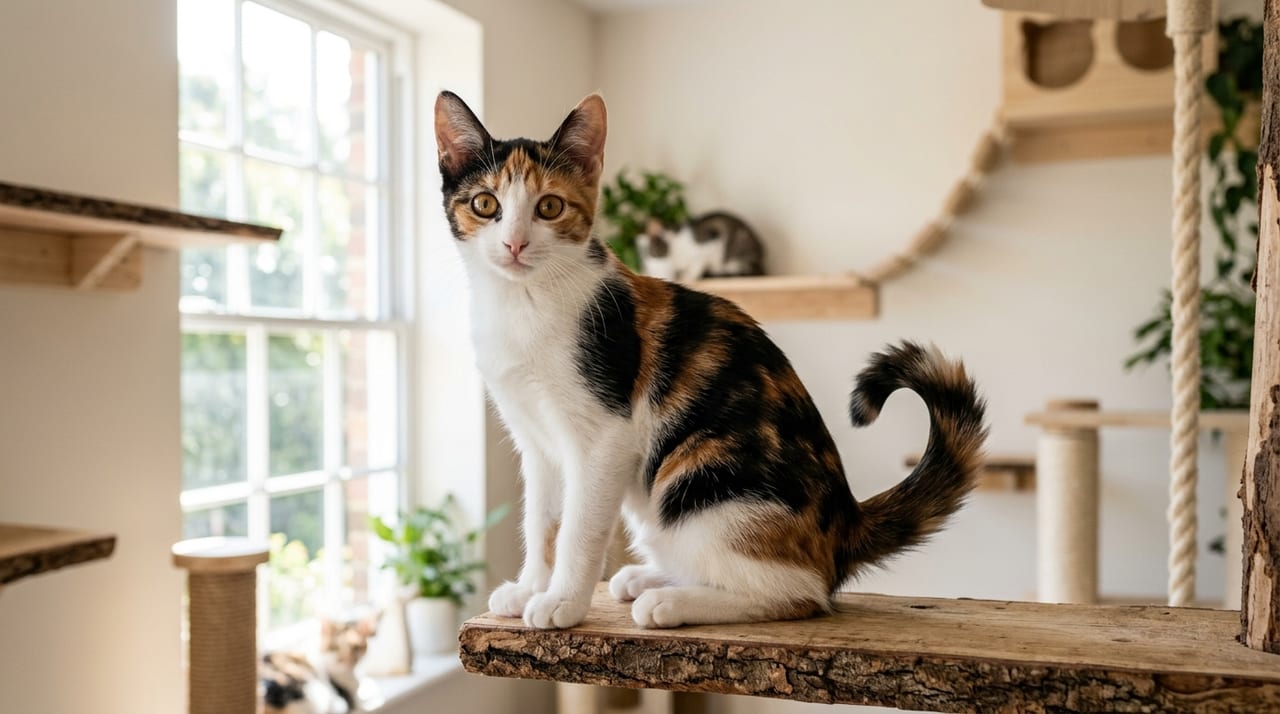
Enriching the indoor environment is also important. Providing cat trees, high perches by windows, and toys to satisfy hunting instincts creates an environment where outdoor desires can be met indoors, reducing the urge to escape. Boredom and stress are often triggers for escape, so ensuring daily playtime is important.
Maintaining a shared awareness among all family members is equally essential. In households with small children, it is important to firmly enforce the rule of "never leaving a door open in front of the cat." Giving visitors advance notice is also effective.
Keeping your cat safe is the responsibility of a pet owner. Be aware that a single escape could be fatal, and begin implementing measures one by one starting today.